
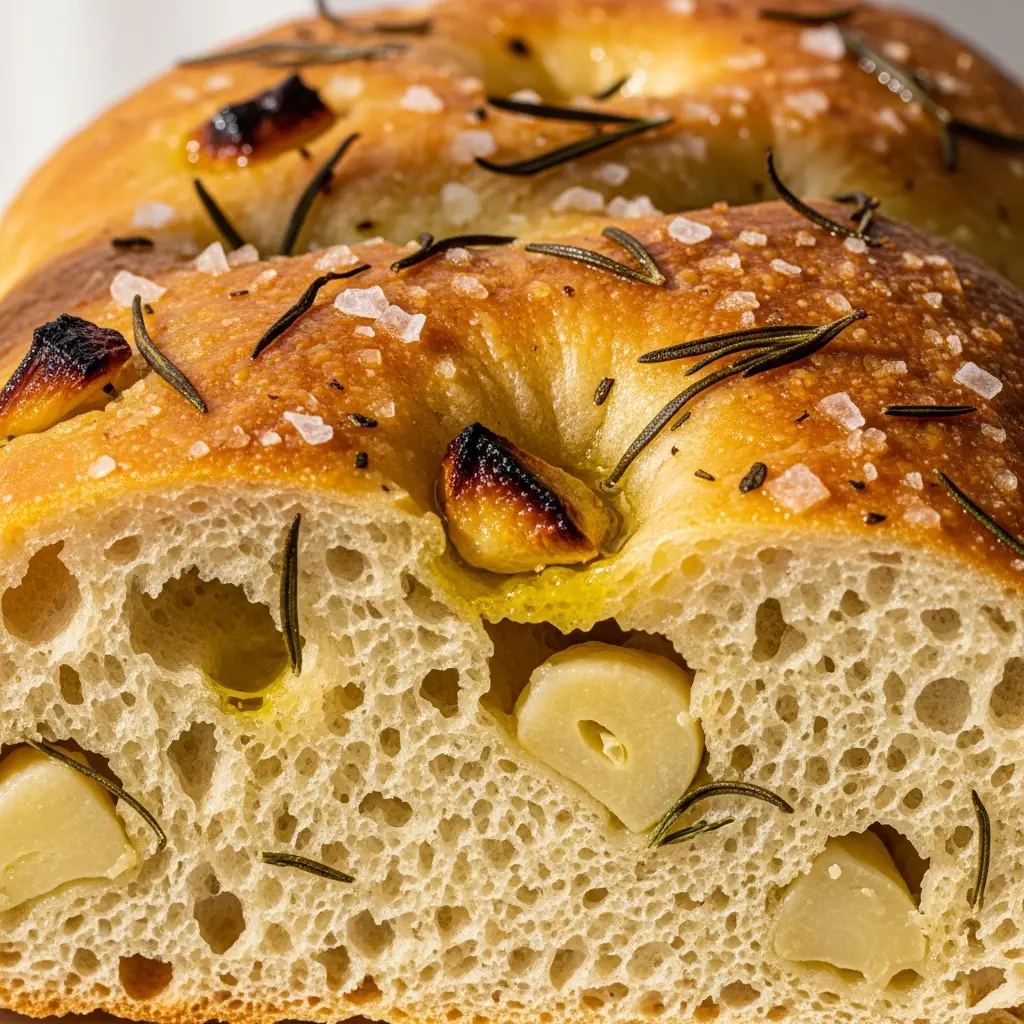
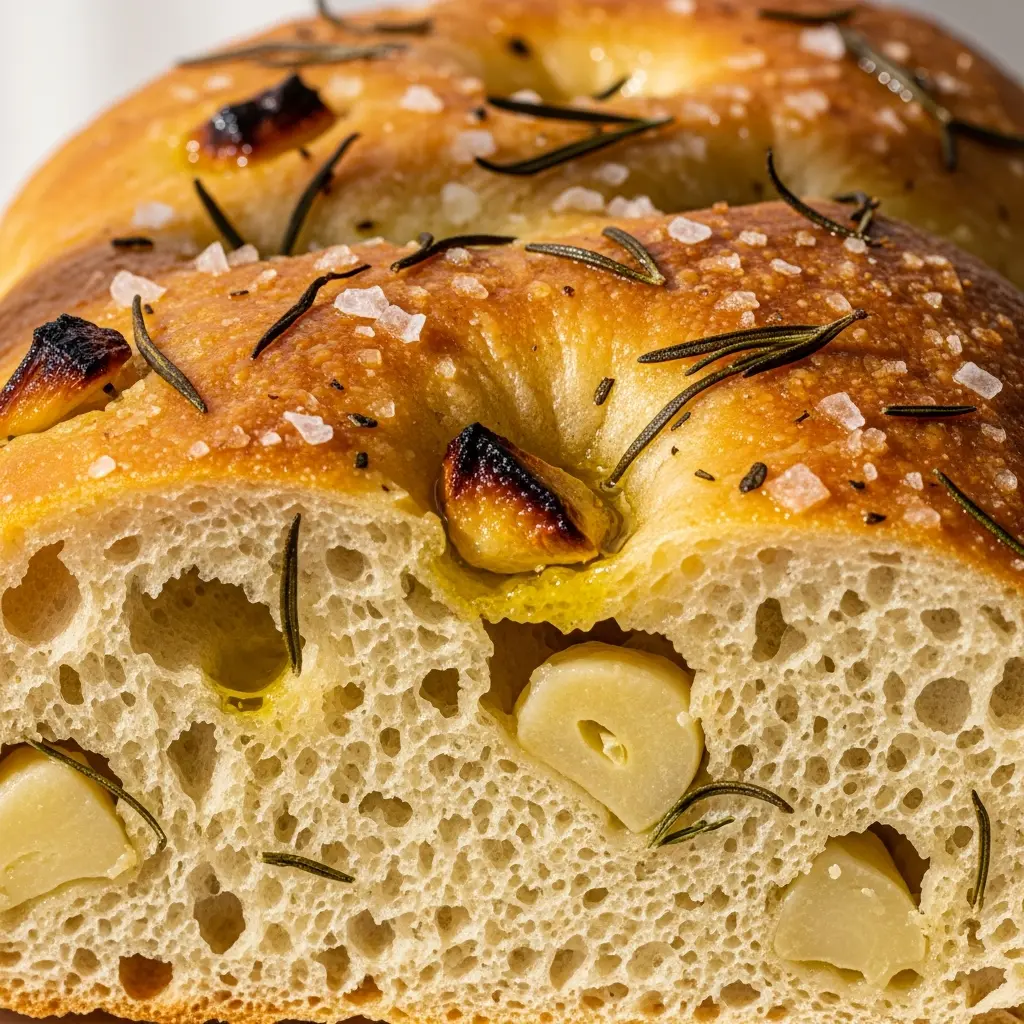
Impressive Roasted Garlic Rosemary Focaccia
Ingredients
Method
- Follow these easy steps to create Garlic and Rosemary Focaccia.
- In a small bowl, mix warm water and sugar. Sprinkle yeast on top and let it sit for 5-10 minutes until frothy.
- In a large mixing bowl, combine all-purpose flour and salt.
- Pour the frothy yeast mixture into the flour mixture, then add ¼ cup of olive oil.
- Mix until combined. Knead the dough on a floured surface for 5-7 minutes until smooth and elastic. If using a stand mixer, knead with a dough hook attachment for approximately 5 minutes.
- Place the dough in a well-oiled bowl. Cover with a damp towel and let it rise in a warm spot for 1 hour, or until doubled in size.
- Grease a baking sheet or a 9x13-inch pan with olive oil.
- Once risen, punch down the dough. Transfer it to the prepared pan and stretch it to fit evenly.
- Cover the dough with a towel and let it rise again for 30 minutes.
- Preheat the oven to 425°F (220°C). After the dough has risen, use your fingers to create dimples all over the surface. Generously drizzle with more olive oil and sprinkle with minced garlic, chopped rosemary, and sea salt.
- Place the focaccia in the preheated oven. Bake for 25-30 minutes, or until golden brown and sounding hollow when tapped.
- Remove from the oven. Let it cool for a few minutes in the pan before transferring to a wire rack. Serve warm.
Nutrition
Notes
Tried this recipe?
Let us know how it was!Welcome to Your Best Roasted Garlic and Rosemary Focaccia
You know, there’s just something about the aroma of homemade bread baking that makes the whole house feel like a warm hug. Honestly, I think it’s one of the best smells in the world. But I get it, working with yeast dough can feel a little intimidating, right? I mean, I’ve had my share of dense, sad loaves in the past, so I truly understand that hesitation.
But what if I told you that creating an absolutely incredible, perfectly tender roasted garlic and rosemary focaccia doesn’t have to be a multi-day ordeal? This isn’t one of those super complicated recipes that makes you want to throw your hands up. We’re talking about a golden crust, a pillowy soft interior, and that distinct, mellow sweetness of roasted garlic mingling with fragrant fresh rosemary. It’s so good.
Especially now, with spring in full swing here in Los Angeles, this roasted garlic and rosemary focaccia is just perfect for those outdoor gatherings or a cozy evening meal as the weather warms up. It complements fresh spring salads beautifully, and I think you’re going to love making it, and definitely eating it!
Why You’ll Love This Roasted Garlic and Rosemary Focaccia
Look, I’ll be honest, this isn’t just another bread recipe. This focaccia is a game-changer because it delivers on flavor and texture without demanding a whole weekend in the kitchen. You get that amazing, aromatic bread that just screams “I put effort into this!” even if the process is actually quite straightforward.
It’s that perfect balance of salty, savory, and a hint of sweet from the roasted garlic. Plus, the texture? We’re aiming for a chewy crumb with that satisfying golden crust that just begs to be torn into. It’s versatile too, great as an appetizer, a side with soup accompaniment, or for dipping in some good Napa Valley extra virgin olive oil.
What Makes Focaccia, Well, Focaccia?
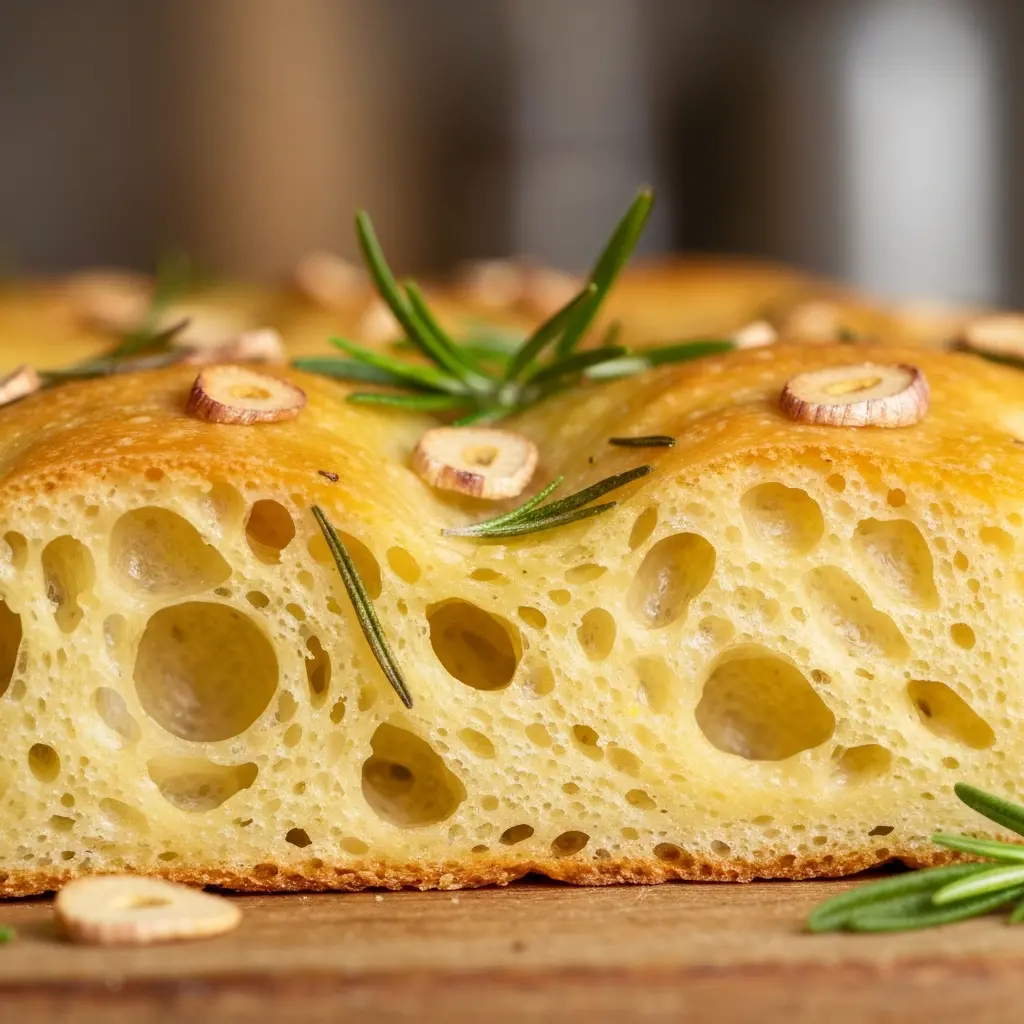
Focaccia is a bit like pizza’s softer, fluffier cousin, you know? It’s a flat oven-baked Italian bread that’s rich in olive oil. The magic really happens with its airy, open crumb and that signature dimpled top, which, I mean, is just begging to catch all that delicious olive oil and flaky sea salt. It’s not supposed to be super crusty or dense.
The dough itself is usually a high-hydration dough, meaning it has a good amount of warm water, which helps create that soft interior. The dimpling technique isn’t just for looks, it helps release gases and prevents large bubbles from forming, giving you that perfectly tender texture we’re after. It’s a pretty amazing bread, honestly.
The Secret to Amazing Focaccia: Ingredients Matter
When you’re making something as simple and delicious as roasted garlic and rosemary focaccia, the quality of your ingredients really shines through. Don’t skimp here, it makes all the difference, trust me. We’re not being fussy, it’s just about getting the best results.
For flour, I usually reach for good quality all purpose flour. I’ve found that using about 1 1/4 cups bread flour with 2 1/2 cups all-purpose flour can yield slightly better results for a really lovely chew, but all all-purpose flour works just fine. Remember to use the ‘spoon and level’ method when measuring flour; scooping directly can add too much and make your dough too stiff.
Yeast: Your Focaccia’s Best Friend
Your yeast is absolutely critical here. You want active dry yeast or instant yeast, and make sure it’s fresh! Old yeast won’t foam or help your bread rise, and that’s just a recipe for disappointment, you know? I always check the expiration date, and if I’m unsure, I’ll do a quick proof in a little warm water with a pinch of sugar.
Speaking of warm water, the temperature is key. You’ll want it around 90-100°F (32-38°C). Too hot and you’ll kill the yeast, too cold and it won’t activate properly. I usually use a thermometer, but if you don’t have one, it should feel like warm bathwater, not hot. This isn’t being fussy, it’s the difference between a sad, flat focaccia and one with amazing oven spring.
Flour Power and the Magic of Olive Oil
As I mentioned, a mix of all purpose flour and bread flour gives you a fantastic chewiness, but don’t worry if you only have all purpose flour on hand. It’ll still be amazing, just maybe a little less chewy. And then there’s the olive oil. Oh, the olive oil!
This is not the time to be stingy. Choose a good quality extra virgin olive oil. I mean, we’re in California, we’ve got access to some amazing Napa Valley olive oil. It adds so much flavor and helps create that crispy, golden crust and soft interior. Let it pool in those dimples, that’s where the magic happens for moisture and crispiness. Regular olive oil can be used, but a good quality EVOO just elevates this roasted garlic and rosemary focaccia to another level.
Your Step-by-Step Focaccia Journey
Making focaccia is truly a therapeutic experience, and it’s simpler than you probably think. We’re going to break it down so you feel confident at every stage. This isn’t just about following steps, it’s about understanding what’s happening to your dough, which is honestly the real secret to becoming a better baker.
I think the biggest hurdle for new bakers is often just the waiting game, but that’s where the flavor develops. You’ll see, the bulk fermentation is where all the good stuff happens, building that amazing chewy crumb. So, let’s dive into the process!
Activating Your Yeast and Mixing the Dough
First things first, get that yeast happy. Combine your warm water, a pinch of sugar, and your instant yeast. Give it about five minutes. You’ll know it’s working when it gets foamy, like a little beer head, you know? If it doesn’t foam, your yeast is probably old or your water was off, and you’ll want to start fresh. Trust me on this, it saves heartache later.
Then, you’ll combine your all purpose flour, salt, and the activated yeast mixture. A stand mixer with a dough hook is super helpful here, but hand mixing works perfectly fine too, just knead by hand for about 12-14 minutes until it’s smooth and elastic. It’s going to be a sticky dough, and that’s just right. Don’t be tempted to add too much extra flour!
The Art of Bulk Fermentation and Dimpling
This is where patience pays off. After mixing, your dough needs time for bulk fermentation, usually a few hours, until it has at least doubled in size. A slightly warm spot is amazing for this, maybe a dryer heated briefly then turned off, or just a sunny spot in your kitchen. This long, slow rise develops the flavor and creates those beautiful air pockets.
Once it’s proofed, you’ll transfer it to your focaccia pan, which should be generously oiled, by the way. Then comes the fun part: dimpling! Gently press your fingers all over the dough, creating those signature indentations. This helps push the gas around and creates that lovely soft interior. Don’t be afraid to really get in there, but be gentle. You’re not trying to deflate it entirely, just create those beautiful little pools for the olive oil.
The Star Flavors: Roasted Garlic and Fresh Rosemary
The roasted garlic is what makes this roasted garlic and rosemary focaccia truly special. It transforms from pungent to mellow, sweet, and spreadable. To roast garlic, just lop off the top quarter of a whole garlic head, drizzle with a little extra virgin olive oil, wrap in foil, and roast at 400°F (200°C) for about 30-40 minutes until perfectly tender. You can honestly do this ahead of time and keep it in the fridge.
Once it’s cooled, you can squeeze out those perfectly tender cloves. We’ll mix some into the dough, and then press more into the dimples along with fresh rosemary sprigs and flaky sea salt right before the final bake. Fresh rosemary is definitely preferred over dried for that vibrant, aromatic bread flavor, I mean, it just makes a huge difference, you know? The combination of roasted garlic and fresh rosemary is also exquisite in dishes like roasted garlic baby potatoes, offering a delightful aromatic complement.
Baking Your Focaccia to Golden Perfection
After its final proof in the pan, where it’s had a chance to relax and puff up again, it’s ready for the oven. You’re looking for that amazing oven spring and a beautiful golden crust. Bake it at a high temperature, usually around 400-425°F (200-220°C).
Keep an eye on it. You’re looking for a perfectly golden brown color, not pale beige, and definitely not burnt. The house will smell absolutely amazing with that comforting, earthy aroma of garlic and rosemary baking. It’s so good, you’ll probably be peeking through the oven door every few minutes, I know I do!
Pro Tips for Your Best Roasted Garlic and Rosemary Focaccia Ever
I’ve made my fair share of focaccia, and I’ve picked up a few tricks along the way that I wish someone had told me early on. These little insights can really make a difference between a good focaccia and an absolutely amazing one, trust me.
First, always ensure your instant yeast is fresh. This isn’t being fussy; old yeast simply won’t foam or help your bread rise, and that’s a pretty basic but critical mistake. Also, maintain your warm water temperature around 90-100°F (32-38°C) to avoid killing that precious yeast. A kitchen thermometer is super helpful here.
Don’t be shy with the extra virgin olive oil. A good quality one is key, and allow it to pool generously in the dimples for moisture and that coveted crispiness. Fresh rosemary is always preferred over dried for better, brighter flavor. And honestly, roasting garlic in bulk and storing it in the fridge is a total game-changer for convenience; it becomes beautifully spreadable and sweet. This method is incredibly useful for preparing other dishes, such as a flavorful roasted garlic potatoes and chicken meal, simplifying your weeknight cooking.
For flour measurement, using the ‘spoon and level’ method is essential to prevent a dense crumb. And here’s the real secret for a light, airy texture and big dimples: keep the dough warm enough and allow it to rise long enough to at least double in size. Don’t bake if it hasn’t doubled, you know? It probably needs more time in a cozy spot, like a briefly warmed oven that’s turned off.
Focaccia Fixes: Troubleshooting Common Baking Hurdles
Even the most seasoned bakers run into issues sometimes, and I’ve definitely learned a lot from my focaccia failures. So, don’t worry if things don’t look perfectly right on your first try. Here are some common problems and how to fix them:
Common Mistakes & Fixes
Mistake: Your focaccia is dense or flat.
Solution: This almost always means your yeast wasn’t active enough or the dough didn’t proof long enough. Make sure your water temperature is just right for the yeast and give it plenty of time to double in size.
Mistake: The bottom of your focaccia isn’t fully baked.
Solution: Your oven rack might be too high, or your oven isn’t hot enough. Try moving the pan to a lower rack for the last 10 minutes, or preheat your baking sheet in the oven before adding the dough for a better bottom crust.
Mistake: My dough seems too wet and sticky.
Solution: Focaccia dough is meant to be quite wet and sticky, it’s how you get that soft interior! Resist adding too much extra flour. A generous amount of extra virgin olive oil on your hands and the focaccia pan will make it much easier to handle.
Mistake: The roasted garlic tastes burnt or bitter.
Solution: You probably roasted it too long or at too high a temperature without enough oil. Ensure your whole garlic cloves are well-covered in extra virgin olive oil and wrapped tightly in foil to steam and soften, not char.
Mistake: The focaccia stuck to the bottom of my pan.
Solution: You didn’t use enough olive oil in the pan, honestly. Don’t be shy; a good glug of extra virgin olive oil is essential to prevent sticking and help create that crispy bottom crust. I mean, it’s pretty critical.
Beyond the Basics: Creative Focaccia Variations
While roasted garlic and rosemary focaccia is a classic for a reason, it’s also a fantastic canvas for other flavors. Once you’ve mastered the basic dough, you can really play around with toppings. I love this part, honestly, it’s where you can get super creative.
You could add some roughly chopped olives, either green or kalamata, for a salty kick. Or, how about some red onion and mushroom? That’s always a winner, especially if you caramelize the onions first. For a fresh, summery vibe, try grape tomatoes, thyme, and basil. I’ve even seen people do jalapeño cheddar, which sounds amazing, you know, for a bit of a kick.
You can also add some cheese right on top, like a little grated Parmesan or a sprinkle of mozzarella, especially if you’re serving it with something saucy. Or switch up the herbs with some fresh basil or thyme instead of rosemary. The possibilities are pretty much endless, which is why I love this recipe so much! For a heartier take, consider making a delicious roasted garlic potato focaccia, incorporating thinly sliced potatoes directly into the dough for a unique texture and flavor.
Serving Your Amazing Focaccia
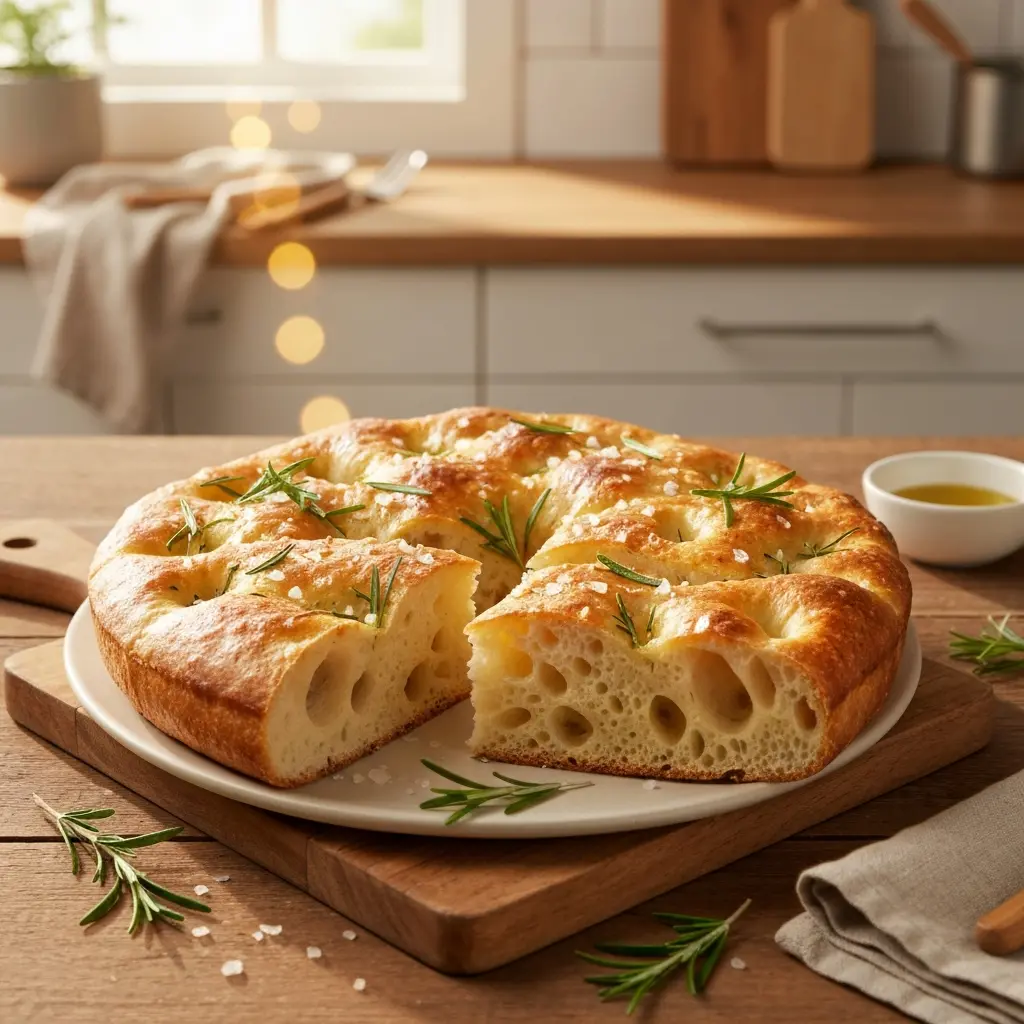
The moment that perfectly tender roasted garlic and rosemary focaccia comes out of the oven, golden brown and smelling absolutely amazing, is just the best. It’s warm, it’s bubbly, it’s fragrant, and honestly, you’ll probably want to tear into it right away. And you should!
Serve it warm, maybe with a small bowl of good quality extra virgin olive oil for dipping. It’s fantastic on its own as an appetizer, or as a companion to a hearty soup or your favorite pasta dish. I love using it as sandwich bread, especially for something like a hearty eggplant parmigiana sandwich. Cut it into strips for dipping or just enjoy a big slice with your morning coffee. It’s so good. Another comforting option that complements many meals, including soups, is a creamy roasted garlic mashed potatoes dairy-free recipe, offering a rich and flavorful side.
Keep it Fresh: Storage and Reheating Tips
If you happen to have any leftover roasted garlic and rosemary focaccia (which, honestly, is a rare occurrence in my house), you’ll want to store it properly to keep that soft interior and golden crust just right. You know, nobody wants stale focaccia.
Focaccia can sit at room temperature for up to 24 hours, covered loosely. After that, I usually slice it and store it in an airtight container or bag in the fridge for a few days. For longer storage, it freezes beautifully for up to a couple of months. Just wrap individual slices tightly in plastic wrap, then foil, and pop them in a freezer-safe bag.
To restore that amazing crispiness, warm slices in a 300°F (150°C) oven for 5-8 minutes. Microwaving works for a quick snack, but it won’t be as crispy, I mean, it’ll still be warm and soft, but the oven is definitely the way to go for the best texture. And if it ever goes completely stale, don’t throw it out! It makes amazing croutons or a base for garlic soup, which is actually quite clever.
Frequently Asked Questions
Ready to Bake Your Own Focaccia Masterpiece?
See? Making an amazing roasted garlic and rosemary focaccia isn’t some insurmountable baking challenge. It’s truly a rewarding experience that fills your home with the most comforting aromas and your table with an impressive, perfectly tender bread. You’ve got this, honestly.
So, next time you’re at Ralphs or Trader Joe’s, grab those simple ingredients. You’ll be so proud when you share this masterpiece with family and friends, and I think they’ll be pretty impressed, too. It’s just so good. Happy baking, everyone! For more inspiration, check out my Pinterest boards.
Source: Nutritional Information
What makes roasted garlic and rosemary focaccia so flavorful?
The incredible flavor comes from the mellow, sweet notes of roasted garlic, which are a stark contrast to raw garlic. This pairs perfectly with the fragrant, slightly piney fresh rosemary, all infused into a rich, olive oil-laden dough. It’s a combination that’s just right and truly amazing.
How do you achieve a pillowy soft texture for homemade focaccia?
A pillowy soft texture for your roasted garlic and rosemary focaccia comes from a few key things. First, a high-hydration dough, meaning enough warm water. Second, proper bulk fermentation and proofing until the dough has doubled. And third, a generous amount of good quality extra virgin olive oil, which keeps the interior moist and tender.
Can I add cheese or other herbs to my roasted garlic and rosemary focaccia?
Absolutely! This roasted garlic and rosemary focaccia is super versatile. You can definitely add some cheese, like Parmesan or mozzarella, directly on top before baking. Or, switch up the herbs with some fresh basil or thyme, or even a mix. It’s a great way to customize it to your taste, you know?
My dough seems too wet and sticky – help!
Don’t panic if your dough for the roasted garlic and rosemary focaccia feels very wet and sticky; that’s actually just right! Focaccia is a high-hydration dough, which is essential for its characteristic soft interior. Just make sure to generously oil your hands and the focaccia pan with extra virgin olive oil, and it’ll be much easier to handle, honestly.
What’s the best way to store leftover roasted garlic and rosemary focaccia to keep it fresh?
To keep your roasted garlic and rosemary focaccia fresh, store any leftovers sliced in an airtight container at room temperature for up to a day. For longer storage, refrigerate for a few days or freeze for up to two months. Reheat in a 300°F (150°C) oven for 5-8 minutes to bring back that amazing crispiness and soft interior.