
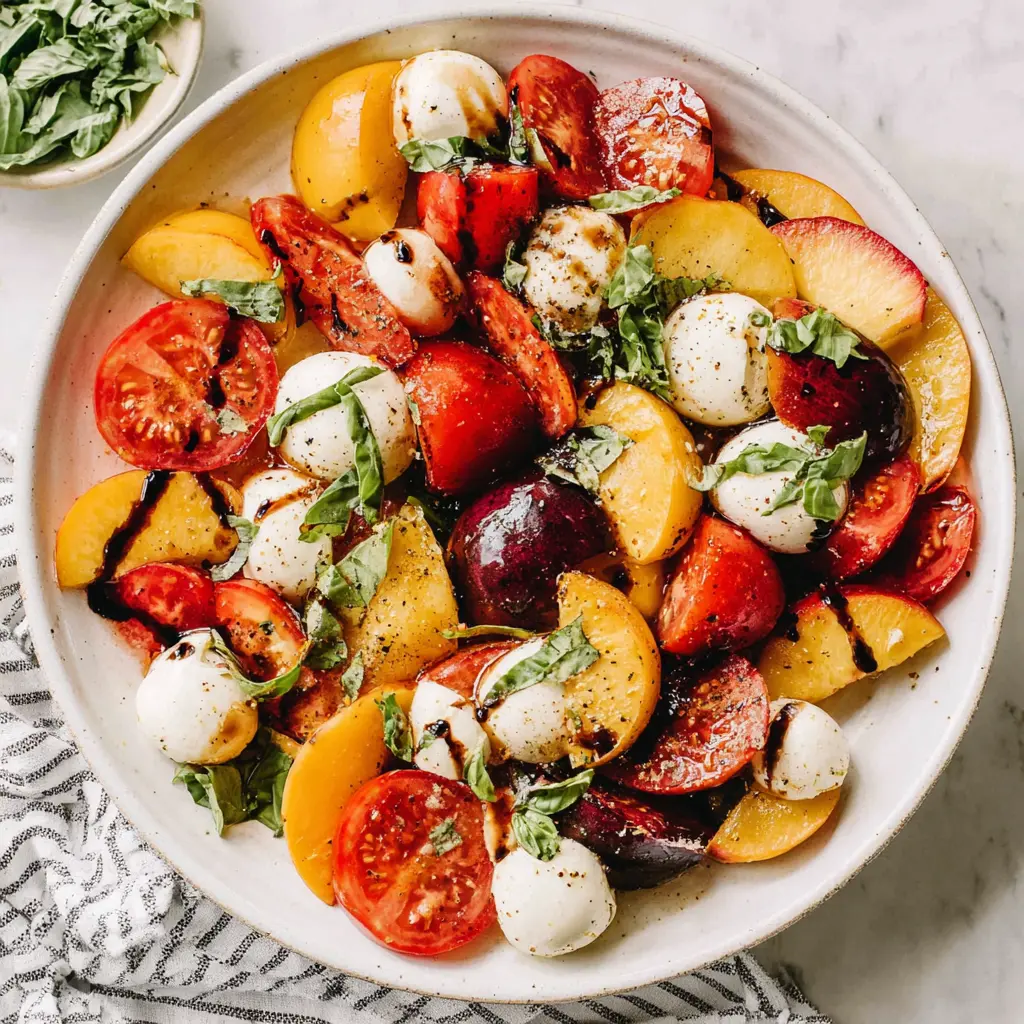
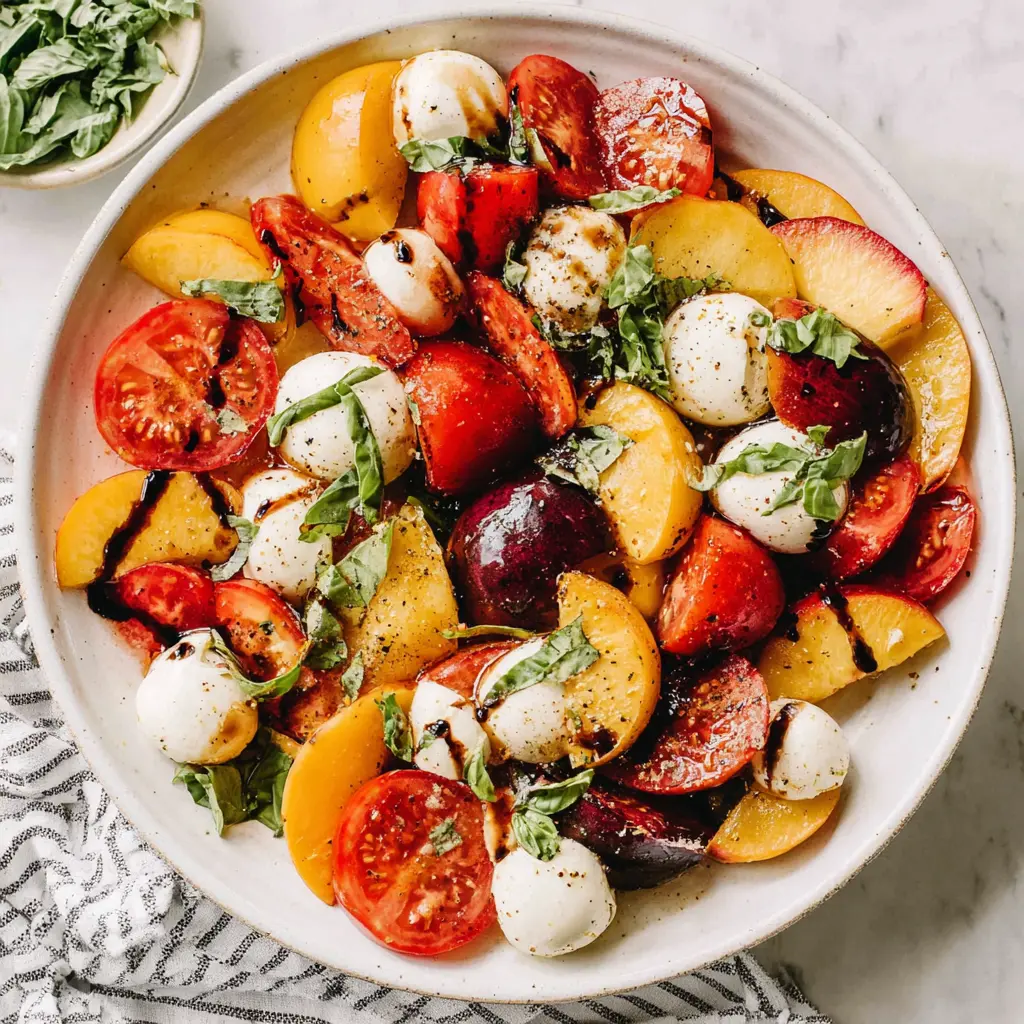
Summer Fruit Caprese Salad with Peaches and Heirloom Tomatoes
Ingredients
Method
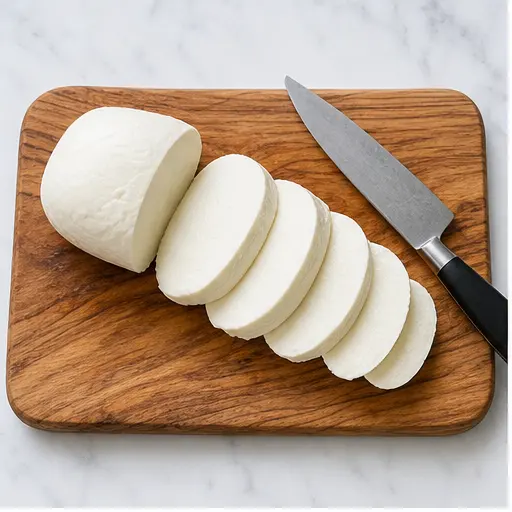
- Cut the mozzarella ball into quarters, then slice each quarter into 1/2-inch thick pieces.
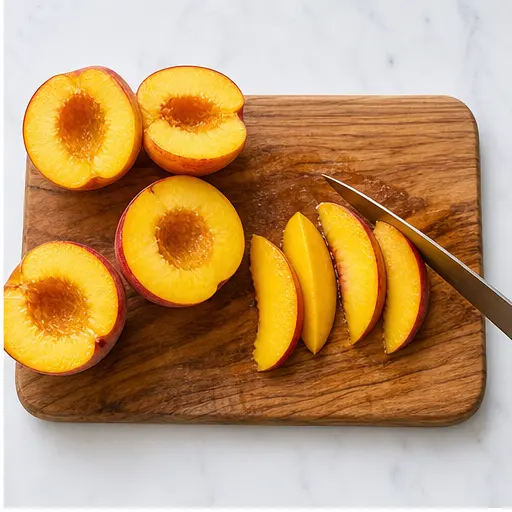
- Halve the peaches, remove the pits, and cut each half into 4 wedges. Slice the wedges crosswise into bite-sized pieces, about 1 inch each.
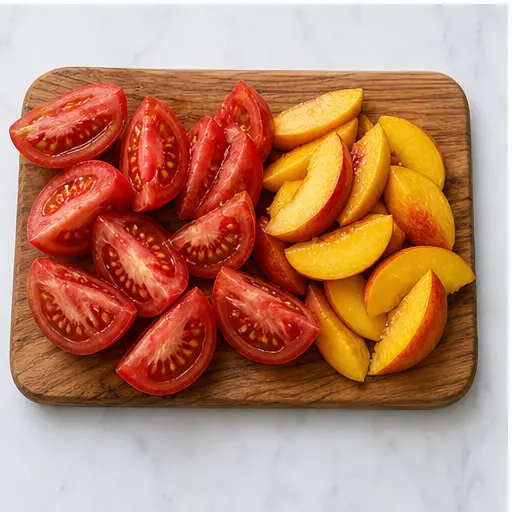
- Core the tomatoes, cut them in half, then slice each half into 4 wedges. Cut the wedges into 1-inch pieces, similar in size to the peaches.
- Tear or roughly chop the basil leaves into smaller pieces.
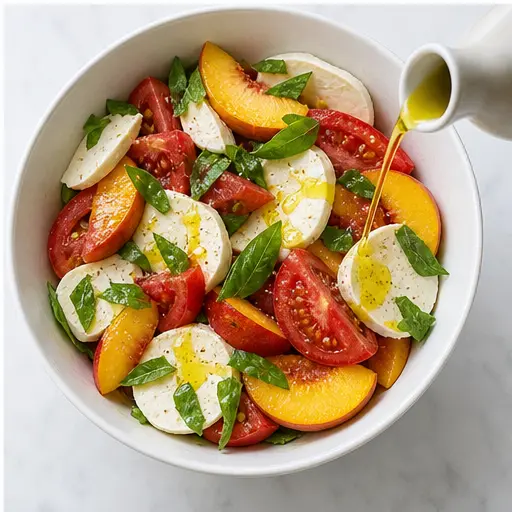
- In a large bowl, combine the mozzarella, peaches, tomatoes, and basil. Drizzle with olive oil, season with salt and pepper, and gently toss to coat.
- Drizzle with balsamic reduction just before serving, and serve immediately.
Nutrition
Notes
Tried this recipe?
Let us know how it was!Why You’ll Love This Summer Fruit Caprese Salad
It’s July. It’s hot. The last thing you want to do is turn on the oven, right? I’ve been there more times than I can count. Standing in front of the open fridge, just staring, hoping a cold dinner will magically appear. That’s exactly how this summer fruit caprese salad came to be a staple in my kitchen.
I remember the first time I made it. I was at the Santa Monica Farmers Market, and the peaches were practically begging me to take them home. They were that perfect shade of sunset gold, and the smell? Like summer in a fruit. I grabbed a ball of fresh mozzarella from a local dairy stand, some heirloom tomatoes that looked like art, and a giant bunch of basil. Got home, sliced everything up, drizzled some good olive oil on it, and sat down on the back porch. That first bite? The peach juice running down my chin, the creamy mozzarella, the fragrant basil… I knew I was onto something special.
This isn’t just a salad. It’s a no-cook, 15-minute masterpiece that tastes like peak summer on a plate. It’s the kind of dish you bring to a potluck and everyone asks for the recipe. Or you make it for yourself on a lazy Tuesday because you deserve something beautiful and delicious without any effort. Trust me, once you try this fruit caprese salad, you’ll never look at a regular Caprese the same way again.
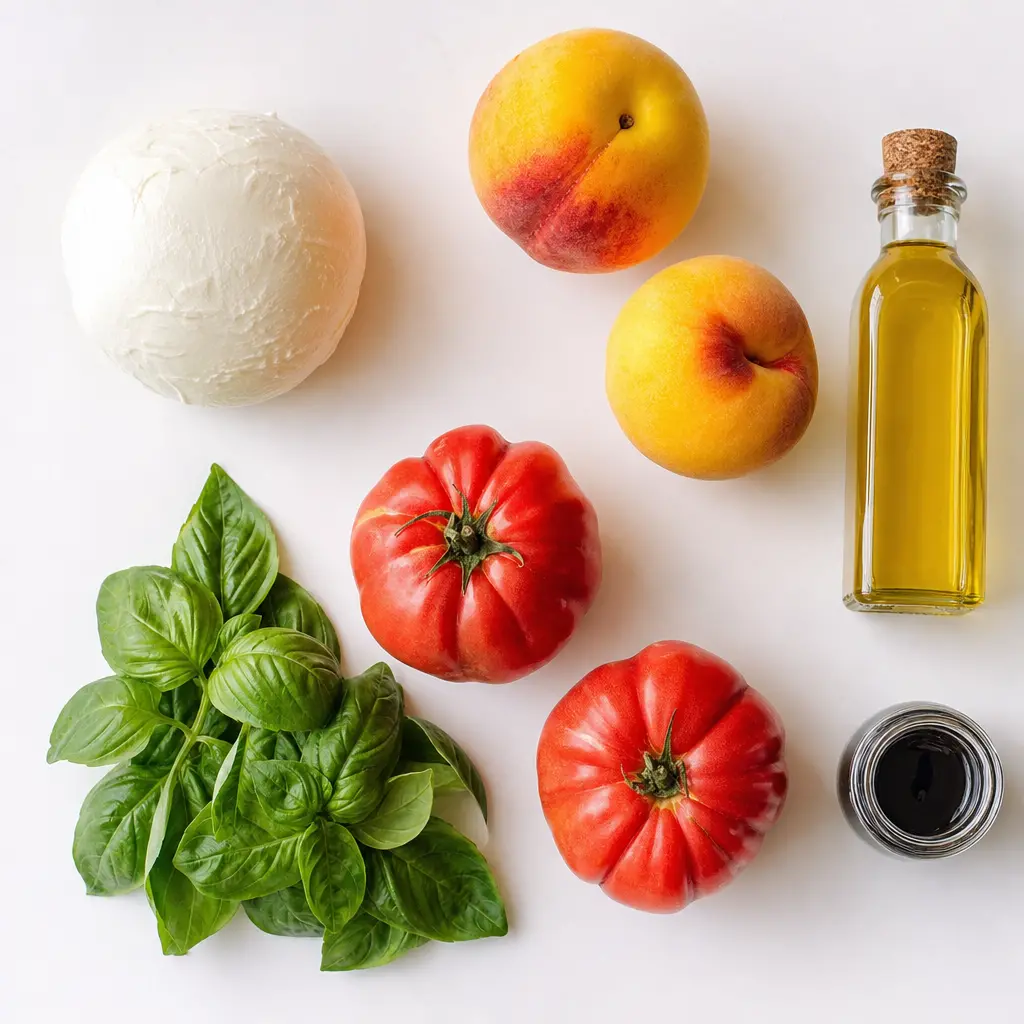
Ingredients for Summer Fruit Caprese Salad
Here’s the thing about this summer fruit caprese salad: it’s all about the quality of the ingredients. There’s no cooking involved, so each component has to shine on its own. You don’t need much, just the good stuff.
- Fresh mozzarella ball (8 oz): Get the good stuff, the one packed in water or whey. It’s so much creamier and softer than the pre-shredded kind. I usually grab the BelGioioso or the one from Trader Joe’s both are solid.
- Ripe peaches (2 medium): Look for ones that are firm but fragrant. You want a little give when you gently squeeze them. If they’re rock hard, leave them on the counter for a day or two. Trust me, it’s worth the wait.
- Heirloom tomatoes (2 medium): Any variety works here. I love using a mix of colors red, yellow, even green zebras if I can find them. They just make the salad look so pretty.
- Fresh basil leaves (1/2 cup, loosely packed): The more the merrier. Tear them, don’t chop them with a knife. It releases the oils better and keeps them from bruising.
- Extra-virgin olive oil (2 tablespoons): Use a good one. I’m partial to California-grown olive oils, but any high-quality EVOO will do. It’s the backbone of the dressing.
- Balsamic reduction (1-2 tablespoons): Store-bought is totally fine. Look for one that’s thick and syrupy, not watery. You could also make your own by simmering balsamic vinegar until it reduces, but I’m usually too lazy for that.
- Kosher salt and freshly ground black pepper: Don’t skip these. Salt brings out the sweetness of the fruit and the creaminess of the cheese. Be generous.
That’s it. Seven ingredients. You probably already have the salt and pepper. See? Easy.
How to Make Summer Fruit Caprese Salad
Okay, so the recipe card has the full details, but let me walk you through the process with some tips I’ve learned from, uh, a few less-than-perfect attempts. I once used underripe peaches big mistake. They were hard and sour, and the whole salad was a letdown. So learn from my mistakes, yeah?
Here’s the general flow, broken down into four stages.
Stage 1: Prep the Mozzarella
Take your fresh mozzarella ball and cut it into quarters. Then slice each quarter into pieces about half an inch thick. Don’t worry about perfect uniformity. A little variation in size is fine it looks more rustic and homemade. If you’re using mini mozzarella balls (ciliegine), you can just halve them. But I prefer the larger ball because you get those nice, satisfying chunks.
Stage 2: Prep the Fruit
Halve the peaches and remove the pits. Cut each half into 4 wedges, then slice those wedges crosswise into bite-sized pieces about an inch each. Do the same with the tomatoes: core them, halve them, cut each half into 4 wedges, then cut the wedges into 1-inch pieces. You want the fruit pieces to be roughly the same size as the mozzarella pieces. It makes for a better bite, you know?
Stage 3: Prep the Basil
Just tear the basil leaves into smaller pieces. Or give them a rough chop if you prefer. I’m a tearer myself. It feels more natural, and the basil doesn’t get all bruised and sad. Plus, it’s one less thing to wash.
Stage 4: Assemble and Dress
In a large bowl, combine the mozzarella, peaches, tomatoes, and basil. Drizzle with the olive oil, season with salt and pepper, and gently toss. And I mean gently. You don’t want to smash the peaches or break up the mozzarella. Use your hands or a big spoon, just be careful. Then drizzle with the balsamic reduction right before serving. That’s it. Serve immediately.
Tips for the Best Caprese Salad with Fruit
Over the years, I’ve picked up a few tricks that make this salad even better. Here are my top ones:
- Keep tomatoes at room temperature. Cold tomatoes lose their flavor. Store them on the counter, not in the fridge.
- Check peach ripeness by smell and touch. If it smells like a peach and has a little give when you squeeze it, it’s ready. If it’s hard, it’s not.
- Be generous with the salt. A good flaky sea salt like Maldon is amazing here. Tomatoes love salt, and it helps the peaches shine too.
- Don’t dress it too early. If you’re making this for a party, keep the dressing (olive oil, salt, pepper) and the balsamic reduction separate until just before serving. The fruit will release its juices and get soggy if it sits too long.
- Use the best balsamic reduction you can find. A good one is thick, sweet, and tangy. A bad one is watery and acidic. Splurge a little here.
- Have fun with it. This is a guideline, not a rulebook. Swap out the peaches for nectarines, use blackberries instead of strawberries, or add some cherries. Make it your own.
Substitutions and Variations
This summer fruit caprese salad is super flexible. Here are some ways to switch it up:
- Stone fruit swap: Use nectarines, plums, apricots, or a mix of all of them instead of peaches. A stone fruit caprese is just as delicious.
- Berry version: Swap the peaches for strawberries, blackberries, or raspberries. A berry caprese salad is a totally different vibe but just as good.
- Cheese swap: Use burrata instead of fresh mozzarella for an extra creamy, decadent version. It’s a showstopper.
- Add some greens: Serve it on a bed of arugula for a peppery kick. The bitterness of the arugula pairs beautifully with the sweet fruit.
- Grill it: Grill the peach halves for a minute or two on each side before slicing. The caramelized edges add a smoky sweetness that’s incredible.
Budget Swaps
Save money: Use regular vine-ripened tomatoes instead of heirloom. They’re cheaper and still taste great. Also, store-brand balsamic glaze works fine just check the ingredients for added sugar and thickness.
Serving Suggestions
This summer fruit caprese salad is so versatile. Here’s how I like to serve it:
- As a side dish: It’s perfect alongside grilled chicken, fish, or steak. The bright, fresh flavors cut through the richness of grilled meat.
- As a light dinner: Eat it as is with some crusty bread to soak up all the juices. It’s a satisfying meal on a hot night.
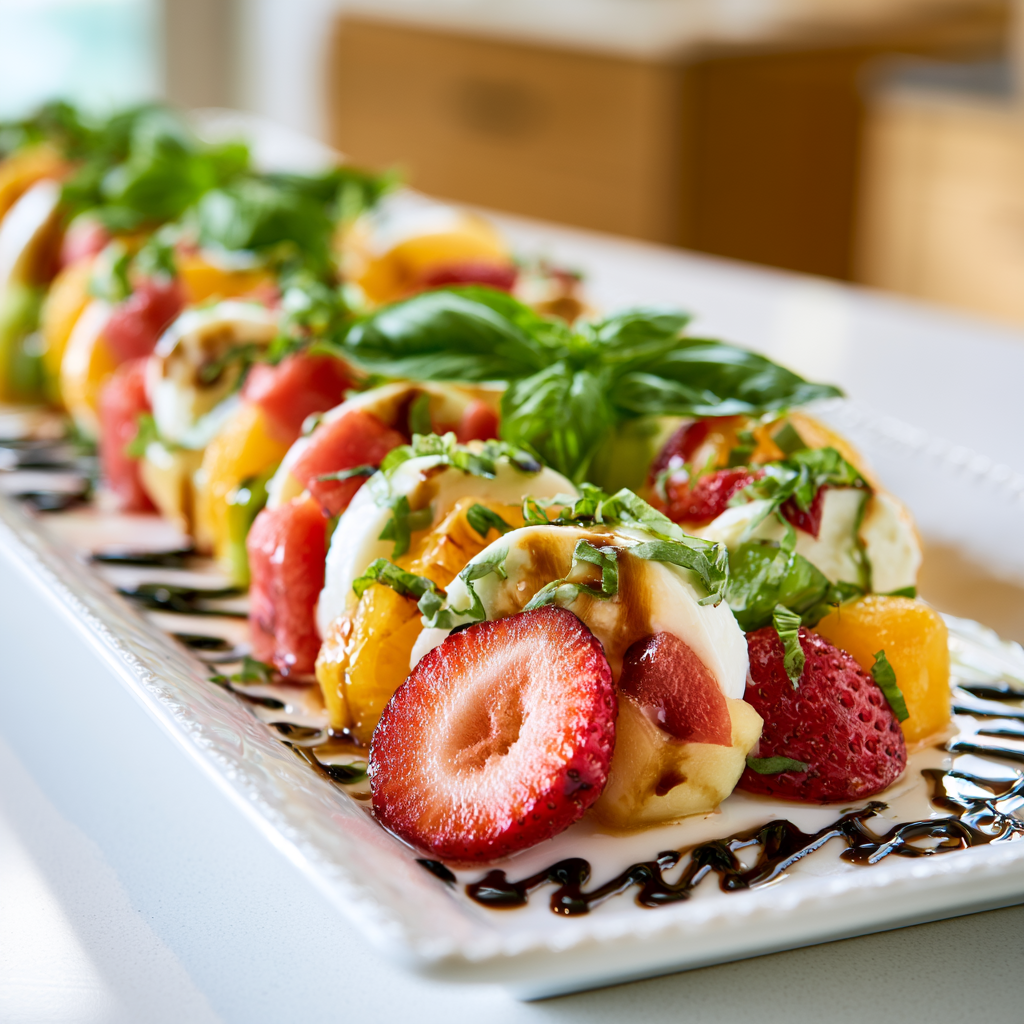
- At a party: Arrange it on a large platter instead of tossing it in a bowl. It looks stunning and guests can serve themselves.
- With toast: Pile it on top of toasted sourdough for an open-faced sandwich. Add a drizzle of honey if you’re feeling fancy.
Storage and Make-Ahead Tips
Okay, real talk: this salad is best eaten immediately. The textures are perfect, the fruit is fresh, and the mozzarella is creamy. But if you have leftovers (which is rare in my house), here’s what to do:
- Store undressed: If you’re making it ahead, keep the olive oil, salt, pepper, and balsamic reduction separate. Combine everything right before serving.
- Leftovers: Store in an airtight container in the fridge for up to one day. The texture won’t be as good the fruit will release some juice and the mozzarella will firm up but it’s still tasty.
- Don’t freeze it. Just don’t. The mozzarella will get rubbery and the fruit will turn to mush.
Frequently Asked Questions
More Summer Salad Recipes You’ll Love
If you’re digging this summer fruit caprese salad, you might also enjoy some of my other go-to summer recipes. They’re all about fresh, seasonal ingredients and minimal effort. Perfect for those hot days when you just can’t.
I hope you give this recipe a try. It’s become a staple in my summer rotation, and I have a feeling it will in yours too. The combination of sweet peaches, juicy tomatoes, creamy mozzarella, and fragrant basil is just unbeatable. And the best part? It takes 15 minutes and zero cooking. What’s not to love?
When you make it, take a photo and tag me I want to see your summer masterpiece! Also, check out my Pinterest board for more fresh, seasonal recipe inspiration. I’m always pinning new ideas.
Source: Nutritional Information
What fruit goes well with Caprese salad?
Peaches and nectarines are the most popular choices for a fruit caprese salad. Stone fruits like plums, apricots, and cherries also work beautifully. Berries like strawberries, blackberries, and raspberries are excellent alternatives that add a different sweetness.
What is summer fruit salad?
A summer fruit salad typically features peak-season fruits like peaches, berries, melons, and cherries. This summer fruit caprese salad is a savory twist, combining those fruits with fresh mozzarella, basil, and a balsamic glaze for a sweet-savory balance.
What fruit goes well with mozzarella?
Mozzarella’s mild, creamy flavor pairs wonderfully with sweet fruits. Peaches, nectarines, strawberries, figs, and melon are classic pairings. The key is using ripe, flavorful fruit so the sweetness contrasts with the cheese’s richness.
What is Gabriella Caprese salad?
Gabriella Caprese salad is a specific variation that typically includes fresh mozzarella, tomatoes, basil, and often a balsamic glaze. The name may refer to a restaurant’s signature version or a family recipe. Our summer fruit caprese salad is a creative twist on the classic.
What is a good accompaniment to Caprese salad?
Crusty bread or toasted sourdough is perfect for soaking up the juices and olive oil. For a heartier meal, serve it alongside grilled chicken, fish, or steak. It also works beautifully as part of an antipasto platter with cured meats and olives.
What’s the best fruit salad combination?
The best combinations balance sweetness, acidity, and texture. For a savory fruit salad like this one, peaches and tomatoes are a dream team. Add creamy mozzarella and fragrant basil, and you have a perfect bite every time.
What fruit should not be mixed in fruit salad?
Very watery fruits like watermelon and cantaloupe can make a salad soggy if mixed with other fruits. Also, very acidic fruits like pineapple can break down softer fruits like peaches if left to sit too long. For this recipe, stick with firm stone fruits and berries.
What to do with summer fruit?
Summer fruit is perfect for no-cook recipes like this summer fruit caprese salad. You can also grill it, bake it into crisps and cobblers, blend it into smoothies, or simply eat it fresh. The key is to let the fruit shine without overwhelming it.
What’s a good dressing for fruit salad?
For a savory fruit salad like this one, a simple dressing of extra-virgin olive oil, kosher salt, and black pepper is all you need. A drizzle of balsamic reduction adds sweetness and tang. For a sweet fruit salad, a honey-lime dressing works well.
What fruit to put on a cheese platter?
Fresh and dried fruits both work. Grapes, figs, sliced apples, pears, and stone fruits like peaches and nectarines are excellent. They provide a sweet contrast to salty and savory cheeses. This summer fruit caprese salad would be a stunning addition to any cheese board.
What do Italians eat with mozzarella?
Italians often eat fresh mozzarella with tomatoes and basil in a classic Caprese salad. It’s also served with prosciutto, grilled vegetables, or simply drizzled with olive oil and salt. The key is keeping it simple to let the mozzarella’s flavor shine.
What fruit goes with parmesan cheese?
Parmesan’s nutty, salty flavor pairs well with sweet and tart fruits. Pears, apples, figs, and grapes are classic pairings. Dried fruits like apricots and dates also work beautifully. This combination is often found on cheese platters.
How to make Caprese salad more interesting?
Add seasonal fruit like peaches or nectarines to create a fruit caprese salad. Use different tomatoes (heirloom, cherry, sun-dried), swap mozzarella for burrata, or add a drizzle of pesto. Grilling the peaches or tomatoes adds a smoky depth that’s really special.
Do Italians eat Caprese salad?
Yes, the classic Caprese salad (mozzarella, tomatoes, basil) originated in Italy, specifically on the island of Capri. It’s a beloved summer dish. While variations like this fruit caprese salad are more modern, the core concept is deeply Italian.
What is the proper order to layer caprese?
For a classic layered Caprese, start with a slice of tomato, then a slice of mozzarella, then a basil leaf. Repeat the layers and finish with a drizzle of olive oil, salt, and pepper. For this fruit caprese salad, we toss everything together for a more casual presentation.