
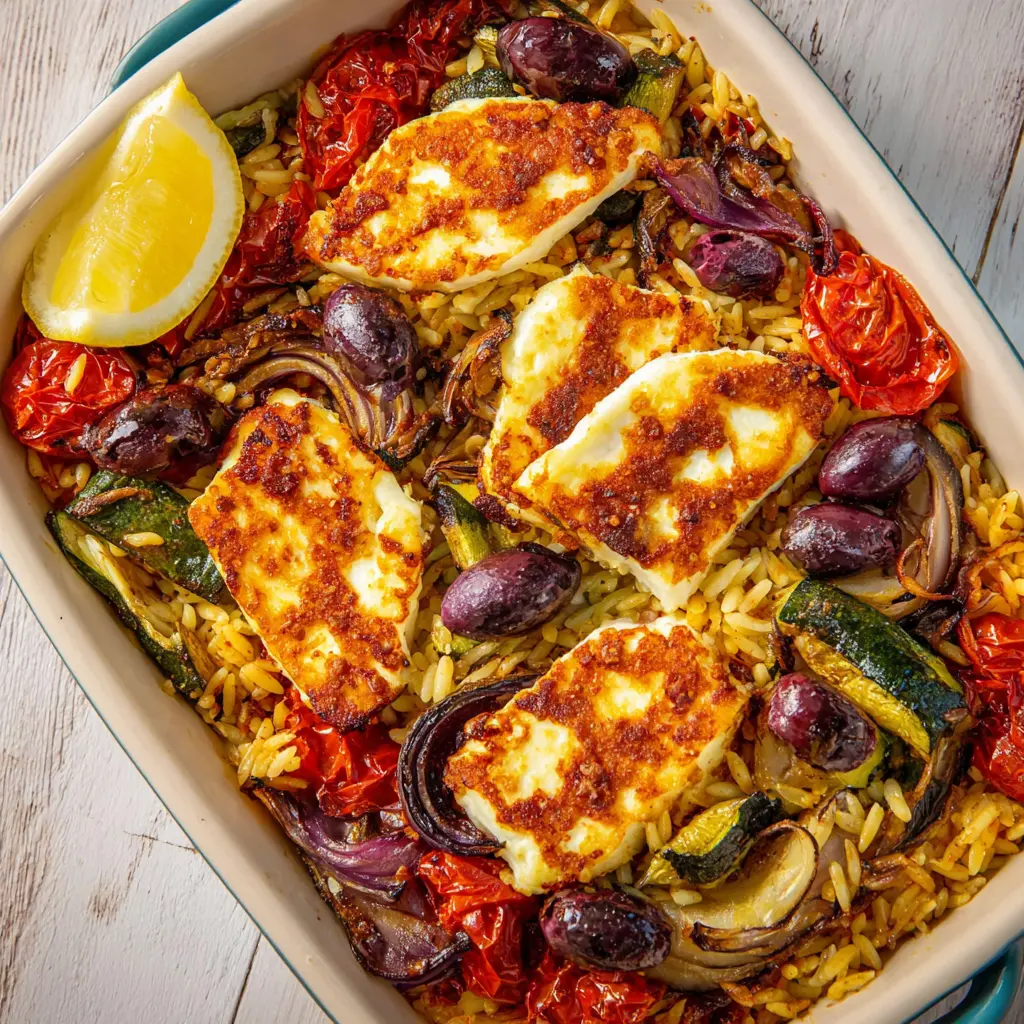
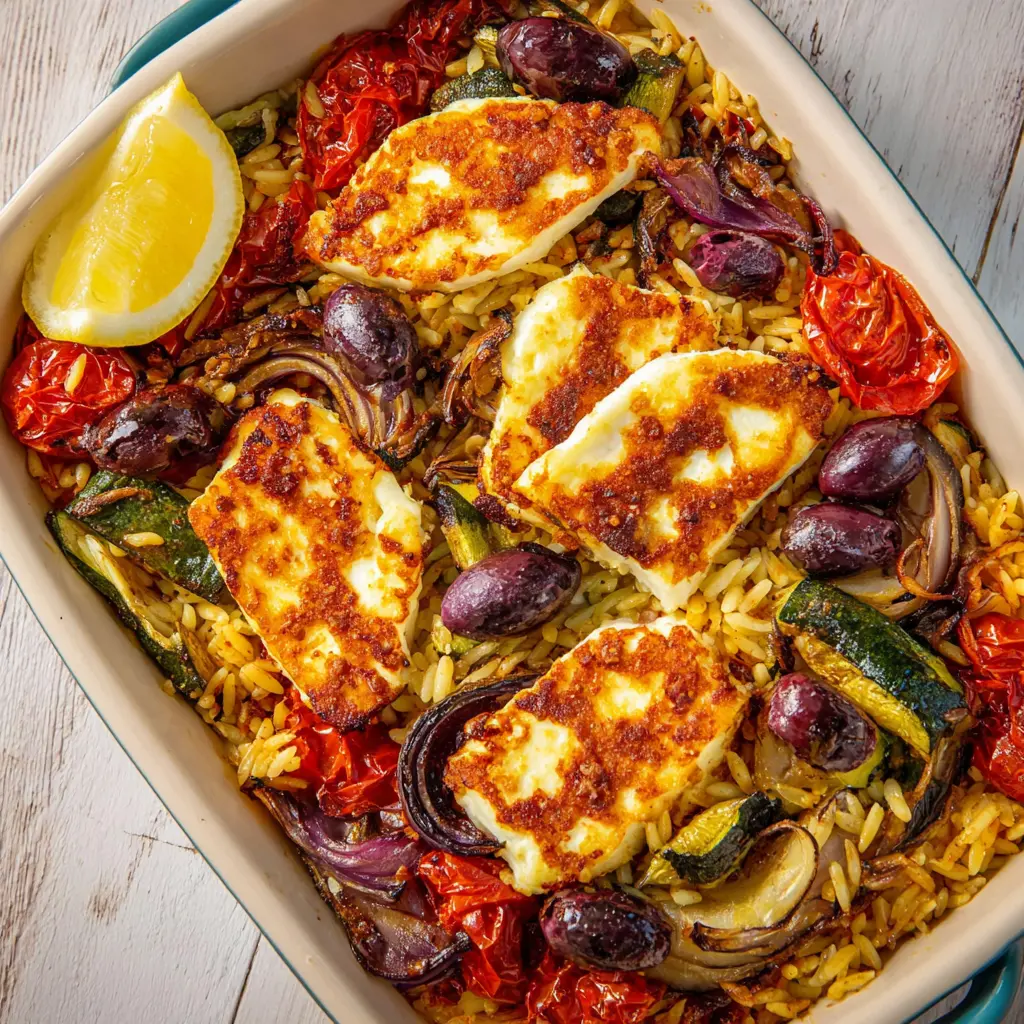
California Baked Orzo with Halloumi and Roasted Summer Vegetables
Ingredients
Method
- Preheat your oven to 350°F.
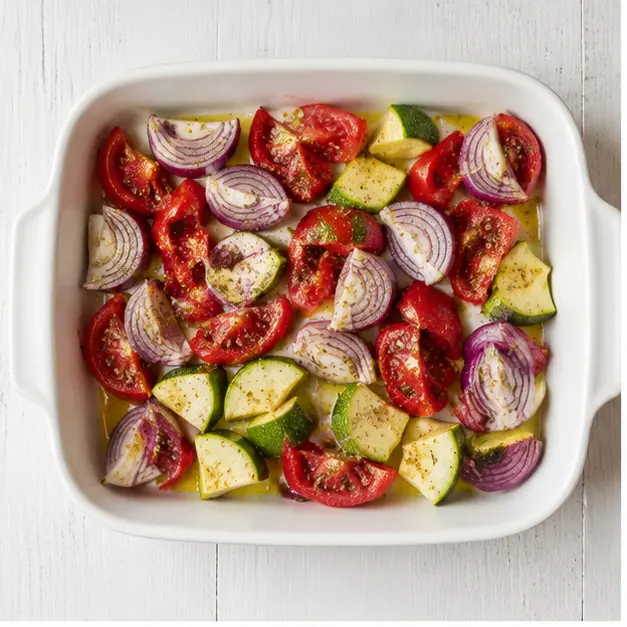
- In a large baking dish or rimmed sheet pan, combine the tomato wedges, onion wedges, and zucchini chunks. Drizzle with 2 1/2 tablespoons olive oil, sprinkle with dried oregano, and season generously with salt and pepper. Toss everything to coat evenly.
- Roast for 25 minutes, until the vegetables are tender and starting to caramelize.
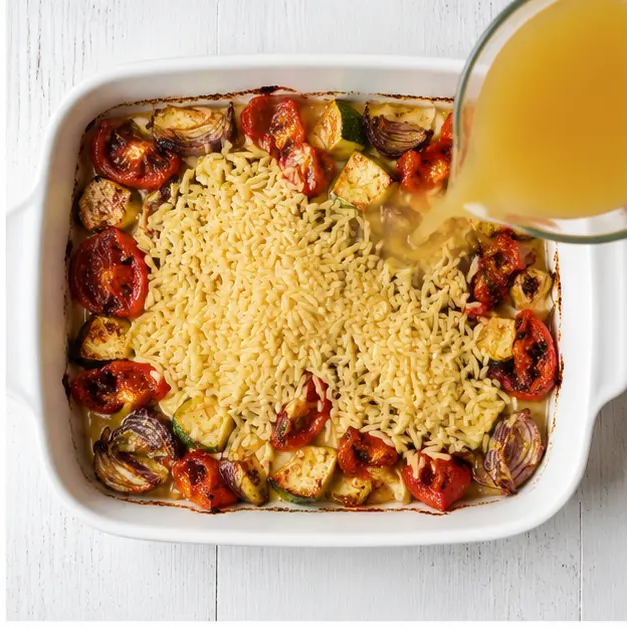
- Remove the pan from the oven. Scatter the orzo over the roasted vegetables, then pour in the vegetable broth, stirring gently so the orzo is mostly submerged. Add the Kalamata olives and stir once more.
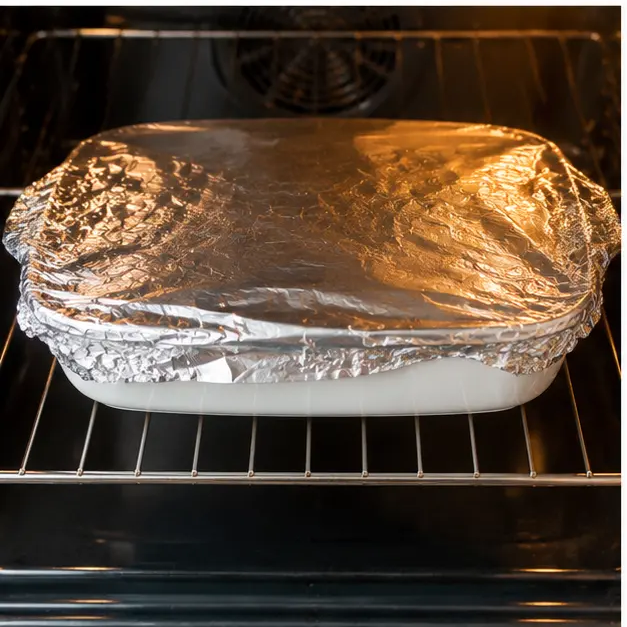
- Cover the dish tightly with aluminum foil and return to the oven. Bake for 25 minutes, until the orzo is tender and has absorbed most of the liquid.
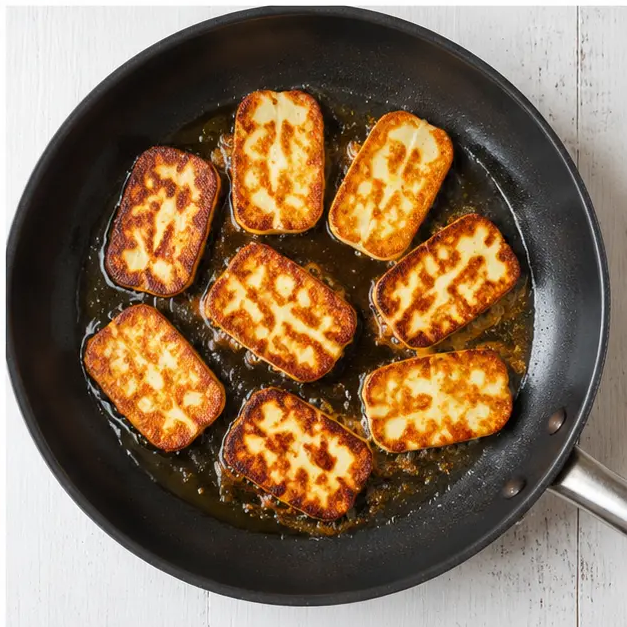
- While the orzo bakes, heat 1/2 tablespoon olive oil in a nonstick skillet over medium heat. Fry the halloumi slices for 2-3 minutes per side, until golden brown and crispy.
- Once the orzo is fully cooked, drizzle the red wine vinegar and extra-virgin olive oil over the top. Stir gently to combine.
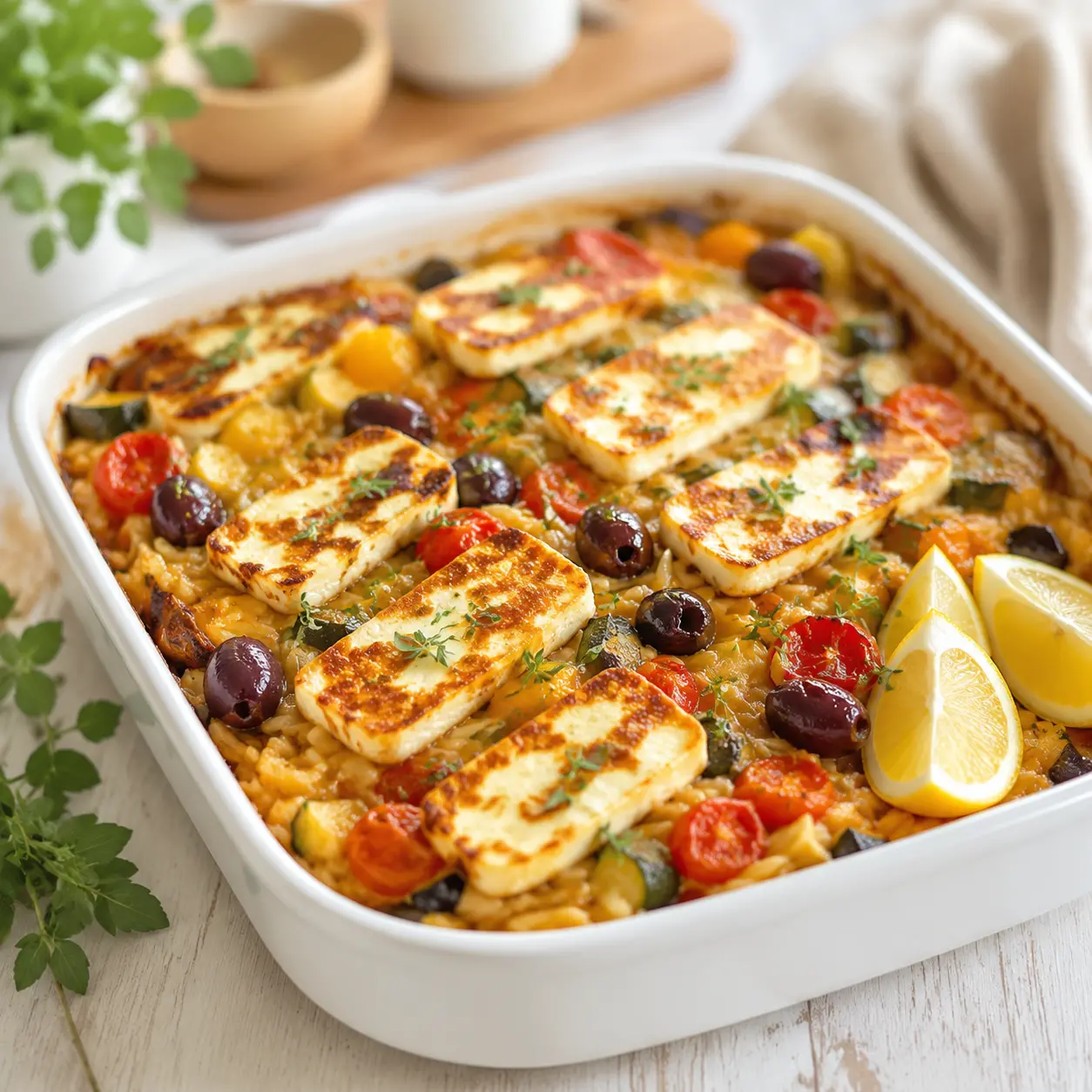
- Arrange the fried halloumi on top of the orzo and vegetables. Garnish with Meyer lemon wedges and serve warm.
Nutrition
Notes
Tried this recipe?
Let us know how it was!Why This Baked Orzo with Halloumi Works
It’s 5pm. The AC is struggling against a July heatwave. You need dinner that won’t turn your kitchen into a sauna, but you also need it to be… you know, good. Something that gets the kids excited and doesn’t leave you with a mountain of dishes. This is where this baked orzo with halloumi comes in.
I stumbled onto this combo almost by accident. I had a block of halloumi in the fridge (a Trader Joe’s impulse buy, honestly) and a bag of orzo I’d forgotten about. The first time I made this, I used way too much broth and ended up with orzo soup. Not my finest moment. But I tweaked the ratios, learned to roast the veggies first, and figured out the halloumi trick. Now it’s my go-to for those sticky summer evenings.
This isn’t just any pasta bake. The halloumi gets this incredible golden crust while staying soft and squeaky inside. The orzo soaks up all the tomato and herb flavors from the roasted veggies. And it’s all done in one dish. One dish. That’s the kind of math I can get behind on a Tuesday.
This Mediterranean baked orzo is hearty enough to be a main, but it’s also fantastic as a side. Plus, it’s vegetarian. So it works for Meatless Monday or just a lighter dinner.
Ingredients You’ll Need
Let’s talk about what goes into this dish. The beauty of this baked orzo recipe is that it uses simple, fresh ingredients. Nothing weird, nothing you have to hunt down at three different stores. Well, except maybe the halloumi. But that’s getting easier to find these days.
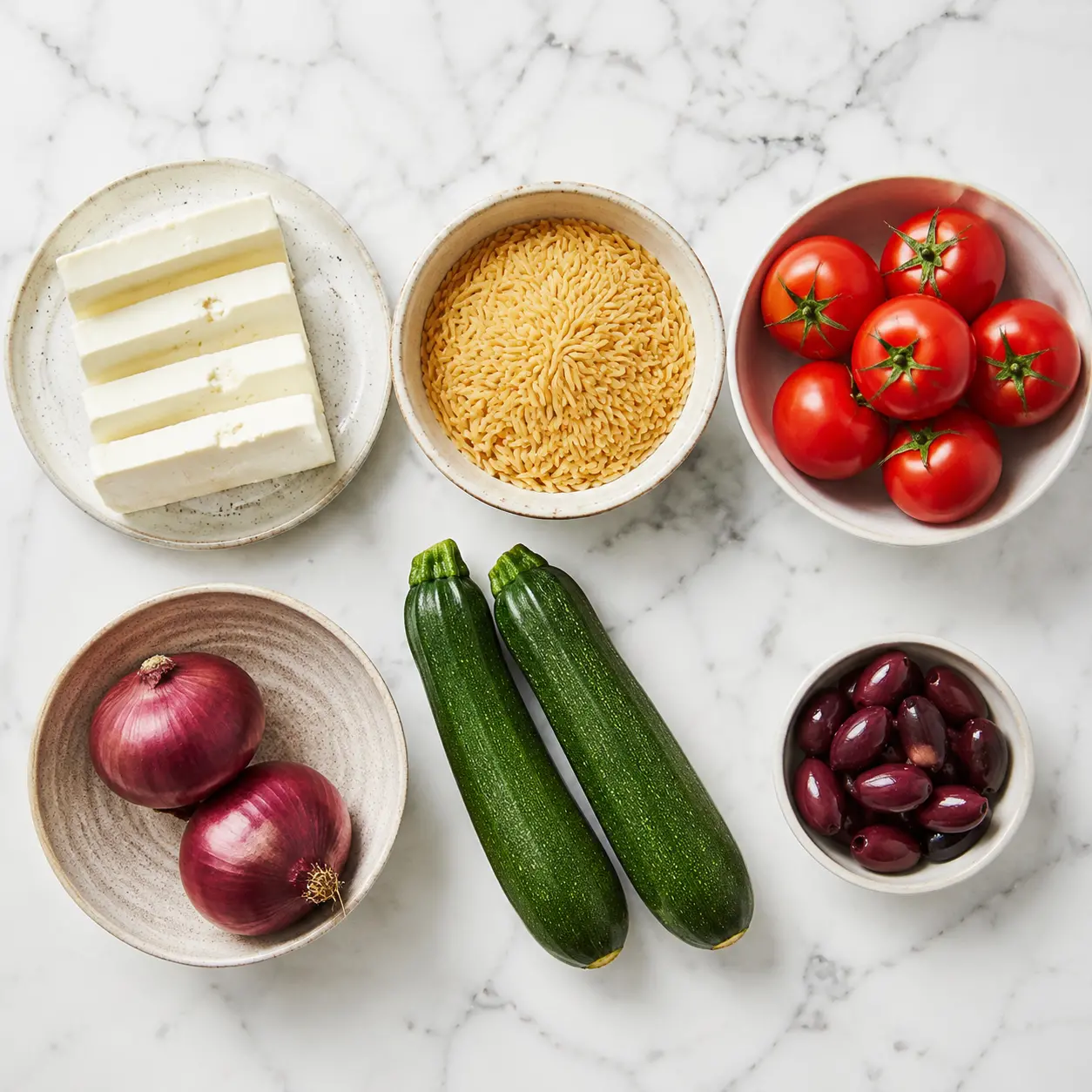
Here’s what you’ll need to grab:
- Halloumi cheese – The star of the show. It’s a semi-hard, brined cheese from Cyprus that has a high melting point. That means it doesn’t turn into a puddle in the oven. Instead, it gets crispy and golden on the outside while staying soft and, yes, squeaky on the inside. That squeak is a feature, not a bug. I promise it’s fun.
- Orzo pasta – These little rice-shaped pasta pieces are perfect for baking. They soak up all the broth and vegetable juices without getting mushy. At least, they don’t if you get the liquid ratio right. More on that later.
- Vegetable broth – Low-sodium is best here. Halloumi is already salty, so you don’t want to overdo it. You can use chicken broth if you want, but keep it low-sodium.
- Summer vegetables – Salad tomatoes (cut into wedges), red onions (wedges), and zucchini (chunks). Use whatever’s fresh and in season. The farmers market is your friend here.
- Kalamata olives – They add a briny, salty pop that balances the richness of the halloumi.
- Meyer lemon – A squeeze of lemon right before serving brightens everything up. If you can’t find Meyer lemons, regular lemons work fine.
- Olive oil, dried oregano, salt, pepper – The basics. Use a good California olive oil if you have it.
- Red wine vinegar – Just a splash at the end adds acidity and depth.
About that halloumi vs feta debate: Look, feta is great. I love feta. But it’s not the same. Feta crumbles and melts. Halloumi holds its shape and gets that gorgeous golden crust. If you can’t find halloumi, you can use firm paneer or extra-firm tofu (pan-fried until golden). But for the full experience, try to find the real deal. Whole Foods usually has it, and I’ve seen it at Ralphs too.
Step-by-Step Instructions
Alright, let’s get cooking. The process is simple, but there are a few key moments where you can make or break the dish. I’ll walk you through each stage.
Stage 1: Roast the Vegetables
First things first, preheat your oven to 350°F. While that’s heating up, grab a large baking dish or a rimmed sheet pan. Toss your tomato wedges, onion wedges, and zucchini chunks with 2 1/2 tablespoons of olive oil, a tablespoon of dried oregano, and a good pinch of salt and pepper. Make sure everything’s coated evenly. Then pop it in the oven for 25 minutes. You want the vegetables tender and starting to caramelize around the edges. The smell at this point is incredible. The oregano gets all fragrant and the tomatoes start to release their juices. This is where the flavor foundation is built.
Stage 2: Bake the Orzo
After 25 minutes, pull the pan out. Scatter your 1 1/4 cups of orzo right over the roasted vegetables. Then pour in 2 1/2 cups of vegetable broth. Give it a gentle stir so the orzo is mostly submerged. Toss in the Kalamata olives and stir once more. Now, cover the dish tightly with aluminum foil. This is crucial. The foil traps the steam so the orzo cooks evenly and absorbs all that goodness. Return it to the oven for another 25 minutes. The orzo should be tender and have absorbed most of the liquid. Don’t overcook it. You want it al dente, not mushy. If it’s still a bit soupy after 25 minutes, leave the foil off for 5 more minutes.
Stage 3: Fry the Halloumi
While the orzo is baking, get your halloumi ready. Slice it into 1/4-inch thick pieces. Heat 1/2 tablespoon of olive oil in a nonstick skillet over medium heat. Fry the halloumi slices for about 2-3 minutes per side, until they’re golden brown and crispy. Don’t crowd the pan. Do it in batches if you need to. The halloumi will release some water as it cooks – that’s normal. Just let it evaporate and keep cooking until it’s beautifully browned. Set the fried halloumi aside on a plate.
Stage 4: Finish and Serve
Once the orzo is done, take it out of the oven. Drizzle 1 tablespoon of red wine vinegar and 2 tablespoons of extra-virgin olive oil over the top. Stir gently to combine. Now, arrange the fried halloumi slices on top of the orzo and vegetables. Don’t stir them in. You want them to stay crispy on top. Garnish with Meyer lemon wedges and serve warm. That first bite, where you get the creamy orzo, the sweet roasted tomato, and that salty, squeaky halloumi… it’s something special.
Tips for the Best Results
I’ve made this baked orzo with halloumi enough times to know where things can go wrong. Here are my best tips to make sure yours turns out perfect.
Common Mistakes to Avoid
❌ Overcooking the orzo: Orzo can go from perfectly al dente to mushy in a minute. Check it at the 25-minute mark. The liquid should be mostly absorbed and the orzo should be tender but still have a slight bite.
❌ Not cutting vegetables into similar-sized pieces: If your zucchini chunks are huge and your tomato wedges are tiny, they won’t cook evenly. Aim for uniform 1-inch pieces.
❌ Stirring the halloumi into the dish before baking: Don’t do it. The halloumi will get soggy and lose its texture. Always fry it separately and arrange it on top at the end.
❌ Not covering the dish tightly with foil: The foil traps steam, which is essential for cooking the orzo. If it’s loose, the orzo will dry out before it’s fully cooked.
❌ Using too much broth: I learned this the hard way. 2 1/2 cups for 1 1/4 cups of orzo is the sweet spot. Too much and you’ll have orzo soup.
More tips for success:
- Choose fresh, seasonal vegetables. This is a summer dish, so use tomatoes and zucchini at their peak. They have the most flavor.
- Fry the halloumi towards the end and set it aside until you’re ready to serve. That way it stays crispy.
- Stir the orzo after 10-15 minutes if you notice it sticking to the bottom. But once you add the halloumi on top, leave it alone.
- Visual cues for doneness: The orzo should look plump and have absorbed most of the liquid. The top should be golden brown, like a summer tan. The halloumi should be deeply golden with crispy edges.
- What’s a good pan for this dish? A 9×13-inch baking dish or a large rimmed sheet pan works great. You want something with enough surface area so the orzo cooks in an even layer.
Storage and Reheating
This dish is great for meal prep, but there are a few things to keep in mind. The halloumi will lose its crispiness as it sits, but the flavors actually get better overnight.
Storing leftovers: Let the dish cool completely. Store it in an airtight container in the fridge for up to 3 days. If you can, store the halloumi separately to keep it from getting soggy.
Reheating: The best way to reheat is in the oven at 350°F, covered with foil, with a splash of broth or water to add moisture. Bake for 15-20 minutes until heated through. You can also microwave individual portions for 2-3 minutes with a splash of water. The halloumi won’t be as crispy, but it’ll still be delicious.
Can you freeze it? Yes, but the texture of the halloumi will change. It’ll be more rubbery after thawing. If you want to freeze it, I’d recommend freezing the orzo and vegetables separately from the halloumi. Thaw overnight in the fridge and reheat as above.
Make-ahead tip: You can roast the vegetables and fry the halloumi a day ahead. Store them separately in the fridge. Then assemble and bake the orzo just before serving. This saves you about 30 minutes on the day you’re serving it.
Frequently Asked Questions
More Mediterranean Recipes to Try
If you loved this baked orzo with halloumi, here are a few more of my favorite Mediterranean-inspired dishes. They’re all about big flavors, fresh ingredients, and minimal fuss.
- Greek Salad with Lemon-Herb Vinaigrette – The perfect side dish for this orzo bake. Crisp cucumbers, juicy tomatoes, salty feta, and a bright lemon dressing.
- One-Pan Lemon Chicken with Potatoes and Olives – Another weeknight winner. Everything roasts together on one sheet pan for a complete meal.
- Mediterranean Chickpea and Spinach Stew – A hearty, vegetarian stew that’s packed with flavor. Serve with crusty bread for dipping.
- Roasted Eggplant and Red Pepper Hummus – Smoky, creamy, and perfect for snacking. Great for meal prep or as an appetizer.
I’d love to see how your baked orzo with halloumi turns out. Tag me when you pull your pan from the oven – I want to see that golden halloumi shine! And if you’re looking for more inspiration, come follow me on Pinterest where I’m always pinning easy weeknight dinners and Mediterranean favorites. Happy cooking!
Source: Nutritional Information
How do you prevent halloumi from becoming too rubbery when baking it with orzo?
The key is to fry the halloumi separately in a skillet until golden brown, then arrange it on top of the baked orzo just before serving. Don’t bake it with the orzo or stir it in. This keeps it crispy on the outside and soft on the inside instead of turning rubbery.
Can I use a different type of cheese instead of halloumi in this Mediterranean baked orzo recipe?
Absolutely. If you can’t find halloumi, firm paneer or extra-firm tofu (pan-fried until golden) are the best substitutes. Feta also works, but it will crumble and melt into the orzo rather than staying in distinct pieces. Mozzarella is an option too, but it won’t have that signature squeaky texture.
What is the best way to roast summer vegetables for a baked orzo with halloumi?
Cut your tomatoes, red onions, and zucchini into similar-sized pieces (about 1-inch chunks). Toss them with olive oil, dried oregano, salt, and pepper. Roast at 350°F for 25 minutes until tender and starting to caramelize. Using a rimmed sheet pan helps them roast evenly instead of steaming.
How long does this California baked orzo with halloumi keep in the refrigerator?
Store leftovers in an airtight container in the fridge for up to 3 days. For best results, keep the halloumi separate from the orzo and vegetables. Reheat in the oven at 350°F with a splash of broth, or microwave individual portions for 2-3 minutes with a little water.
Can I substitute vegetable broth with chicken broth in this baked orzo with halloumi recipe?
Yes, you can use chicken broth instead of vegetable broth. It will add a slightly richer flavor. Just make sure to use low-sodium broth, since halloumi is already quite salty. The cooking time and liquid ratio (2 1/2 cups broth to 1 1/4 cups orzo) stay the same.
Can I use a different pasta shape instead of orzo?
You can, but you’ll need to adjust the cooking time and liquid ratio. Small pasta shapes like fusilli, macaroni, or ditalini work well. Check the package directions and add about 5-10 minutes to the covered baking time. The orzo is ideal because it absorbs liquid quickly and cooks evenly.
How do I meal-prep this recipe or reheat it?
Roast the vegetables and fry the halloumi a day ahead. Store them separately in the fridge. On serving day, assemble the orzo with the roasted veggies and broth, bake covered for 25 minutes, then top with the reheated halloumi. Leftovers keep for 3 days and reheat well with a splash of broth.
How do I make sure my orzo doesn’t dry out?
Cover the dish tightly with aluminum foil while baking. This traps steam and keeps the orzo moist. Use the correct liquid ratio (2 1/2 cups broth to 1 1/4 cups orzo). If reheating leftovers, add a splash of water or broth before microwaving or baking to restore moisture.
What is a good pan for this dish?
A 9×13-inch baking dish or a large rimmed sheet pan works perfectly. You want a pan that’s wide enough so the orzo cooks in an even layer. A dish that’s too deep or too small will result in uneven cooking. Glass, ceramic, or metal all work fine.
Would this work with a different type of pasta?
Small pasta shapes like fusilli, spirali, or ditalini are good alternatives. Avoid large pasta shapes like lasagna sheets or shells. The cooking time will vary, so check for doneness at 20 minutes and add time as needed. Orzo is the most reliable choice for this specific dish.
5 Responses
Great recipe, but I found the orzo a bit undercooked after the suggested time. I think my oven runs cool. Should I parboil the orzo first next time, or just add a little more stock and bake longer?
Hi Mark, glad you liked it! I’d recommend adding a splash more stock and baking for an extra 5-10 minutes if your oven runs cool. Parboiling isn’t necessary since the orzo cooks in the oven, but you can also cover the dish with foil for the first 20 minutes to trap more steam.
I substituted the halloumi with feta because that’s what I had, and it was still tasty but obviously different. The roasted veggies were the star for me. Next time I’ll use the halloumi as written!
This was a hit with the whole family, even my picky kids ate it. Only change I made was adding some grilled chicken on the side for the meat-eaters. The one-dish cleanup is a lifesaver on busy nights.
Made this last night and it was absolutely delicious! The halloumi got perfectly crispy on top. I added some roasted red peppers I had lying around and it worked great. Will definitely make again.