
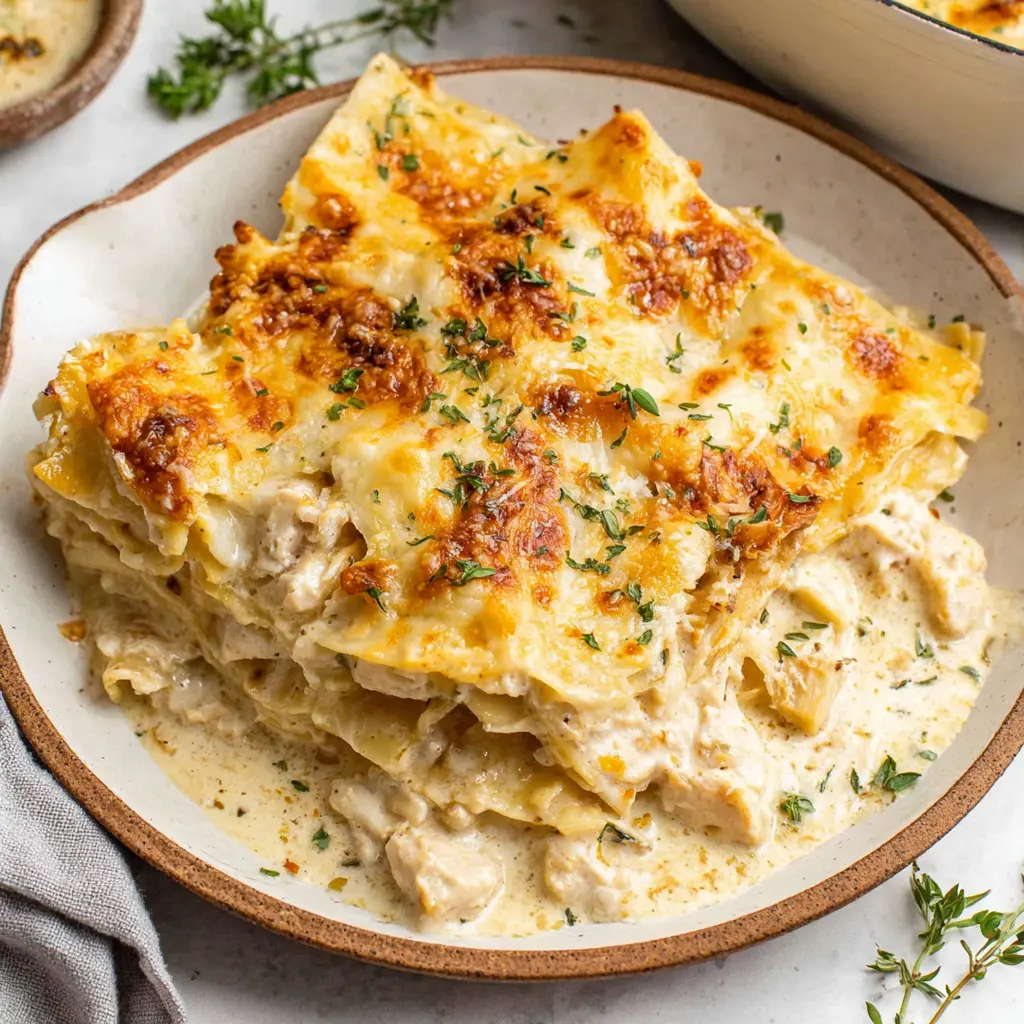
Why You’ll Love This White Chicken Lasagna
You know that craving for something creamy and comforting, but you’re tired of the same old red sauce? I get it. There are only so many spaghetti and meatball nights a person can handle before your soul starts begging for a change. That’s exactly how this white chicken lasagna was born in my kitchen.
I still remember my first attempt at a white sauce. It was lumpy. And I mean lumpy. Little flour bombs floating in a sea of milk. My kids took one look and asked if we could order pizza. But I refused to give up. After a few more tries (and a lot of whisking), I figured out the secret to a smooth, creamy sauce that doesn’t require a culinary degree.
This version? It’s the one I make on repeat. It’s a white chicken lasagna that comes together in a single skillet, uses broken lasagna noodles (no boiling required), and delivers that rich, cheesy comfort we all crave. And the best part? It takes just 30 minutes from start to finish. I promise, this one’s a game-changer for busy weeknights.
Ingredient Notes
Let’s talk about what goes into this creamy chicken lasagna. The ingredient list is short, but each one does something important. Here’s what you’ll need and why it matters.
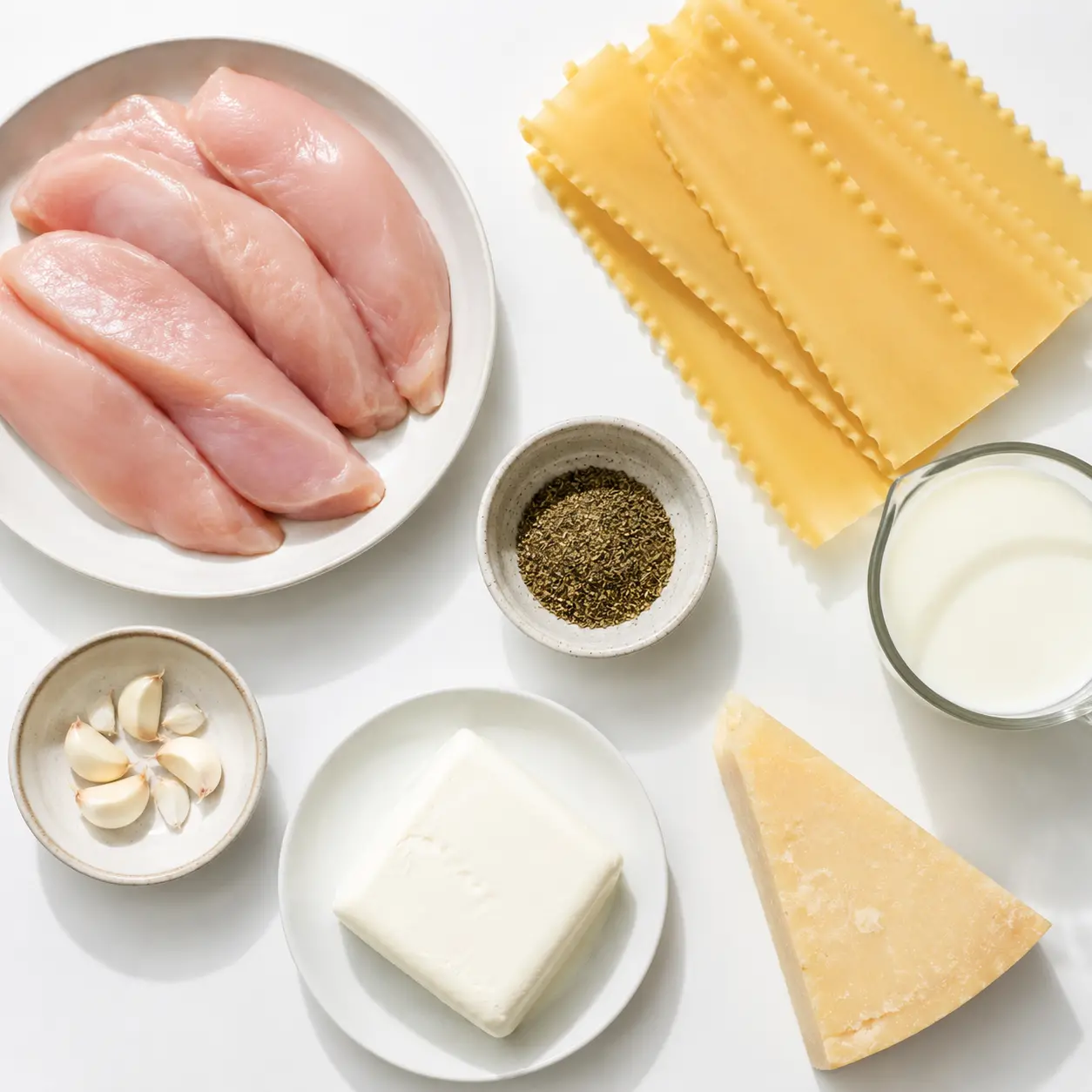
- Olive oil: For searing the chicken and sautéing the garlic. A good quality extra-virgin works, but regular is fine too.
- Boneless skinless chicken fillets: About 1 pound total. I use fillets because they cook quickly and shred beautifully. You can also use rotisserie chicken to save even more time.
- Garlic: Two cloves, minced. Fresh is best here. Skip the jarred stuff if you can.
- Italian seasoning: This blend adds that classic herb flavor without needing a dozen different jars.
- Low-sodium chicken broth: The base of our sauce. Low-sodium lets you control the salt level.
- Heavy cream: This is what makes the sauce luxuriously creamy. For a lighter version, you can swap in whole milk or evaporated milk, but you’ll want to add a tablespoon of cornstarch to help it thicken.
- Lasagna noodles: You’ll need about 10 pieces, broken into 2-inch chunks. No-boil noodles work perfectly here because they cook right in the sauce.
- Mozzarella cheese: Shredded, about 6 ounces. This gives you that glorious stretchy, melty top.
- Parmesan cheese: Just 2 tablespoons of grated Parmesan adds a salty, nutty finish.
Don’t worry if you only have mozzarella and no Parmesan. That’s fine. No heavy cream? Use milk and a little extra butter. This white chicken lasagna is forgiving. I’ve made it with what I had on hand more times than I can count.
How to Make White Chicken Lasagna
Alright, let’s get cooking. I’ll walk you through the four main stages. Trust me, if I can nail this after my lumpy sauce disaster, you’ve got this.
Stage 1: Sear the Chicken
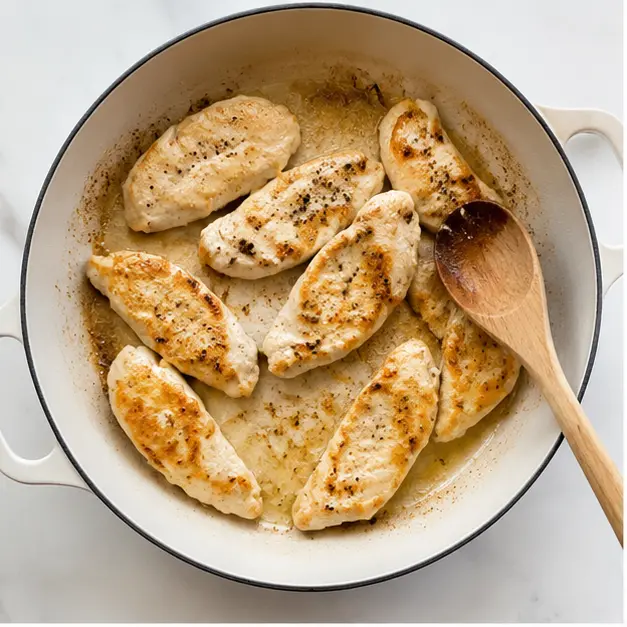
Start by heating the olive oil in a large skillet over medium heat. While that warms up, season your chicken fillets lightly with salt and pepper. Don’t go overboard you can adjust later. Place them in the skillet and let them cook undisturbed for 3-5 minutes per side. You’re looking for a golden brown crust. That browning adds so much flavor. Once they’re done, transfer the chicken to a plate and set it aside.
Stage 2: Build the Flavor Base
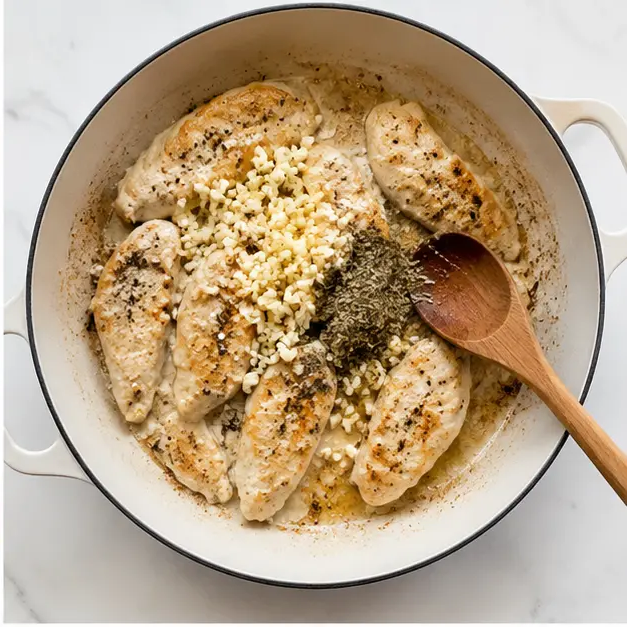
Now, add the minced garlic, Italian seasoning, 1/2 teaspoon salt, and 1/4 teaspoon pepper to the same skillet. Cook for about 1 minute, stirring constantly. Your kitchen will start smelling incredible. Then pour in the chicken broth. Here’s the important part: use a wooden spoon to scrape up all those browned bits from the bottom of the pan. That’s where the flavor lives. We’re deglazing the pan, and it makes all the difference.
Stage 3: Create the Creamy Sauce
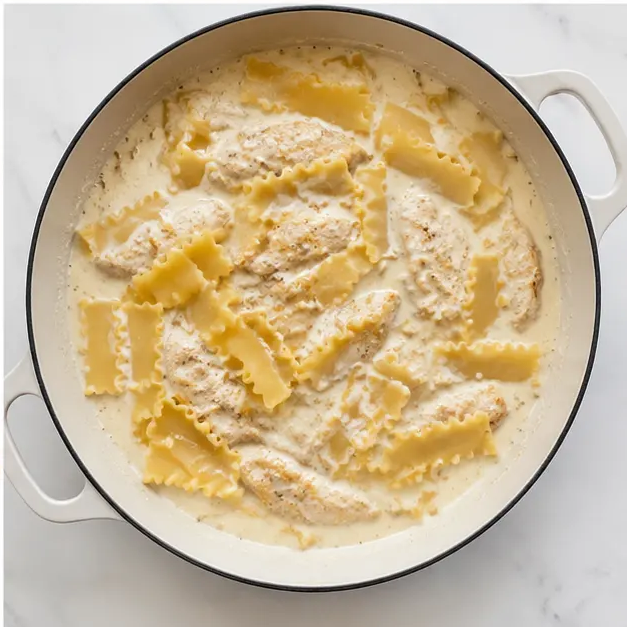
Stir in the heavy cream and bring the mixture to a simmer over medium-high heat. The sauce should look smooth and slightly thickened. Now add the broken lasagna noodles, stirring to combine. Return everything to a simmer, then reduce the heat to medium-low. Cover the skillet and let it cook for 10-15 minutes, until the noodles are al dente. The sauce will thicken as it rests. If it’s thinner than you like, whisk together 1 tablespoon water and 1 tablespoon cornstarch, then stir it into the simmering sauce. It’ll thicken right up.
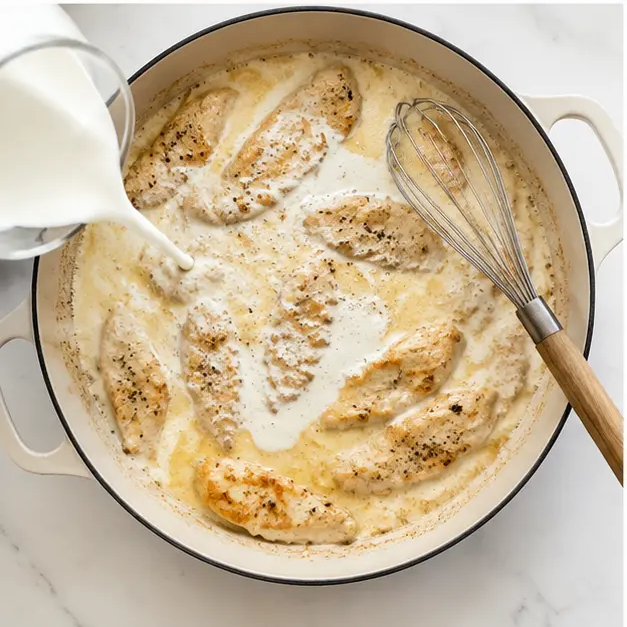
Stage 4: Finish and Serve
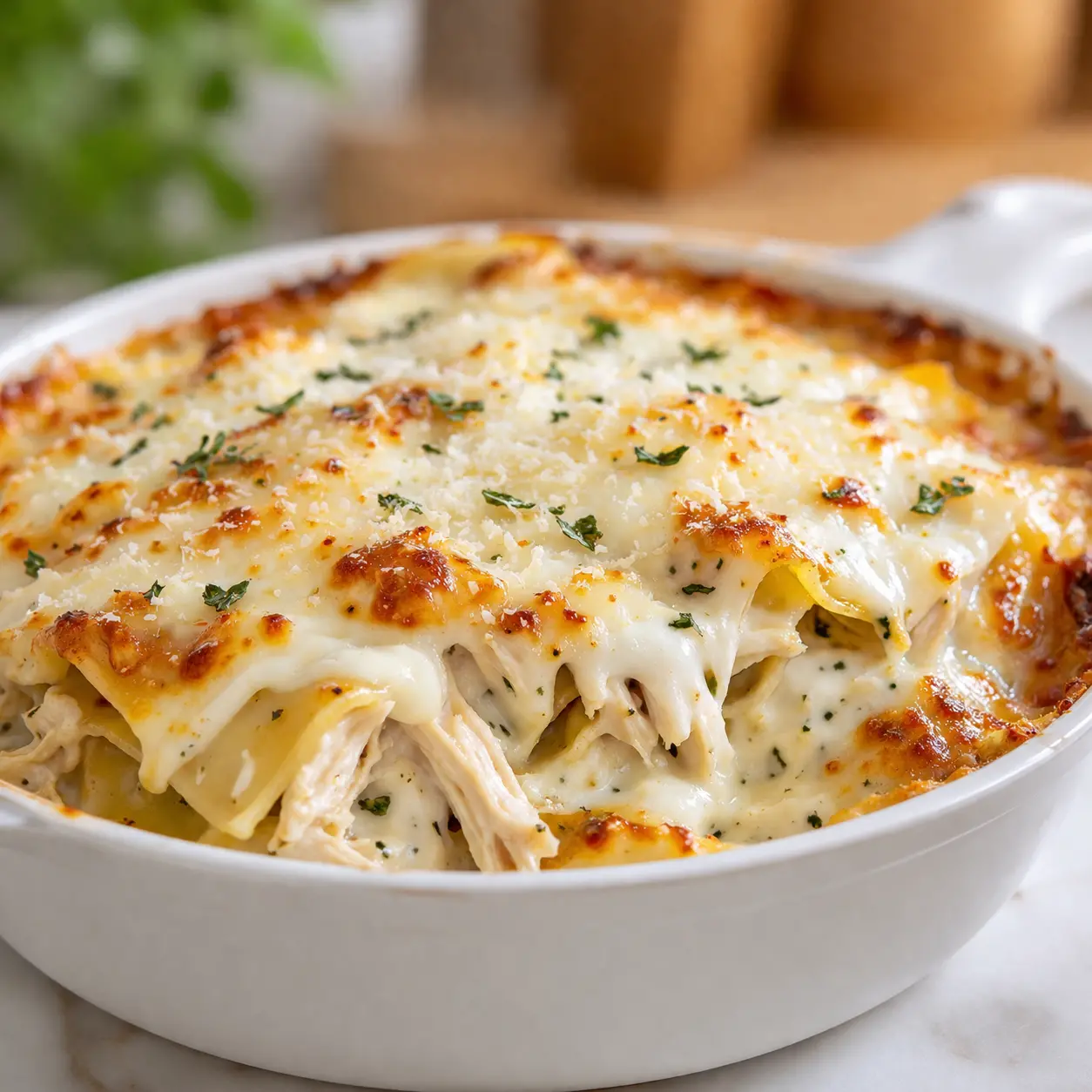
Slice or shred the cooked chicken and return it to the skillet. Sprinkle the mozzarella and Parmesan over the top. Cover to let the cheese melt, or place the skillet under the broiler for 2-3 minutes until it’s bubbly and golden. When you remove the foil, you’ll hear it bubbling. That sound? Pure satisfaction. Serve immediately. Don’t worry if your layers aren’t perfect it will taste amazing anyway.
Serving Suggestions
This white chicken lasagna is a meal in itself, but I love pairing it with something fresh on the side. A simple tossed green salad with a tangy vinaigrette cuts through the richness perfectly. Or go with a Greek salad crunchy cucumbers, juicy tomatoes, and tangy feta cheese. The acidity balances the creamy sauce beautifully.
Garlic bread is always a hit, too. Something to soak up any extra sauce on the plate. And if you’re feeling fancy, a side of roasted asparagus or steamed broccoli adds color and a little crunch.
For a summer gathering, this is perfect. Make it ahead, bake it when guests arrive, and watch them swoon. It’s the kind of dish that feels special without requiring chef-level skills.
Make-Ahead Instructions
This white chicken lasagna is a dream for meal prep. You’ve got options, and I’ll walk you through both.
For unbaked lasagna: Assemble the entire dish in a freezer-safe baking dish. Wrap it in two layers of heavy-duty foil, label it, and freeze for up to 4 months. When you’re ready, thaw it in the refrigerator for 36-48 hours, then bake as directed with an extra 20-30 minutes.
For baked lasagna: Cool it completely after baking. Wrap it with foil, refrigerate until cold, then wrap again and freeze for up to 4 months. To reheat, thaw in the refrigerator, then warm in a 350°F oven covered with foil for an extra 15-20 minutes.
I like to make a double batch on Sunday. One for dinner that night, one for the freezer. Future me is always grateful.
Storage & Reheating
Leftovers? Yes, please. This white chicken lasagna keeps beautifully. Store any leftovers in an airtight container in the fridge for up to 3 days. The sauce might thicken a bit as it sits, but that’s fine.
To reheat, you’ve got two options. Microwave individual portions for about 2 minutes, stirring halfway through. Or for a larger portion, place it in a 350°F oven covered with foil until heated through, about 15-20 minutes. Add a splash of milk or broth if the sauce seems too thick.
You can also freeze individual portions for up to 3 months. Just know that cream-based sauces may separate slightly when thawed. A quick stir usually brings it back together.
Common Questions
Final Thoughts
This white chicken lasagna has become a staple in my house for a reason. It’s creamy, cheesy, and comes together in one skillet with minimal fuss. No boiling noodles, no complicated steps, no mountain of dishes. Just pure, comforting goodness that makes everyone at the table happy.
I hope you give it a try. And when you do, don’t stress about perfection. The first time I made this, the sauce was a little thin and the noodles were slightly underdone. But you know what? We ate every bite. And the next time, it was even better. That’s the beauty of cooking you learn and adjust.
If you’re looking for more dinner inspiration, I’d love for you to follow me on Pinterest. I pin all my favorite recipes there, including more one-skillet wonders like this one.
Let me know in the comments how yours turned out! Did you add spinach? Swap the chicken for sausage? I’d love to hear about your version.
Expert Notes & Data Insights
I’ve made this white chicken lasagna more times than I can count, and I’ve learned a few extra things along the way. Let me share some of those little nuggets that make a big difference.
Why This Recipe Works (The Science Bit)
You know how some creamy sauces separate or turn grainy? That’s because dairy can be finicky with heat. Here’s the trick: when you add the heavy cream to the broth, you’re creating an emulsion. The fat in the cream helps stabilize the sauce, preventing it from breaking. And because we’re using no-boil noodles, they absorb just the right amount of liquid as they cook, releasing starches that naturally thicken the sauce. No roux needed. No lumps. Just a silky, creamy result every time.
I stumbled onto this method after a few failed attempts with traditional roux-based sauces. The first time I tried this shortcut, I was skeptical. But when I lifted the lid and saw that glossy, velvety sauce hugging the noodles, I knew I’d found something special. It’s the kind of kitchen win that makes you feel like a genius, even though it’s really just smart chemistry.
Common Mistakes to Avoid
I’ve made plenty of mistakes so you don’t have to. Here are the big ones to watch out for.
- Overcooking the noodles: No-boil noodles are delicate. Cook them just until al dente, about 10-12 minutes. If you cook them too long, they’ll turn mushy. Trust me, I’ve eaten my share of noodle mush. Not good.
- Sauce too thin: If your sauce looks runny after adding the noodles, don’t panic. The noodles will absorb liquid as they cook. But if it’s still thin after 10 minutes, whisk together 1 tablespoon cornstarch and 1 tablespoon water, then stir it into the simmering sauce. It’ll thicken in about a minute.
- Sauce too thick: The opposite problem is also possible. If the sauce thickens too much while resting, stir in a splash of milk or broth. It’ll loosen right up.
- Cheese sticking to foil: This one drove me crazy. Now I always spray the underside of the foil with nonstick cooking spray before covering the dish. No more cheese pulling off onto the foil. Game changer.
- Not seasoning enough: White sauces can be bland if you’re not careful. Taste as you go. Add a pinch of salt, a crack of pepper. The Italian seasoning helps, but don’t be shy with the salt.
Ingredient Substitution Guide
Sometimes you don’t have exactly what the recipe calls for. Here’s how to swap without sacrificing flavor.
- Heavy cream: Substitute with whole milk plus 1 tablespoon cornstarch. Whisk the cornstarch into cold milk before adding to the skillet. This mimics the thickness of cream without the extra fat.
- Mozzarella: Provolone or fontina work beautifully. They melt just as well and add a slightly different flavor.
- Parmesan: Pecorino Romano or Asiago are great substitutes. Use the same amount, but go easy on salt since these cheeses are saltier.
- Chicken broth: Vegetable broth works fine. Or use water plus a bouillon cube. Just adjust the salt accordingly.
- Italian seasoning: Mix dried basil, oregano, thyme, and rosemary. About 1/2 teaspoon each is perfect.
- No-boil noodles: Regular lasagna noodles work, but you’ll need to boil them first until al dente. Drain and add to the sauce as directed. Add about 1/4 cup extra broth to compensate for the drier noodles.
Visual Doneness Guide
How do you know when it’s perfect? Look for these signs.
- Noodles: They should be tender but still hold their shape. A fork should slide through easily with no resistance.
- Sauce: Thick enough to coat the back of a spoon. It should cling, not run.
- Cheese: Bubbly and golden on top. The edges should be slightly browned, not burnt.
- Bubbling: When you remove the foil, you should hear a gentle bubbling sound. That’s the sauce releasing steam. If it’s silent, it’s probably overcooked.
Make-Ahead Strategy with Timing
I love planning ahead. Here’s my foolproof schedule for a stress-free dinner.
- Up to 4 months ahead: Assemble the unbaked lasagna in a freezer-safe dish. Wrap tightly in two layers of foil. Freeze flat for easy stacking.
- 2 days before serving: Thaw in the refrigerator. It needs a full 36-48 hours to thaw completely. Don’t rush this.
- Day of serving: Bake as directed, adding 20-30 minutes to account for the cold dish. Check for bubbling and golden cheese.
- Leftovers: Store in the fridge for up to 3 days. Reheat individual portions in the microwave or the whole dish in a 350°F oven.
Nutritional Information (Per Serving)
Here’s the breakdown for one serving of this white chicken lasagna. Numbers are approximate and based on using whole ingredients.
- Calories: 520
- Protein: 32g
- Fat: 26g
- Carbohydrates: 38g
- Fiber: 2g
- Sugar: 4g
- Sodium: 680mg
For a lighter version, use whole milk instead of heavy cream, and reduce the mozzarella by half. You’ll save about 100 calories per serving. Still creamy, still satisfying.
Final Thoughts
This white chicken lasagna has become a staple in my house for a reason. It’s creamy, cheesy, and comes together in one skillet with minimal fuss. No boiling noodles, no complicated steps, no mountain of dishes. Just pure, comforting goodness that makes everyone at the table happy.
I hope you give it a try. And when you do, don’t stress about perfection. The first time I made this, the sauce was a little thin and the noodles were slightly underdone. But you know what? We ate every bite. And the next time, it was even better. That’s the beauty of cooking you learn and adjust.
If you’re looking for more dinner inspiration, I’d love for you to follow me on Pinterest. I pin all my favorite recipes there, including more one-skillet wonders like this one.
Let me know in the comments how yours turned out! Did you add spinach? Swap the chicken for sausage? I’d love to hear about your version.
What vegetables can I use in a white chicken lasagna?
You can add spinach, mushrooms, or finely chopped broccoli. Just cook them first before adding to the skillet. For spinach, stir it into the sauce until wilted. For mushrooms, sauté them with the garlic.
How do you make a roux?
A roux is equal parts fat and flour cooked together. For this recipe, we skip the roux and use cream and broth to create the sauce. It’s simpler and less fussy. No lumps to worry about.
What can I substitute for chicken?
Cooked Italian sausage (chicken or beef) works great. So does ground turkey or white beans for a vegetarian option. Just adjust the cooking time to match your protein.
Can I make white chicken lasagna in advance?
Yes. Assemble the entire dish in a baking dish, cover, and refrigerate for up to 24 hours before baking. Add about 10 minutes to the baking time if cooking from cold. It’s perfect for busy nights.
Is white chicken lasagna healthy?
Each serving has about 520 calories, 32g protein, and 26g fat. It’s a balanced meal with good protein. For a lighter version, use whole milk instead of heavy cream and add a cornstarch slurry to thicken.
Can I use different meat in this recipe?
Absolutely. Cooked Italian sausage, ground chicken, or even shredded rotisserie chicken all work. Just make sure any meat is fully cooked before adding it to the skillet with the noodles.