
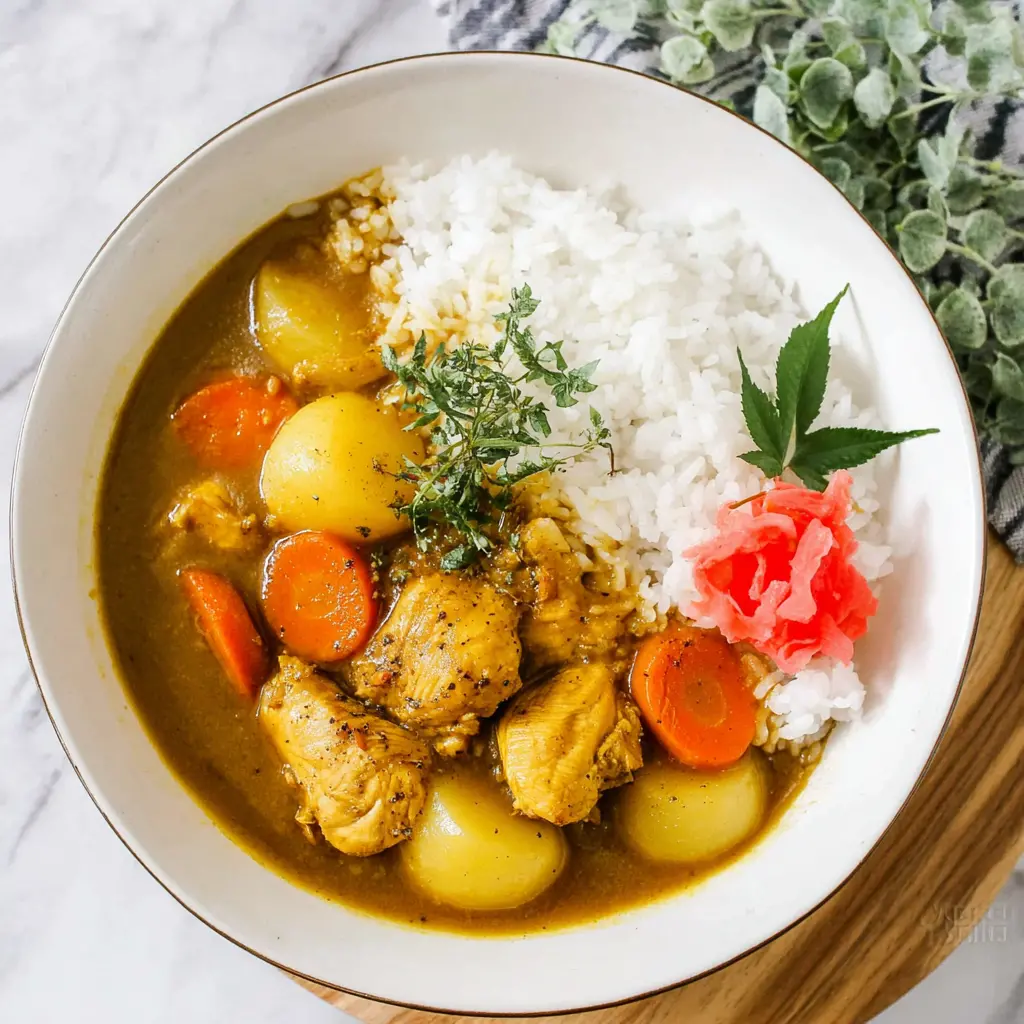
Why This Japanese Curry Recipe Works
I’ll be honest with you my first attempt at Japanese curry was a disaster. I burned the onions (like, really burned them), used way too much water, and ended up with a sad, watery soup that tasted nothing like the thick, glossy curry rice I craved from my local spot. But after a few more trials and a lot of takeout containers, I finally cracked the code.
This curry rice recipe is the one I turn to on busy weeknights when I need something comforting, fast, and guaranteed to please both the adults and the kids at the table. It uses store-bought curry roux blocks (yes, the boxed kind no shame), simple veggies, and boneless skinless chicken. Total time from start to spoon? Under an hour. Most of that is hands-off simmering.
Best part: leftovers taste even better the next day. The flavors meld overnight, the sauce gets thicker, and reheating a bowl for lunch feels like a hug in a bowl. If you’ve ever wondered how to make curry rice that rivals your favorite Japanese restaurant, this is it.
Key Ingredients for Japanese Curry
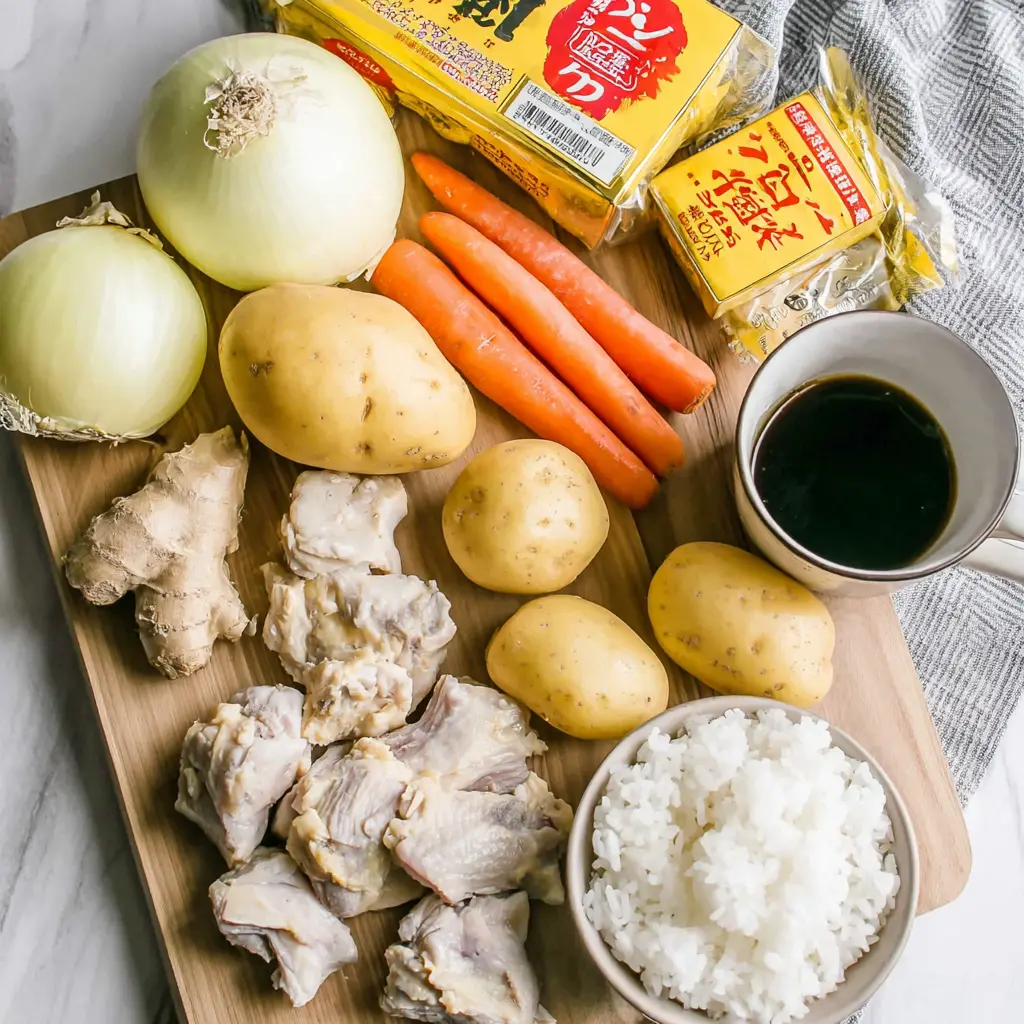
The beauty of Japanese curry is that it doesn’t require a pantry full of exotic spices. Here’s what you need and why each ingredient matters.
- Curry roux blocks – The heartbeat of this dish. Brands like S&B Golden Curry or Vermont Curry are widely available in the international aisle of most supermarkets. They come in mild, medium, and hot pick your comfort level. The roux is a concentrated mix of fat, flour, curry powder, and seasonings that melts into the broth and creates that signature thick, glossy sauce.
- Chicken – Boneless skinless chicken breast works great, but thighs stay juicier. Cut into 1-inch chunks so they cook through quickly and stay tender.
- Vegetables – Classic Japanese curry uses onions, carrots, and potatoes. Yukon Gold potatoes hold their shape better than russets. The carrots add sweetness, and the onion forms the flavor base.
- Aromatics – Fresh ginger and garlic. Don’t skip them – they give the curry depth that you can’t get from the roux alone.
- Soy sauce – Just a teaspoon. It’s optional but adds a savory umami boost that rounds out the flavor.
- Rice – Short-grain white rice (sushi rice) is traditional. It’s slightly sticky and clumps together, perfect for soaking up that thick curry sauce.
That’s it. No long list of spices, no special equipment. If you have a Dutch oven or a large pot, you’re set.
How to Make Japanese Curry (Step-by-Step)
I’ll walk you through the four major cooking stages. Think of these as the big picture the recipe card below has the exact measurements and timings.
Stage 1: Sauté the Aromatics
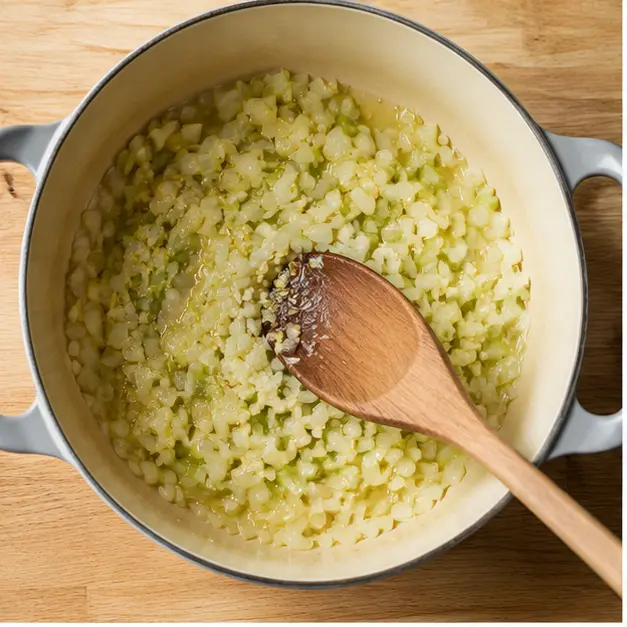
Heat a couple tablespoons of vegetable oil in a large pot over medium heat. Toss in the minced ginger and garlic and stir for about a minute. Your kitchen will start smelling incredible that warm, spicy fragrance is your cue to add the chopped onion and celery. Cook everything for about 3 minutes until the onion turns translucent. Don’t rush this step; a good flavor base starts here.
Stage 2: Brown the Chicken
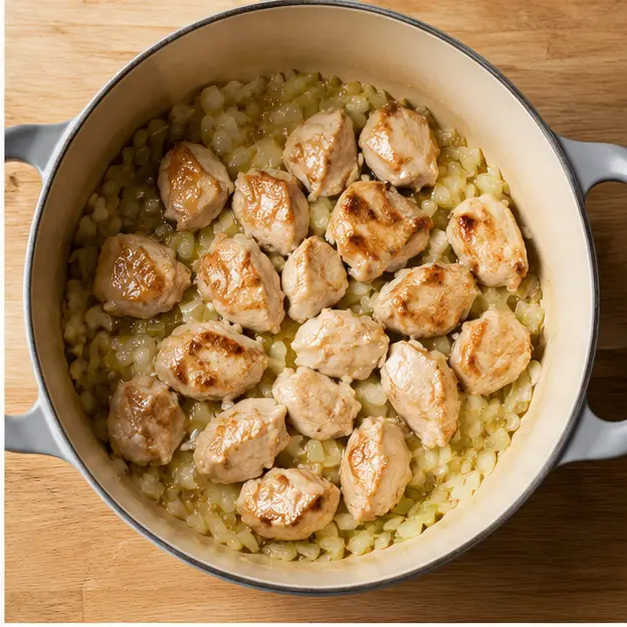
Add your chicken chunks to the pot. Cook them for 2-3 minutes, stirring occasionally, just until the outside is no longer pink. The centers will still be raw that’s fine. You’re building color and flavor, not cooking the chicken through yet. If you see any bits sticking to the bottom, that’s all good flavor waiting to be released.
Stage 3: Simmer with Vegetables
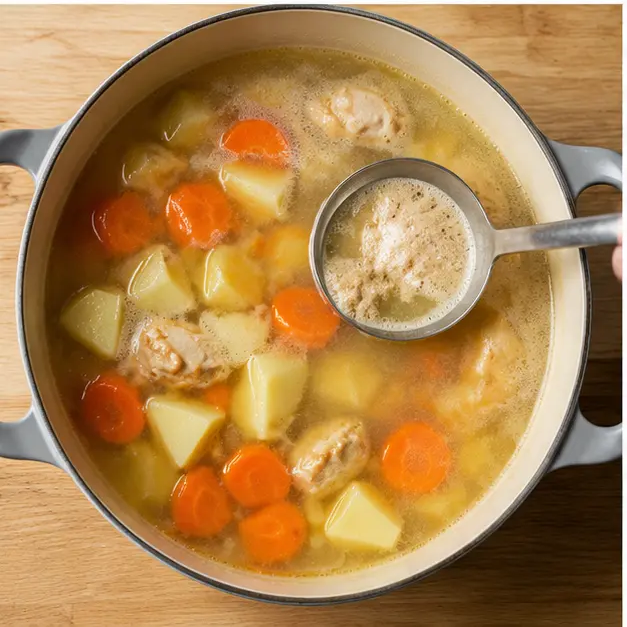
Pour in the water, then add the carrot rounds and potato cubes. I like to add a teaspoon of soy sauce at this point for extra depth. Crank the heat to high and bring everything to a boil. As it heats up, you’ll see some foam rise to the surface skim it off with a spoon. That’s just impurities, and removing it keeps your curry clear and clean-tasting. Once boiling, reduce the heat to low, cover, and let it simmer for 15 minutes. The potatoes should be tender when pierced with a fork.
Stage 4: Thicken with Roux
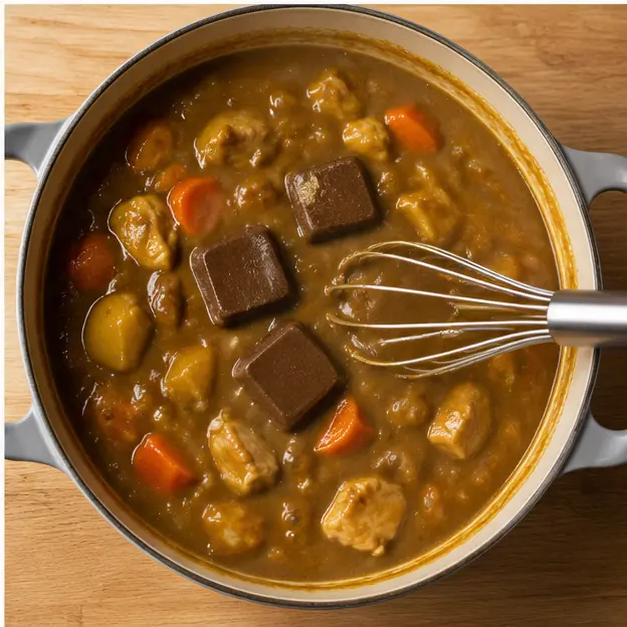
Turn off the heat. Break the curry roux blocks into pieces and add them one at a time, stirring well after each until completely dissolved. This is the magical moment the broth transforms into a thick, velvety sauce right before your eyes. Once all the roux is in, return the pot to low heat and simmer uncovered for about 5 minutes, stirring occasionally to prevent sticking. The sauce will thicken further as it cools. Taste and adjust if you want more spice, you can add a pinch of cayenne or extra curry powder.
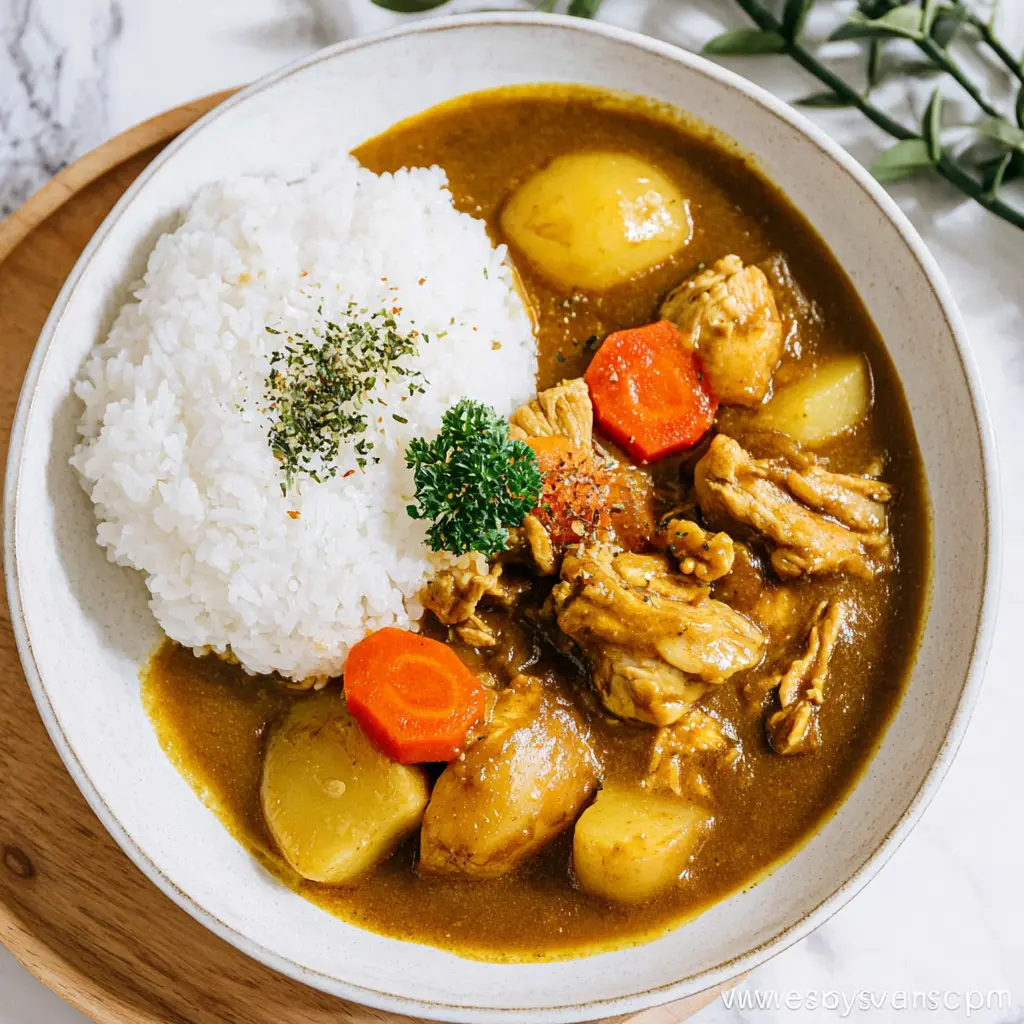
Serve immediately over hot steamed short-grain rice.
Tips for the Best Japanese Curry
Over the years I’ve picked up a few tricks that take this curry rice from good to “can I have seconds?”
- Use chicken stock instead of water – Swap half the water for chicken stock for an even richer flavor. Low-sodium works best so you can control the salt.
- Add a grated apple – A small apple, peeled and grated, adds natural sweetness and balances the savory notes. It’s a classic Japanese trick.
- A touch of dark cocoa powder – I know it sounds weird, but 1 teaspoon of unsweetened cocoa powder adds depth and a subtle earthiness. It doesn’t make it taste like chocolate, I promise.
- Read the roux package – Different brands recommend different water amounts. S&B usually calls for 3.5 cups for 6 blocks, but check yours.
- Cut vegetables uniformly – About 1-inch chunks for potatoes and 1/4-inch rounds for carrots ensure everything cooks at the same rate.
- Let it rest – Like chili or stew, Japanese curry tastes better after sitting for a few hours or overnight. The flavors marry and deepen.
Variations to Try
This base recipe is a blank canvas. Here are a few ways to change it up without starting from scratch.
- Vegetable curry – Skip the chicken and use firm tofu or a mix of mushrooms (shiitake, king oyster, shimeji). Use vegetable broth instead of water. The roux itself is usually vegetarian, but check the label.
- Beef curry – Replace chicken with 1.5 pounds of beef chuck, cut into bite-sized pieces. Brown the beef well before adding the liquid, then simmer for 30-40 minutes until tender before adding the roux.
- Katsu curry – Serve the curry sauce over crispy breaded chicken or pork cutlets. Make the cutlets while the curry simmers, then slice and place on top of the rice before ladling the sauce over.
- Spice it up – If you want more heat, add a pinch of cayenne pepper or a dash of hot sauce when you add the roux. Or use the “hot” version of the curry roux blocks.
- Add some greens – Frozen peas or green beans stirred in during the last 5 minutes of simmering add color and nutrients.
How to Store and Reheat Japanese Curry
One of the best things about this dish is how well it keeps. Here’s what I’ve learned from making big batches.
- Refrigerator – Store in an airtight container for up to 3 days. The sauce will thicken as it sits, which is totally normal.
- Freezer – Freeze without potatoes if you can (they get spongy). Portion into zip-top bags or containers and freeze for up to 1 month. To thaw, place the bag in a bowl of hot water or microwave in short bursts, stirring often.
- Reheating on the stove – Put the curry in a saucepan over medium-low heat. Add a splash of water or broth to thin it out if needed. Stir occasionally until hot throughout.
- Reheating in the microwave – Cover the bowl loosely and microwave in 30-second intervals, stirring between each, until steaming. Be careful – the center can stay cold while the edges are boiling.
Pro tip: If you freeze the curry, cook a fresh batch of rice to serve with it. Rice doesn’t freeze as well, but the curry itself is just as delicious.
What to Serve with Japanese Curry
A bowl of curry rice is a complete meal on its own, but a few accompaniments make it feel extra special. Here are my go-tos.
- Fukujinzuke – Those bright red or yellow Japanese pickles you see at restaurants. They add a crunchy, sweet-and-sour contrast that cuts through the richness of the curry. Find them in the Asian section of most supermarkets.
- Pickled ginger (gari) – The same kind you get with sushi. Its sharp, clean flavor is a great palate cleanser between bites.
- Soft-boiled egg – A jammy egg on top is pure luxury. The runny yolk mixes into the curry and rice – so good.
- Simple cucumber salad – Thinly sliced cucumbers with a little rice vinegar and sesame oil. Refreshing and light.
- Miso soup – A warm bowl of miso soup rounds out the meal beautifully.
Frequently Asked Questions
I hope this recipe becomes a regular in your weeknight dinner rotation. It’s one of those dishes that feels special but is secretly so easy. If you make it, tag me in your photos I love seeing curry rice bowls on my feed. And if you’re looking for more inspiration, come check out my Pinterest board for cozy dinner ideas. I pin new recipes every week.
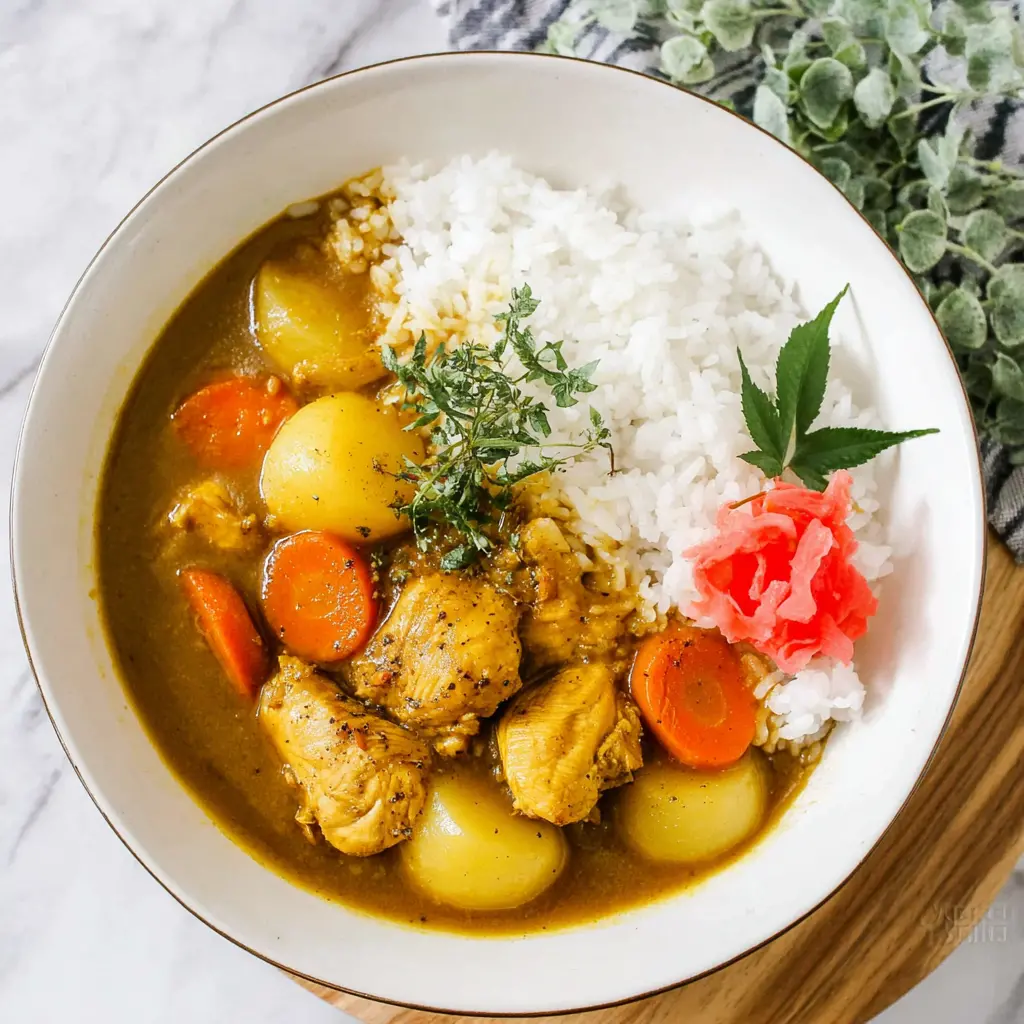
Quick and Easy Japanese Curry with Chicken
Ingredients
Method
- In a large pot or Dutch oven, heat the vegetable oil over medium heat. Add the minced ginger and garlic and stir for about 1 minute until fragrant.
- Add the chopped onion and diced celery. Cook, stirring occasionally, for about 3 minutes until the onion becomes translucent.
- Add the chicken pieces and cook for 2–3 minutes, stirring, until the outside is no longer pink but the centers remain raw.
- Pour in the water, then add the carrot rounds, potato cubes, and soy sauce. Increase heat to high and bring to a boil. As it comes to a boil, skim off any foam or impurities that rise to the surface. Once boiling, reduce heat to low, cover, and simmer for 15 minutes.
- Add the curry roux blocks one at a time, stirring well after each addition until completely dissolved. Continue until all 6 blocks are incorporated.
- Simmer uncovered for 5 minutes, stirring occasionally to prevent sticking, until the curry thickens to your liking. Serve ladled over hot steamed rice.
Nutrition
Notes
Tried this recipe?
Let us know how it was!Source: Learn More About This Dish
What is Japanese curry sauce made of?
Japanese curry sauce is thickened with a roux made from flour, butter or oil, and curry powder. Store-bought blocks like S&B Golden Curry also include seasonings, sugar, and MSG for umami. The sauce base is typically a broth (water or stock) simmered with onions, carrots, potatoes, and meat.
What makes Japanese curry different from Indian curry?
Japanese curry is milder, sweeter, and much thicker, with a gravy-like consistency. It relies on a roux for thickening and often includes fruit like apple for sweetness. Indian curries are typically thinner, use a wider variety of spices, and can be much spicier. The flavor profiles are completely different.
What are the ingredients in curry rice?
Basic Japanese curry rice contains protein (chicken, beef, or tofu), onion, carrots, potatoes, curry roux blocks, water or stock, and seasonings like soy sauce. It’s served over short-grain white rice. That’s the classic combination – simple and satisfying.
Can I make this recipe meatless?
Absolutely. Omit the chicken and use vegetable broth instead of water. Add extra vegetables like mushrooms (shiitake, king oyster), bell peppers, or zucchini. Check the curry roux label – most brands are vegetarian, but some may contain meat extracts.
Can I use store-bought curry roux blocks?
Yes, and I highly recommend it. Store-bought roux blocks like S&B and Vermont Curry are authentic, consistent, and save a ton of time. They’re made specifically for Japanese curry rice, so the flavor is perfect right out of the box.
What is Japanese curry roux made of?
Japanese curry roux is a solid block made from fat (usually palm oil or butter), flour, curry powder, sugar, salt, and umami enhancers like monosodium glutamate. Some brands add fruit purée, yeast extract, or spices like cumin and coriander. It’s designed to melt into hot liquid and thicken it.
How do I make good rice for curry?
Use short-grain white rice (sushi rice). Rinse it under cold water until the water runs clear to remove excess starch. Cook with a 1:1.1 ratio of rice to water (1 cup rice to 1.1 cups water) in a rice cooker or covered pot. Let it steam for 10 minutes after cooking for the best texture.
Can I just add curry powder to rice?
You can, but it won’t be Japanese curry. Plain curry powder stirred into rice gives you spiced rice, not the rich, thick sauce that defines curry rice. To get the real dish, you need to make a curry sauce with roux and vegetables.
How to make curry rice taste good?
Sauté fresh aromatics (ginger, garlic, onion) before adding liquid. Use a quality curry roux block. Simmer long enough for the flavors to meld – at least 15 minutes after adding the roux. A splash of soy sauce or a grated apple adds depth. And don’t forget: leftover curry always tastes better.