
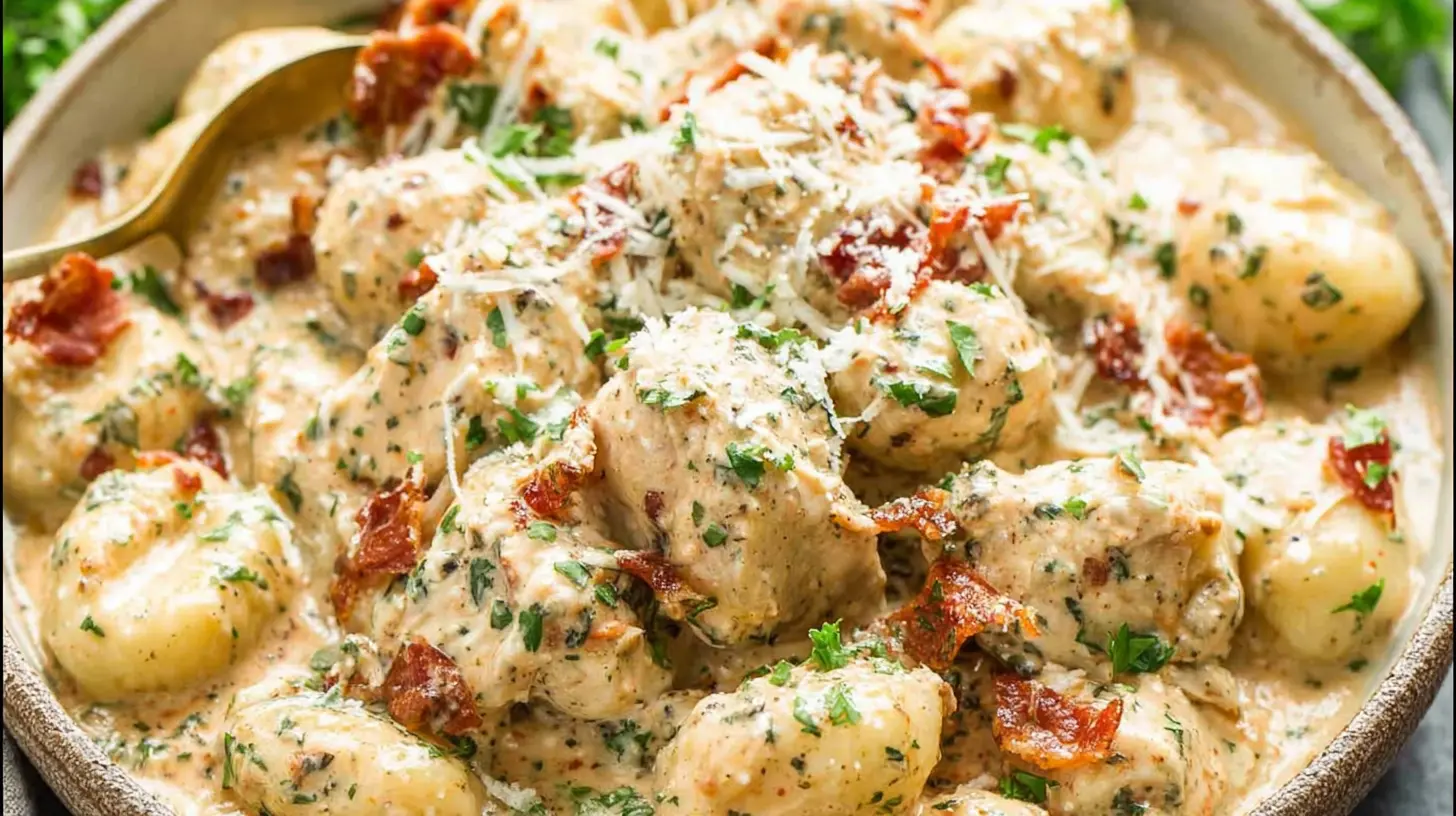
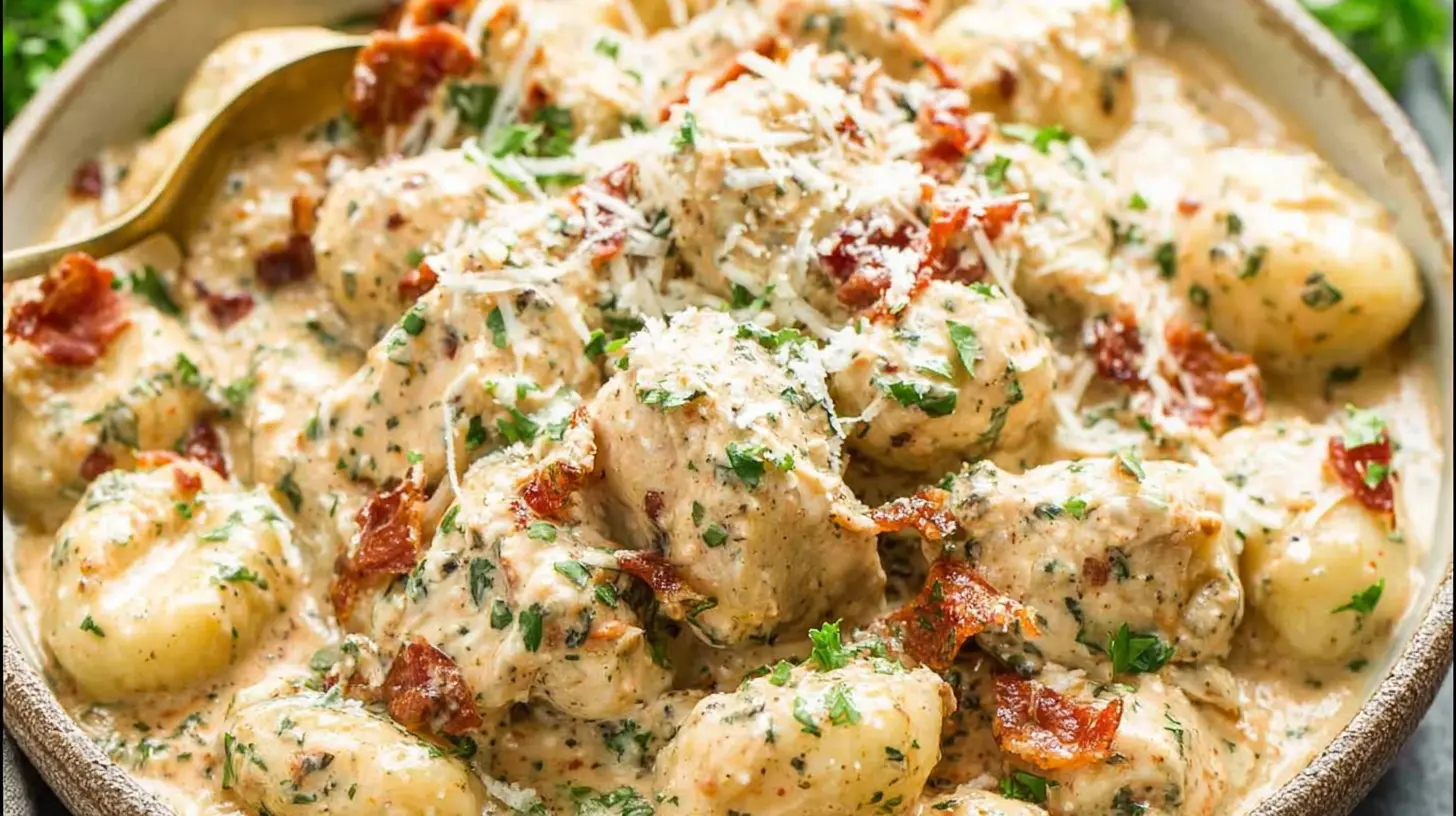
Italian Creamy Garlic Chicken Gnocchi with Tomato
Ingredients
Method
- Cook the gnocchi according to package directions, then drain well and set aside. Drain the oil from the sun-dried tomatoes jar into a small bowl and reserve it for cooking.
- In a large skillet, heat the butter and reserved sun-dried tomato oil over medium-high heat. Add the chicken tenders, season with salt and pepper, and cook on both sides until no longer pink and lightly golden brown. Remove the chicken from the skillet and set aside on a plate.
- If the skillet seems dry, add a little more sun-dried tomato oil. Add the minced garlic and chopped sun-dried tomatoes to the skillet, sautéing for 2 to 3 minutes until the garlic is aromatic and fragrant.
- Pour in 1½ cups of milk and half-and-half, then add the Parmesan cheese to the skillet. In a small bowl, whisk together the cornstarch with 2 tablespoons of milk until smooth, then add this mixture to the skillet. Stir or whisk continuously for about 1 minute as the sauce thickens and bubbles.
- Stir the cooked gnocchi into the cream sauce and add the chicken tenders back into the skillet. Drizzle some sauce over the chicken, garnish with fresh parsley, and serve warm.
Nutrition
Notes
Tried this recipe?
Let us know how it was!Why You’ll Love This Creamy Garlic Chicken Gnocchi in Tomato Sauce
You know that moment when a cream sauce starts looking a little grainy around the edges, and you think, “okay, here we go again”? I’ve been there. Honestly, I’ve watched a perfectly beautiful tomato-cream sauce go from silky to separated in about forty-five seconds flat, and it is genuinely demoralizing.
This version doesn’t do that. Here’s why.
The creamy garlic chicken gnocchi in tomato sauce you’re about to make is built on a technique that actually respects the chemistry of what you’re working with. Garlic that hits the pan golden and fragrant. A tomato base that cooks down until it’s deep and slightly sweet. Cream that folds in at exactly the right moment and stays put. The whole thing comes together in one pan in about 35 minutes, and it looks like something you’d order at a place with a wait list.
April evenings in LA still carry that cool edge, especially after the sun drops. This is exactly the dish for that window. Warm enough to feel like comfort food, bright enough from the tomato to not feel heavy. Let’s get into it.
What Is Gnocchi, Exactly?
If you’ve never cooked with gnocchi before, here’s the quick version: gnocchi (pronounced NYOH-kee) are small Italian dumplings, traditionally made from mashed potatoes and a small amount of wheat flour. They’re soft, pillowy, and they absorb sauce in the most satisfying way.
The potato-to-flour ratio matters a lot for texture. Brands that lean heavier on the potato side tend to be fluffier and more tender. Brands with more flour can get a little dense and chewy, especially if you overcook them.
For this recipe, use packaged, shelf-stable gnocchi. You’ll find it in the pasta aisle at Trader Joe’s, Whole Foods, or Ralphs. It’s usually vacuum-sealed and doesn’t need refrigeration until it’s opened. This is important: frozen gnocchi doesn’t work well here. Frozen gnocchi releases too much water as it cooks, which throws off your sauce consistency. Shelf-stable is the move.
Gluten-free? Cauliflower gnocchi works as a substitute, though it’s a bit softer and will absorb sauce more aggressively. Plan to add it a little later in the cooking process and watch it closely.
The Ingredients: What You Need and Why
Let’s talk through the main players before you start cooking. Knowing what each ingredient is doing makes you a better cook, not just someone following steps.
Chicken. Boneless, skinless chicken breast is the standard here, cut into bite-sized pieces so it cooks quickly and evenly. Chicken thighs work too (honestly, I think they’re slightly more forgiving if you’re nervous about overcooking), but breast keeps things a little lighter. Whatever you use, you’re looking for an internal temperature of 165°F (74°C). Get a thermometer if you don’t have one. It takes the guesswork out completely.
Tomatoes. This is where people get stuck. Crushed tomatoes are my go-to because they give you a smooth, cohesive sauce without any extra blending. Diced tomatoes work if that’s what’s in your pantry, but the chunks stay a little more distinct. Tomato paste adds depth and richness but needs more liquid to balance it. Marinara sauce is a solid shortcut if you’re short on time, though you’ll have less control over seasoning. Best choice: crushed tomatoes. Good substitute: diced or marinara. Skip: fresh tomatoes here, they don’t have enough concentrated flavor.
Heavy cream. This is what makes the sauce creamy and cohesive. Half-and-half works in a pinch and makes the dish a little lighter, but the sauce won’t cling to the gnocchi quite as well. Full-fat coconut cream is a great dairy-free swap. Best choice: heavy cream. Good substitute: half-and-half or full-fat coconut cream. Skip it: not really, the cream is kind of the point.
Garlic. Fresh garlic cloves only, please. Pre-minced garlic from a jar has its place, but this sauce is built on that moment when raw garlic hits hot olive oil and the whole kitchen smells incredible. Don’t shortchange yourself here.
Parmesan. Use freshly grated parmesan. Pre-shredded parmesan has anti-caking agents that make it melt unevenly and can make your sauce grainy. A block of parmesan from Costco or Trader Joe’s and a box grater is all you need. Best choice: freshly grated parmesan. Good substitute: Pecorino Romano. Skip it: don’t, it adds saltiness and depth that nothing else quite replicates.
The Sauce Science: How to Keep Cream and Tomato Together
Okay. This is the part I really want you to read, because this is where most people go wrong.
Tomatoes are acidic. Cream is fat-and-protein. When acid and dairy protein meet at high heat, the protein can seize up and separate, which is what gives you that grainy, broken-looking sauce. I’ve definitely made this sauce break before. Here’s exactly what fixed it.
The order of addition matters more than anything else. You let the tomato sauce cook down first, over medium heat, until it deepens in color and loses some of its bright, sharp acidity. This usually takes about 5 to 7 minutes. You’re looking for the sauce to go from a vivid red to a slightly darker, more brick-like red. That’s the signal that the acid has mellowed.
Then, and only then, you reduce the heat to medium-low and add the cream. Slowly. Stir as you pour. The lower temperature and the already-cooked tomato base create a stable environment for the cream to emulsify rather than separate.
One more thing: don’t let the sauce boil hard after the cream goes in. A gentle simmer is fine. A rolling boil will break it every time.
If Your Sauce Looks Grainy or Separated
Pull the pan off the heat immediately. Add a splash of pasta water (or just plain warm water) and whisk vigorously. The starch in pasta water helps re-emulsify the sauce. If it’s only slightly grainy, a tablespoon of cold butter stirred in can also bring it back together. Don’t panic. It’s fixable.
How to Make Creamy Garlic Chicken Gnocchi in Tomato Sauce
The full recipe card is above with exact measurements and steps. Here’s what I want you to know about the technique at each stage, because the recipe card can’t always explain the why.
The chicken sear matters. Get your pan hot before the chicken goes in. You want that golden sear on the outside, which adds flavor and helps the chicken stay juicy through the sauce-building process. Don’t crowd the pan. If the pieces are touching, they’ll steam instead of sear. Work in batches if needed. Once the chicken hits 165°F, pull it out and set it aside. It goes back in at the end.
The garlic moment. After the chicken comes out, add your olive oil and garlic cloves to the same pan. You’ll smell it almost immediately, that sharp, warm, slightly sweet smell that means the garlic is softening and releasing its flavor into the fat. This should take about 60 seconds over medium heat. Don’t walk away. Garlic goes from golden to burnt very fast, and burnt garlic is bitter and not salvageable.
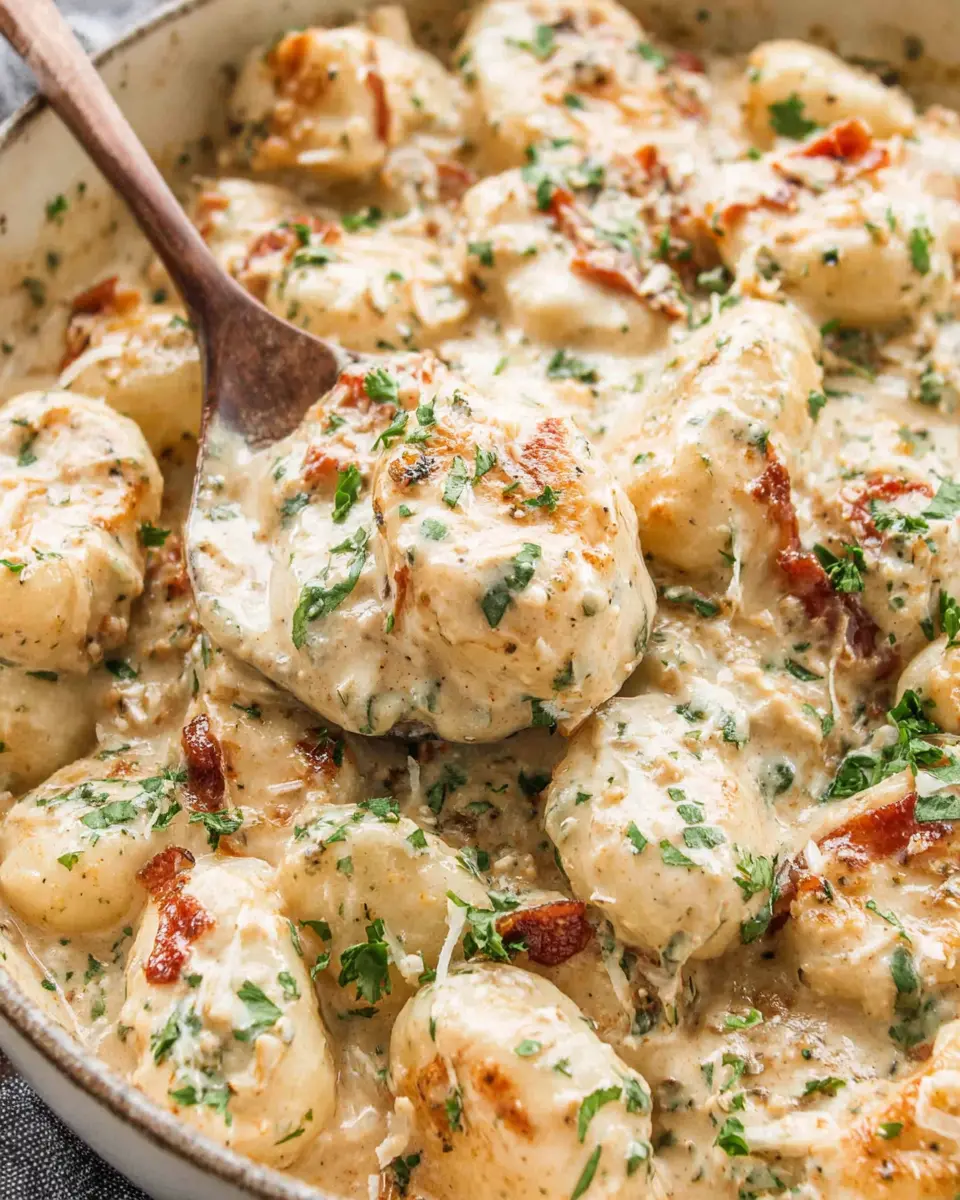
Gnocchi timing. Here’s something that surprised me the first time I made this: you don’t have to boil the gnocchi separately. Add the shelf-stable gnocchi directly to the sauce, uncooked. It will cook right in the sauce, absorbing all that flavor as it softens. This also means one fewer pot to wash, which is honestly amazing. The gnocchi is done when it’s tender and slightly puffed, usually 4 to 5 minutes. Don’t overcook it or it gets mushy.
Herb timing. Dried oregano goes in early, with the tomatoes, so it has time to bloom in the sauce and lose its dusty edge. Fresh basil goes in at the very end, torn and scattered over the top right before serving. Heat destroys the bright, almost peppery flavor of fresh basil quickly, so keep it off the heat until the last possible second.
Pro Tips for the Best Results
A few things that make a real difference here, from testing this recipe more times than I can count.
First: don’t throw away the oil from a jar of sun-dried tomatoes if you’re using them as an add-in. That oil is packed with concentrated tomato flavor and a little garlic. Use it in place of some of your olive oil when you’re sautéing the garlic. It’s a small thing that adds a lot of depth.
Second: use regular-sized gnocchi if you can’t find mini gnocchi. The mini version is charming and cooks slightly faster, but standard gnocchi works just as well. Just check for doneness a little earlier.
Third: keep a little pasta water on hand even if you’re not boiling the gnocchi separately. Just reserve about half a cup of hot water before you start the sauce. If the sauce gets too thick as the gnocchi cooks and absorbs liquid, a splash of that starchy water loosens it back up beautifully without diluting the flavor.
Fourth: red pepper flakes. I’d say add them. Even just a small pinch while the garlic is cooking adds a warmth that you feel in the back of your throat, not a heat that overwhelms. It balances the richness of the cream really well.
Fifth: taste before you serve. Always. The parmesan adds salt, the tomatoes add acid, and depending on your brand of crushed tomatoes, you might need more or less seasoning than the recipe suggests. Trust your palate.
Variations Worth Trying
This creamy garlic chicken gnocchi in tomato sauce is honestly great as written, but here’s how to make it work for different situations or dietary needs.
Make it vegetarian. Skip the chicken entirely. Add a can of white beans or chickpeas for protein. They hold up well in the sauce and give you that heartiness without any meat. Cooking time stays about the same.
For those seeking lighter options, exploring a healthy creamy garlic chicken gnocchi recipe can offer delicious alternatives with reduced calories or carbs.
Make it dairy-free. Swap the heavy cream for full-fat coconut cream and use vegan butter instead of regular butter. The coconut flavor is subtle in a sauce this bold, I promise. For the cheese, nutritional yeast adds a savory, slightly cheesy note, though the sauce will be a little looser than the original.
Add greens. A big handful of baby spinach stirred in right at the end wilts down to almost nothing and adds color and a mild earthiness. Frozen peas work too, just add them a minute before the gnocchi is done so they heat through without going mushy.
Finishing touches. This is where you make it yours. A ball of fresh mozzarella torn over the top right before serving melts slightly from the heat of the dish. Burrata is even more indulgent, it pools into the sauce and makes everything richer. Extra parmesan, a drizzle of good olive oil, a few more torn basil leaves. At this point, the hard work is done. All that’s left is to taste, adjust, and serve.
Common Mistakes and How to Fix Them
Common Mistakes and Fixes
Mistake: Dry, overcooked chicken.
Solution: Pull the chicken out as soon as it hits 165°F (74°C) and set it aside while you build the sauce. It goes back in at the very end, just long enough to warm through. That’s it. Chicken breast especially goes dry fast if you leave it in the pan the whole time.
Mistake: Using frozen gnocchi.
Solution: Stick with shelf-stable, packaged gnocchi. Frozen gnocchi releases excess water as it cooks, which dilutes your sauce and makes the texture soft in the wrong way. If frozen is all you have, boil it separately according to package directions, drain it well, and add it to the finished sauce just to coat.
Mistake: The cream sauce breaks or looks grainy.
Solution: You probably added the cream too early or the heat was too high. Pull the pan off the heat, add a splash of warm water or pasta water, and whisk. Lower the heat before adding cream next time, and make sure the tomato has cooked down first.
Mistake: Sauce is too thick.
Solution: Add pasta water or a splash of warm water, a little at a time, stirring between additions. The starch in pasta water is especially good at loosening the sauce without making it watery.
Mistake: Sauce is too thin.
Solution: Simmer uncovered for a few extra minutes. The sauce will reduce and thicken on its own. You can also stir in a little extra parmesan, which adds body as it melts.
Make-Ahead and Meal Prep Strategy
This dish is genuinely good for meal prep, with one caveat: the gnocchi absorbs sauce as it sits. So if you’re making this ahead, I’d suggest storing the sauce and the gnocchi separately when possible. Or just accept that the reheated version will be a little thicker and add a splash of water when you reheat.
You can sear the chicken and make the tomato-cream sauce up to two days ahead. Store it in an airtight container in the fridge. When you’re ready to eat, reheat the sauce gently over medium-low heat, then add the uncooked gnocchi directly and let it cook through. That way the gnocchi is always fresh and perfectly tender.
If you’re doing full meal prep with everything combined, portion it into airtight containers and refrigerate for up to 4 days. Do not freeze this dish. The cream sauce gets grainy and the gnocchi turns mushy when frozen and thawed. It’s just not worth it.
Storage and Reheating
Store leftovers in an airtight container in the refrigerator for up to 4 days. The sauce will thicken considerably as it sits, which is normal.
Stovetop reheating (best method): Add the leftovers to a skillet over medium-low heat with a splash of water, maybe 2 to 3 tablespoons. Stir gently as it warms, adding a little more water if needed, until the sauce is loose and the gnocchi is heated through. This takes about 5 minutes and the texture comes back really close to fresh.
Microwave reheating: Add a splash of water to the container, cover loosely, and microwave in 60-second increments, stirring between each, until steaming hot. It works fine, though the gnocchi can get a little softer than stovetop.
Again: don’t freeze it. The cream separates and the gnocchi texture is not great after thawing. Make it fresh or refrigerate for the week.
What to Serve With This
Honestly, this dish is a full meal on its own. But if you want to round it out, here’s what works really well.
A simple green salad with a sharp lemon vinaigrette cuts through the richness of the cream sauce perfectly. Crusty sourdough bread (San Francisco-style if you can get it) is ideal for swiping up every last bit of sauce from the bowl. Garlic bread works too, obviously. You could also do a quick roasted vegetable on the side, asparagus is in season right now in spring, and it takes about 12 minutes at 425°F (220°C).
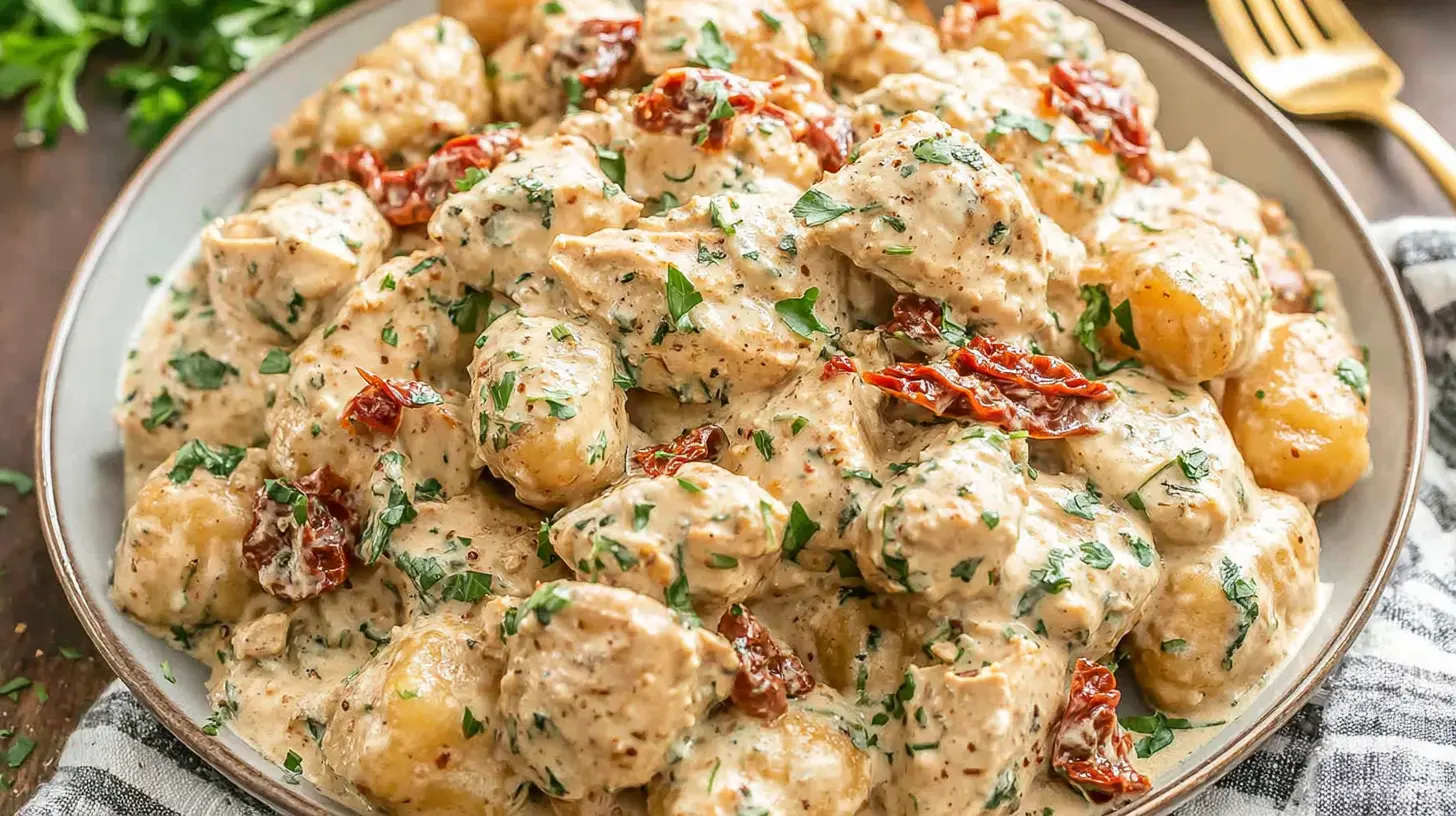
For presentation: serve in wide, shallow bowls. Scatter torn fresh basil over the top, add a little extra parmesan, and if you’re feeling it, a drizzle of good olive oil. That rust-orange color of the finished sauce against the pale gnocchi and green basil is genuinely beautiful. It looks like something from a restaurant, and you made it on a Wednesday.
Frequently Asked Questions
You’ve Got This
When you make this creamy garlic chicken gnocchi in tomato sauce, the sauce will come together faster than you expect. The garlic will smell incredible. The sauce will shift from bright red to that deep rust-orange that means everything is exactly right. The gnocchi will puff up and get pillowy in the sauce, and the chicken will be golden and tender all the way through.
You’ll serve it in a wide bowl with fresh basil on top, and it will look like something you ordered somewhere nice. Except you made it. On a weeknight. In one pan.
If you added burrata, swapped in thighs, threw in some spinach, or made it dairy-free with coconut cream, I genuinely want to know. Drop it in the comments. And if you’re looking for more ideas like this one, check out my Pinterest boards where I share variations and weeknight dinner inspiration all the time.
This is the kind of dish that makes you the person in your friend group who always knows what to cook on a random Tuesday. And honestly? That’s a pretty great thing to be.
Source: Nutritional Information
Can I make creamy garlic chicken gnocchi in tomato sauce ahead of time?
Yes, with a small adjustment. Make the tomato-cream sauce and sear the chicken up to two days ahead, then store them separately in the fridge. When you’re ready to eat, reheat the sauce gently and add the uncooked gnocchi directly to the pan. This keeps the gnocchi from getting too soft and gives you the best texture.
Can I use larger pieces of chicken in this recipe?
You can, but smaller pieces cook faster and eat more easily. If you want to use larger cutlets or tenders, sear them whole, cook fully to 165°F (74°C), then slice before adding back to the sauce. Larger pieces take longer to cook through, so just make sure you’re checking the internal temperature.
What is gnocchi made of, and why does it work so well in a creamy tomato sauce?
Traditional gnocchi is made from mashed potatoes and a small amount of wheat flour. The potato base makes it soft and slightly porous, which means it absorbs sauce as it cooks. In a creamy garlic chicken gnocchi in tomato sauce like this one, that absorption is a feature, not a bug. Every piece gets coated inside and out with flavor.
What temperature should chicken breast be cooked to?
Chicken breast is safe to eat at an internal temperature of 165°F (74°C). Use an instant-read thermometer inserted into the thickest part of the piece. Don’t guess on this one. Pulling the chicken at exactly 165°F keeps it juicy; going past that is when it starts to dry out.
How long can I store leftover creamy garlic chicken gnocchi in the fridge?
Up to 4 days in an airtight container. The sauce will thicken as it sits, so add a splash of water when reheating on the stovetop or in the microwave. Don’t freeze it. Cream-based sauces turn grainy when frozen and thawed, and the gnocchi texture suffers too.
3 Responses
This recipe is an absolute winner! I made it last night and the sauce truly is as silky and delicious as described – no graininess at all, which is usually my struggle with cream sauces. The sun-dried tomatoes really shine through. My family devoured it!
Loved the flavors in this gnocchi dish! The chicken was tender and the sun-dried tomato cream sauce was fantastic. I was wondering if there’s a good vegetarian substitute for the chicken tenders? Maybe some mushrooms or chickpeas? Thanks for a great recipe!
Hi David, I’m