
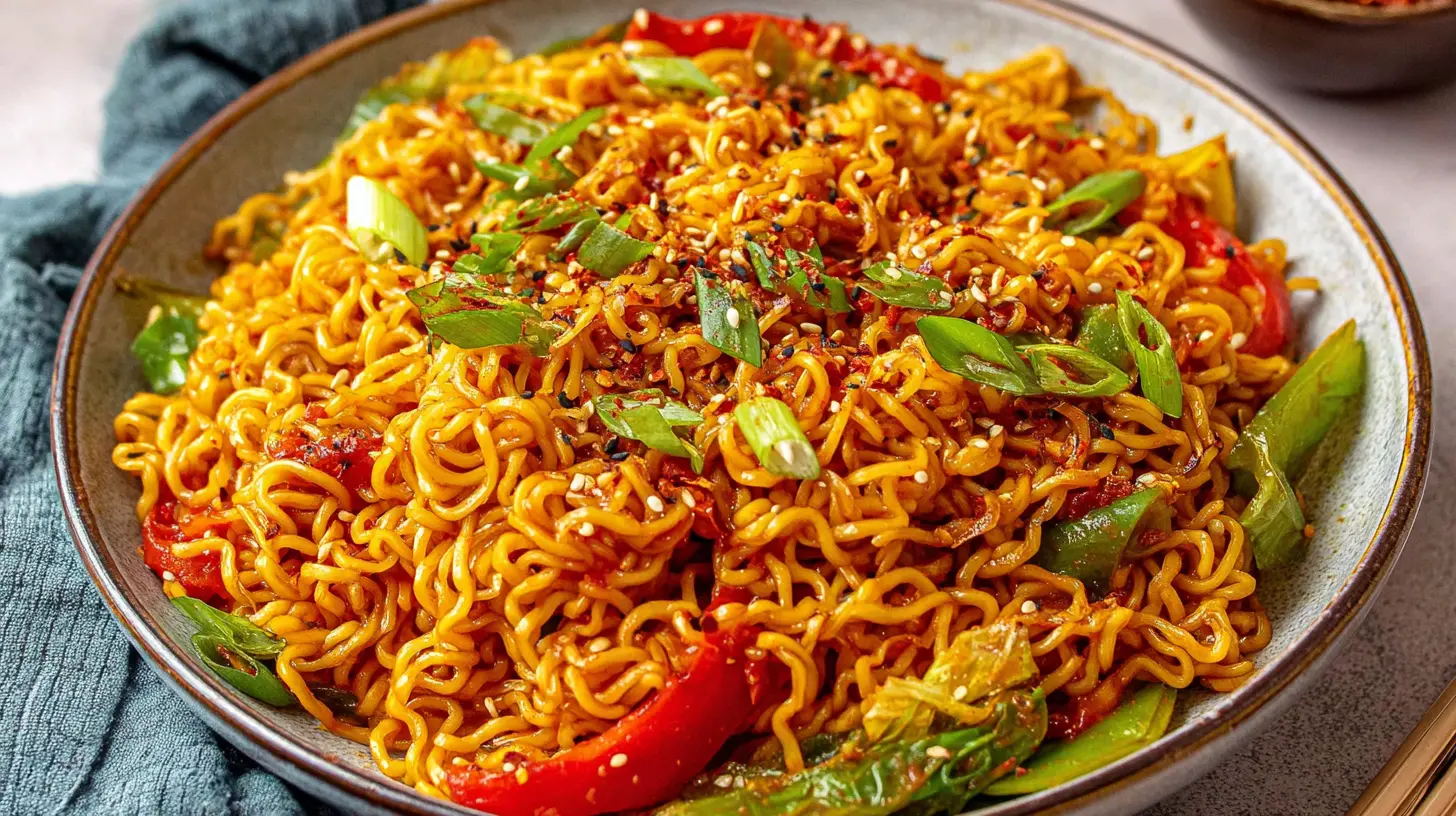
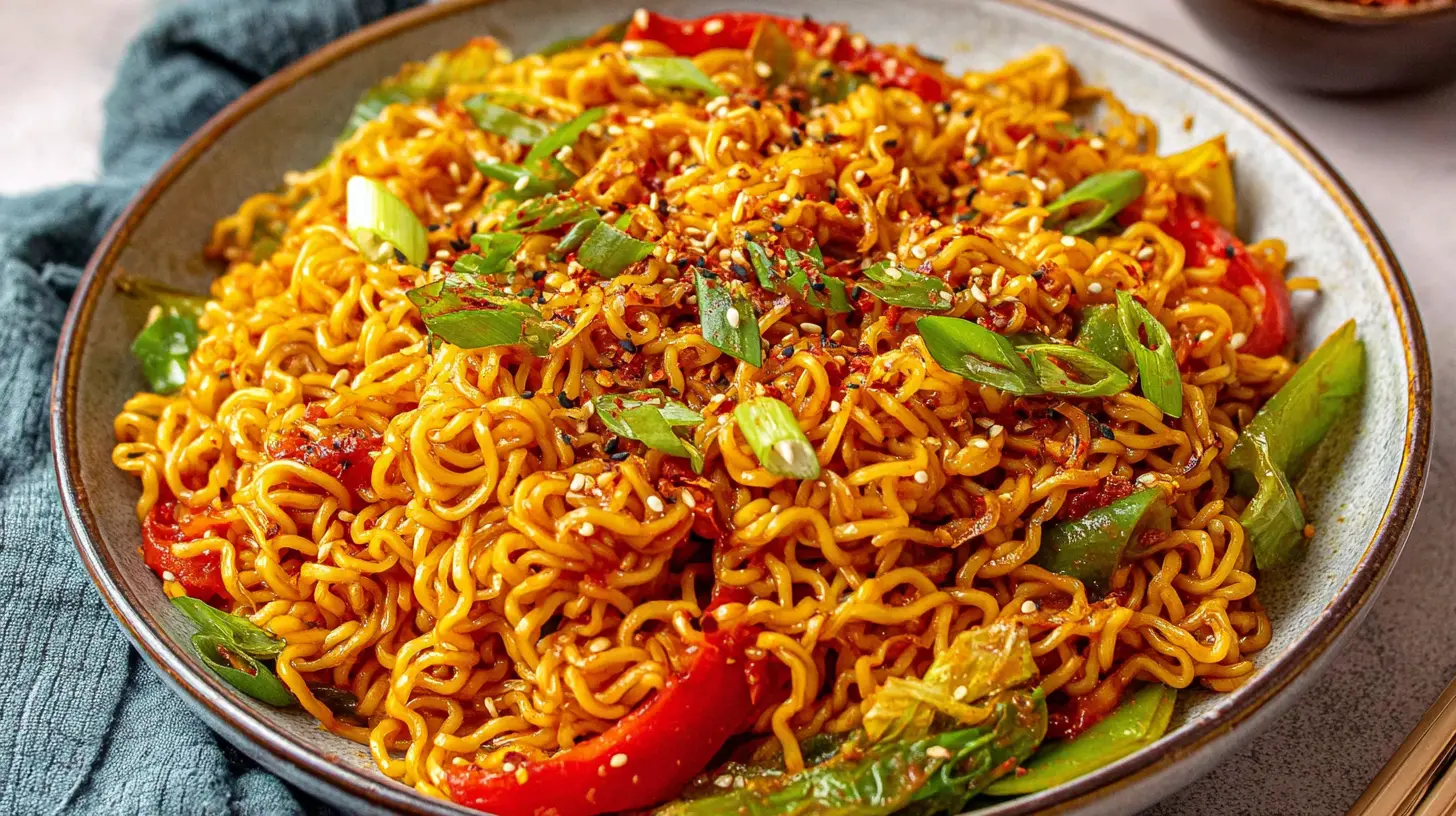
Spicy Gochujang Kimchi Noodle Stir Fry
Ingredients
Method
- Whisk together the gochujang noodles sauce ingredients. Set the sauce aside.
- Boil the noodles in hot water according to package directions for 4-5 minutes, or until done. Drain the noodles and transfer them to a lightly oiled bowl.
- Heat the oil in a wok or large pan over medium heat. Add the chili peppers and cook for 5 minutes to soften.
- Add the noodles and stir-fry for 1 minute.
- Stir in the spicy noodles sauce and toss to evenly coat the noodles.
- Transfer the noodles to bowls. Garnish and serve immediately.
Nutrition
Notes
- If the gochujang sauce is too thick, thin it with a few tablespoons of water to your preference.
- Works with any of your favorite stir fry vegetables.
- Add in a protein like shrimp, chicken, or tofu.
Tried this recipe?
Let us know how it was!Why You’ll Love This Spicy Garlic Noodle Stir Fry
You know that feeling? You’re scrolling through your phone, maybe after a long day, and you get this intense craving for something specific. Something with deep, savory flavor, a kick of heat, and that incredible, satisfying chew of perfectly cooked noodles. You want that restaurant-quality Korean spicy garlic noodle stir fry gochujang experience, but you don’t want to spend a fortune or deal with a complicated recipe that takes hours.
I’ve been there, honestly. I used to think achieving those complex, fermented flavors at home was a whole big project. Then I figured out the secret. It’s not about a million ingredients. It’s about a few key players and understanding how they work together. This spicy garlic noodle stir fry gochujang recipe is my answer to that weeknight craving. It’s quicker than delivery, I promise, and the flavor is just amazing. It hits all the notes: savory, sweet, spicy, and packed with umami. You’re going to love it.
Key Ingredients for Gochujang Noodle Stir Fry
Let’s talk about the stars of the show. This isn’t a long list, but each one brings something special. Think of them as your flavor dream team.
First, the heart of it all: gochujang. This Korean fermented chili paste is the magic. It’s not just heat. It’s got this deep, savory, slightly sweet, funky depth that’s impossible to replicate. You’ll find it in little red plastic tubs. Don’t grab the “gochujang sauce” in a bottle, you want the straight paste. Brands like Sempio or Chung Jung One are fantastic and easy to find at H Mart, Whole Foods, or even a well-stocked Ralphs in the international aisle.
Then, kimchi. The sour, crunchy, fermented cabbage is a game-changer. It adds a bright acidity and another layer of complex flavor. Use the juice, too. That liquid gold is packed with taste. Fresh garlic and ginger are non-negotiable. We’re using a lot of garlic, because it’s in the name for a reason. It gets fragrant and just sweet enough when it hits the hot oil.
Soy sauce, sesame oil, and a touch of sweetener like brown sugar or honey round everything out. For the noodles, I love using fresh or frozen udon. They’ve got this wonderful chew that holds the sauce so well. But you know, you can use what you have. Ramen noodles (just the noodles, toss the seasoning pack), or even thick spaghetti in a pinch. The sauce is the real hero here.
How to Make Spicy Garlic Noodle Stir Fry: The Technique
Okay, here’s where I share what I wish someone had told me. The order of operations matters. It’s what takes this from a soggy noodle mess to a restaurant-worthy spicy garlic noodle stir fry gochujang.
You start by getting your noodles ready. Cook them according to the package, but stop just shy of perfectly tender. They’re going to finish cooking in the sauce. This is crucial. Now, here’s a tip I learned the hard way. Before you drain them, scoop out about a half cup of that starchy noodle cooking water. Set it aside. This water is your secret weapon for adjusting the sauce later. It helps everything cling to the noodles, especially if you’re using dried ones.
While the noodles boil, mix your sauce. Gochujang, soy sauce, that sweetener, and a splash of water to loosen it up. Whisk it until it’s smooth. It’ll look thick and intense, and that’s perfect.
Then, you get your wok or your biggest, widest skillet screaming hot. A wide surface area lets you toss everything without breaking the noodles. Add your oil, then the garlic and ginger. You want them fragrant and just starting to turn golden, not burnt. Burnt garlic is bitter, and we don’t want that. Then in goes the kimchi. Let it sizzle for a minute to warm through and release its juices.
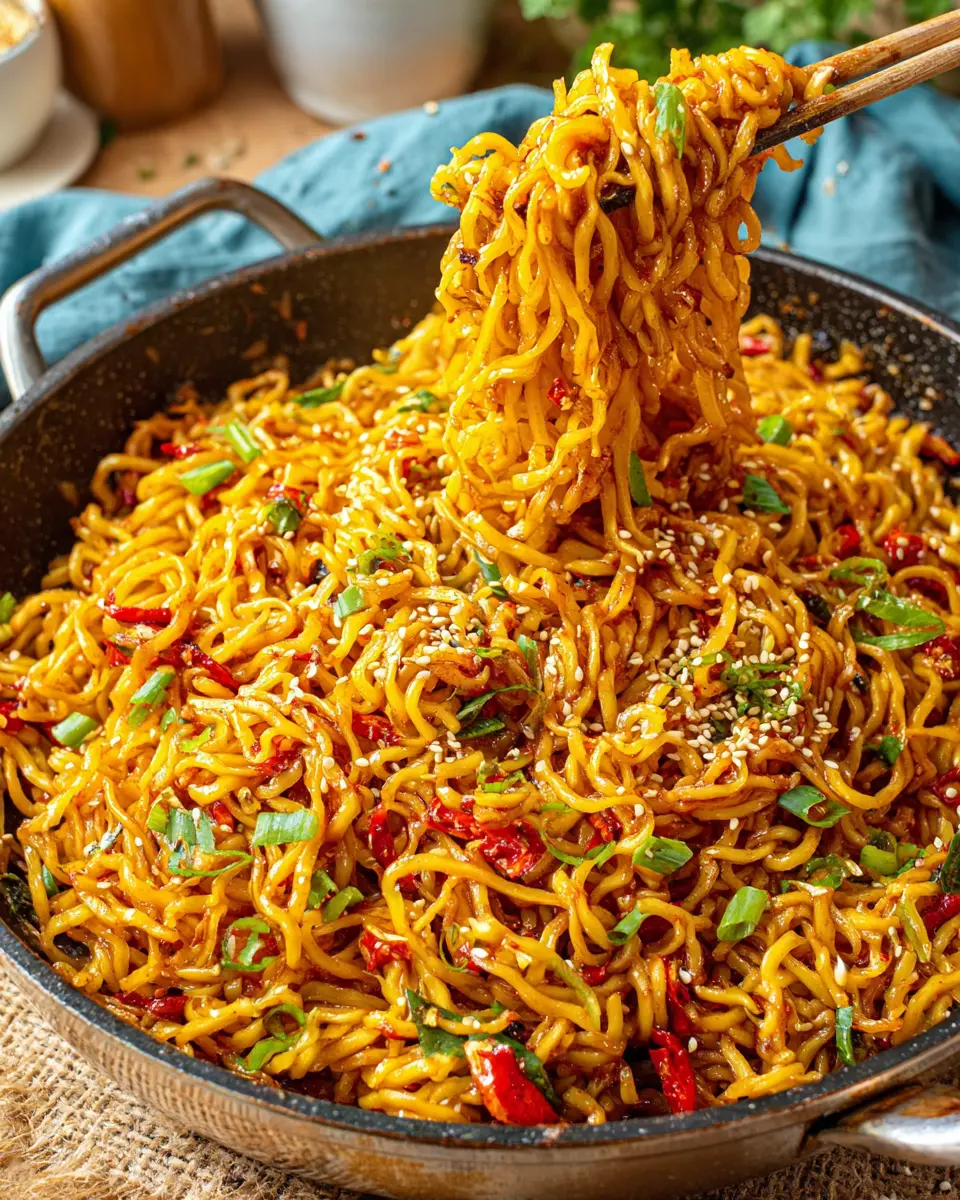
Now, the noodles go in. Toss them with the kimchi and garlic. Then pour that gorgeous red sauce over everything. This is the fun part. Use tongs or two big spoons to lift, fold, and toss until every single noodle is coated in that glossy, spicy sauce. If it looks too thick or is sticking, that’s when you use your reserved noodle water, a tablespoon or two at a time, until it’s just right.
The final flourish is a drizzle of sesame oil and a scatter of toasted sesame seeds and green onions. That toasted sesame seed step? Don’t skip it. Toasting them in a dry pan for a few minutes until they’re lightly golden brings out a nutty flavor that you just don’t get from the raw seeds. It makes a difference, I promise.
Tips for Perfect Gochujang Noodles Every Time
I want you to succeed on the first try. So here are the little things that make a big difference.
First, control the heat. If you’re new to gochujang, maybe start with half the amount the recipe calls for. You can always add more, but you can’t take it out. The same goes for gochugaru (Korean chili flakes) if you’re adding an extra kick. Taste as you go.
Second, don’t add extra salt. Seriously. Between the gochujang, soy sauce, and kimchi, there’s more than enough saltiness already. I don’t even salt the noodle water if I’m using udon.
Third, be gentle. Use a wide pan and fold the noodles. Don’t stir them vigorously like you’re scrambling eggs. You want to keep them intact.
And my biggest, most important tip? Save that noodle water. I put a little bowl right under my colander so I don’t forget. That starchy liquid is the perfect tool to loosen a thick sauce or help it coat dried noodles. You probably won’t need it with fresh udon, but with dried noodles, it’s a lifesaver.
Gochujang vs. Gochugaru: What’s the Difference?
This trips a lot of people up, so let’s clear it up. They’re both essential to Korean cooking, but they are not the same thing and you can’t substitute one for the other.
Gochujang is the thick, red paste. It’s made from fermented soybeans, rice, and chili peppers. It’s savory, sweet, spicy, and packed with umami. It’s a complete flavor base. You use it to build sauces, like in this spicy garlic noodle stir fry gochujang.
Gochugaru are the flakes. They’re dried, coarsely ground Korean chili peppers. They provide pure chili heat and a vibrant red color, but not the fermented, savory depth. You’d sprinkle gochugaru on top of dishes for heat, or use it in kimchi recipes.
Think of it this way: gochujang is like a complex mole sauce, while gochugaru is like crushed red pepper flakes. Both are great, but they do different jobs in your kitchen.
Best Noodles for Stir Fry & A Make-Ahead Strategy
Noodle choice changes the texture, honestly. For the best chewy, satisfying bite, fresh or frozen udon noodles are my top pick. They’re thick and hold the sauce perfectly. If you’re using dried udon or another dried noodle like ramen, you’ll use less by weight because they expand so much.
Want to get ahead? You totally can. Cook your noodles ahead of time, drain them, and run them under cold water to stop the cooking. Then drizzle them with a tiny bit of neutral oil and toss. This keeps them from sticking together in a big clump. Store them in the fridge. When you’re ready, your stir-fry comes together in under 10 minutes.
For those especially busy nights, our quick spicy garlic noodle stir fry recipe offers more time-saving tips.You can also mix the sauce a day or two in advance. Just keep it in a jar in the fridge. Having these components ready turns this into a truly lightning-fast weeknight meal.
Common Mistakes & Fixes
Mistake: The sauce is too thick and gloppy.
Solution: You forgot the noodle water! Thin it out with a few tablespoons of the reserved starchy water until it coats the noodles smoothly.
Mistake: The dish is way too spicy.
Solution: You might have used a very hot gochujang or too much. Next time, start with less. To fix this batch, add a bit more sweetener and a splash of water to dilute.
Mistake: The noodles are mushy.
Solution: You overcooked them in the first boil. Remember, cook them just until al dente. They’ll finish in the sauce.
Mistake: Everything tastes bland.
Solution: Your gochujang might be old or low-quality. Use a good brand, and make sure your kimchi is nicely fermented and tangy.
Delicious Variations to Try
The beautiful thing about this spicy garlic noodle stir fry gochujang is how adaptable it is. Think of the base recipe as your canvas.
Want to add protein? Go for it. Thinly sliced beef or chicken stir-fried first, then set aside and added back at the end. For a vegetarian version, cubed extra-firm tofu, baked or pan-fried until crispy, is so good. You can even add a fried egg on top for extra richness.
More veggies? Absolutely. Toss in some sliced bell peppers, sugar snap peas, or broccoli florets. Add the harder veggies (like carrots or broccoli) to the wok right after the garlic to give them a head start. Leafy things like spinach or the green parts of bok choy can be folded in at the very end.
For a creamy twist, a small spoonful of tahini or unsweetened peanut butter whisked into the sauce adds a wonderful richness. It’s a different vibe, but honestly, it’s so good.
If you love the idea of a nutty, creamy sauce, our spicy garlic noodle stir fry with peanut sauce is a must-try variation.
Storage & Reheating Instructions
Leftovers are a beautiful thing. Your spicy garlic noodle stir fry gochujang will keep in an airtight container in the fridge for up to 4 days.
Reheating is easy, but you gotta be gentle. The noodles soak up the sauce, so they’ll be thick. The best way is to warm them in a skillet over medium-low heat with a tiny splash of water. Toss them gently until they’re hot and saucy again. You can microwave them, too. Just put them in a bowl, add a tablespoon of water, cover loosely, and heat in short bursts, stirring in between.
I don’t recommend freezing this one. The noodles can become a bit mushy when thawed.
Spicy Garlic Noodle Stir Fry FAQ
You’re Ready to Stir-Fry!
So there you have it. Everything you need to make an incredible, restaurant-worthy spicy garlic noodle stir fry gochujang right in your own kitchen. It’s faster than waiting for takeout, more satisfying, and you get to control exactly how spicy, savory, and delicious it is.
When you make this tonight, and you get that first bite of the chewy noodles coated in that rich, garlicky, slightly sweet and spicy sauce, you’ll know. It was totally worth it. The thrill of getting those authentic Korean flavors at home is real. I love seeing your creations, so if you snap a pic, I hope you’ll share it. Tag me or pin it. Now go grab that gochujang and get cooking. You’ve got this.
For more weeknight inspiration and twists on classic dishes, check out my Pinterest boards. I’m always adding new ideas over there.
Source: Nutritional Information
Where can I buy gochujang?
You can find it at Korean or Asian markets like H Mart, in the international aisle of well-stocked grocery stores (Whole Foods, some Ralphs or Vons), and definitely online. Look for the traditional paste in red plastic tubs, not a bottled “sauce.”
Can I make this spicy garlic noodle stir fry gochujang vegetarian or vegan?
Absolutely. It’s naturally vegetarian as written. For vegan, just use maple syrup or agave instead of honey, and ensure your gochujang brand is vegan (most are). Add baked tofu or tempeh for protein.
My sauce is too thin. What did I do wrong?
You might have added too much noodle water or your kimchi was extra juicy. Let it simmer for another minute or two in the wok. The sauce will reduce and thicken up as the water evaporates.
What’s the best noodle for a spicy garlic noodle stir fry gochujang?
For the ideal chewy texture, fresh or frozen udon noodles are the best. They hold the sauce perfectly. In a pinch, dried udon, ramen noodles (sans seasoning), or even thick spaghetti will work just fine.