
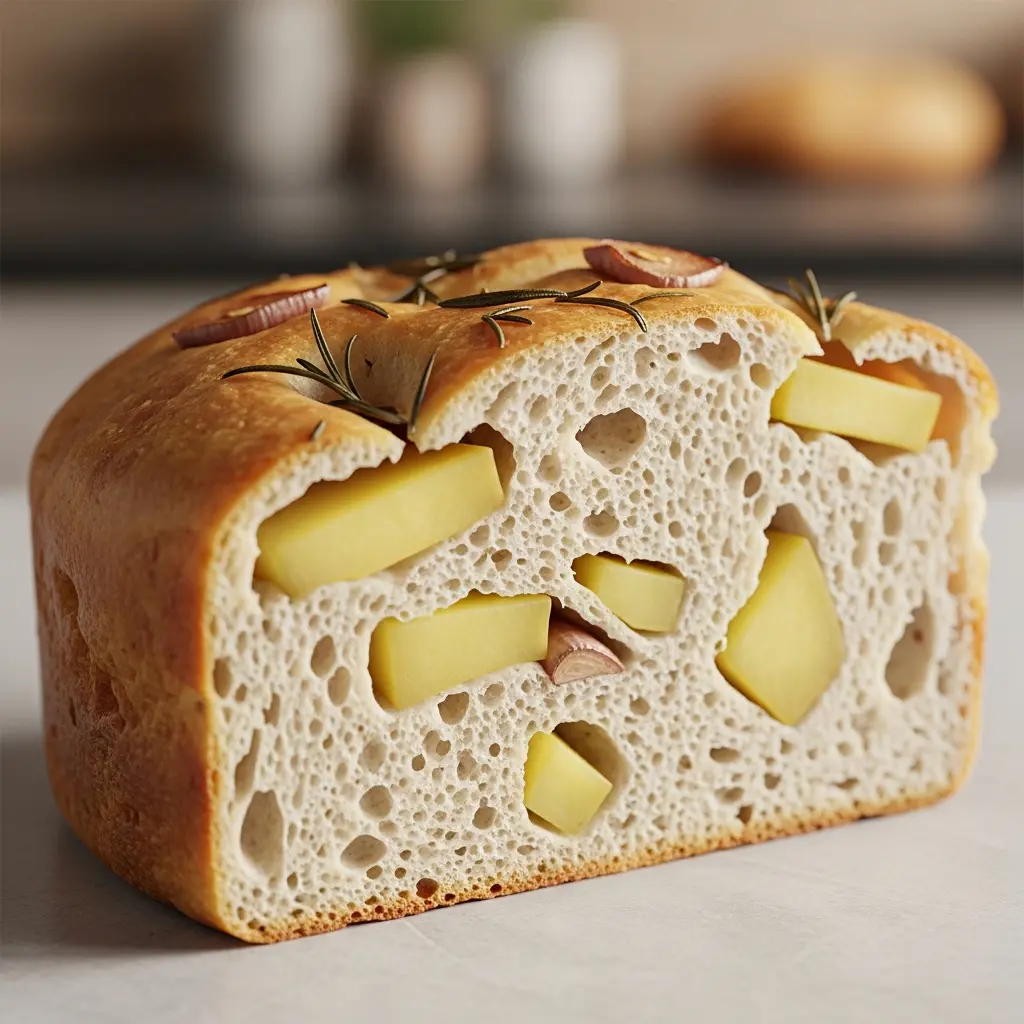
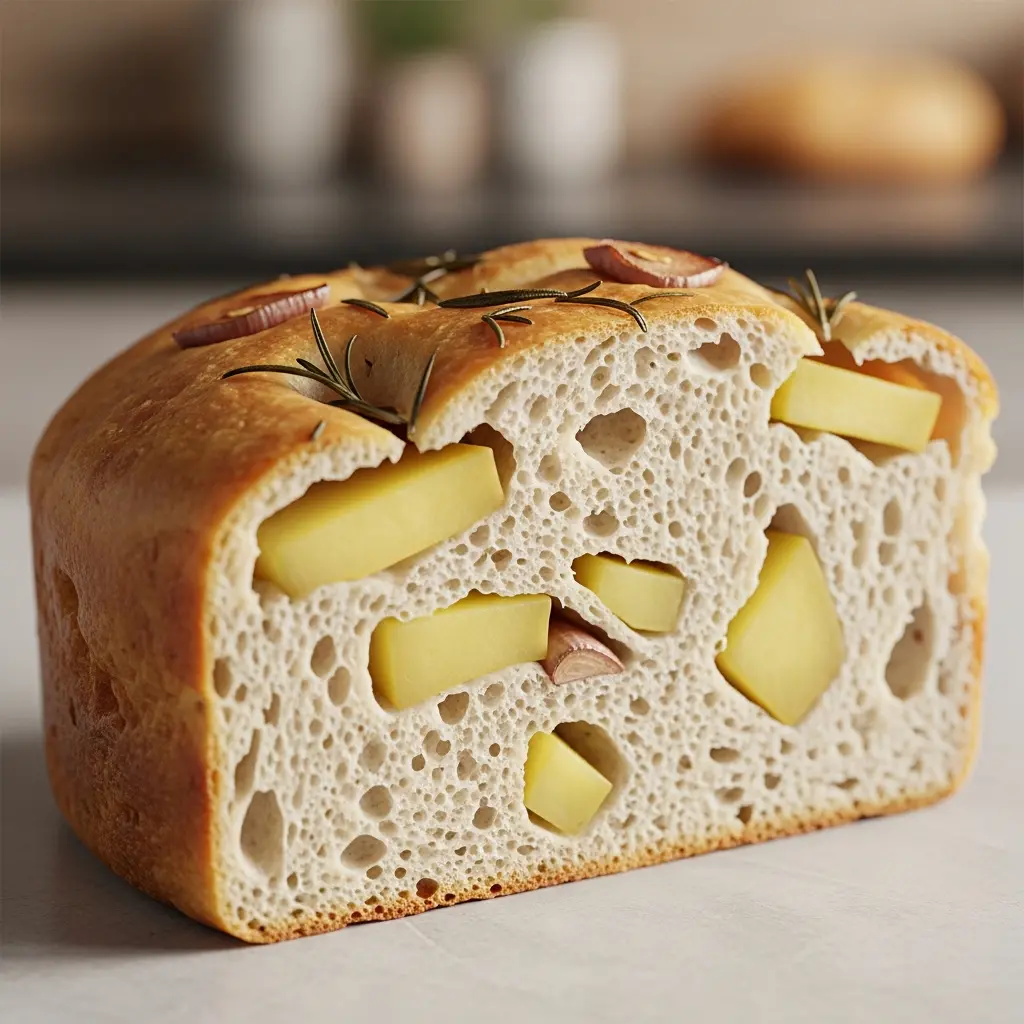
Perfect Roasted Garlic Potato Focaccia
Ingredients
Method
- In a large bowl, combine 1¾ cups warm water, 2¼ tsp active dry yeast, and 2 tsp sugar; let sit for 5-10 minutes until foamy. Whisk 4 cups all-purpose flour and 2 tsp kosher salt in a separate bowl. Add the flour mixture and 1 tablespoon of olive oil to the wet ingredients; mix until a shaggy dough forms.
- Knead the dough by hand (stretch and fold in the bowl) for 5-7 minutes, or with a stand mixer for 8-10 minutes, until smooth and elastic.
- Lightly oil the mixing bowl with 1 teaspoon of olive oil. Place the dough in the bowl and turn to coat. Cover and let rise in a warm, draft-free spot for 1-1.5 hours, until doubled in size.
- Drizzle 1 tablespoon of olive oil into a 9x13 inch baking pan, spreading to coat. Gently transfer the dough to the pan and press to fill. Dimple the dough deeply with oiled fingertips.
- Cover the pan loosely and let the dough proof in a warm spot for 30-45 minutes. Towards the end of this proofing time, preheat your oven to 425°F (220°C).
- In a small saucepan, gently heat the remaining 1 tablespoon + 1 teaspoon of olive oil with 4 minced garlic cloves, ½ tsp dried oregano, and ¼ tsp red pepper flakes (if using) until fragrant. Do not brown the garlic. Remove from heat.
- Brush the infused oil mixture over the proofed dough. Sprinkle evenly with ½ cup freshly grated Parmesan cheese, flaky sea salt, and black pepper. Bake for 25-30 minutes, or until the top is a deep golden brown and crispy.
- Immediately transfer the focaccia to a wire rack to cool for at least 15-20 minutes before slicing. Serve warm. Store leftovers in an airtight container at room temperature for up to 2 days; reheat in a toaster or oven at 350°F (175°C) for a few minutes to refresh.
Notes
Tried this recipe?
Let us know how it was!Why You’ll Love This Roasted Garlic Potato Focaccia
You know that feeling when you want to bake something that feels special, something that makes people go “wow,” but you’re also a little worried it’s going to be a whole project? I’ve been there. Honestly, focaccia can seem intimidating. All that talk about hydration and proofing. But here’s the thing: this roasted garlic potato focaccia is your gateway bread. It’s easier than it looks, I promise. The first time I made it, my family ate almost half the pan before I even remembered to grab my camera. I was so chuffed, I had to share it immediately.
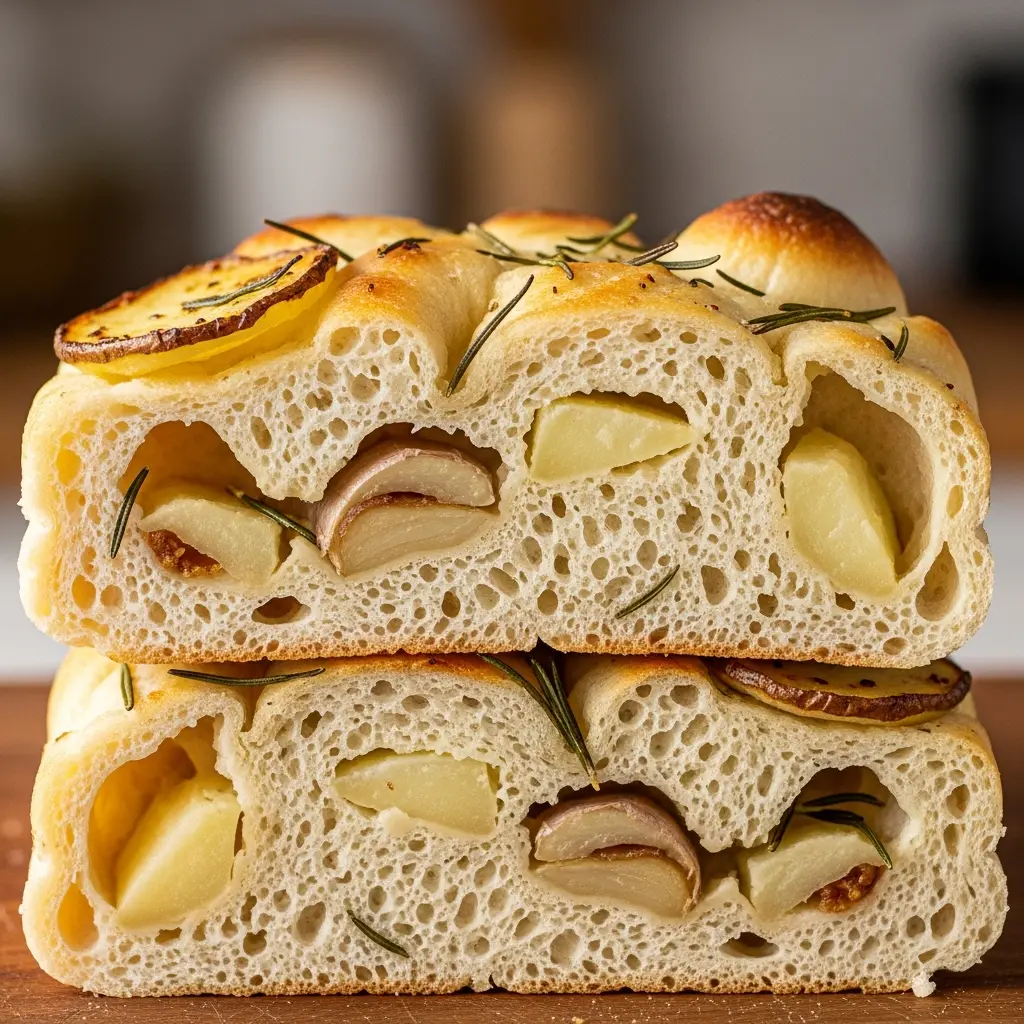
This isn’t just any bread. It’s a whole experience. Imagine a crispy, golden crust that crackles when you tear it. Inside, it’s impossibly airy and soft, with sweet, caramelized roasted garlic and tender slices of potato in every bite. It’s savory, it’s fragrant with rosemary, and it’s honestly one of the most satisfying things you can pull from your oven. Whether it’s your first ever attempt at focaccia bread or your fiftieth, this recipe builds confidence. It’s a showstopper that’s secretly simple.
The Right Potato Makes All the Difference
Let’s talk spuds, because it matters. You can’t just grab any potato from the bin and expect perfect results. For a savory focaccia with potato slices that bake up tender and hold their shape, you need the right variety. I learned this the hard way with a soggy, disappointing bake once. Not fun.
You want a potato that’s low in moisture and high in starch. My absolute go-to is a good old Russet. You know, the classic baking potato. They’re dry and starchy, which means they won’t weep a bunch of water into your beautiful dough and make it soggy. They get perfectly tender inside while their edges crisp up and turn a lovely golden brown in the oven’s heat. If you’re at the store and can’t find Russets, look for Maris Pipers. They’re another great dry variety.
Now, if you see those cute little baby potatoes or fingerlings, save those for tossing on top as a crispy topping. For embedding right into the dough, stick with the dry, starchy ones. Slice them about 1/8-inch thick so they cook through without weighing the bread down.
Expert Tips for Perfect Focaccia Every Time
I’ve made a lot of focaccia. Some were great, some were… learning experiences. So here are the tips I wish I’d had from the start. They’ll save you from the common pitfalls and set you up for that perfect, airy, golden-brown roasted garlic potato focaccia.
First, the flour. Honestly, just go for a good bread flour. I like King Arthur because it’s consistent. That higher protein content is what builds the strong gluten network that traps air. It gives you that chewy, open crumb and supports all our yummy toppings. All-purpose can work in a pinch, but the texture won’t be quite as spectacular.
Now, the cold proof. This is where the flavor magic happens. After your first rise, you’ll stick the dough in the fridge. Here’s the non-negotiable tip: cover it tightly. Use plastic wrap pressed right onto the surface of the dough. If you don’t, a dry skin forms on top. That skin is like a little barrier that stops the bread from rising freely in the oven. You’ll get a denser loaf. Just press that wrap on there, okay?
And after it bakes? Don’t let it steam itself soggy in the pan. After about five minutes, carefully lift the whole focaccia out and transfer it to a cooling rack. This lets air circulate all around it, preserving that incredibly crunchy bottom crust we’re after. It makes a huge difference.
Your Roasted Garlic Potato Focaccia Questions, Answered
I get it. Baking bread brings up questions. Let’s tackle the big ones so you can bake with total confidence.
Why is bread flour so important for focaccia?
It’s all about protein. Bread flour has more of it than all-purpose. This protein creates gluten, which is the stretchy network that traps the gas from the yeast. For a roasted garlic potato focaccia with that signature airy, holey interior and chewy texture, you need that strong structure. It’s what supports the weight of the potatoes and gives you a great rise.
How long can I keep the roasted garlic confit?
If you make extra (and you should), store it in an airtight container in the fridge for up to two weeks. The key is to keep the cloves completely submerged in the oil. This prevents spoilage. You can also freeze it in small portions for a couple of months. Never leave garlic confit at room temperature, though, there’s a risk of botulism.
Can I add other toppings to my focaccia?
Absolutely! This recipe is a fantastic base. Think of it like a savory canvas. Before the final proof, you can press in pitted olives, sun-dried tomatoes, or even thin slices of caramelized onion. For cheese, grated Parmesan or Asiago is amazing, or try a handful of cherry tomatoes, halved. Just don’t overload it, or you’ll weigh the dough down.
Common Mistakes & How to Fix Them Before They Happen
Common Focaccia Mistakes & Fixes
Mistake: The dough is dense and didn’t rise well.
Solution: Your yeast might be old, or your water was too hot and killed it. Use a thermometer: water should be between 105-110°F. Also, ensure you covered the dough during the cold proof to prevent a skin.
Mistake: The bottom is soggy.
Solution: You didn’t lift it out of the pan soon enough. Let it cool in the pan for only 5 minutes, then transfer to a wire rack. Also, make sure your oven is fully preheated and you’re using a heavy, light-colored baking sheet.
Mistake: The toppings burn before the bread is done.
Solution: Some ingredients, like thin onion slices or certain cheeses, brown fast. If you see this happening, loosely tent the focaccia with aluminum foil for the last 5-10 minutes of baking.
Delicious Variations to Make It Your Own
Once you’ve mastered the basic roasted garlic potato focaccia, the fun really begins. This dough is so welcoming to other flavors. Honestly, I rarely make it the same way twice.
Love cheese? Before the final dimpling, scatter over a mix of grated Asiago, Fontina, and a little extra Parmesan. It creates these incredible crispy, cheesy bits on top. Fresh herbs are a game-changer too. While rosemary is classic, try fresh thyme leaves or chopped sage. In the spring, I love adding a sprinkle of chives from my window box.
For a little kick, drizzle the top with a spicy chilli oil right after it comes out of the oven. Or, keep it simple and elegant with just a heavy flaky sea salt, like Maldon. The point is, play around. This recipe is your foundation for endless savory focaccia creations.
Storing, Reheating, and Serving Your Masterpiece
Okay, let’s say you have leftovers. It happens, maybe. To keep your roasted garlic potato focaccia at its best, let it cool completely first. Then store it in an airtight container or wrapped tightly in foil at room temperature for up to 3 days.
Want to make it ahead? The dough is your friend. After the first rise, you can refrigerate it for up to two days. That slow, cold fermentation only makes the flavor better. When you’re ready, let it come to room temperature in the pan before dimpling and baking.
To reheat and bring back that just-baked magic, don’t microwave it. You’ll get a sad, steamed bread. Instead, pop slices in a 350°F oven for about 5-10 minutes, or until the crust re-crisps. If you’ve frozen a whole loaf (wrapped tightly in cling film, then foil), thaw it on the counter overnight and then refresh it in a hot oven.
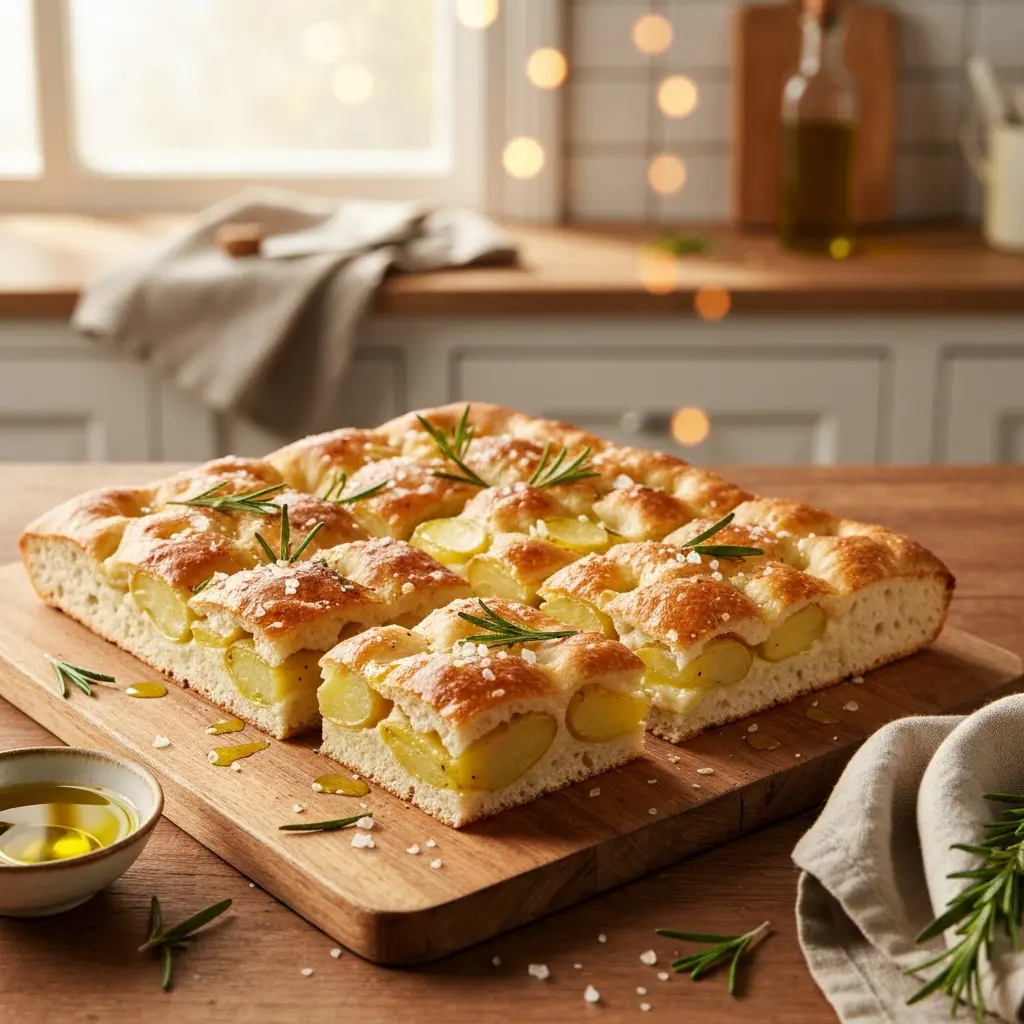
How to serve it? Oh, the possibilities. It’s amazing warm from the oven, torn apart with your hands. Serve it alongside a big spring salad or a hearty soup. It makes for a superior sandwich bread, especially for meatball subs or grilled vegetables. Cut into smaller squares, it’s the ultimate appetizer for your next gathering. Honestly, it’s good any time of day.
Go Forth and Bake Something Amazing
When you make this roasted garlic potato focaccia, get ready for the compliments. That smell of garlic and rosemary filling your kitchen, the sight of that golden, dimpled crust, the sound of the crackle when you tear off a piece it’s pure baking joy. It’s the kind of homemade bread that makes everyone feel special.
I’m so excited for you to try this. Remember, bread baking is part science, part feel. Don’t stress if your dimples aren’t perfect or your first rise takes a little longer on a cool day. It’s all part of the process. You’ve got this. I can’t wait to hear how your roasted garlic potato focaccia turns out share your photos and stories! For more savory baking inspiration, check out my Pinterest boards where I share tons of variations.
Happy baking!
Source: Nutritional Information
What are the best types of potatoes for making delicious roasted garlic potato focaccia?
For roasted garlic potato focaccia, you can use different potato varieties depending on how you’re incorporating them. If you’re adding thin slices directly on top of the focaccia, waxy potatoes or small baby potatoes like Jersey Royals or Fingerlings are excellent choices as they crisp up beautifully during baking, adding a delightful texture. If the recipe calls for incorporating mashed potato into the dough itself to enhance softness and moisture, starchy varieties such as Russets or Maris Pipers are ideal, as they create a lighter, more pillowy crumb without making the bread heavy.
How can I achieve a perfectly crispy crust and wonderfully airy interior in my homemade roasted garlic potato focaccia?
To achieve that coveted crispy crust and airy, soft interior in your roasted garlic potato focaccia, several factors are key. Using bread flour is crucial, as its high protein content develops a strong gluten network that effectively traps air, resulting in an open, chewy crumb. Cold proofing the dough for at least eight hours (or up to two days) in the refrigerator not only deepens the flavor but also allows for better gluten development and a more consistent rise. Additionally, the potato incorporated into the dough contributes to a softer, more pillowy texture and helps the focaccia stay tender longer. For optimal crispness, ensure your oven is preheated properly, and after baking, transfer the focaccia to a cooling rack within five minutes to prevent the bottom from becoming soggy.
Can I customize my roasted garlic potato focaccia with different cheeses or other flavorful toppings like cherry tomatoes?
Absolutely! Roasted garlic potato focaccia is incredibly versatile and welcomes various customizations. While the core recipe is delicious, feel free to experiment with different cheeses; Parmesan or Gruyère make excellent alternatives or additions to traditional options like Asiago or Fontina, adding their unique savory notes. Beyond cheese, you can elevate your focaccia with a range of toppings such as briny olives, sweet sun-dried tomatoes, caramelized onions, or fresh herbs like thyme and sage. Cherry tomatoes are a fantastic choice, bursting with flavor when roasted. A drizzle of chili oil or a sprinkle of flaky sea salt just before serving can also add an extra layer of taste and texture.
What’s the recommended method for storing and reheating leftover roasted garlic and potato focaccia to maintain its quality?
To store leftover roasted garlic and potato focaccia, ensure it’s completely cooled, then wrap it tightly in cling film or place it in an airtight container. It will keep well at room temperature for up to three days. For longer storage, focaccia freezes beautifully; wrap individual slices or the whole loaf tightly in cling film, then in foil, and freeze for up to three months. When you’re ready to enjoy it again, reheating in a hot oven is best to revive its texture. Defrost frozen focaccia overnight on the counter, then refresh it in an oven preheated to 350°F (175°C) for about 10-15 minutes, or until warmed through and the crust is re-crisped. This method helps restore its original crisp exterior and soft interior.
Is roasted garlic potato focaccia a good recipe for beginners attempting focaccia bread for the first time?
Yes, roasted garlic potato focaccia is an excellent choice for beginners venturing into focaccia baking! Focaccia is known for being a forgiving bread, often requiring minimal kneading and less complex shaping compared to other yeasted breads. The overnight cold proof not only develops incredible flavor but also makes the process more flexible and less rushed. Furthermore, the addition of potato to the dough contributes to a wonderfully soft, moist crumb, making it more resilient and less prone to drying out, which can be very encouraging for first-time bakers. With a few simple tips, like ensuring proper dough covering during proofing, you’ll be chuffed with your results.