
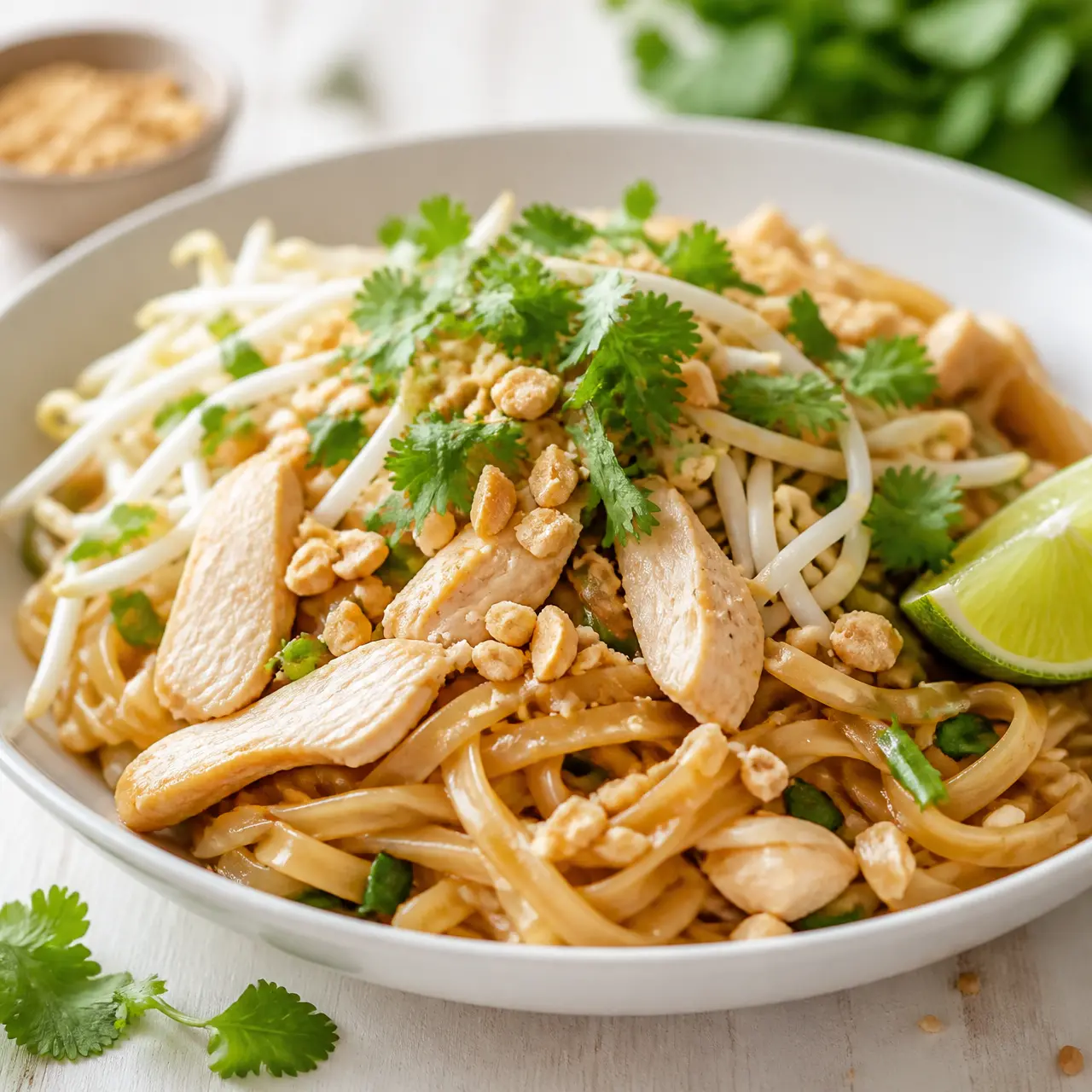
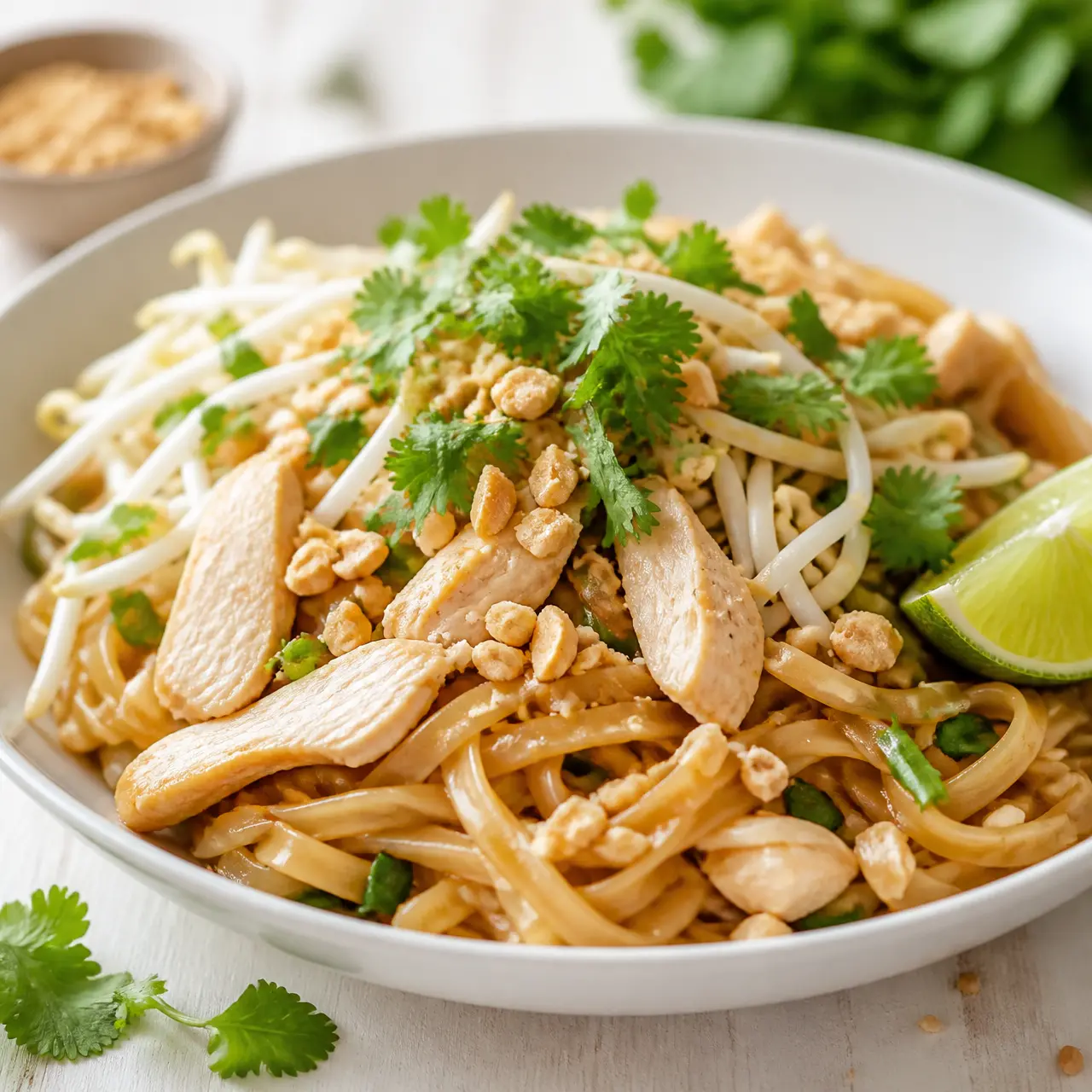
Chicken Pad Thai with Crunchy Peanuts and Veggies
Ingredients
Method
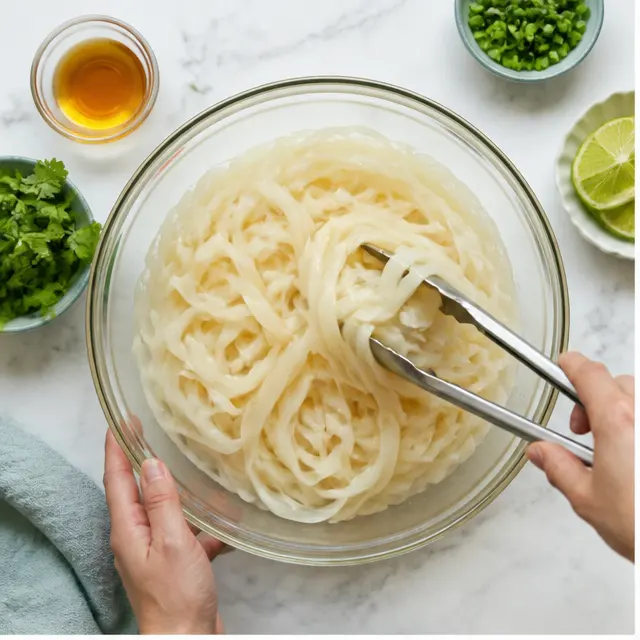
- Cook the rice noodles according to the package directions, stopping while they are still slightly firm to the bite, since they will continue cooking in the sauce. Rinse the noodles under cold water, drain well, and toss with the toasted sesame oil. Set aside.
- In a medium mixing bowl, whisk together the brown sugar, soy sauce, fish sauce, lime juice, rice vinegar, peanut butter, chili paste, dried basil, coriander, ginger, and black pepper until the sugar is dissolved and the sauce is smooth. Set aside.
- Meanwhile, heat 1 tablespoon of the vegetable or peanut oil in a large nonstick skillet or wok over medium-high heat. Add the chicken and let it sear undisturbed for 1 minute, then stir-fry until just cooked through. Transfer the chicken to a plate and wipe out the pan.
- Return the skillet to medium-high heat and add the remaining 1 tablespoon oil. Add the bell pepper and shallots and saute for 1 minute. Add the carrots and garlic and cook for 1 more minute. Reduce the heat to medium, pour in the beaten eggs, and stir constantly until softly scrambled.
- Pour the sauce into the skillet and add the noodles, then increase the heat to medium-high. Toss everything together until evenly coated and cook, stirring, until the noodles are chewy-tender, about 1 to 2 minutes. Fold in the cooked chicken, bean sprouts, green onions, and peanuts, and heat through.
- Taste the pad thai and add an extra tablespoon of lime juice if you prefer more tang, plus more chili paste if you want additional heat. Sprinkle with cilantro and serve right away.
Nutrition
Notes
Tried this recipe?
Let us know how it was!Why This Is the Best Chicken Pad Thai
I have a confession. I’ve spent enough money on chicken pad thai delivery to fund a small vacation. The fees, the tip, the slightly soggy noodles that arrive anyway. It was a problem.
My first attempt to make it at home? A sticky, clumpy disaster. The noodles turned into a glue-like paste, and the flavor was all wrong. I nearly gave up. But this easy chicken pad thai recipe? It’s the one that changed everything.
This is the glossy, tangy, peanutty pile of noodles you dream about. The one that makes you say, “Why did I ever order takeout?” It’s achievable on a regular Tuesday night. One pan, 30 minutes, practically impossible to mess up. That’s the mantra here.
What Is Chicken Pad Thai?
It’s a stir-fried rice noodle dish and an absolute rockstar of Thai street food. You’ve got chewy flat rice stick noodles, tender slices of chicken, a soft scrambled egg in pad thai, and a glossy sauce that hits every note. Sweet, sour, salty, and savory all at once.
Texture is the whole game here. The silky noodles tangled with crisp bean sprouts, crunchy crushed peanuts, and fresh cilantro. Every bite is a little different.
If you’re wondering about the difference between this and chicken lo mein, think about the sauce. Lo mein leans on soy sauce and is often heavier. Chicken pad thai is all about that vibrant sweet and sour balance, plus the nutty, creamy finish. It’s brighter, tangier, and way more exciting, honestly.
Ingredients for Chicken Pad Thai
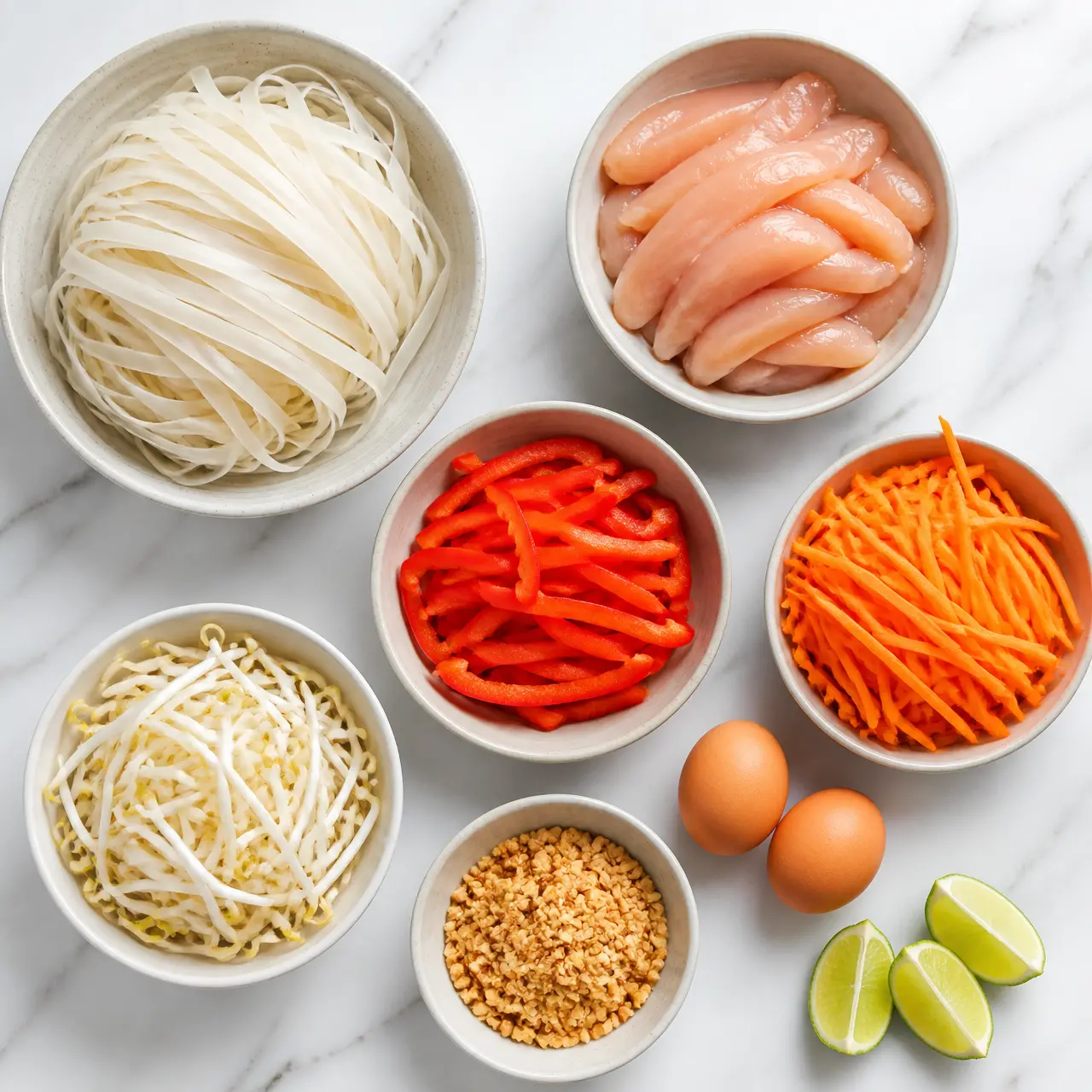
Here’s the thing about this recipe. It uses real, grocery-store-friendly ingredients. No hunting down obscure specialty items required. Let’s break down the cast of characters.
- Flat rice noodles: The foundation. Look for stir-fry style flat rice stick noodles, about 1/4 inch wide. They soak up the sauce perfectly.
- Protein: Sliced chicken breast fillets. Cut them into thin, uniform pieces so they cook fast and stay tender.
- Crisp veggies: Red bell pepper, matchstick carrots, shallots, fresh garlic, and a big handful of bean sprouts for that essential crunch.
- Finishing touches: Unsalted peanuts, fresh cilantro leaves, green onions, and lime wedges.
Pro tip: Prep everything before you start. The stir-fry moves fast, and you don’t want to be chopping garlic while your pan is smoking.
The Pad Thai Sauce
The sauce is where the magic happens. It’s the soul of this dish. You’re building a balance of flavors.
- Sweet: Packed brown sugar dissolves into a rich, caramel-like sweetness.
- Sour: Fresh lime juice and rice vinegar give it that bright, tangy punch.
- Salty & Savory: Fish sauce is the non-negotiable. It’s salty, funky, liquid gold. It melts into the background and gives you that deep umami you just can’t fake. Low sodium soy sauce rounds it out.
- Creamy & Spicy: A scoop of smooth peanut butter adds body and nuttiness, while chili paste (like sambal oelek) brings the heat. Dried basil, coriander, ginger, and black pepper add the aromatic depth.
How to Make Chicken Pad Thai
The process is quicker than you think. We’re talking 8 minutes of actual cooking time. Here’s the flow, broken down into four easy stages.
Stage 1: Prep the Noodles and Sauce
Cook your rice noodles according to the package directions, but here’s the golden rule. Stop while they’re still slightly firm to the bite. They’ll finish cooking in the pan later. Rinse them under cold water to stop the cooking, drain well, and toss with toasted sesame oil so they don’t clump into a brick.
While the noodles cool, make the sauce. Whisk together the brown sugar, soy sauce, fish sauce, lime juice, rice vinegar, peanut butter, chili paste, and all those spices. Keep whisking until the sugar is fully dissolved and the sauce looks smooth. Set it aside.
Stage 2: Sear the Chicken and Veggies
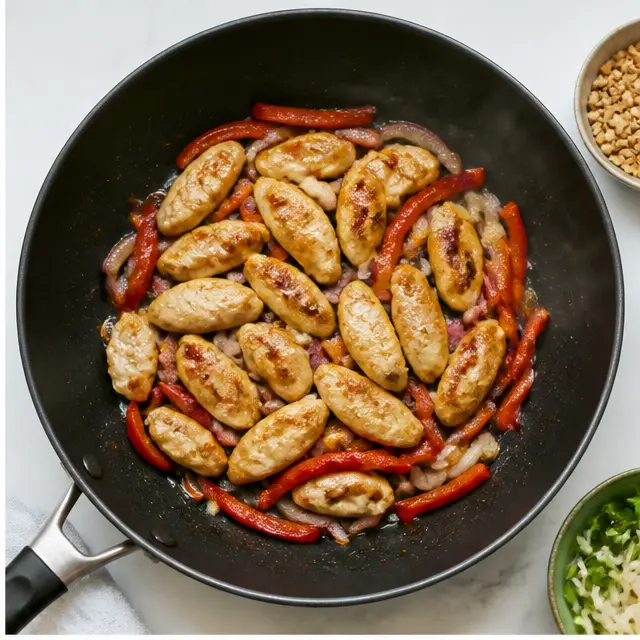
Heat your wok or a large nonstick skillet over medium-high heat. Add a tablespoon of oil. When it’s shimmering hot, add the sliced chicken and let it sear undisturbed for a full minute. That’s how you get those nice browned edges. Then toss it around until it’s just cooked through. Transfer the chicken to a plate and wipe out the pan.
Add the rest of the oil to the pan. Toss in the red bell pepper and shallots. Let them sizzle for about a minute, then add the carrots and garlic. The smell of garlic hitting hot oil is one of the greatest things on earth.
Stage 3: Scramble the Eggs and Add the Noodles
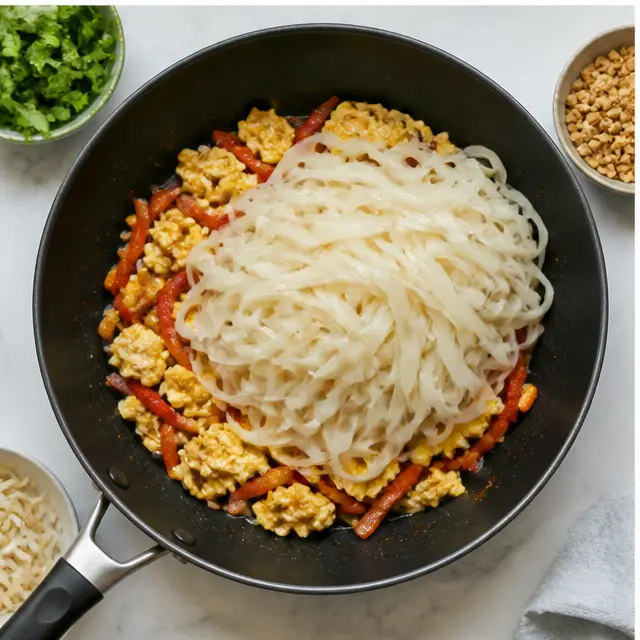
Here’s where it gets fun. Reduce the heat to medium and push the veggies to the side of the pan. Pour in your beaten eggs and stir them constantly until they’re softly scrambled. They should be fluffy and just barely set.
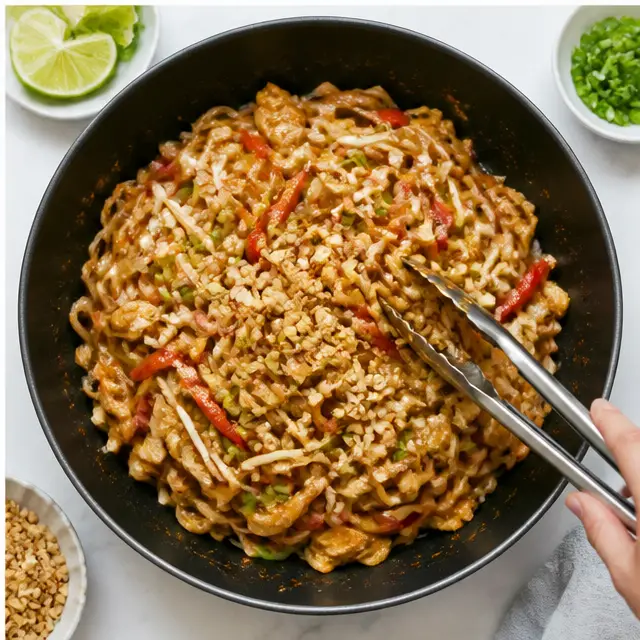
Now pour in that beautiful pad thai sauce and add the noodles. Crank the heat back up to medium-high. Toss everything together with your spatula or tongs. You want every single noodle coated in that glossy, brown sauce. This is when the kitchen starts to smell like your favorite Thai restaurant.
Stage 4: Toss and Finish
Fold in the cooked chicken, the crisp bean sprouts, green onions, and most of your crushed peanuts. Give it all a gentle toss to heat everything through. The sprouts should stay crunchy, the chicken just warms back up.
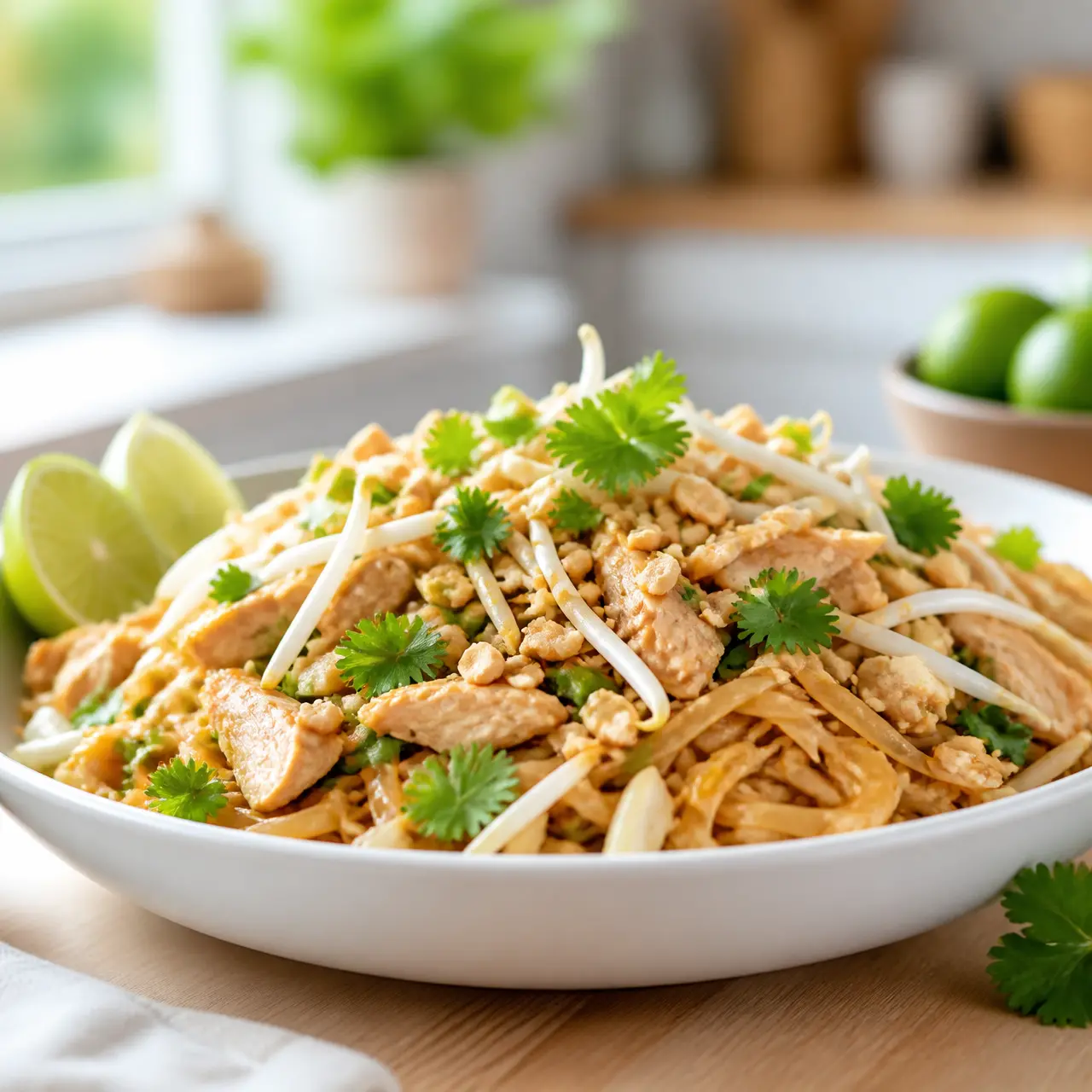
Taste it. This is your moment to adjust. Add an extra squeeze of fresh lime juice if you want it tangier. Throw in a little more chili paste if you want more heat. Then pull it off the heat, shower it with fresh cilantro, and get it on plates immediately.
Expert Tips for Perfect Chicken Pad Thai
I’ve made this recipe more times than I can count. And I’ve messed it up plenty along the way. Here are the lessons I learned so you don’t have to repeat my mistakes.
- Don’t overcook the noodles. This is mistake number one. If you boil them until they’re fully soft, they’ll turn to mush in the wok. Al dente is your friend.
- Prep everything first. This isn’t the time for multitasking. Have your veggies chopped, your eggs beaten, and your sauce whisked before you turn on the stove.
- Use the right pan. A wok is ideal for wok cooking, but a large, high-sided nonstick skillet works great. Just don’t crowd the pan, or you’ll steam everything instead of searing it.
- Don’t skip the fish sauce. I know it smells intense. I’ve forgotten it before, and the dish just falls flat. It’s essential for that authentic thai recipe flavor.
- Balance your flavors. Too sweet? Add a squeeze of lime. Too salty? A pinch of brown sugar helps. Taste as you go.
Chicken Pad Thai Variations
This recipe is incredibly flexible. Shrimp instead of chicken? Yes, just cook it for a minute or two less. Tofu? Absolutely. Thinly sliced beef? Also yes. Just adjust the cooking time so your protein stays tender.
Want to make it vegan? Leave out the egg, swap the chicken for firm tofu, and use a bit more soy sauce in place of the fish sauce. It’ll still be delicious. Need it gluten-free? Just use tamari or a certified gluten-free soy sauce. Easy swaps, no stress.
And if you’re a heat seeker, add a spoonful of chili crisp or red chili flakes on top before serving. It gives it a wonderful crunchy, spicy kick.
Storage and Reheating
Leftover chicken pad thai is a beautiful thing. It keeps well in an airtight container in the refrigerator for up to 3 days. The flavors actually have time to meld together overnight.
To reheat, add a splash of water to your skillet and warm it over medium heat. That splash of water brings the sauce back to life so the noodles don’t dry out. Or, you know, just microwave it in a pinch. No judgment here.
I’ll be honest, it’s so good that leftovers rarely make it to the next day in my house. But when they do, they make a mean desk lunch.
Frequently Asked Questions
When this chicken pad thai becomes your weeknight go-to, and trust me, it will, you’ll never look at a delivery app the same way again. There’s too much pride and flavor in making it yourself. The glossy noodles, the crunchy peanuts, that incredible aroma filling your kitchen. It’s a win the weeknight feels like a victory.
If you give this easy chicken pad thai a shot, let me know how it turns out! I love hearing from you. And for more weeknight dinner inspiration and recipe ideas, come hang out with me on Pinterest. I’m always pinning our latest favorites there. You can find me at my Pinterest page. Enjoy every single bite!
Source: Learn More About This Dish
What is Chicken Pad Thai Made Of?
It’s made with flat rice noodles, sliced chicken, scrambled eggs, bean sprouts, green onions, and crushed peanuts. The signature pad thai sauce combines brown sugar, fish sauce, lime juice, rice vinegar, and peanut butter for that sweet, tangy, savory balance.
What goes in Chicken Pad Thai?
The essentials are flat rice stick noodles, chicken breast pieces, eggs, red bell pepper, carrots, shallots, and garlic. You’ll also need bean sprouts, peanuts, cilantro, and the key sauce ingredients like fish sauce, lime juice, and brown sugar.
What Does Pad Thai Taste Like?
It’s a flavor rollercoaster. You get sweetness from the brown sugar, a bright tang from the lime juice, and a deep salty savoriness from the fish sauce. The peanut butter adds a subtle nutty creaminess that pulls it all together.
What does Chicken Pad Thai taste like?
It’s savory, slightly sweet, and a little sour, all in perfect harmony. The tender chicken picks up the complex sauce, while the crisp bean sprouts and crunchy peanuts add texture. It’s a satisfying, well-rounded weeknight dinner.
Is Pad Thai Bad for You?
Restaurant versions can be heavy on oil, sugar, and sodium. But this homemade chicken pad thai is much easier to control. It has lean chicken protein and a good amount of veggies for fiber, and you get to decide how much sugar and salt goes into the sauce.
Is chicken a clean protein?
Absolutely. Chicken breast fillets are one of the leanest, most versatile proteins you can cook with. They’re packed with protein to keep you full and happy, and they take on the flavor of the pad thai sauce beautifully.
Why use chicken in Pad Thai?
Chicken cooks incredibly fast, which is perfect for a 30-minute stir-fry. It’s also budget-friendly compared to shrimp, and it soaks up the sweet and tangy sauce without overpowering the other ingredients. It’s an easy, crowd-pleasing protein.
Can I make Chicken Pad Thai gluten free?
Yes, it’s actually quite simple. Just swap the regular soy sauce for tamari or a certified gluten-free soy sauce. Everything else in the stir-fry is naturally gluten-free, making it a great option for dietary needs.
Can I prep Chicken Pad Thai ahead of time?
Definitely. You can cook the noodles, slice the chicken, chop the veggies, and whisk the sauce up to a day in advance. Keep everything in separate containers in the fridge. When you’re ready to eat, just heat your wok and stir-fry. It’s a great meal prep strategy.
What’s the difference between Pad See Ew and Pad Thai?
Pad See Ew uses wide, thick noodles and a darker, soy-sauce-based sauce, making it heavier and sweeter. Pad Thai uses thinner rice noodles and features that bright, tangy, peanutty balance of lime, fish sauce, and sugar. They’re both delicious, but totally different vibes.
What’s the secret ingredient in Pad Thai?
It’s definitely fish sauce. It might smell strong on its own, but it provides an irreplaceable savory, umami depth that makes the whole dish sing. Combined with the sweet brown sugar and sour lime, it creates that legendary sweet and sour profile.