
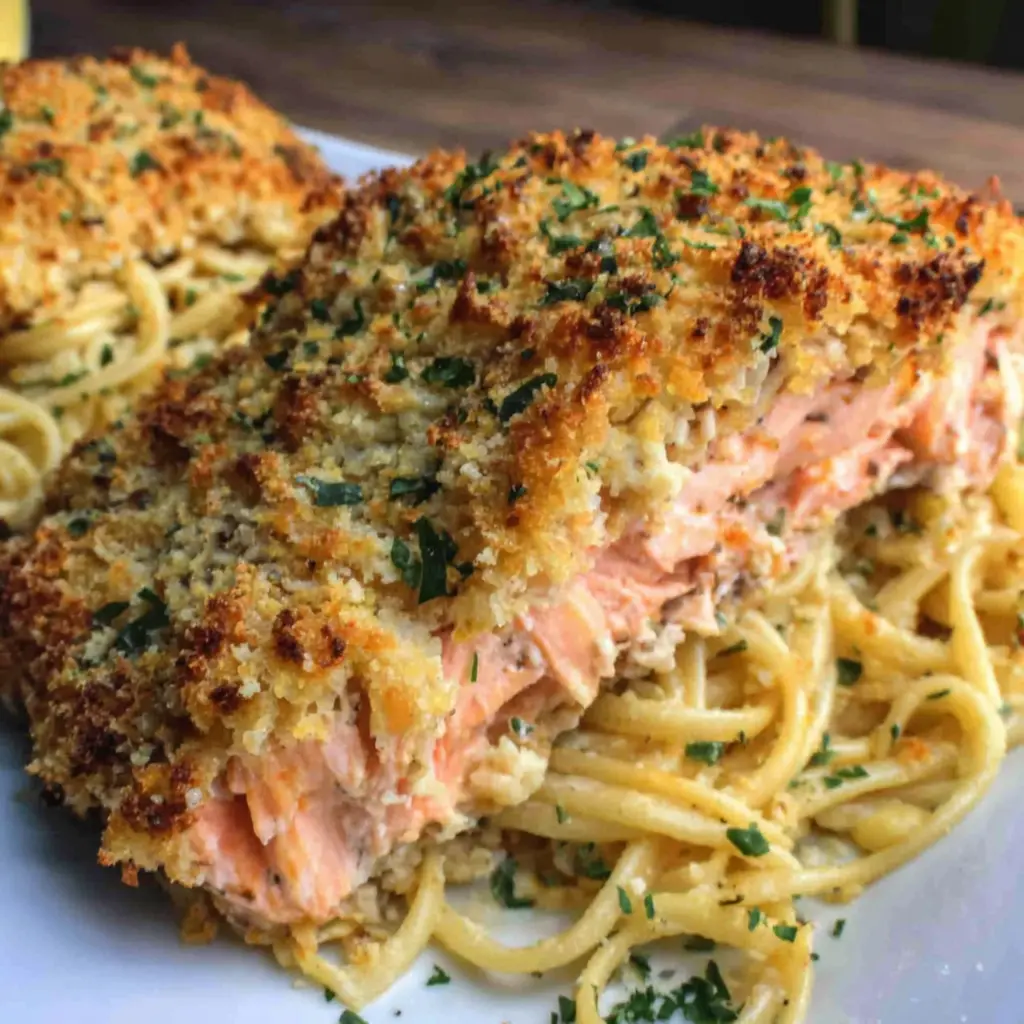
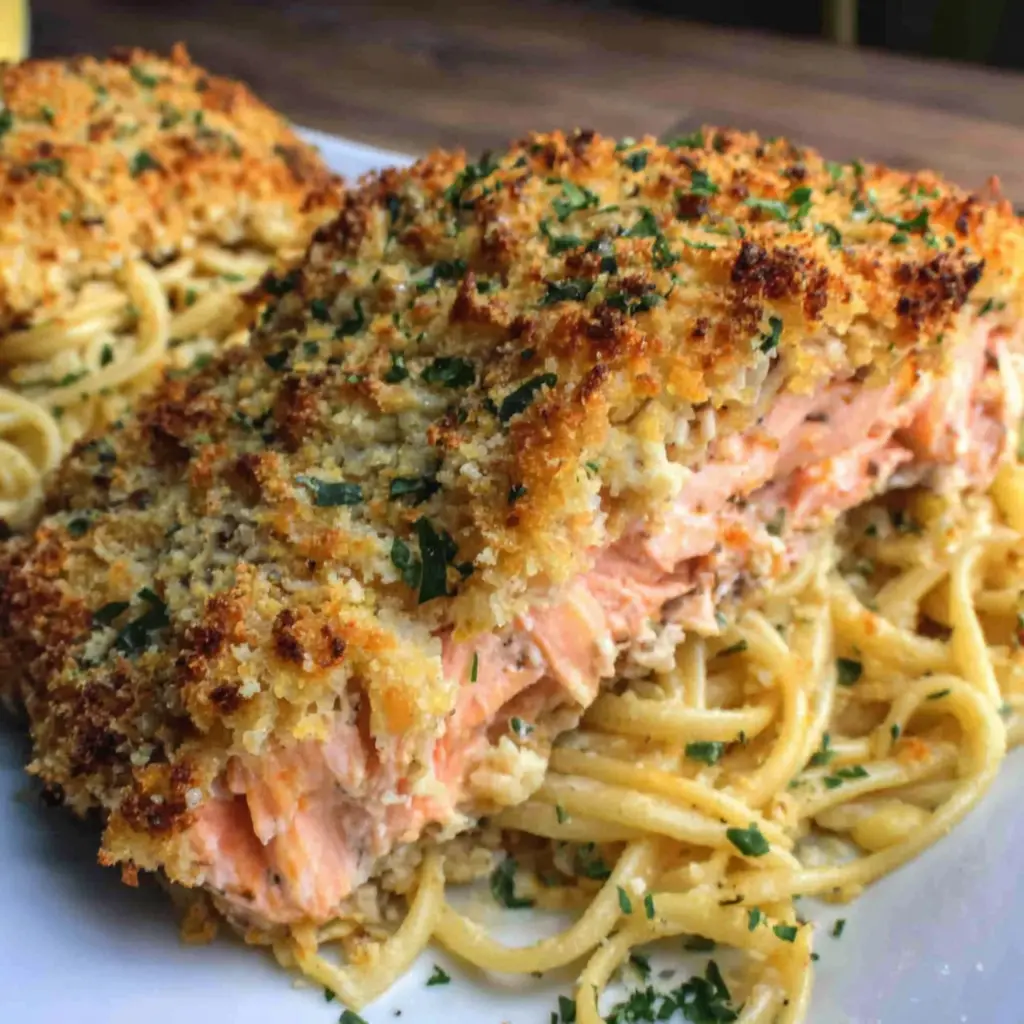
Restaurant-Style Crispy Parmesan Crusted Salmon Pasta
Ingredients
Method
- Prepare the oven and a baking sheet.
- Preheat the oven to 400°F (200°C). Line a baking sheet with parchment paper or lightly grease it with olive oil.
- Prepare the salmon.
- Place the salmon fillets skin-side down on the baking sheet. Pat them dry with paper towels.
- Make the parmesan crust mixture.
- In a small bowl, combine grated parmesan, panko breadcrumbs, minced garlic, lemon zest, parsley, paprika, salt, and black pepper. Drizzle in the olive oil and mix until the texture resembles slightly damp crumbs.
- Add flavor to the salmon.
- Spread a thin layer of Dijon mustard over each salmon fillet.
- Add the crust.
- Press the parmesan breadcrumb mixture evenly onto the top of each fillet.
- Bake until golden.
- Place the tray in the oven and bake for 12–15 minutes, depending on the salmon's thickness.
- Finish with fresh lemon.
- Once baked, drizzle with fresh lemon juice or serve with lemon wedges.
Nutrition
Notes
Tried this recipe?
Let us know how it was!Why You’ll Absolutely Love This Dish
You know that feeling? It’s Wednesday, you’re staring at a salmon fillet and a box of pasta, and you’re just… stuck. You want something comforting, something that feels like a treat, but you don’t have the energy for a culinary project. I’ve been there. Honestly, I’ve ruined a perfectly good piece of salmon more times than I’d like to admit, ending up with a soggy crust and overcooked fish. It’s the worst.
That’s why I’m so excited about this crispy parmesan crusted salmon pasta. It solves everything. It gives you that restaurant-quality wow factor the kind of dish that makes everyone at the table go quiet for a second but it’s built for a real weeknight. You get this incredible texture contrast: the salty, crunchy parmesan crust giving way to perfectly tender salmon, all tangled up in the creamiest, most carby comfort food pasta. It’s a hug in a bowl that also happens to look amazing. I promise, this is easier than it looks. Let’s get into it.
Key Ingredients for Success (And What You Can Swap)
Before we even turn on the stove, let’s talk ingredients. This isn’t about being fussy, it’s about setting you up to win. The right choices here make the difference between good and “can I have the recipe?” amazing.
First, the salmon. You want skinless fillets, about 6 ounces each. Thicker cuts, around an inch thick, work best because they give you time to get that crust golden brown without drying out the middle. If you’re at Costco or your local Ralphs, look for the center-cut portions. They cook more evenly. Now, the parmesan. This is non-negotiable for the crust. You need a block of real Parmigiano-Reggiano or Grana Padano and a microplane or the fine side of your box grater. The pre-grated stuff in a tub has anti-caking agents that prevent proper melting and crisping. It just won’t work the same, you know?
For the pasta, I’m a linguine or fettuccine person for this recipe. Those long, flat noodles are perfect for clinging to every bit of the creamy sauce and catching those deliciously flaked pieces of salmon. But hey, use what you love. Rigatoni or penne are great too. The sauce is simple magic: butter, garlic, a splash of cream (or a great non-dairy substitute), and that magical, starchy pasta water. I mean, it’s the secret to a silky sauce that coats every strand without being gloppy. Don’t you dare pour it down the drain.
How to Make Crispy Parmesan Salmon Pasta: A Step-by-Step Mindset
Okay, let’s cook. The key to nailing this crispy parmesan crusted salmon pasta is in the timing and a little bit of kitchen confidence. I’ll walk you through the two main components the salmon and the pasta and then how to bring them together in a way that feels seamless, not stressful.
Prepare the Crispy Salmon (This is Where the Magic Happens)
The absolute number one tip, and I learned this the hard way, is to pat your salmon fillets completely dry with paper towels. Any surface moisture is the enemy of crispiness. It creates steam under the crust and you’ll end up with a sad, soft topping. Season them well with salt and pepper. Now, for the crust.
I think there are two good approaches here, and the tradeoff is mostly about texture. You can mix your finely grated parmesan with some panko breadcrumbs for an extra-crunchy, shattery crust. Or, you can go pure parmesan for a more intense, lace-like crisp that’s almost like a fancy cheese crisp. I love the pure parmesan version, but the breadcrumb mix is a bit more forgiving and gives you that fantastic golden brown color. Your call.
Press the parmesan mixture firmly onto the top of each fillet. You want a good, even layer. Heat a bit of olive oil in a non-stick or cast-iron skillet over medium-high heat. Place the salmon in the pan, crust-side down, and don’t touch it. Let it sizzle for a good 2-3 minutes until you see that gorgeous golden-brown edge. You’ll hear the sound change from a sizzle to more of a faint crackle. That’s your cue. Carefully flip it, and cook for another 3-4 minutes on the other side, or until it’s just cooked through. You can check with a knife peek in the thickest part; it should flake easily. Then, let it rest. This lets the juices settle so they don’t run out all over your beautiful pasta.
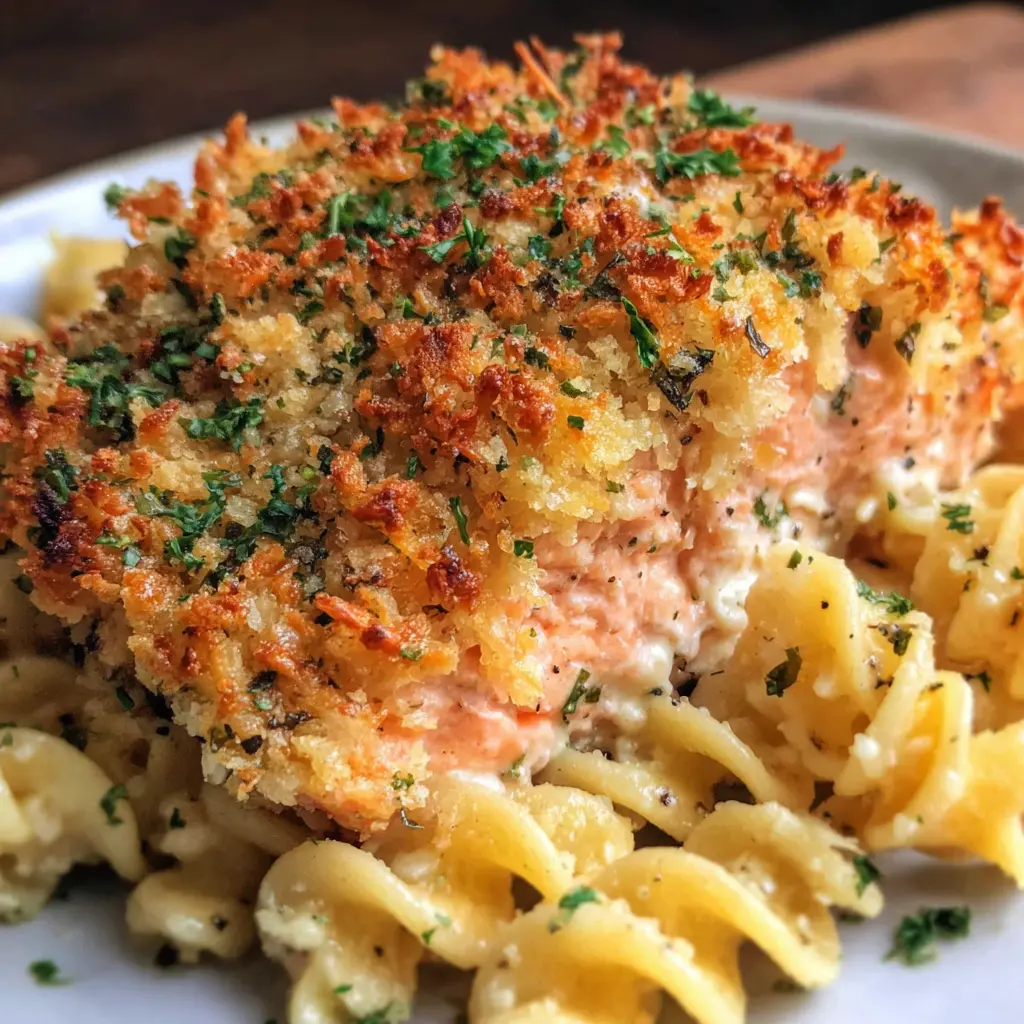
Cook the Pasta & Build the Pan Sauce
While the salmon is doing its thing, get your pasta water boiling. Salt it like the sea. Seriously, it should taste like mild seawater. This is your only chance to season the pasta itself. Cook your linguine until it’s al dente it should have a slight bite. Right before you drain it, scoop out about a cup of that starchy pasta water. This liquid gold is what will make your sauce creamy and cohesive.
In the same skillet you used for the salmon (all those browned, flavorful bits are still in there!), melt a little butter. Add some minced garlic and let it become fragrant, maybe 30 seconds. If you want a little brightness, a squeeze of lemon juice here is amazing. Then, pour in a bit of cream. Let it simmer for a minute to thicken slightly. Now, add your drained pasta directly to the skillet. Toss it all together, adding splashes of that reserved pasta water until the sauce coats every noodle in a glossy, luxurious way. It should look loose and silky in the pan; it’ll tighten up perfectly on the plate.
Assemble Your Delicious Masterpiece
This is the fun part. Divide that creamy pasta among your bowls. Take your rested salmon and use a fork to gently flake it into big, beautiful chunks. You want to preserve some of that gorgeous crust in each piece. Scatter the flaked salmon over the pasta. The heat from the pasta will warm it through perfectly.
Finish with a final shower of fresh grated parmesan and a sprinkle of chopped herbs. Fresh basil or dill are my go-tos, especially with a spring vibe. That’s it. You’ve just made a crispy parmesan crusted salmon pasta that looks like it came from a fancy Italian trattoria. The contrast of the crunchy salmon, the tender flakes, and the creamy pasta is honestly so good.
Expert Tips for the Best Crispy Parmesan Crusted Salmon Pasta
I want you to nail this every single time, so here are the little things that make a big difference. They’re the kind of tips you pick up after making a recipe a dozen times.
For the crispiest crust, make sure your skillet is properly hot before adding the salmon. You should see a light shimmer in the oil. And don’t overcrowd the pan. If you’re cooking for four, you might need to do it in two batches. Crowding creates steam, and steam is the enemy of crisp. Also, let the salmon sit at room temperature for 10-15 minutes before cooking if you have time. A fridge-cold fillet going into a hot pan can seize up and cook unevenly.
When it comes to doneness, I highly recommend using a digital thermometer. Cook your salmon until the internal temperature hits 145°F in the thickest part. It seems precise, but it takes the guesswork out and guarantees perfectly tender, not dry, fish every time. If your oven doesn’t heat evenly and you’re finishing the salmon there, give the tray a little shake or turn it once during cooking.
And about leftovers? They keep in an airtight container in the fridge for a day or two. To reheat and re-crisp that amazing parmesan crust, skip the microwave. Instead, pop it under the broiler for just 2-3 minutes. It brings everything back to life. If you’re starting from frozen salmon, our guide for making crispy parmesan crusted salmon from frozen is a great time-saver.
Common Mistakes & Fixes
Mistake: The parmesan crust won’t stick or falls off.
Solution: You probably didn’t pat the salmon dry enough. Moisture is the culprit. Also, press the crust on firmly and let it sear without moving it to form a bond.
Mistake: The crust burns before the salmon is cooked.
Solution: Your heat is too high. After the initial sear on the crust side, reduce the heat to medium to finish cooking through gently.
Mistake: The pasta sauce is too thick or gloppy.
Solution: You didn’t use enough pasta water! That starchy water is your sauce’s best friend. Add it in splashes until the sauce loosens and coats the noodles silkily.
Mistake: Reheating turns the salmon rubbery.
Solution: Never use the microwave. The broiler or a toaster oven is your only good option to restore texture.
Let’s Mix It Up: Crispy Salmon Pasta Variations
The beautiful thing about this crispy parmesan crusted salmon pasta recipe is that it’s a fantastic template. Once you’re comfortable with the basic method, you can run with it. Here are a few of my favorite twists.
For a springtime feel, add a handful of fresh peas or asparagus tips to the pasta during the last minute of cooking. The sweetness pairs beautifully with the salty parmesan. You could also swap the creamy sauce for a simple lemon-butter pan sauce. Just use butter, garlic, lemon juice, and that pasta water. It’s lighter but just as luxurious. For a complete meal built around this pairing, try our crispy parmesan crusted salmon and asparagus.
If you’re feeding a crowd or want to prep ahead, this transforms into an incredible pasta bake. After combining the flaked salmon and pasta, transfer it all to a baking dish, top with extra parmesan and breadcrumbs, and bake at 375°F until bubbly and golden on top. It’s the ultimate comfort food casserole.
And for dietary needs, it’s easy to adapt. Gluten-free? Use your favorite GF pasta and swap the panko for crushed gluten-free crackers or finely chopped almonds in the crust. Need it dairy-free? Use a high-quality vegan parmesan alternative (nutritional yeast can work in a pinch) and a rich, unsweetened non-dairy cream like coconut or cashew for the sauce. I’ve tested this, and it works beautifully.
Frequently Asked Questions
Serving, Storing, and Reheating Like a Pro
This dish is a complete meal on its own, honestly. But if you want to round it out, keep it simple. A bright, lemony arugula salad cuts through the richness perfectly. Some roasted asparagus or broccolini on the side is also a winner. For a real treat, grab a loaf of crusty sourdough from the farmers’ market to soak up any extra sauce.
If you have leftovers, let them cool completely before storing in an airtight container in the fridge. They’ll keep for up to 3 days. The best way to reheat is in the oven or toaster oven at 300°F for 10-15 minutes, or under the broiler for a few minutes to re-crisp the topping. You can even reheat individual portions in an air fryer at 380°F for 8-10 minutes. It works shockingly well.
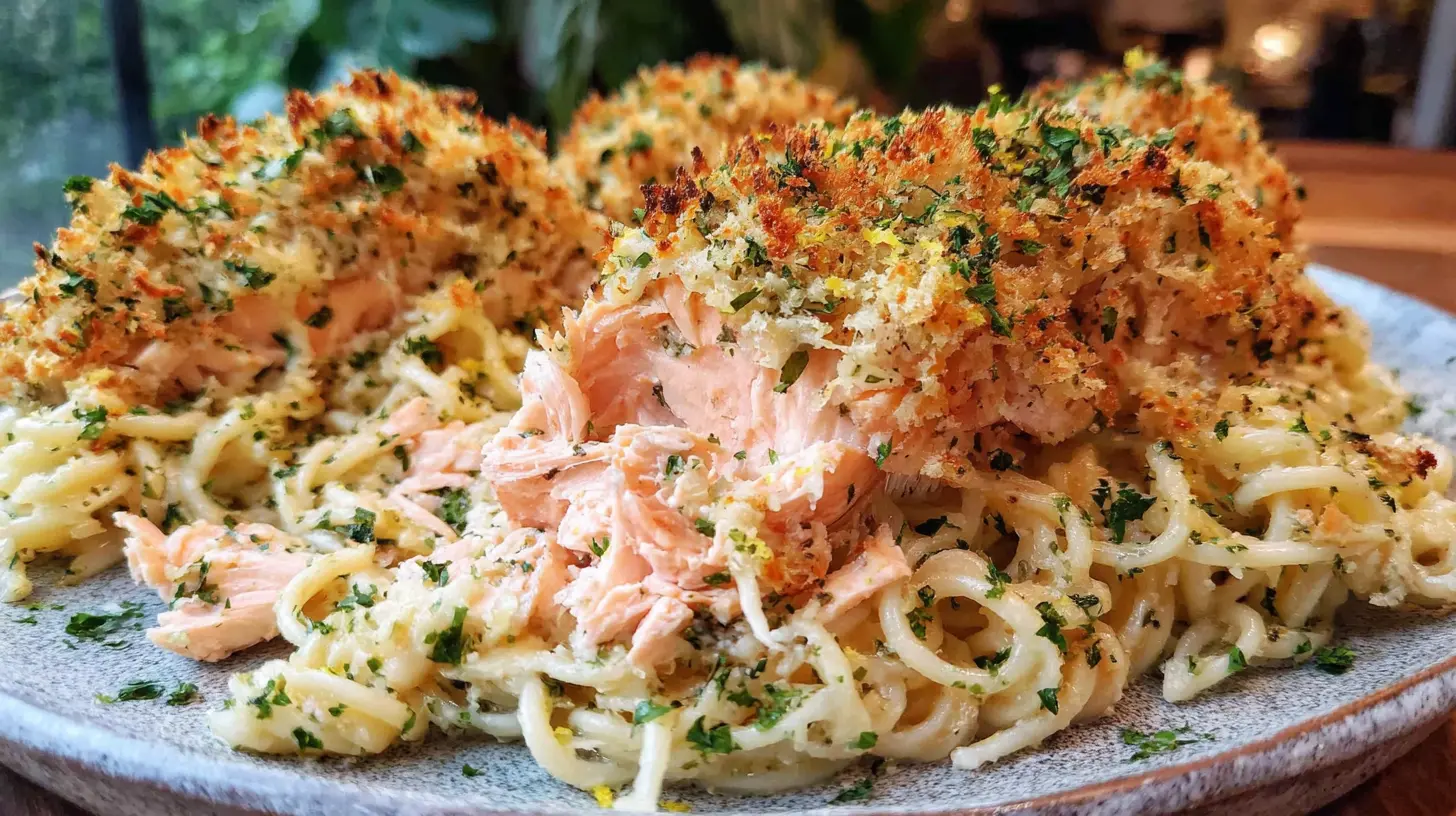
So there you have it. Everything you need to turn a simple salmon fillet and some pasta into a show-stopping dinner that’s packed with flavor and texture. I love this recipe because it feels special without being stressful. When you serve this crispy parmesan crusted salmon pasta, just watch the smiles appear. You’ve totally got this. And hey, if you try it, I’d love to see your creation. For more weeknight dinner inspiration and fun twists on classics, check out my Pinterest boards.
Happy cooking!
Source: Nutritional Information
Can I make crispy parmesan crusted salmon pasta ahead of time?
You can prep components! Make the crust mixture, pat dry and season the salmon, and measure your sauce ingredients. Cook everything fresh for the best texture, though. The assembled dish is best eaten right away, but leftovers reheat well.
Do I need to thaw frozen salmon before making this?
Yes, absolutely. Thaw it completely in the fridge overnight. Pat it extra dry to remove any moisture from thawing. Starting with frozen or partially frozen fillets will give you a soggy crust and unevenly cooked fish.
What’s the right internal temperature for the salmon?
Cook it to 145°F measured in the thickest part. A digital thermometer is your best friend here. It guarantees the salmon is safe to eat and stays perfectly tender and moist, not overdone.
Can I make a dairy-free version of this pasta?
You can! For the crust, use a vegan parmesan or a mix of nutritional yeast and breadcrumbs. For the sauce, swap the butter for olive oil and use an unsweetened, full-fat coconut cream or cashew cream. It’ll be different, but still delicious.
4 Responses
This Crispy Parmesan Crusted Baked Salmon was an absolute triumph last night! The crust was perfectly golden and crunchy, and the salmon itself was so moist and flaky. It felt like a restaurant meal but was incredibly simple to prepare for a weeknight. Huge hit with the whole family!
I tried this recipe and it was delicious! I took your advice about using thicker salmon fillets, and it really helped get that crust crispy without overcooking the fish. I actually added a tiny sprinkle of red pepper flakes to the parmesan mix for a little extra kick, which was a nice touch.
This recipe looks amazing and I can’t wait to try it! I’m planning on making it this weekend, but I was wondering if there’s a good substitute for Dijon mustard if I don’t have any on hand? Also, how crucial is the lemon zest for the overall flavor of the crust versus just using the lemon juice?
For the Dijon, you can use a teaspoon of regular yellow mustard or even a bit of mayonnaise in a pinch. The lemon zest adds a bright, aromatic note that the juice alone doesn’t quite achieve, so I’d really recommend including it if you can!