
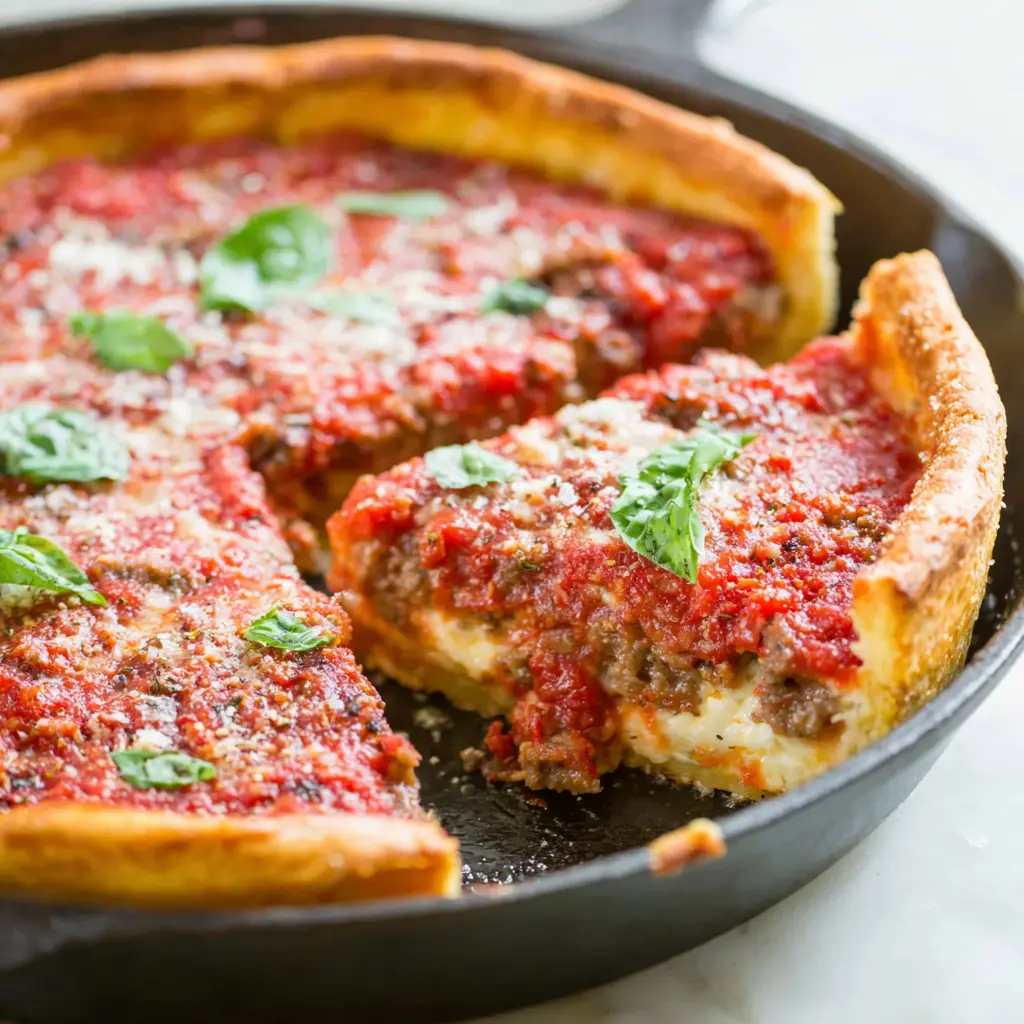
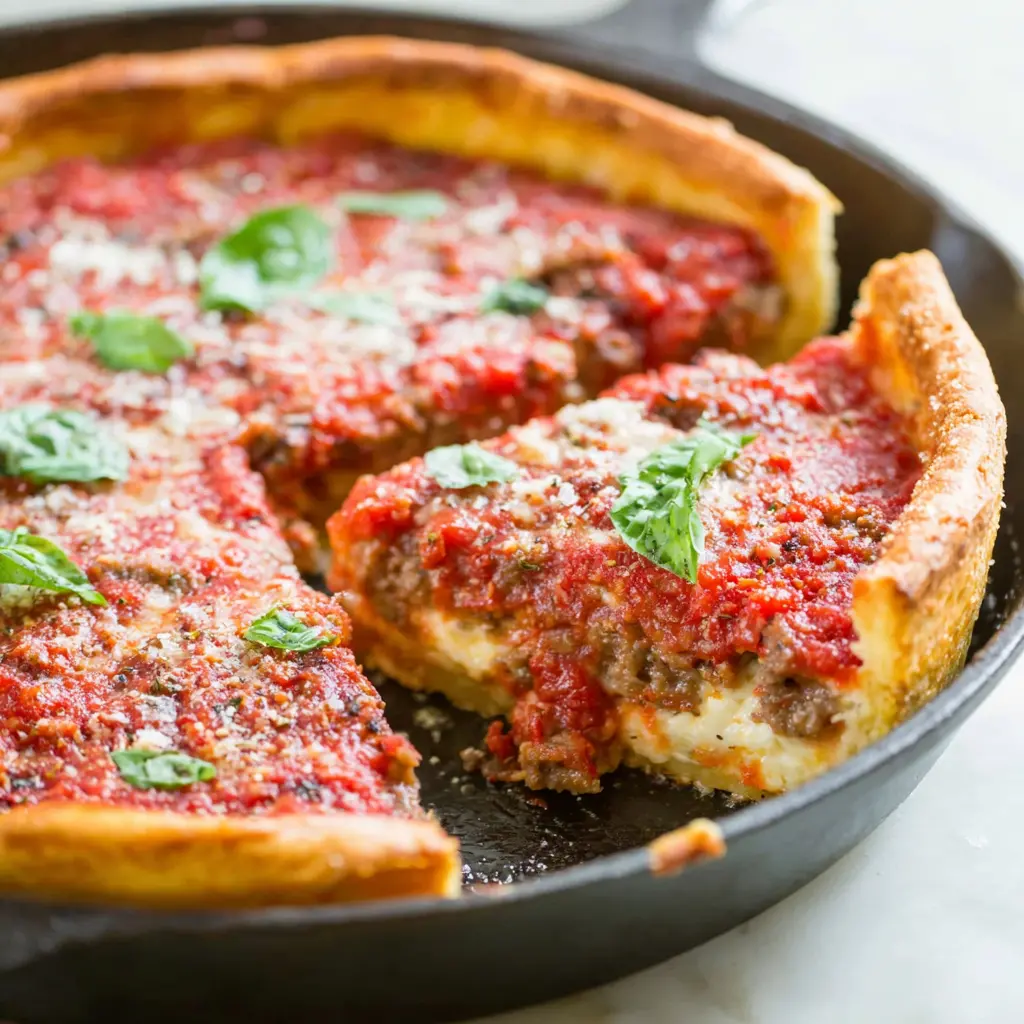
Authentic Chicago Style Deep Dish Pizza with a Buttery, Flaky Crust
Ingredients
Method
- In a stand mixer fitted with the dough hook, combine the flour, cornmeal, yeast, sugar, and salt. Mix on low speed until well blended. Add the water and melted butter. Continue mixing for 1 to 2 minutes until combined. Scrape down the sides of the bowl, then mix again. Increase speed to medium and knead until the dough is smooth and shiny and pulls away from the sides, about 4 to 5 minutes.
- Coat a large bowl with 1 teaspoon of olive oil. Transfer the dough to the bowl and turn to coat. Cover with plastic wrap and let rest at room temperature until nearly doubled in size, about 1 hour.
- While the dough rises, prepare the sauce. In a medium saucepan over medium heat, combine 1 tablespoon olive oil and 1 tablespoon butter. Add the minced onion, crushed red pepper, Italian seasoning, salt, and pepper. Cook, stirring frequently, until the onion softens, about 5 minutes. Add the garlic and cook until fragrant, about 30 seconds. Stir in the crushed tomatoes and sugar. Bring to a simmer, then reduce heat to medium-low. Cook, stirring often, until the sauce reduces to about 2 1/2 cups, about 30 minutes. Remove from heat, stir in the fresh basil and remaining 1 tablespoon olive oil. Adjust salt to taste. Cover and set aside.
- Adjust the oven rack to the lowest position and preheat the oven to 425°F. Turn the dough out onto a clean countertop. Roll the dough into a 15 by 12-inch rectangle. Using an offset spatula, spread the softened butter over the dough, leaving a 1/2-inch border along the edges. Starting at the short end, tightly roll the dough into a cylinder. With the seam-side down, flatten the dough into an 18 by 4-inch rectangle. Cut the rectangle in half crosswise. Working with one half at a time, fold the dough into thirds like a business letter. Pinch the seams together to form a ball. Repeat with the remaining half. Transfer both balls to the oiled bowl, cover tightly with plastic wrap, and let rise in the refrigerator until nearly doubled, 45 to 50 minutes.
- While the dough chills, cook the Italian sausage in a large non-stick skillet over medium heat, breaking it into chunks. Cook until browned and cooked through. Drain well and set aside.
- Coat two 9-inch cast iron skillets or cake pans with 1 1/2 tablespoons of olive oil each.
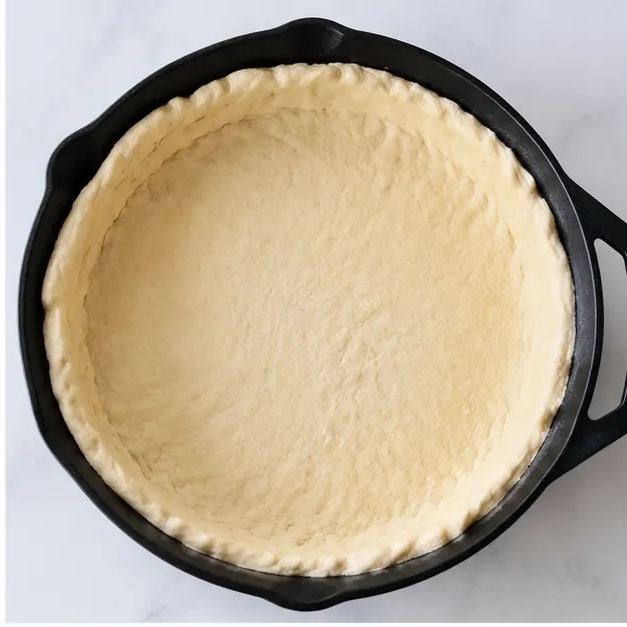
- On a clean countertop, roll one dough ball into a 13-inch round disk, about 1/4-inch thick. Loosely roll the dough around the rolling pin and transfer to one prepared skillet. Unroll and press the dough into the pan, working it into the corners and about 1 inch up the sides. If the dough resists, let it rest for 5 minutes before trying again. Repeat with the remaining dough ball and the second skillet.
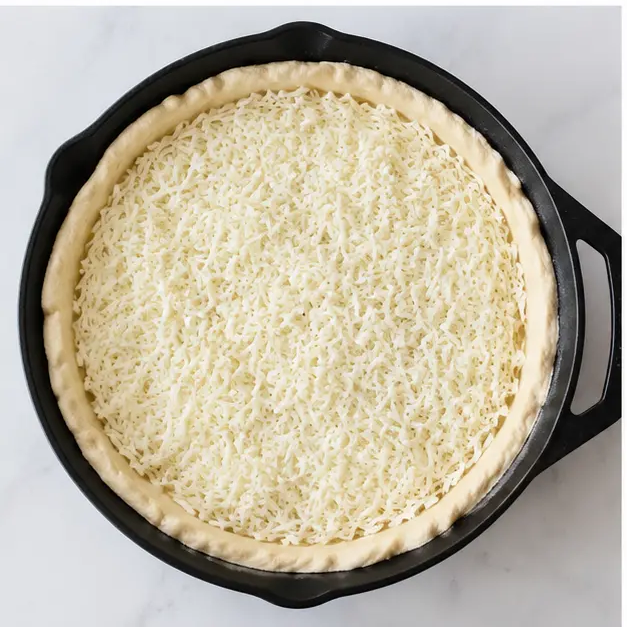
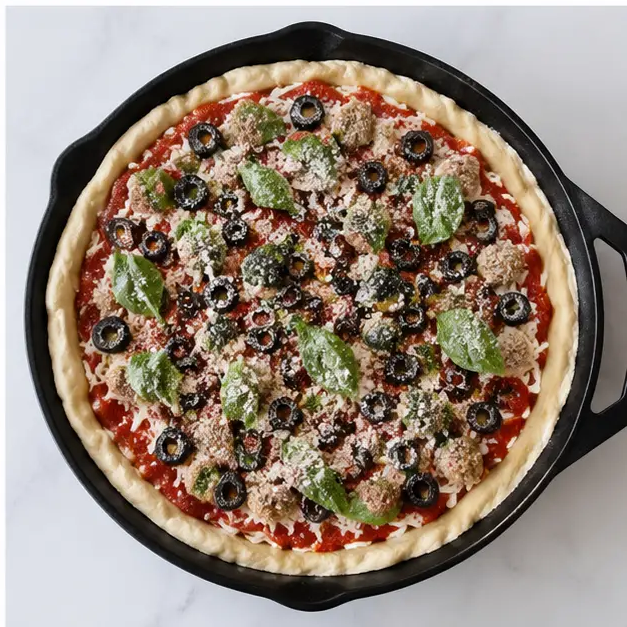
- Sprinkle each pizza with 2 cups of the shredded mozzarella. Divide the sauce between the two pizzas, spreading with the back of a spoon to cover the cheese. Top each pizza with half the cooked Italian sausage, then the olives, and finally the Parmesan cheese.
- Bake until the crust is golden brown, about 20 to 30 minutes. If the top browns too quickly, tent with foil. Let the pizzas cool in the pans for 10 minutes before serving.
Nutrition
Notes
Tried this recipe?
Let us know how it was!What Makes Chicago-Style Deep Dish Pizza Unique?
I remember my first deep dish ending up a soupy mess. The crust was pale and doughy, the cheese had turned into a rubbery disc, and the sauce just flooded the whole thing. It was a disaster. But that failure taught me something important: Chicago style deep dish pizza isn’t just a thicker version of regular pizza. It’s a completely different beast.
So what sets it apart? For starters, the crust is more like a buttery, flaky pastry than a traditional chewy pizza base. It’s pressed into a deep pan and climbs up the sides, creating a sturdy vessel for all the good stuff. The layering is also flipped. Cheese goes on the bottom, toppings go in the middle, and a chunky tomato sauce goes on top. This keeps the crust from getting soggy and lets the cheese melt into every bite.
And that crust? It’s got cornmeal in it, which adds a subtle crunch and that signature golden color. The dough is also laminated, a technique borrowed from pastry making, where butter is folded into the dough to create those delicate, flaky layers. It’s a patient pizza, but it’s worth it.
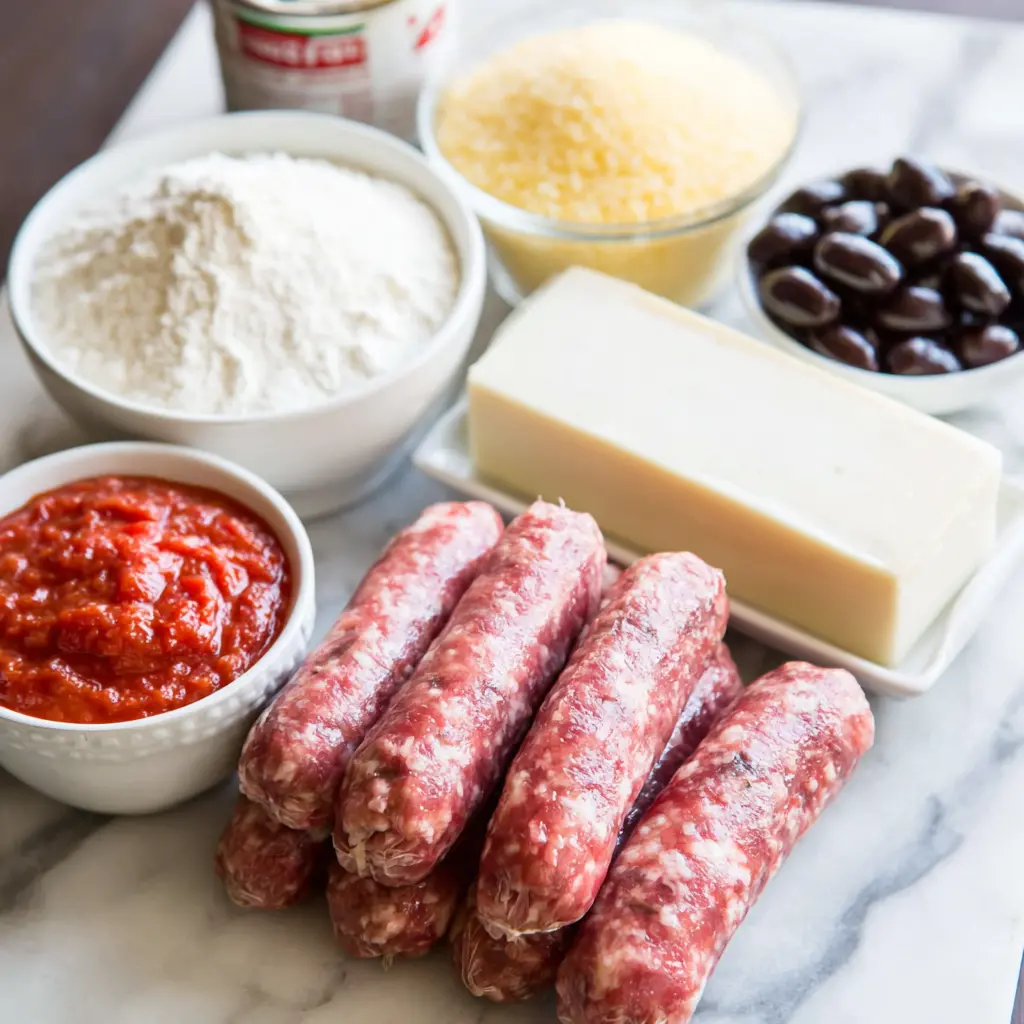
Ingredients for Deep Dish Pizza
Before we dive in, let’s talk about what you’ll need. This recipe is broken into three parts: the dough, the sauce, and the toppings. Each one is important, so don’t skip any of them.
For the buttery pizza dough:
- All-purpose flour and yellow cornmeal for structure and crunch
- Rapid rise yeast so you don’t have to proof it separately
- A little sugar to feed the yeast and balance the acidity
- Salt for flavor
- Water and melted butter for moisture
- Extra softened butter for laminating (this is the secret to flaky layers)
- Olive oil for greasing the bowl and the pans
For the chunky tomato sauce pizza:
- Olive oil and butter for sautéing
- Red onion, garlic, and Italian seasoning for depth
- Crushed red pepper flakes for a little heat
- Crushed tomatoes (no salt added so you control the salt)
- Sugar to cut the acidity
- Fresh basil stirred in at the end
For the toppings:
- Italian sausage (casings removed) for that classic deep dish flavor
- Sliced black olives for a briny pop
- Part-skim mozzarella cheese, shredded fresh (don’t use pre-shredded, it won’t melt the same)
- Parmesan cheese for a salty, nutty finish
How to Make Deep Dish Pizza Dough
This dough is the foundation of everything. It’s not hard, but it does need a little patience. The key is to let the gluten develop properly so the crust holds its shape.
In a stand mixer with the dough hook, combine the flour, cornmeal, yeast, sugar, and salt. Give it a quick mix on low to blend everything. Then add the water and melted butter. Keep mixing for a minute or two until it comes together. Scrape down the bowl, then bump up the speed to medium and knead for about 4 to 5 minutes. You’re looking for a smooth, shiny dough that pulls away from the sides of the bowl. It should feel soft and supple, like a relaxed earlobe.
Coat a large bowl with a teaspoon of olive oil, drop the dough in, and turn it to coat. Cover with plastic wrap and let it rest at room temperature until nearly doubled, about an hour. Don’t rush this part. The yeast needs time to work.
How to Make the Chunky Tomato Sauce
While the dough is rising, you can make the sauce. This is a chunky, rustic sauce that sits beautifully on top of the pizza without running off.
In a medium saucepan, heat a tablespoon of olive oil and a tablespoon of butter over medium heat. Add the minced red onion, crushed red pepper, Italian seasoning, salt, and pepper. Cook for about 5 minutes, stirring often, until the onion softens and turns translucent. Toss in the garlic and cook for another 30 seconds until it’s fragrant.
Stir in the crushed tomatoes and sugar. Bring it to a simmer, then reduce the heat to medium-low. Let it cook for about 30 minutes, stirring occasionally, until it reduces to about 2 1/2 cups. The sauce should be thick enough to hold its shape on a spoon. Remove from heat, stir in the fresh basil and a final tablespoon of olive oil. Taste it and adjust the salt. Set it aside.
How to Laminate the Dough
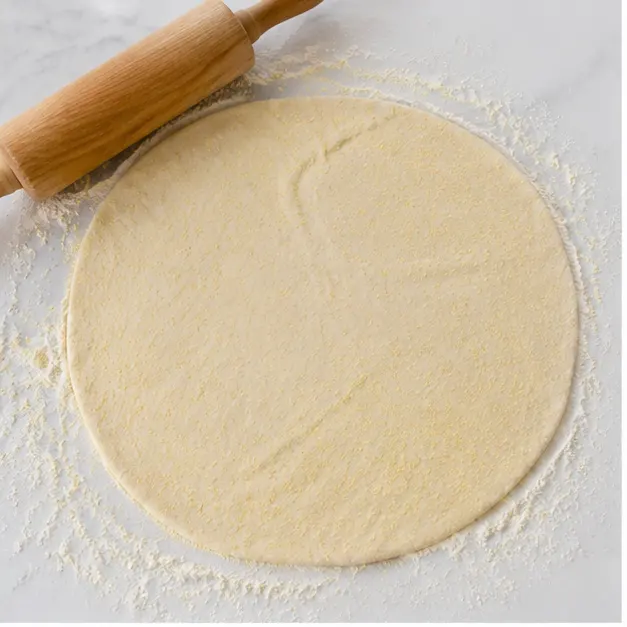
This is where the magic happens. Laminating the dough creates those buttery, flaky layers that make deep dish crust so special. It’s a technique usually reserved for croissants, but trust me, it works here.
First, adjust your oven rack to the lowest position and preheat to 425°F. Turn the dough out onto a clean countertop. Roll it into a 15 by 12-inch rectangle. Using an offset spatula, spread the softened butter over the dough, leaving a half-inch border along the edges. Starting at the short end, tightly roll the dough into a cylinder. With the seam-side down, flatten it into an 18 by 4-inch rectangle. Cut the rectangle in half crosswise.
Working with one half at a time, fold the dough into thirds like a business letter. Pinch the seams together to form a ball. Repeat with the other half. Transfer both balls to the oiled bowl, cover tightly with plastic wrap, and let them rise in the refrigerator until nearly doubled, about 45 to 50 minutes.
While the dough chills, cook the Italian sausage in a large non-stick skillet over medium heat, breaking it into chunks. Cook until browned and cooked through. Drain well and set aside.
How to Assemble and Bake the Pizza
Now comes the fun part. Coat two 9-inch cast iron skillets or cake pans with 1 1/2 tablespoons of olive oil each. Don’t skimp on the oil. It helps the crust get golden and crispy.
On a clean countertop, roll one dough ball into a 13-inch round disk, about a quarter-inch thick. Loosely roll it around the rolling pin and transfer it to one prepared skillet. Unroll and press the dough into the pan, working it into the corners and about an inch up the sides. If the dough resists, let it rest for 5 minutes before trying again. Repeat with the second dough ball.
Sprinkle each pizza with 2 cups of the shredded mozzarella. Yes, all of it goes on the bottom. This is the reverse layering that defines authentic deep dish. Divide the sauce between the two pizzas, spreading it with the back of a spoon to cover the cheese. Top each pizza with half the cooked Italian sausage, then the olives, and finally the Parmesan cheese.
Bake until the crust is golden brown, about 20 to 30 minutes. If the top browns too quickly, tent with foil. Let the pizzas cool in the pans for 10 minutes before serving. I know it’s hard to wait, but if you cut too soon, the filling will gush out everywhere.
Tips for the Best Deep Dish Pizza
After making this recipe more times than I can count, I’ve picked up a few tricks that make a real difference. Here are the ones I swear by.
Pro Tips for Success
Don’t skip chilling the dough: That 45 minutes in the fridge after laminating isn’t just for show. It relaxes the gluten and firms up the butter, which prevents shrinkage when you bake.
Let the dough rest before rolling: If it keeps snapping back, let it sit at room temperature for 10 minutes. The gluten needs a moment to relax.
Shred your own mozzarella: Pre-shredded cheese has anti-caking agents that stop it from melting smoothly. Freshly shredded melts into a creamy, stringy layer.
Spread cheese to the edge: Make sure the mozzarella touches the sides of the pan. It’ll create crispy, browned edges that are absolutely irresistible.
Cool the pizza before cutting: At least 10 minutes, but 15 is better. This lets the structure set so you get clean slices instead of a messy pile.
One more thing about the pan. Cast iron skillets are ideal because they hold heat evenly and create a beautifully browned crust. But cake pans work too. Just make sure they’re at least 2 inches deep. If you use a different size pan, adjust the dough thickness and baking time accordingly.
Deep Dish Pizza Variations
This recipe is a great starting point, but feel free to make it your own. Here are some ideas to try.
Cheese pizza: Simply omit the Italian sausage and olives. You’ll have a classic cheese deep dish that’s perfect for kids or purists.
Vegetable lovers: Add sliced mushrooms, bell peppers, or onions along with the sausage. Sauté harder vegetables like mushrooms and peppers first to release excess moisture, so they don’t make the pizza soggy.
Meat lovers: Use ground beef instead of Italian sausage, or add cooked crumbled bacon (if that’s your thing) on top of the cheese layer.
Spicy kick: Use hot Italian sausage instead of sweet, or add extra crushed red pepper flakes to the sauce.
Remember, the layering stays the same. Cheese on the bottom, then toppings, then sauce on top. That’s non-negotiable for authentic Chicago style pizza ingredients.
How to Store and Reheat Leftovers
If you have leftovers, which is rare in my house, here’s how to keep them tasting great.
Store slices in an airtight container in the refrigerator for up to 4 days. The crust will soften a bit, but it’ll still be delicious.
For reheating, skip the microwave. It makes the crust soggy and the cheese rubbery. Instead, preheat your oven to 350°F. Place the slices on a baking sheet and heat for about 10 minutes, or until the cheese is bubbly and the crust is crisp again. You can also reheat slices in a cast iron skillet on the stovetop over medium heat, covered, for about 5 minutes.
If you want to freeze the dough, wrap it tightly in plastic wrap and store it in an airtight container for up to a month. Thaw it in the refrigerator overnight before using. I don’t recommend freezing the fully assembled pizza or the baked pizza. The texture just isn’t the same.
Frequently Asked Questions
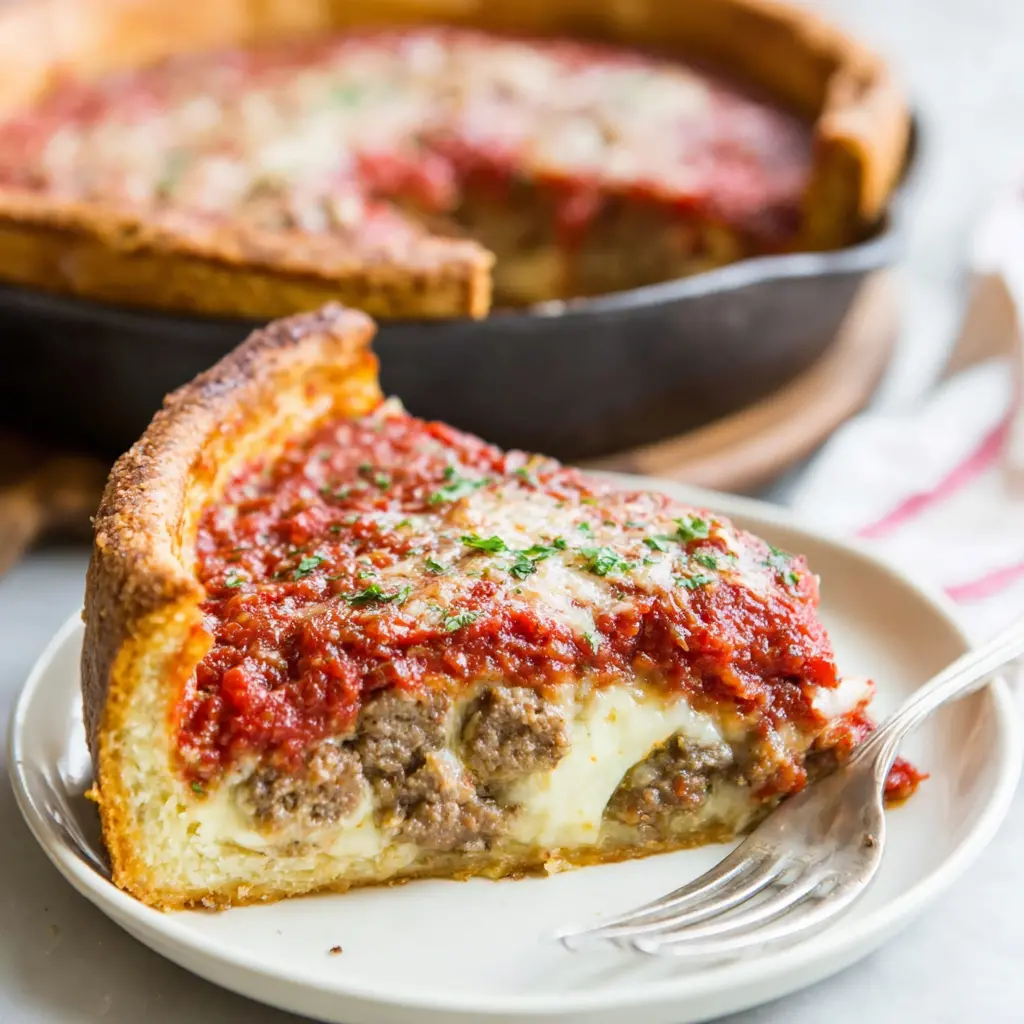
When you slice into that first piece, you’ll see the layers. The golden, buttery crust. The thick, melted mozzarella. The rich, chunky sauce. And you’ll know it was worth every minute. If you make this recipe, I’d love to hear about it. And if you want more inspiration, come find me on Pinterest for more recipes and tips.
Source: Nutritional Information
Is it possible to halve this recipe to make only one pizza?
Yes, absolutely. Simply cut all the ingredients in half. You’ll still need to make the full batch of dough, but you can freeze half of it for later. The baking time stays about the same for a single pizza.
How do you store it and reheat it?
Store leftover slices in an airtight container in the fridge for up to 4 days. Reheat in a 350°F oven for about 10 minutes, or in a covered skillet on the stovetop. Avoid the microwave, it makes the crust soggy.
How long before baking can you store the final kneaded dough (with butter included)?
After laminating and shaping the dough balls, you can refrigerate them for up to 24 hours before baking. Just keep them tightly covered with plastic wrap. Let them sit at room temperature for 20 minutes before rolling out.
Can I use a hand mixer to mix the dough?
You can, but it’s not ideal. A hand mixer with dough hooks will work, but the dough is stiff and may strain the motor. Kneading by hand for 8 to 10 minutes is actually a great option if you don’t have a stand mixer.
Can regular active dry yeast be used or must it be rapid or instant rise?
You can use active dry yeast, but you’ll need to proof it first. Dissolve it in the warm water (about 110°F) with a pinch of sugar and let it sit for 5 to 10 minutes until frothy. Then proceed with the recipe as written.
What, if anything, do I need to change for high altitude?
At high altitudes (above 3,000 feet), you may need to reduce the yeast by about 25% and add a tablespoon or two of extra flour. The dough may rise faster, so keep an eye on it. The baking temperature can stay the same.
What is the best deep-dish pizza pan?
A 9-inch cast iron skillet is the gold standard. It heats evenly and creates a beautifully browned crust. A 9-inch cake pan with 2-inch sides works well too. Avoid non-stick pans with dark coatings, they can burn the crust.
What is deep-dish pizza?
Deep-dish pizza is a style of pizza originating in Chicago. It features a thick, buttery crust that’s pressed into a deep pan, with cheese on the bottom, toppings in the middle, and a chunky tomato sauce on top. It’s baked until the crust is golden and the cheese is bubbly.
Is deep-dish pizza dough different from regular pizza dough?
Yes, it’s very different. Deep dish dough includes cornmeal and butter for a flakier, more pastry-like texture. It’s also laminated, which creates delicate layers. Regular pizza dough is typically leaner, with just flour, water, yeast, and salt.
4 Responses
This was my first attempt at deep dish pizza and it turned out amazing! The crust was perfectly flaky and buttery, just like you described. I used hot Italian sausage instead of sweet and it gave it a nice kick. My family devoured it in minutes.
I appreciate the detailed explanation about why the layering is reversed. I always wondered why my homemade deep dish got soggy! The cornmeal in the crust was a game changer. I’ll definitely be making this again for our next pizza night.
Great recipe overall, but I found the dough a bit tricky to work with. It kept shrinking back when I tried to press it into the pan. Any tips for getting it to stay put up the sides? I let it rest for 15 minutes after mixing but maybe it needed longer?
Hi Mike, glad you gave it a try! The dough can be a little stubborn. Try letting it rest for 10-15 minutes after pressing it into the pan before adding the fillings. That relaxes the gluten and helps it stay in place. Also, make sure your pan is well-greased so it doesn’t slide back down.