
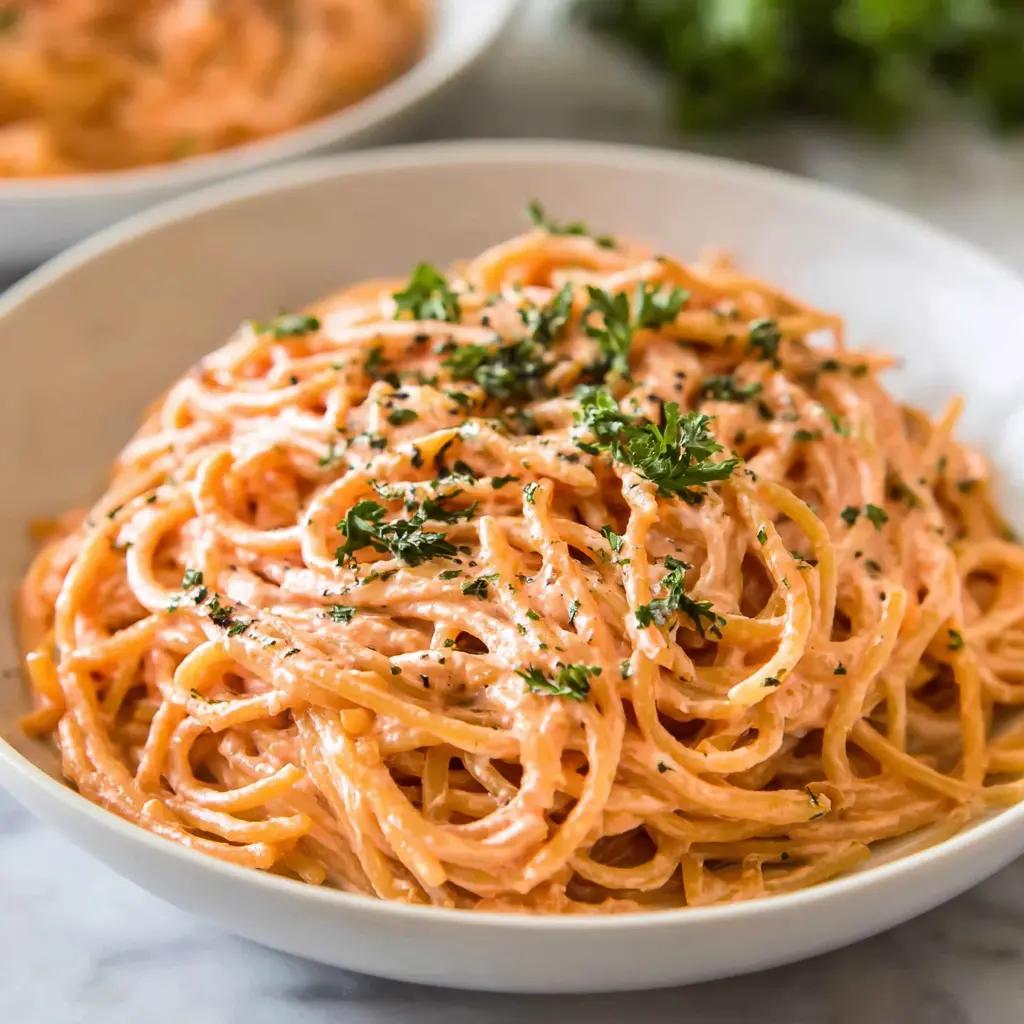
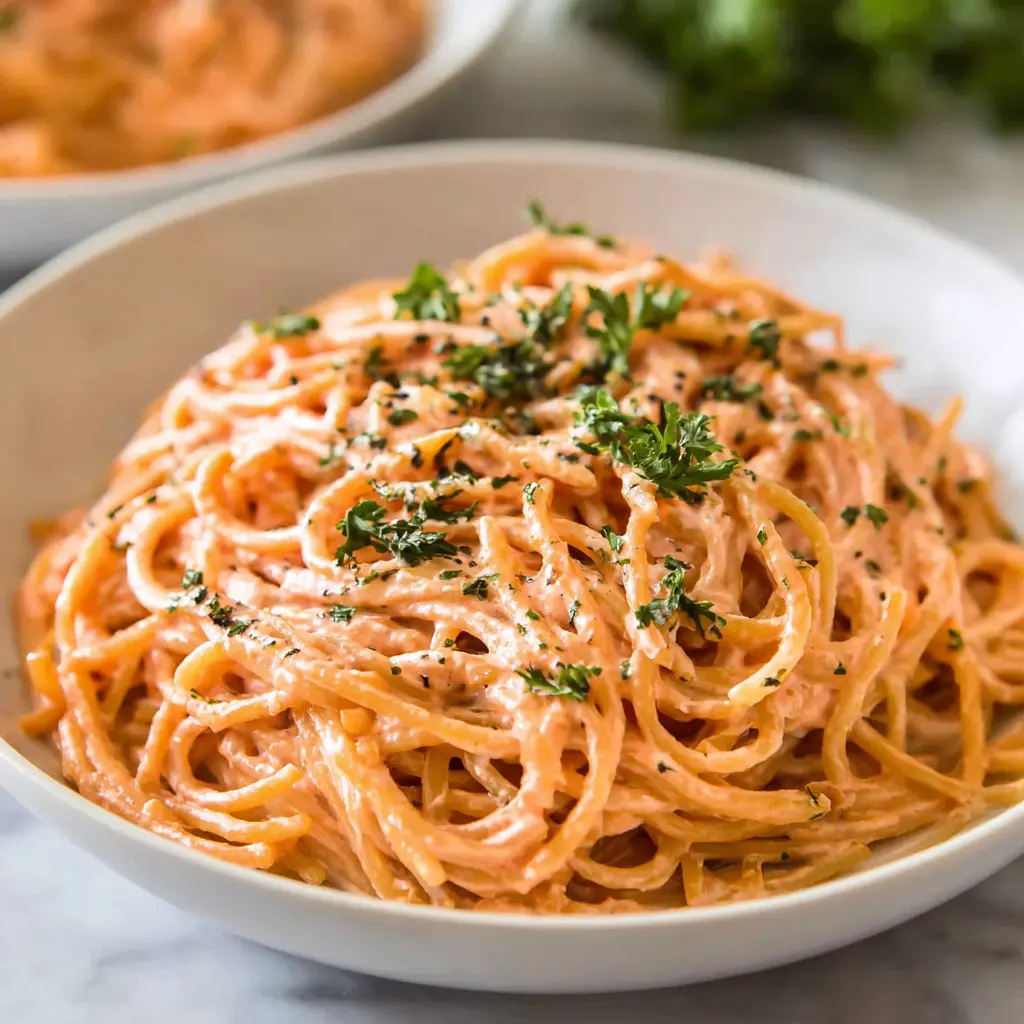
Creamy Tomato Pasta
Ingredients
Method
- Bring a large pot of well-salted water to a rolling boil. Add the pasta and cook according to package directions until al dente. Reserve about 1/2 cup of the pasta cooking water before draining.
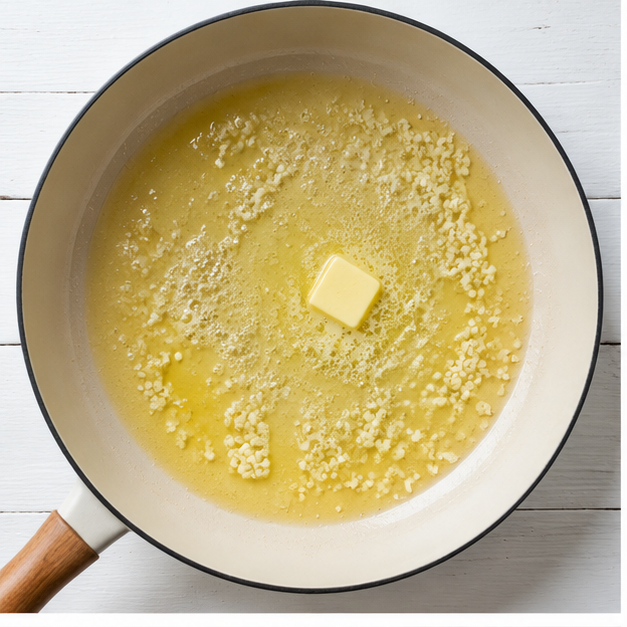
- While the pasta cooks, melt the butter in a large skillet over medium-high heat. Add the minced garlic and cook, stirring constantly, for about 1 minute until fragrant.
- Stir in the tomato paste, tomato sauce, heavy cream, and Italian seasoning. Whisk until smooth. Reduce the heat to medium-low so the sauce is gently bubbling, and let it simmer for about 5 minutes, stirring occasionally, until thickened to your liking.
- Taste the sauce and season with salt and pepper as needed. If the sauce tastes too acidic, stir in a pinch of sugar to balance the flavor.
- Drain the cooked pasta and return it to the pot or a large bowl. Pour the creamy tomato sauce over the pasta and toss well to coat. If the sauce seems too thick, add a splash of the reserved pasta water to loosen it. Serve immediately topped with plenty of fresh Parmesan cheese.
Nutrition
Notes
Tried this recipe?
Let us know how it was!Why This Creamy Tomato Pasta Works
Let me tell you, there are some recipes that just become your weeknight heroes. This creamy tomato pasta is that for me. It’s the one I turn to when the kids are hungry, I’m tired, and there’s nothing in the fridge that looks promising. You know what I mean? That 5 PM panic where you’re staring into the abyss of a half-empty pantry.
This recipe works because it’s built on a few simple, smart moves. We start with a base of butter and garlic, then we cook the tomato paste until it darkens and gets all concentrated and sweet. That’s the secret. Then, instead of a complicated roux or a long simmer, we just add heavy cream. The result is a sauce that’s velvety, rich, and clings to every single piece of pasta. No lumps, no separation, just pure comfort.
And the best part? It takes 25 minutes. From start to finish. That’s faster than ordering takeout. Trust me on this.
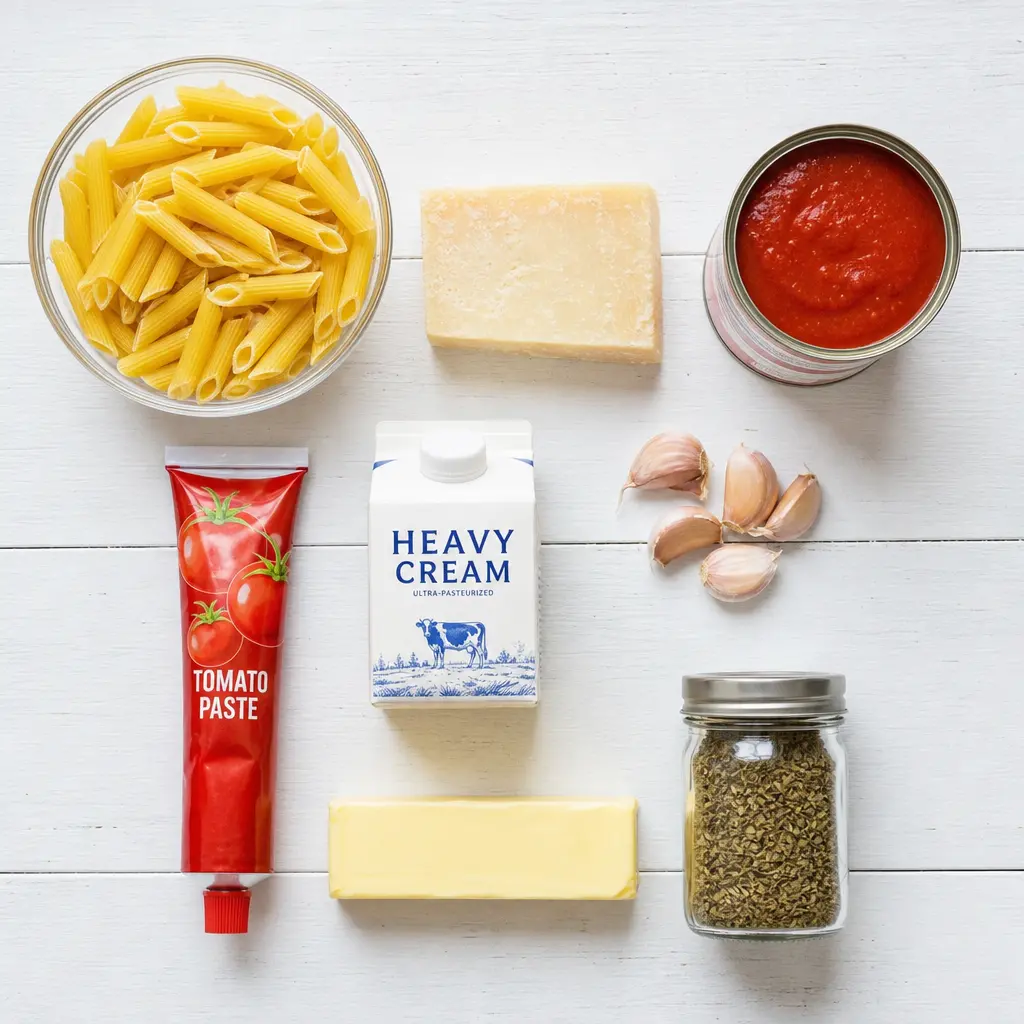
Pro Tips for Perfect Creamy Tomato Pasta
I’ve made this creamy tomato pasta more times than I can count. And I’ve definitely messed it up a few times along the way. So let me share what I’ve learned so you nail it on the first try.
The Cream Situation
This is the big one. Use full-fat heavy cream. I know, I know, half-and-half seems like a lighter option. But here’s the thing: the acid in the tomatoes can cause lower-fat creams to curdle. And nobody wants a grainy sauce. I once added cold half-and-half straight from the fridge to a hot pan of tomatoes disaster. It looked like cottage cheese soup. So stick with heavy cream or whipping cream. It’s worth it.
Don’t Skip the Pasta Water
Reserve about half a cup of that starchy pasta water before you drain. This is liquid gold. If your sauce gets too thick, a splash of pasta water loosens it up beautifully. The starch also helps the sauce cling to the pasta. It’s a simple trick that makes a huge difference.
Cook the Tomato Paste
When you add the tomato paste to the butter and garlic, let it cook for a minute or two. Stir it constantly. You’ll see it darken from bright red to a deeper, richer shade. This step develops the flavor and removes any raw, tinny taste. It takes almost no extra effort, but the payoff is huge.
Use Fresh Parmesan
I’m going to be honest with you: pre-grated Parmesan from a shaker just won’t melt the same way. It has anti-caking agents that make it clump up. Grate your own from a block. It takes 30 seconds and the texture is so much smoother. You’ll taste the difference.
How to Make Creamy Tomato Pasta (4 Simple Stages)
This is where the magic happens. I’ll walk you through the four main stages of making this dish. Think of these as the big picture steps.
Stage 1: Get the Pasta Going
Bring a big pot of well-salted water to a rolling boil. I mean, it should be salty like the sea. This is your only chance to season the pasta itself. Add your pasta I like penne or fettuccine for this sauce and cook it until it’s al dente, just a minute or two shy of the package directions. We’ll finish cooking it in the sauce later. Don’t forget to scoop out that half cup of pasta water before you drain.
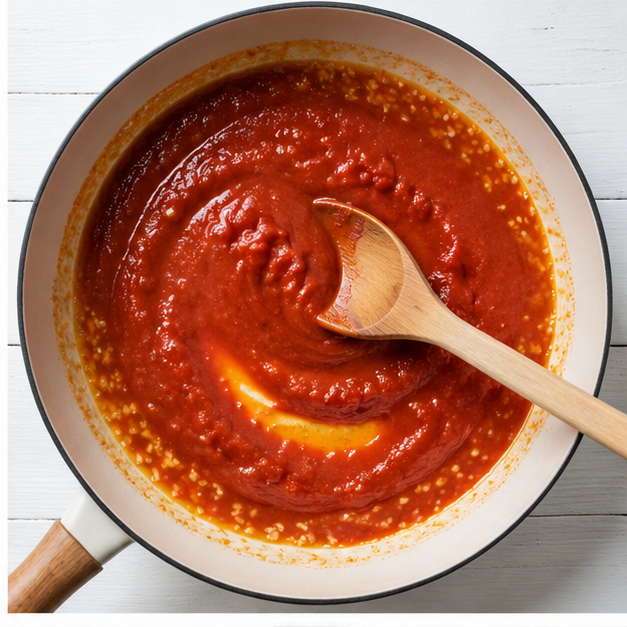
Stage 2: Build the Flavor Base
While the pasta cooks, melt the butter in a large skillet over medium-high heat. Listen for that gentle sizzle as you add the minced garlic. Cook it for about a minute, stirring constantly. Your kitchen should smell amazing right about now. Then stir in the tomato paste, tomato sauce, heavy cream, and Italian seasoning. Whisk it all together until it’s smooth. The color will shift from a bright red to a gorgeous, creamy coral. That’s what we’re after.
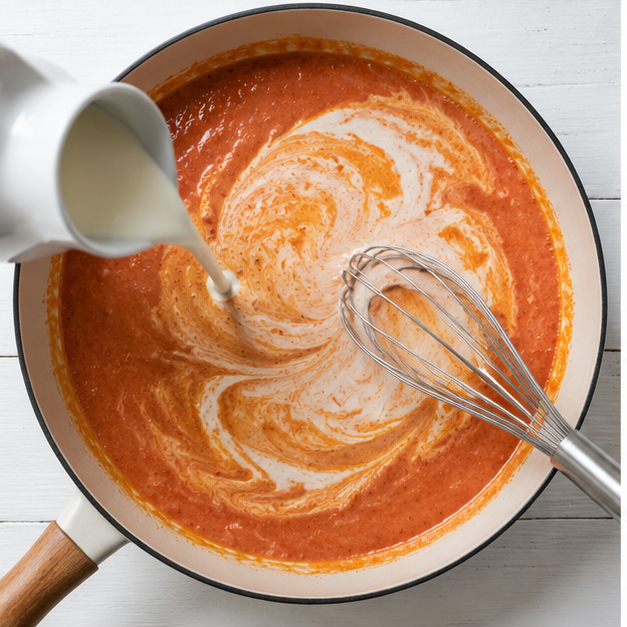
Stage 3: Let the Sauce Simmer
Reduce the heat to medium-low so the sauce is gently bubbling, not boiling like crazy. Let it simmer for about 5 minutes, stirring every now and then. You’ll see it thicken up nicely. Taste it. Add salt and pepper. If the sauce tastes a little too acidic sometimes canned tomatoes can be sharp stir in a pinch of sugar. It balances everything out without making it sweet.
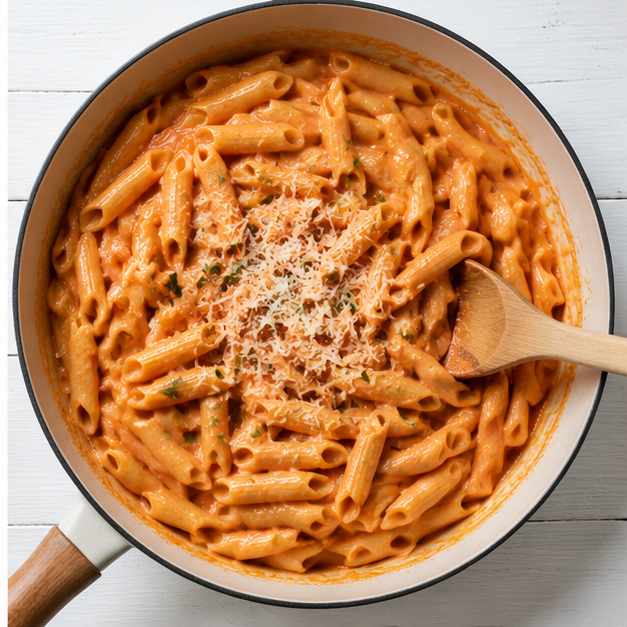
Stage 4: Bring It All Together
Drain the pasta and return it to the pot or a big bowl. Pour that beautiful creamy tomato sauce over the top and toss well. Every piece of pasta should be coated. If the sauce seems a bit thick, add a splash of that reserved pasta water. It’ll loosen right up. Serve immediately with a generous shower of freshly grated Parmesan. The smell alone is going to bring everyone running.
Substitutions and Variations
This recipe is a great base to play with. Here are some ways to make it your own.
Pasta Shapes
- Penne: Great for catching the sauce in those little ridges.
- Fettuccine: Classic and elegant, the sauce clings beautifully.
- Spaghetti: Works perfectly too, just toss well.
- Gluten-free pasta: Use your favorite brand, just watch the cooking time.
Add Some Protein
Want to make this a heartier meal? Stir in some cooked chicken or shrimp at the end. Just warm them through in the sauce for a minute or two. You could also add some cooked Italian sausage (just not pork sausage, of course).
Veggie Boost
Toss in a handful of fresh spinach at the end and let it wilt in the warm sauce. Or add some sautéed mushrooms or bell peppers. Grated zucchini works great too, it just melts right in.
Dairy-Free Option
You can make a lighter version by swapping the heavy cream for whole milk and adding an extra tablespoon of butter for richness. It won’t be as thick, but it’ll still be delicious. Just be careful not to boil it or it might separate.
What to Serve with Creamy Tomato Pasta
This dish is pretty complete on its own, but a few simple sides take it to the next level.
- Garlic bread: Perfect for sopping up any leftover sauce. I won’t judge if you make extra.
- Simple green salad: A crisp salad with a lemony vinaigrette cuts through the richness nicely.
- Roasted vegetables: Broccoli, asparagus, or zucchini roasted with olive oil and salt are a great pairing.
- Steamed green beans: Quick, easy, and adds a pop of color to the plate.
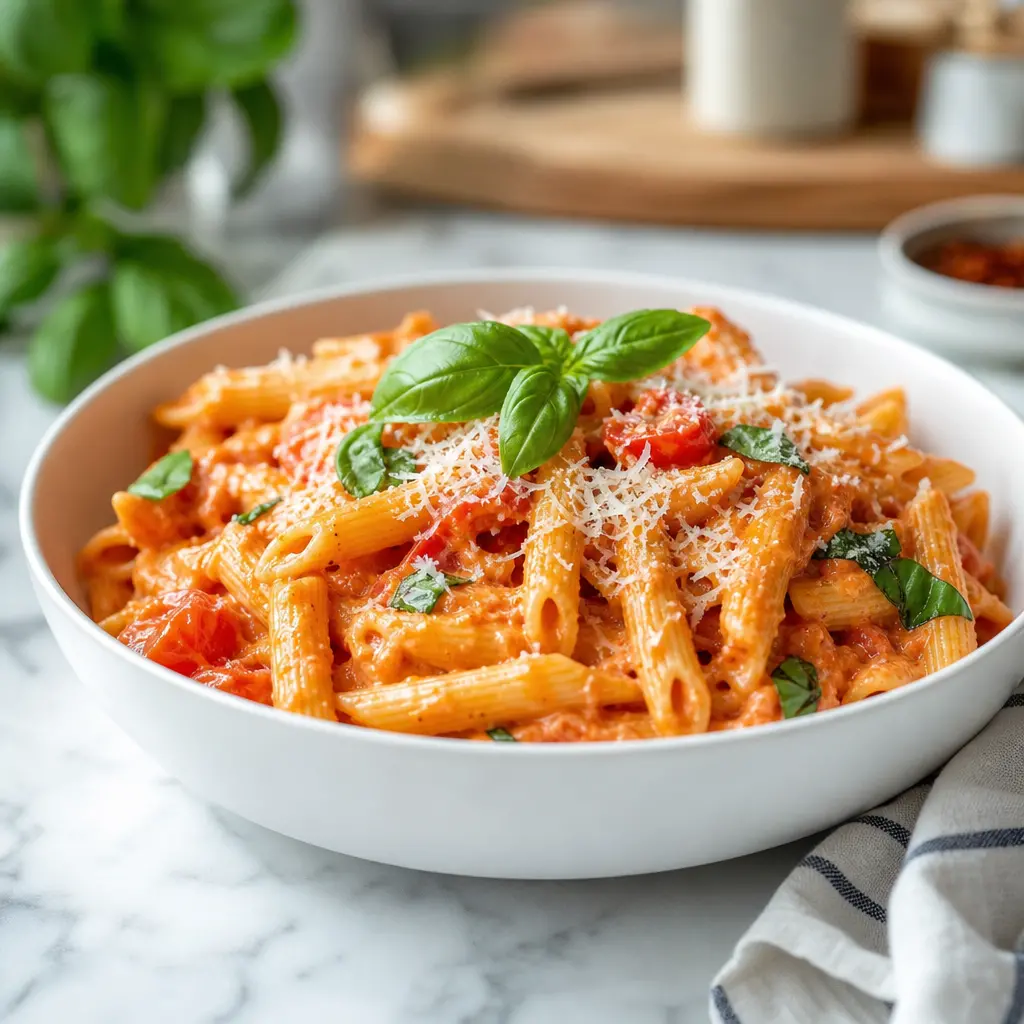
Storage and Leftovers
This creamy tomato pasta is best enjoyed fresh, but leftovers are totally doable. Here’s how to handle them.
Storing
Let the pasta cool completely, then transfer it to an airtight container. It will keep in the fridge for up to 3 days. The sauce might thicken up a bit as it sits, but that’s normal.
Reheating
The key to reheating is to go slow and add a little liquid. Here are your options:
- Stovetop: Place the pasta in a skillet over low heat. Add a splash of milk, water, or reserved pasta water. Stir gently until warmed through. This is the best method for keeping the sauce smooth.
- Microwave: Put the pasta in a microwave-safe bowl, add a splash of milk, cover loosely, and heat in 30-second bursts, stirring between each. It won’t be quite as perfect as stovetop, but it’s fast.
I don’t recommend freezing this one. The cream sauce can separate and get grainy when thawed. Better to just make a fresh batch when the craving hits.
Frequently Asked Questions
I really hope you give this creamy tomato pasta a try. It’s become a staple in my kitchen for a reason. If you make it, I’d love to hear how it goes. And hey, if you’re looking for more easy dinner inspiration, come hang out with me on Pinterest where I’m always pinning weeknight-friendly recipes.
Source: USDA Nutritional Data
What is the best way to make creamy tomato pasta without using canned tomato paste?
You can skip the tomato paste and use a full 15-ounce can of tomato sauce instead. The sauce will be a bit thinner, so let it simmer a few extra minutes to thicken. You could also roast and puree 2-3 fresh Roma tomatoes as a substitute, though it will take more time.
Can I use milk instead of heavy cream for creamy tomato pasta?
You can, but you need to be careful. Whole milk will make a thinner sauce that’s more prone to curdling from the tomato acid. To help it work, add an extra tablespoon of butter for richness, and never let the sauce boil after adding milk. Stir constantly over low heat.
How long does it take to cook creamy tomato pasta from scratch?
This entire dish comes together in about 25 minutes. The prep takes 5 minutes to mince garlic and measure ingredients. The cooking takes about 20 minutes, most of which is just the pasta boiling and the sauce simmering. It’s one of the fastest homemade pasta sauces you can make.
What can I add to creamy tomato pasta for extra protein?
Cooked chicken breast, shrimp, or ground turkey are all excellent additions. Just cook your protein separately, then stir it into the finished sauce to warm through. You can also add a can of drained chickpeas for a vegetarian protein boost that works beautifully with the creamy sauce.
How do I store leftover creamy tomato pasta and reheat it?
Store leftovers in an airtight container in the fridge for up to 3 days. To reheat, place the pasta in a skillet over low heat with a splash of milk or water. Stir gently until warmed through. You can also use the microwave in 30-second bursts, stirring between each, with a splash of liquid added.