
Greek Roasted Eggplant Dip Melitzanosalata
Ingredients
Method
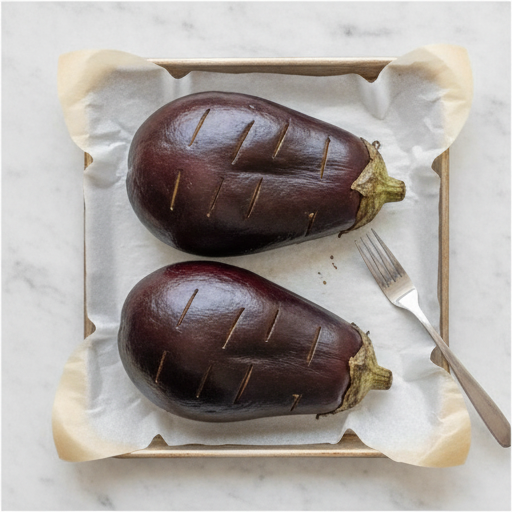
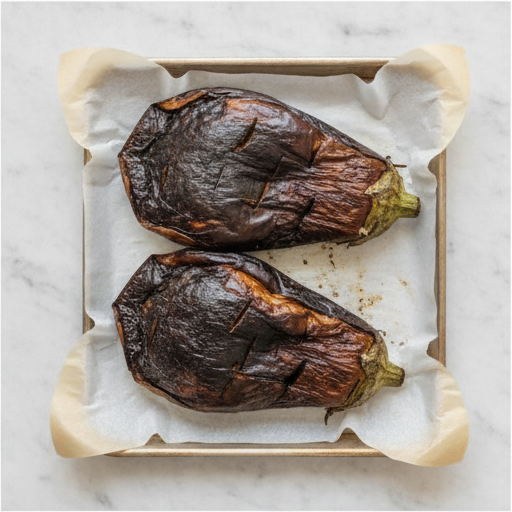
- Preheat your oven to 400°F. Line a baking sheet with parchment paper. Prick the eggplants all over with a fork, then place them on the prepared sheet. Roast for 50 to 60 minutes, turning every 15 minutes, until the skin is charred and the flesh is very soft.
- Remove the eggplants from the oven and let them rest on the sheet for at least 10 minutes, or until cool enough to handle.
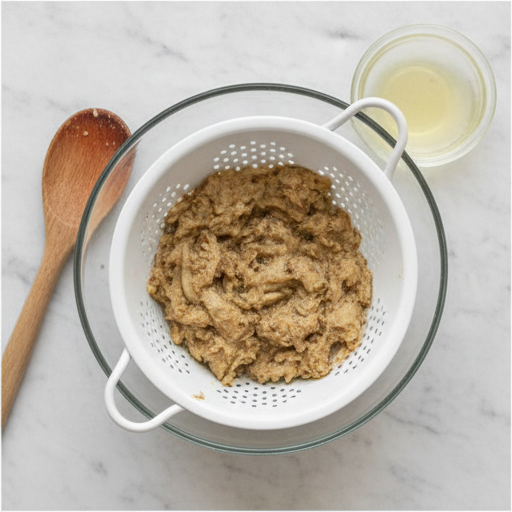
- Slice each eggplant in half lengthwise and scoop out the soft flesh. Transfer the flesh to a colander set over a bowl and let it drain for 10 minutes to remove excess moisture.
- Move the drained eggplant to a mixing bowl and mash it with a fork until relatively smooth but still with some texture.
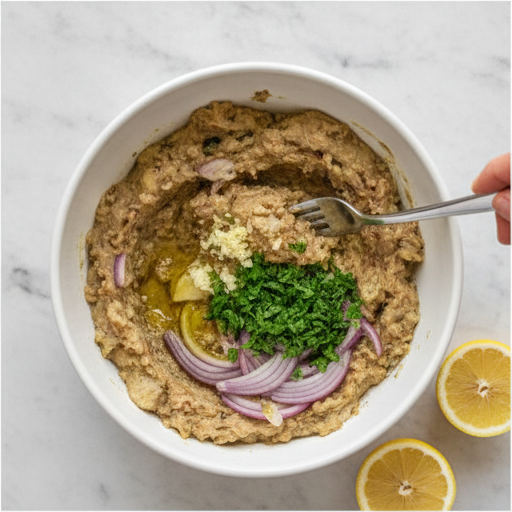
- Add the olive oil, minced garlic, chopped red onion, lemon juice, parsley, salt, and pepper. Stir well to combine.
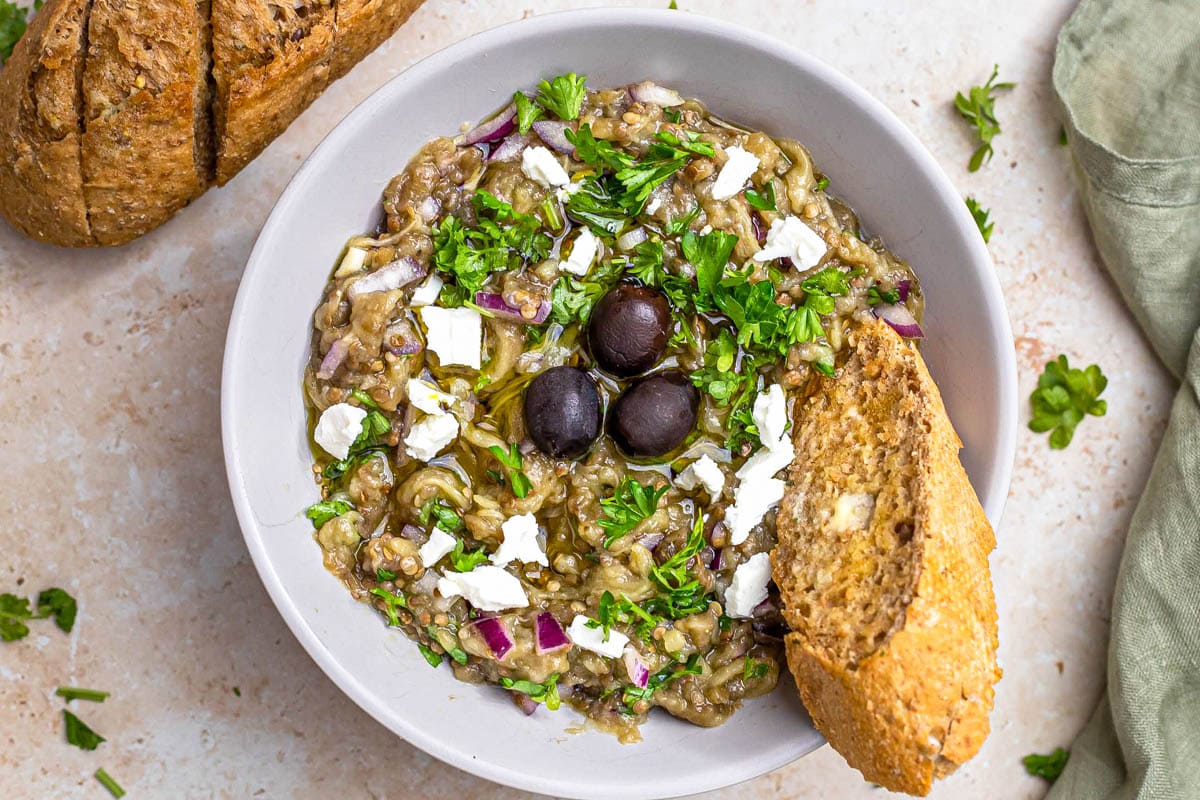
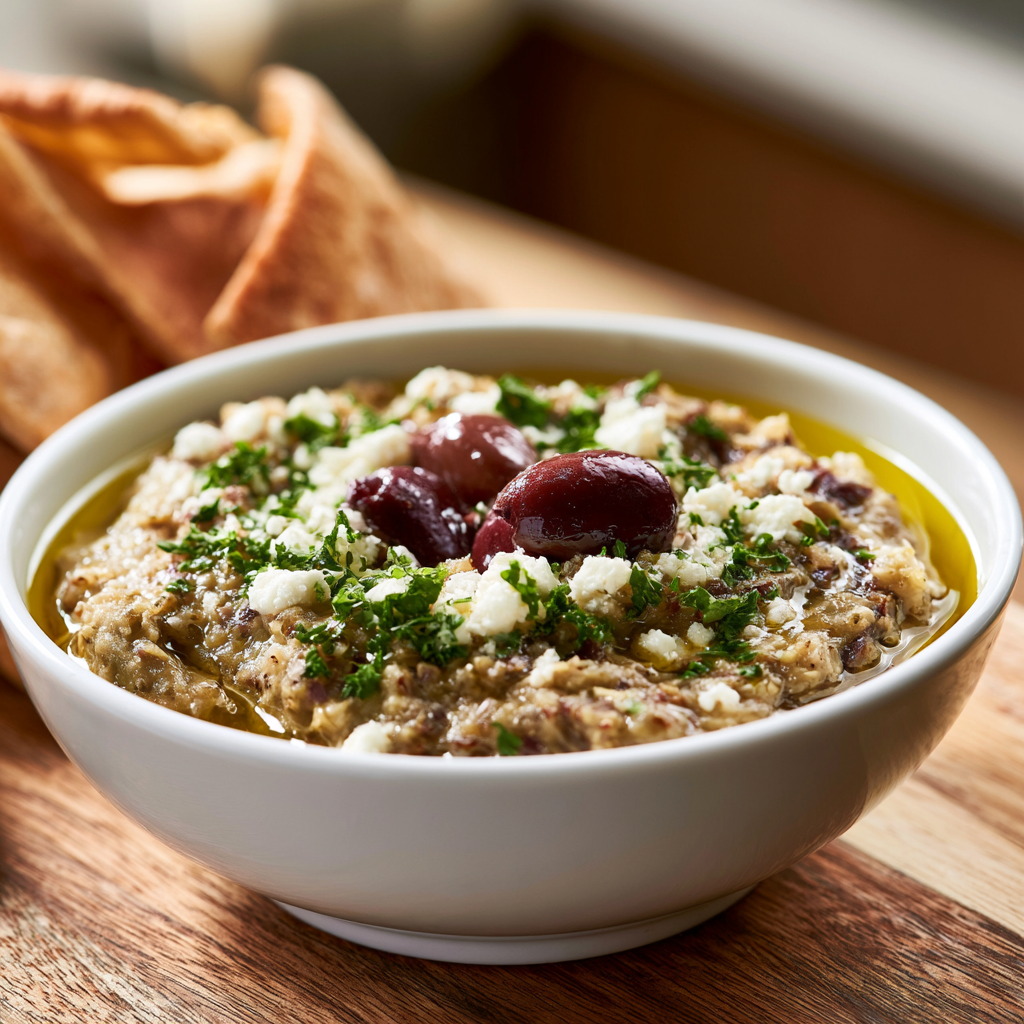
- If desired, garnish the dip with crumbled feta and a few olives.
- Serve the melitzanosalata with warm pita chips, crusty sourdough bread, or your favorite crackers.
Nutrition
Notes
Tried this recipe?
Let us know how it was!What Is Melitzanosalata?
The first time I tried to make a greek roasted eggplant dip melitzanosalata, I ended up with what I can only describe as eggplant soup. It was watery, sad, and tasted like nothing. I almost gave up on the whole idea of making a Mediterranean dip at home. But then I went to a little Greek place in my neighborhood, ordered their melitzanosalata recipe, and had one of those lightbulb moments. The texture was silky, the flavor was deep and smoky, and it was nothing like my failed attempt. I knew I had to figure it out.
So what exactly is melitzanosalata? It’s a traditional Greek dip made primarily from roasted eggplant. Think of it as the Greek cousin to baba ganoush, but with its own distinct personality. It’s a staple on any meze platter, served alongside grilled meats, and is the perfect cold appetizer for hot summer days. The name itself comes from the Greek words “melitzana” (eggplant) and “salata” (salad). Simple, right? But the magic is all in the technique.
This isn’t just any eggplant recipe. It’s a smoky eggplant dip that relies on the charred eggplant flavor you get from roasting the whole vegetable until the skin is blackened and the inside is practically falling apart. That’s the soul of this dip. And once you get it right, it’s a total crowd-pleaser. I’m talking about the kind of dip that disappears in minutes at a party, with people asking for the recipe before they’ve even finished their first pita chip.
What It Tastes Like
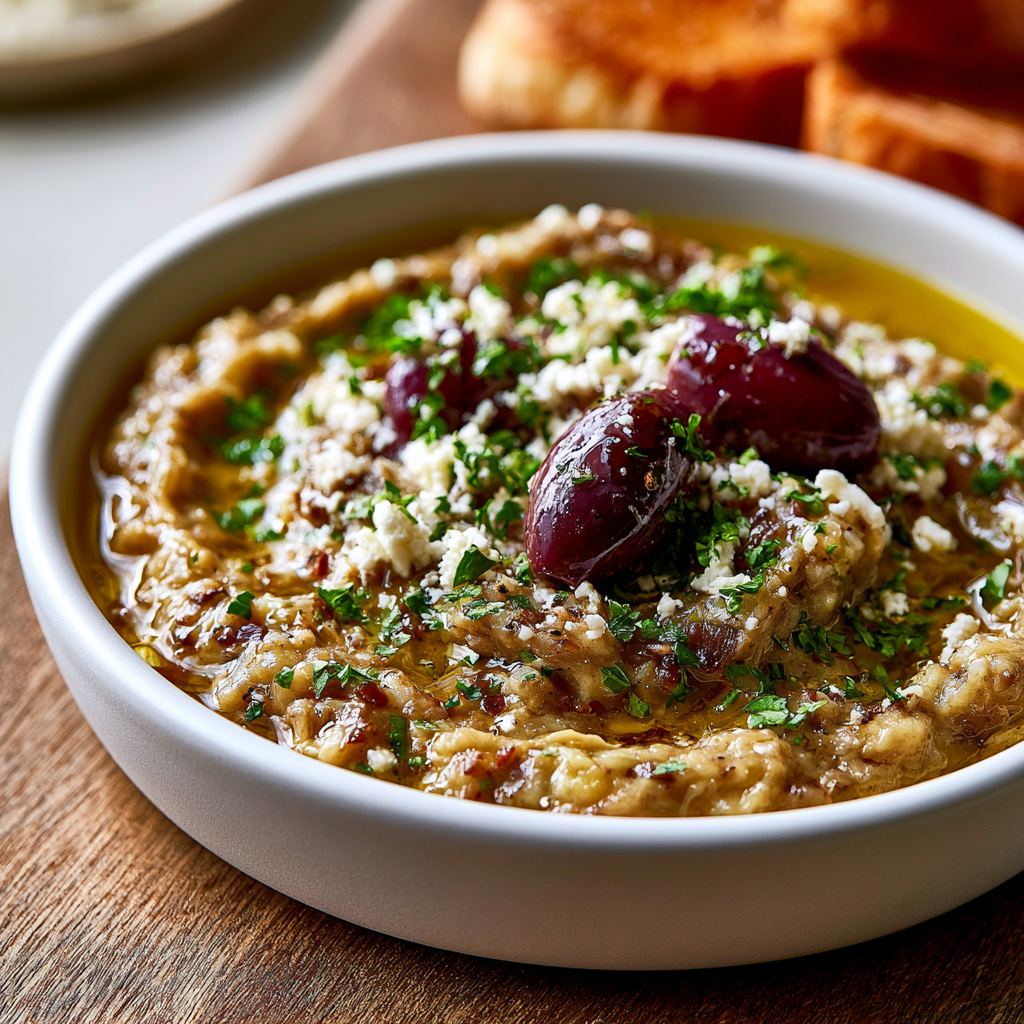
Let’s talk about the flavor. A good greek roasted eggplant dip melitzanosalata is a beautiful balance of things. First and foremost, it’s smoky. That’s the non-negotiable part. You get this deep, earthy char from the grill eggplant or oven-roasted skin that just sings. Then there’s the richness of the extra-virgin olive oil, which adds a fruity, peppery note. The garlic is there, but it’s a background player, not the star. It should whisper, not shout. The lemon juice cuts through all that richness with a bright, tangy pop. And the fresh parsley adds a clean, herbaceous finish that makes everything feel light.
The texture is another big part of the experience. You want it to be creamy but not completely smooth. It should have a little bit of body, a little bit of that eggplant texture you can see and feel. It’s not a puree. It’s a mash. And that rustic, slightly chunky texture is what makes it feel so authentic. It’s the kind of dip that’s just as good on a meze platter with olives and feta as it is spread on a piece of crusty bread for a quick snack. It’s a summer dip through and through, perfect for those hot California evenings when you want something cool and satisfying.
Ingredients You’ll Need
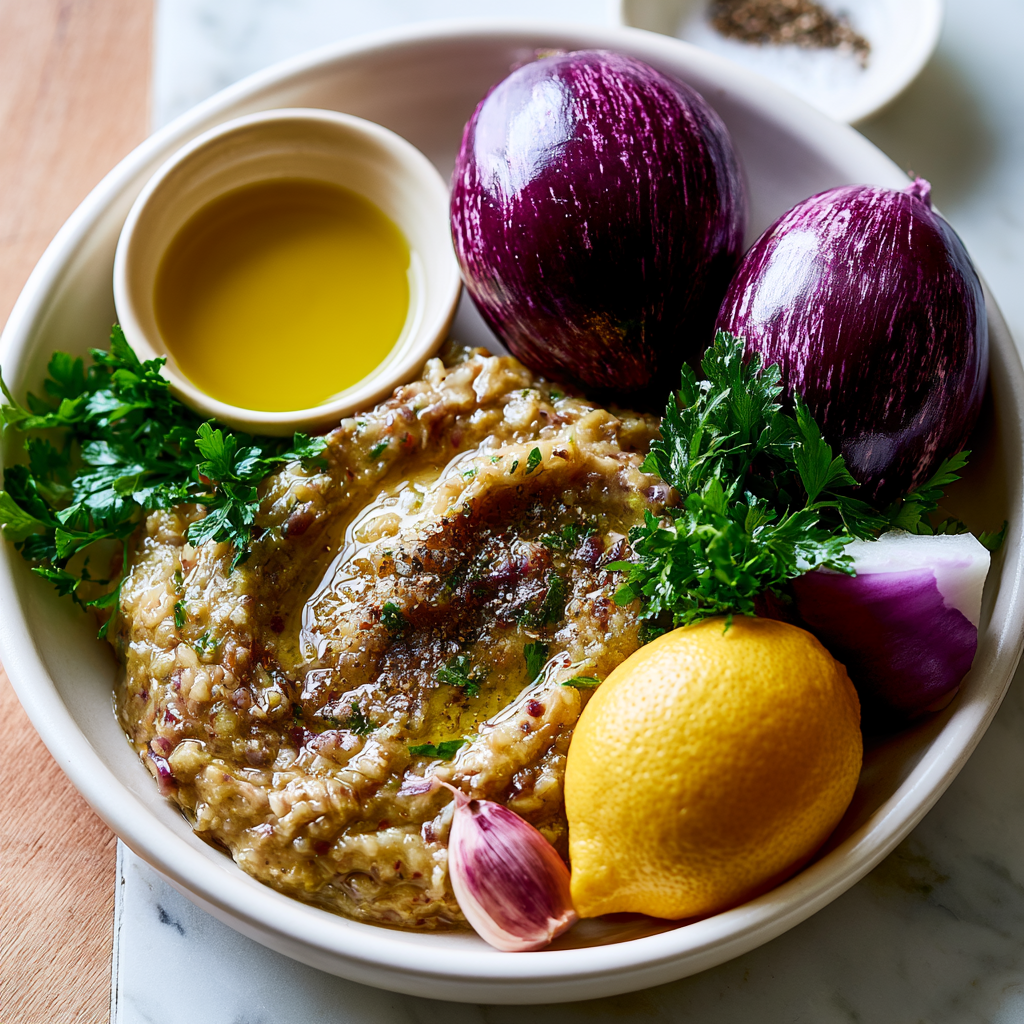
One of the best things about this easy eggplant recipe is how simple the ingredient list is. You probably have most of these things in your kitchen right now. Here’s what you need for the perfect greek roasted eggplant dip melitzanosalata:
- 2 medium eggplants: The foundation of the whole dish. Look for ones that are firm, shiny, and feel heavy for their size. They should be free of blemishes.
- 1 clove garlic: Just one. I know it’s tempting to add more, but trust me on this. One clove is enough to give you that garlicky warmth without overpowering the delicate eggplant flavor. Especially if you’re making this as a make ahead dip, garlic can get stronger as it sits.
- 1/4 cup red onion, finely chopped: Adds a little sharpness and crunch. It’s a nice contrast to the creamy eggplant.
- 2 tablespoons fresh lemon juice: About half a lemon. Fresh is non-negotiable here. Bottled lemon juice just doesn’t have the same brightness.
- 1/2 cup fresh parsley, chopped: A generous handful. It adds color and freshness.
- 1/3 cup extra-virgin olive oil: This is where you can really make a difference. Use a good quality one. I like California-grown olive oil for its bright, grassy flavor.
- Salt and black pepper to taste: Simple seasonings that tie everything together.
- For garnish (optional but recommended): crumbled feta cheese and Kalamata olives. These add a salty, briny kick that’s just perfect.
That’s it. No long list of exotic spices or hard-to-find ingredients. Just a handful of good, fresh things that come together to make something truly special.
How to Roast Eggplants
This is the most important step, and it’s where a lot of people go wrong. The goal is to get that charred eggplant flavor that makes this dip so distinctive. There are a few ways to do it, and I want to walk you through the best options.
Oven Roasting (The Method We’re Using): This is the most reliable and convenient method, especially if you’re making this on a weeknight. Preheat your oven to 400°F. Line a baking sheet with parchment paper. Now, here’s a crucial step: prick the eggplants all over with a fork. I cannot stress this enough. If you don’t prick them, they can burst in the oven, and that’s a mess you don’t want to deal with. Place them on the prepared sheet and roast for 50 to 60 minutes, turning them every 15 minutes. You’ll know they’re done when the skin is charred and wrinkled, and the flesh feels very soft when you poke it. A knife should slide in with absolutely no resistance.
Grill or Open Flame (For Extra Smokiness): If you want that deep, campfire-like smoky flavor, you can grill the eggplants over a gas grill or even directly on a gas burner. This method is faster, usually taking about 10-20 minutes, but you need to watch them carefully. You want the skin to char and blister, and the flesh to soften completely. This is the traditional way to do it, and it gives you the most intense smoky flavor. But the oven method is a fantastic alternative that still delivers great results.
After roasting, let the eggplants rest on the baking sheet for at least 10 minutes. They’ll be very hot, and letting them cool makes the next step much easier. Plus, the residual heat continues to soften the flesh.
How to Make Melitzanosalata
Now for the fun part. Once your eggplants are roasted and cool enough to handle, it’s time to turn them into dip. Here’s how the process breaks down into four major stages.
Stage 1: Scooping and Draining. Slice each eggplant in half lengthwise. You’ll see the beautiful, soft, almost creamy flesh inside. Use a spoon to scoop it all out, leaving the charred skin behind. Now, here’s the trick that separates a good dip from a watery one: transfer the flesh to a colander set over a bowl and let it drain for 10 minutes. Eggplants hold a lot of water, and if you skip this step, your dip will be runny. This is the number one mistake people make, and it’s the reason my first attempt was such a disaster. Let that excess moisture drip away.
Stage 2: Mashing. Move the drained eggplant to a mixing bowl. Now, you have a choice. You can use a fork to mash it, which will give you a chunkier, more rustic texture. Or you can use a food processor for a smoother dip. I prefer the fork method, personally. It gives you that satisfying, slightly irregular texture that feels more authentic. If you do use a food processor, pulse it just a few times. Don’t over-process it, or you’ll end up with a watery puree.
Stage 3: Mixing. This is where the dip comes to life. Add the extra-virgin olive oil, the minced garlic, the finely chopped red onion, the fresh lemon juice, the chopped parsley, and a good pinch of salt and black pepper. Stir everything together until it’s well combined. Taste it. This is your chance to adjust the seasoning. Maybe it needs a little more lemon juice for brightness, or a little more salt to bring out the flavors. Trust your palate.
Stage 4: Garnishing and Serving. If you’re using them, this is when you add the crumbled feta cheese and a few Kalamata olives on top. A final drizzle of olive oil is never a bad idea. Then, serve your greek roasted eggplant dip melitzanosalata with warm pita chips, crusty sourdough bread, or your favorite crackers. It’s also amazing as a spread for sandwiches or a side for grilled lamb chops.
Tips for the Best Dip
Over the years, I’ve learned a few things that make a huge difference. Here are my best tips for nailing this authentic melitzanosalata every single time:
- Don’t skip the draining step. I know I’ve said it before, but it really is the key to a perfect texture. A watery dip is a sad dip.
- Use only one clove of garlic. Raw garlic can be very pungent, especially after the dip sits in the fridge overnight. One clove is the perfect amount to add flavor without overwhelming everything else.
- Chill it before serving. This dip is best served cold or at room temperature. Letting it chill for at least 30 minutes allows the flavors to meld together and deepen. It’s a great make ahead dip for this reason.
- For a smoother dip, use a food processor. But pulse it, don’t let it run. A few quick pulses is all you need. For a chunkier dip, stick with a fork.
- If you want more smoky flavor and you’re not using a grill, you can add a pinch of smoked paprika. It’s not traditional, but it works. Or, you can char the skin of the eggplant directly over a gas flame before roasting.
- Adjust the lemon juice and salt to your taste. The amounts in the recipe are a starting point. Some people like it tangier, some like it saltier. Make it your own.
Variations to Try
While the classic greek roasted eggplant dip melitzanosalata is perfect as is, it’s also fun to play around with variations. Here are a few ideas that work beautifully with the base recipe:
- Herb Swap: Our recipe notes suggest swapping the fresh parsley for fresh mint. This gives the dip a completely different, brighter, and more refreshing character. It’s wonderful in the summer.
- Add Some Heat: If you like a little kick, you can add a pinch of red pepper flakes or a finely chopped small chili pepper. It adds a nice warmth without being overpowering.
- Nutty Crunch: For a bit of texture, you can fold in some chopped walnuts or sprinkle toasted pine nuts on top. It adds a lovely crunch and a nutty flavor that pairs well with the smoky eggplant.
- Roasted Red Pepper: Adding a bit of chopped roasted red pepper can add another layer of smoky sweetness. Just make sure to drain it well so it doesn’t make the dip watery.
- Dairy-Free Version: The dip itself is naturally vegan. If you’re making it dairy-free, simply omit the feta cheese garnish and use olives and tomatoes instead. It’s still incredibly delicious.
Remember, these are variations. The base recipe is fantastic on its own. But if you’re feeling adventurous, don’t be afraid to experiment.
How to Serve
This greek roasted eggplant dip melitzanosalata is incredibly versatile. Here are some of my favorite ways to serve it:
- As a Meze Platter: This is the classic way. Serve the dip alongside other Greek appetizers like hummus, tzatziki, dolmades, olives, and feta cheese. Add some warm pita bread and you have a feast.
- With Pita Chips or Crusty Bread: The simplest and most satisfying way. Warm pita chips or slices of good sourdough bread are perfect for scooping up the dip.
- As a Sandwich Spread: Use it instead of mayonnaise or mustard on a sandwich. It’s amazing with roasted vegetables, grilled chicken, or lamb.
- Alongside Grilled Meats or Fish: This dip is a fantastic accompaniment to grilled lamb chops, chicken souvlaki, or even a simply grilled fish fillet. The smoky, creamy flavor is a perfect counterpoint to the charred meat.
- As a Party Appetizer: It’s the ultimate party appetizer. You can make it a day ahead, and it only gets better. Just put it in a nice bowl, garnish it, and watch it disappear.
No matter how you serve it, this dip is a guaranteed hit. It’s the kind of dish that makes people think you spent hours in the kitchen, when really, it’s mostly hands-off oven time.
How to Store Leftovers
One of the best things about this greek roasted eggplant dip melitzanosalata is that it stores beautifully. In fact, the flavors often get even better after a day in the fridge. Here’s how to store it properly:
Transfer any leftover dip to an airtight container. It will keep in the refrigerator for up to 2-3 days. Some sources say it can last up to two weeks, but I find that the flavor and texture are best within the first few days. Before serving, give it a good stir, as some of the olive oil might separate. You can also let it sit at room temperature for about 15 minutes to take the chill off, which helps the flavors open up.
Can you freeze melitzanosalata? Honestly, I don’t recommend it. The texture of eggplant can become watery and grainy after thawing. It’s much better to make a fresh batch when you need it. Since it’s so easy to make, it’s not a big deal to whip up a new one.
Frequently Asked Questions
So there you have it. My go-to recipe for a greek roasted eggplant dip melitzanosalata that’s smoky, creamy, and full of authentic flavor. It’s one of those dishes that feels special but is surprisingly simple to make. I hope you give it a try and love it as much as I do. If you make it, I’d love to see your results. Tag me when you make it I want to see your creamiest result.
Source: Nutritional Information
How do you pronounce melitzanosalata?
It’s pronounced u0022meh-leet-zah-no-sah-LAH-tah.u0022 The emphasis is on the second-to-last syllable. Just take it slow, and you’ll get it. Greeks will appreciate the effort.
Can you freeze melitzanosalata?
I don’t recommend freezing this dip. The eggplant’s high water content causes it to become watery and mushy after thawing. It’s best to make it fresh and store it in the fridge for up to 3 days.
What is the difference between melitzanosalata and baba ghanoush?
Both are smoky eggplant dips, but they have different flavor profiles. Melitzanosalata is Greek and typically uses olive oil, lemon juice, garlic, and parsley. Baba ghanoush is Middle Eastern and often includes tahini (sesame paste) and sometimes pomegranate molasses.
Why do my eggplants taste bitter?
Eggplant bitterness is usually due to the seeds and the skin. Roasting them whole until very soft helps mellow the flavor. Also, salting the cut flesh before cooking can draw out bitter compounds, but it’s not necessary for this recipe.
Is melitzanosalata vegan?
Yes, the base recipe for this greek roasted eggplant dip melitzanosalata is naturally vegan. It contains no animal products. If you want to keep it vegan, simply omit the feta cheese garnish and use olives or tomatoes instead.
What type of eggplants are best for making melitzanosalata recipe?
Standard globe eggplants are perfect for this recipe. They have a good amount of flesh and a mild flavor. Look for ones that are firm, shiny, and feel heavy for their size. Avoid very large ones that might be seedy.
How do I cook the eggplant?
You have a few options. The oven method at 400°F for 50-60 minutes is the most reliable. For a smokier flavor, you can grill them over a gas flame or on a barbecue for about 10-20 minutes. Prick them first to prevent bursting.
How do I keep the dip from being runny?
The key is to drain the cooked eggplant flesh. After scooping it out, place it in a colander set over a bowl and let it sit for 10 minutes. This allows the excess water to drip away, resulting in a thick, creamy dip.