

Why This Simple Method Changes Everything
I’ll be honest, cutting this squash scared me the first time. I mean, have you ever tried to slice through one of those things? It’s like wrestling a small, yellow football. But once I figured out this ring technique, everything clicked. No more struggling to halve a rock-hard squash, no more watery, sad strands. Just perfectly cooked, long pasta-like strands every single time.
This is the best way to cook spaghetti squash if you ask me. You get even cooking, those beautiful golden edges, and strands that actually separate instead of turning into a mushy mess. Plus, it’s ready in about 40 minutes. That’s faster than takeout in my neighborhood.
So if you’ve been wondering how to cook spaghetti squash without the drama, you’re in the right place. I’ve got you covered with everything you need to know. Trust me, if I can do it, you can do it.
How to Cut Spaghetti Squash into Rings
Okay, let’s talk about the part that makes everyone nervous. Cutting a spaghetti squash. I once forgot to halve it and learned the hard way that microwaving a whole squash for too long is not a good idea. So here’s the safe, simple way to do it.
First, grab a sharp chef’s knife. This is non-negotiable. A dull knife is way more dangerous than a sharp one. Place the squash on a sturdy cutting board and trim off both ends. Just a thin slice from each side so you have flat surfaces.
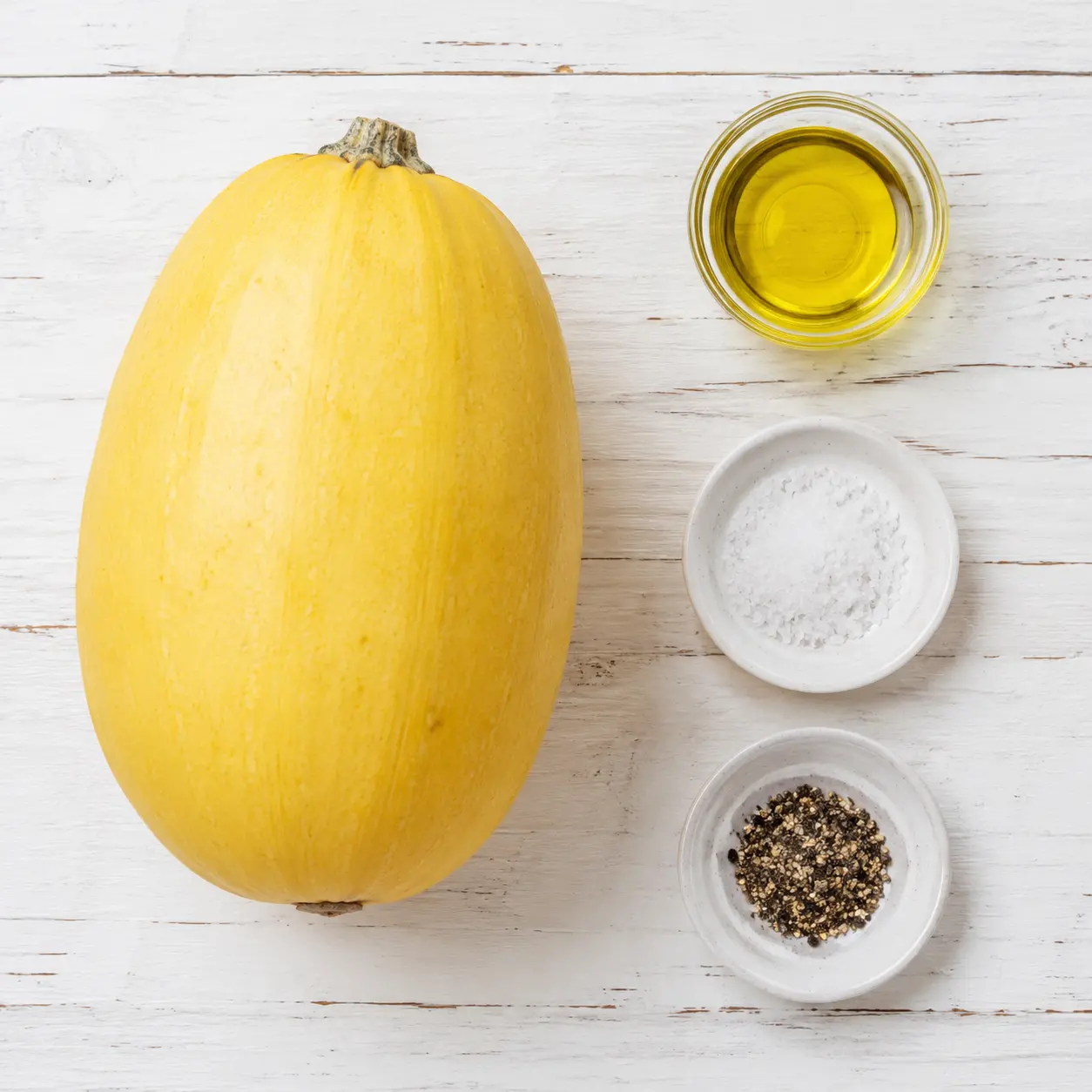
Now, stand the squash up on one of those flat ends. Slice it crosswise into rings about 1 1/2 inches thick. Try to keep them uniform, you know, so they cook evenly. Thicker rings will take longer, thinner ones might burn. Trust your eyes here.
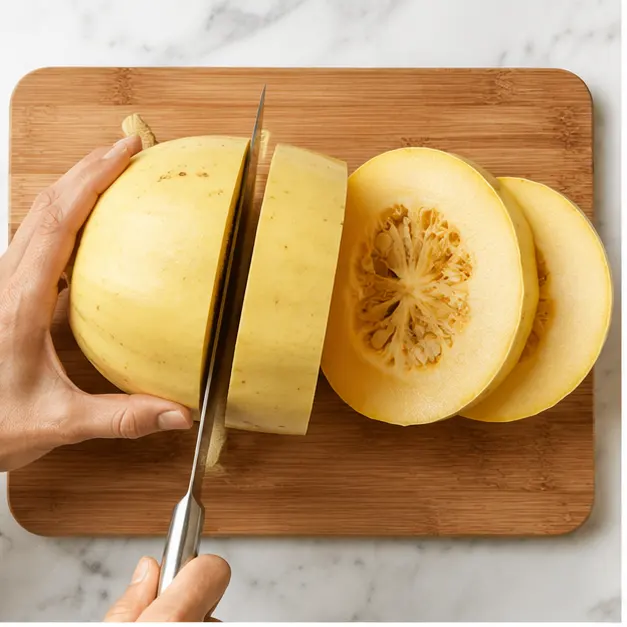
Next, use a spoon to scoop out the seeds from each ring. A grapefruit spoon works like magic for this, but a regular spoon does the job too. Just get all those stringy bits and seeds out. You can save the seeds and roast them later if you want, but that’s a whole other recipe.
And there you have it. Rings ready to go. Wasn’t that way easier than trying to cut the thing in half lengthwise? I think so.
How to Cook Spaghetti Squash in the Oven
Now for the fun part. Here’s the step-by-step on how to cook spaghetti squash using the oven method. This is my go-to because it gives you the best texture and flavor.
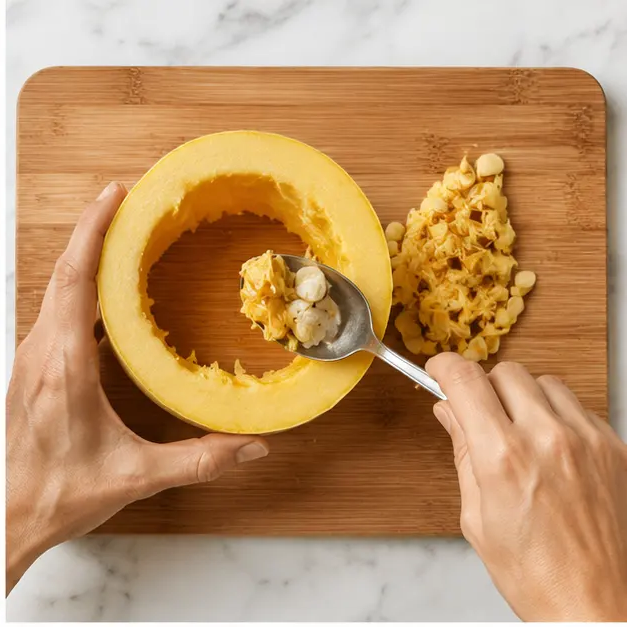
Preheat your oven to 400°F. While that’s heating up, arrange your squash rings on a rimmed baking sheet. Drizzle them with olive oil, about 1-2 teaspoons total. Then season with sea salt and black pepper to taste. Use your hands to coat each piece evenly. Don’t be shy, get in there.
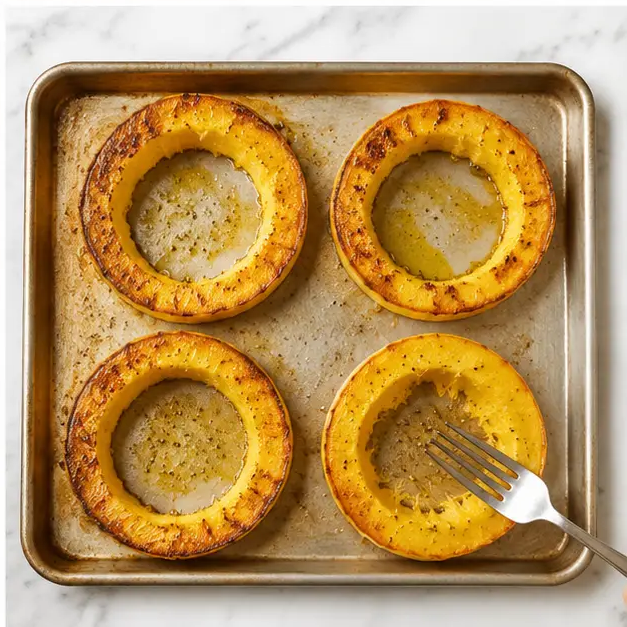
Roast the rings for 30-40 minutes. Here’s the trick: flip them once at the 15-minute mark. This ensures even browning on both sides. You’ll know they’re done when they’re tender and lightly browned around the edges. The smell in your kitchen will be amazing, by the way.
Let the rings cool for about 15 minutes. I know, it’s tempting to dig in right away, but trust me on this. Once they’re cool enough to handle, peel off the skin. It should come off pretty easily. Then use a fork to separate the flesh into long, spaghetti-like strands. This is the satisfying part. Watch those strands just fall apart.
How Long to Bake Spaghetti Squash
This is probably the most common question I get. The spaghetti squash cooking time 400 is 30-40 minutes. But it really depends on the size of your rings and your particular oven. Some ovens run hot, some run cool.
The best way to check doneness? The fork test. You’ll know it’s done when you can easily pierce the skin with a fork. The flesh should be tender but not mushy. If you’re unsure, err on the side of slightly undercooked. You can always pop it back in for a few more minutes. But once it’s overdone, you can’t undo that.
Another visual cue: the edges should be golden brown and slightly caramelized. That’s where all the flavor is. The inside should look slightly translucent and separate easily when you run a fork through it.
Quick Doneness Guide
Under 30 minutes: Rings will be firm, strands won’t separate easily. Not ready yet.
30-35 minutes: Perfect tenderness. Strands separate cleanly. Edges lightly golden.
35-40 minutes: Still good, but edges will be more caramelized. Strands may be slightly softer.
Over 40 minutes: Risk of mushiness. Check at 35 minutes to be safe.
Tips for the Best Spaghetti Squash
After making this more times than I can count, I’ve picked up a few tricks. Here are my top tips for getting it right every time.
- Pat the rings dry before seasoning. This helps them caramelize instead of steam. Less water means better texture.
- Don’t overcrowd the baking sheet. Give each ring some breathing room. If they’re touching, they’ll steam each other.
- Use parchment paper for easy cleanup. The squash can stick to the pan otherwise.
- Season generously. Spaghetti squash is pretty mild, so don’t be afraid with the salt and pepper. You can always add more later.
- Let it cool completely before fluffing. This is crucial for getting those long strands instead of mush.
One more thing: if you’re trying to avoid watery spaghetti squash, this ring method is your best friend. Because the rings are exposed on all sides, moisture evaporates instead of pooling inside the squash. No more soggy strands.
Serving Suggestions
So you’ve got your beautiful strands. Now what? The possibilities are honestly endless. Spaghetti squash is such a great spaghetti squash pasta alternative that works with almost any sauce.
Here are some of my favorite ways to serve it:
- Classic marinara: Top with your favorite jarred or homemade marinara sauce. Add a sprinkle of Parmesan if you’re into that.
- Garlic and oil: Sauté some garlic in olive oil, toss with the strands, and finish with fresh parsley. Simple and perfect.
- Pesto: Mix in a few spoonfuls of basil pesto. It’s like a light, summery pasta dish.
- As a side dish: Serve it alongside grilled chicken or fish. It’s a great low-carb swap for rice or potatoes.
- In casseroles: Use it as the base for a spaghetti squash casserole. Just mix with sauce, cheese, and bake until bubbly.
Honestly, you can use it anywhere you’d use noodles. Spaghetti squash meal prep is a game-changer too. Make a big batch on Sunday and use it throughout the week for quick lunches.
How to Store and Reheat Leftovers
If you somehow have leftovers, you’re in luck. Cooked spaghetti squash stores really well. Here’s how to handle it.
Store the strands in an airtight container in the fridge for up to 4 days. Make sure you let them cool completely before sealing the container, otherwise condensation will make them watery.
To reheat, you have a few options:
- Skillet: This is my favorite method. Heat a little olive oil in a skillet over medium heat, add the strands, and cook for 3-4 minutes until warmed through. You’ll get a little browning on the edges.
- Microwave: Quick and easy. Just microwave in 30-second bursts until hot. It might be a bit softer this way.
- Oven: Spread on a baking sheet and reheat at 350°F for about 10 minutes.
Can you freeze it? Absolutely. Place the cooled strands in freezer-safe bags, squeeze out the air, and freeze for up to 6 months. Thaw in the fridge overnight before reheating.

Common Mistakes to Avoid
I’ve made every mistake in the book so you don’t have to. Here are the most common ones and how to fix them.
❌ Mistake: Roasting too long. This leads to mushy strands that fall apart. ✅ Solution: Start checking at 30 minutes. The rings should be tender but still hold their shape.
❌ Mistake: Adding too much oil. Excess oil makes the squash greasy and can cause it to steam instead of roast. ✅ Solution: Use just 1-2 teaspoons for the whole squash. You can always add more later.
❌ Mistake: Not using parchment paper. The squash sticks to the baking sheet and you lose all those caramelized bits. ✅ Solution: Line your sheet with parchment or a silicone mat.
❌ Mistake: Not checking for doneness. Guessing the time leads to either undercooked or overcooked squash. ✅ Solution: Use the fork test. If it pierces easily and the strands separate, it’s done.
❌ Mistake: Fluffing while hot. The strands will be too soft and won’t separate cleanly. ✅ Solution: Let the rings cool for a full 15 minutes before peeling and fluffing.
Frequently Asked Questions
And there you have it. Everything you need to know about how to cook spaghetti squash the right way. No fuss, no stress, just perfect strands every time. Once you make it this way, you’ll wonder why you didn’t try it sooner. I promise.
If you give this method a try, I’d love to hear how it goes. Tag me on Pinterest when you make it. Happy cooking!

How to Cook Spaghetti Squash: The Best Oven Method for Perfect Strands
Ingredients
Method
- Preheat your oven to 400°F. Trim both ends off the spaghetti squash, then slice it crosswise into rings about 1 1/2 inches thick, keeping them uniform for even cooking.
- Using a spoon, scoop out the seeds from each ring. A grapefruit spoon works well for this task.
- Arrange the rings on a rimmed baking sheet. Drizzle with olive oil and season with salt and pepper, using your hands to coat each piece evenly.
- Roast for 30-40 minutes, flipping the rings once at the 15-minute mark, until tender and lightly browned.
- Let the rings cool for about 15 minutes. Peel off the skin, then use a fork to separate the flesh into long, spaghetti-like strands.
Nutrition
Notes
Tried this recipe?
Let us know how it was!Source: Health & Nutrition Research
How do I store cooked spaghetti squash?
Store the strands in an airtight container in the fridge for up to 4 days. Make sure they’re completely cool before sealing to avoid condensation. You can also freeze them in freezer-safe bags for up to 6 months.
What temperature do you roast spaghetti squash?
Roast spaghetti squash at 400°F for the best results. This temperature gives you tender strands with nicely caramelized edges. The spaghetti squash cooking time 400 is about 30-40 minutes, depending on the size of your rings.
My spaghetti squash is watery after chilling, how do I fix that?
This happens when condensation forms in the container. To fix it, spread the strands on a paper towel-lined plate and microwave for 30-60 seconds. The paper towel absorbs the excess moisture. Or reheat in a dry skillet over medium heat to evaporate the water.
How do you know when spaghetti squash is done in the oven?
Use the fork test. You’ll know it’s done when you can easily pierce the skin with a fork and the flesh separates into long strands. The edges should be lightly golden and caramelized. For the ring method, check at 30 minutes and go from there.