
We’ve All Been There: The Pepper That Wouldn’t Stay Still
You know the scene. You’re trying to get dinner started, you grab a beautiful red bell pepper from the farmers market, and then the struggle begins. It rolls. Seeds fly everywhere. The slices are uneven. One piece is a thick chunk, the next is practically see-through. And somehow, there’s a sticky white membrane clinging to everything.
I’ve been there more times than I can count. It used to frustrate me so much that I’d just buy the pre-cut ones from the store. But honestly? They’re more expensive, they dry out faster, and they never seem to have the same crunch. So I made it my mission to figure out how to cut a bell pepper without the mess and frustration.
And guess what? It’s actually pretty simple once you know the right technique. Whether you need strips for fajitas, dice for salsa, or rings for grilling, this guide will walk you through it. No fancy skills required, just a sharp knife and a little patience.
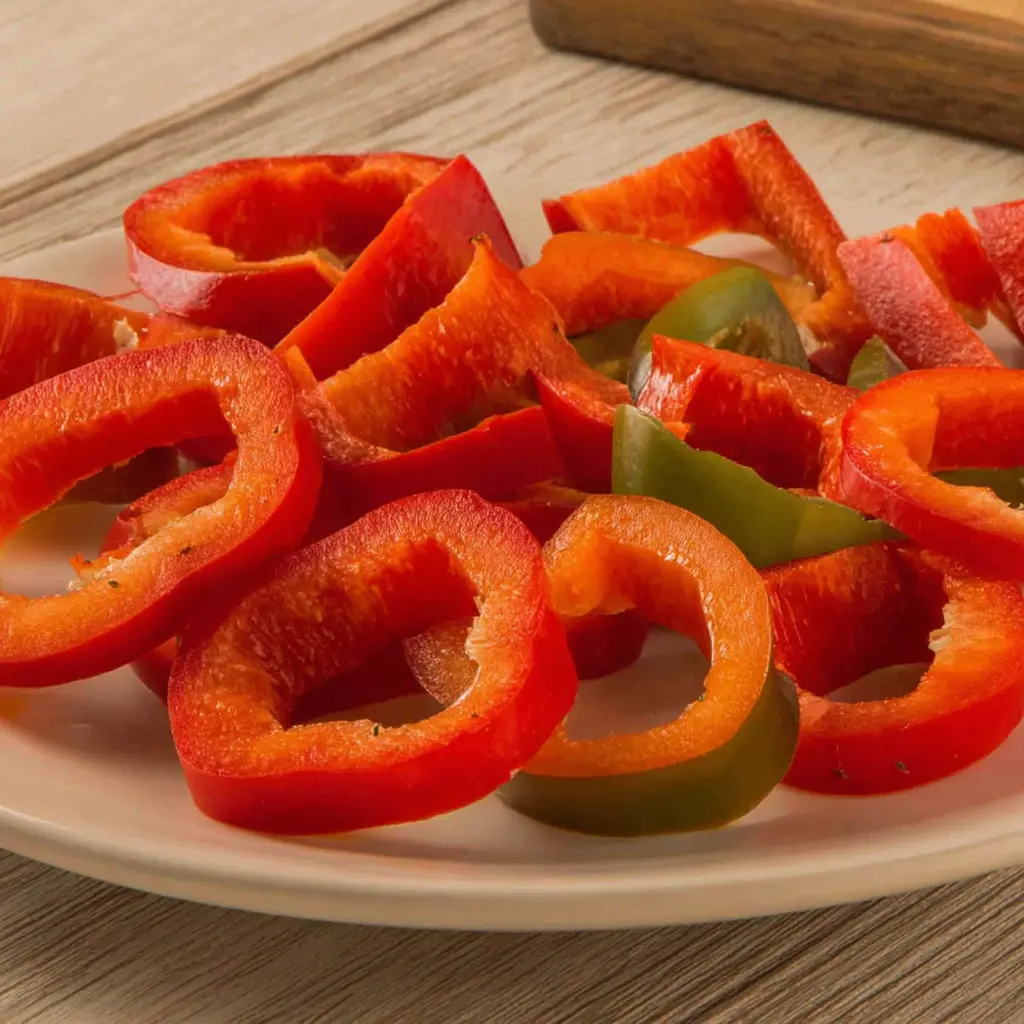
Choosing the Best Bell Peppers
Before we even pick up a knife, let’s talk about picking the right pepper. This makes a bigger difference than you might think. A firm, fresh pepper is way easier to cut than a soft, wrinkly one.
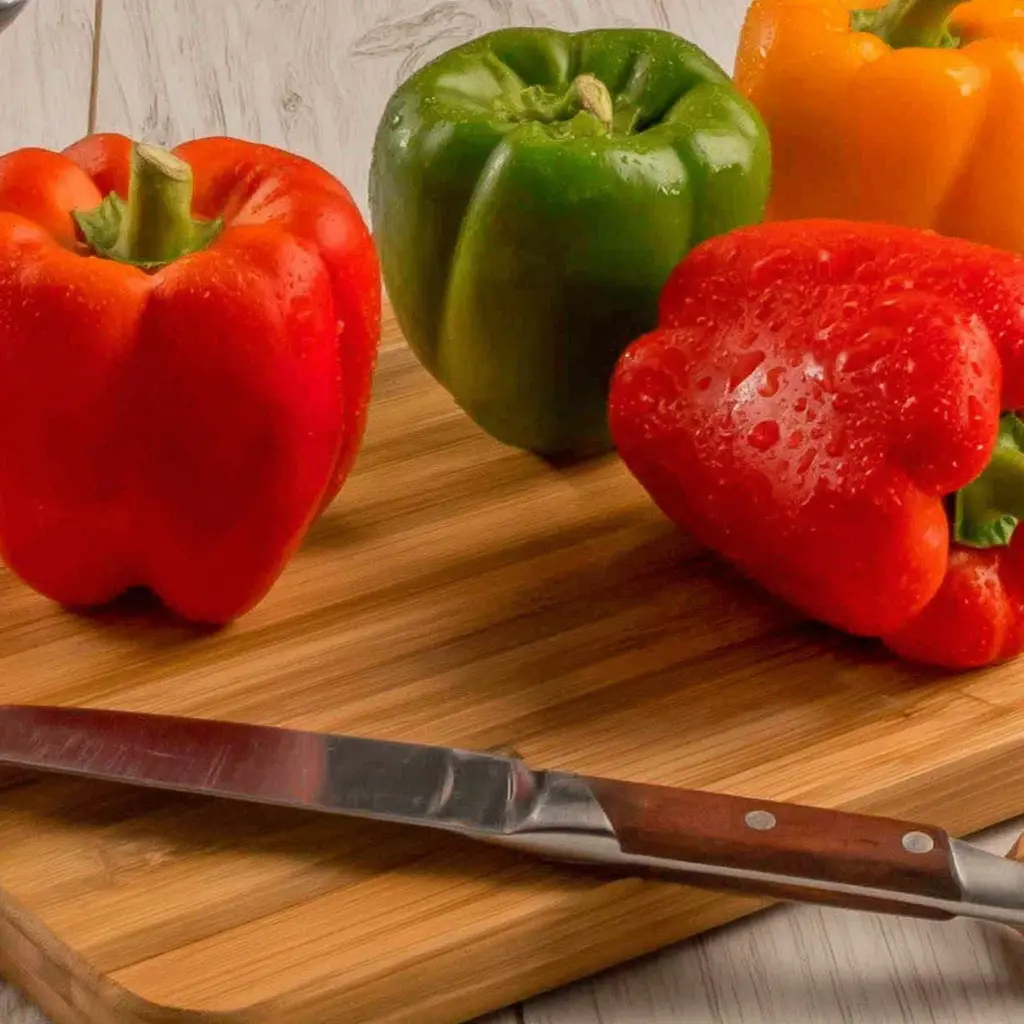
When you’re at the store or the farmers market, look for peppers that feel heavy for their size. The skin should be smooth, glossy, and tight. Give it a gentle squeeze it should be firm, not mushy. And check the stem: a green, fresh-looking stem means it was picked recently.
Color matters too. Green peppers are actually unripe red, yellow, or orange ones. They’re more bitter and have a firmer texture. Red peppers are the sweetest and most tender. Yellow and orange fall somewhere in between. For most recipes, any color works, but if you want a sweeter flavor, go for red.
One more thing avoid peppers with soft spots, wrinkled skin, or cuts. Those are signs they’ve been sitting around too long. A good pepper will last about two weeks in your fridge’s crisper drawer, so stock up when they’re on sale.
Essential Tools for the Job
You don’t need a fancy knife collection for this. Really. But having the right tools makes the whole process smoother and safer. Here’s what I recommend:
- A sharp chef’s knife (8-inch is perfect) a dull knife is actually more dangerous because it slips. I use a Victorinox, but any sharp knife works.
- A sturdy cutting board wood or plastic, just make sure it doesn’t slide around. Put a damp paper towel under it if needed.
- A paring knife (optional) helpful for removing the core if you’re doing the stuffed pepper method.
That’s it. No special gadgets, no fancy equipment. Just a sharp knife and a stable board. Oh, and wash your peppers before you start even if you’re going to remove the skin, give them a quick rinse and dry them off.
How to Cut Bell Peppers into Rings
Bell pepper rings are one of my favorite things to make. They look so professional on a burger or grilled on the BBQ. And honestly, they’re the easiest cut to master.
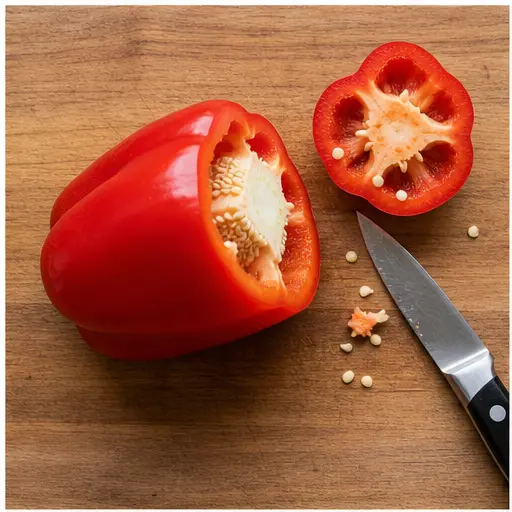
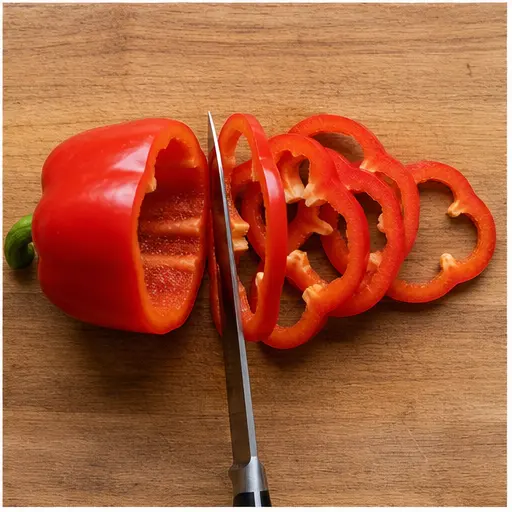
Start by laying the pepper on its side on your cutting board. Using your sharp chef’s knife, slice off the top (the stem end) and the bottom. Discard the stem or compost it if you’re into that. Now you have a hollow pepper tube.
Here’s the trick: stand the pepper upright and gently press down to stabilize it. Then, using a smooth sawing motion, cut thin cross-sections. I like mine about a quarter-inch thick for grilling, but you can go thinner for salads. The seeds will fall out naturally as you slice, but you can also shake them out first.
Why this works: By removing the top and bottom, you create flat surfaces that prevent the pepper from rolling. No more chasing a runaway pepper across the counter. And the rings come out perfectly uniform every time.
How to Slice Bell Peppers (Julienne Cut)
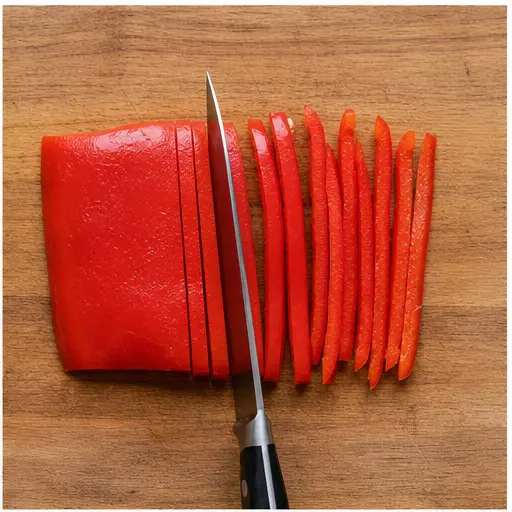
This is my go-to method for stir-fries, fajitas, and salads. Thin, even strips that cook quickly and look beautiful. It’s called a julienne cut, but don’t let the fancy name intimidate you it’s just a fancy way to say “thin strips.”
Start the same way as for rings: lay the pepper on its side and slice off the top and bottom. But instead of slicing cross-sections, stand the pepper upright and cut open one side. You’ll end up with one long strip of pepper that you can lay flat on the board.
Place the strip skin-side down. Carefully trim away any white pith or membrane that’s the bitter part. Now you have a clean, flat piece of pepper. Slice it into thin strips, about an eighth of an inch wide and an inch and a half to two inches long.
Pro tip: Use a claw grip with your non-knife hand. Curl your fingers under so your knuckles guide the blade. It keeps your fingertips safe and gives you more control. If you mess up and get uneven strips, don’t worry just adjust your dice size or eat the scraps as a snack.
How to Dice Bell Peppers
Diced bell peppers are perfect for soups, stews, salsas, and pretty much anything where you want smaller, uniform pieces. The technique builds on the julienne cut, so if you’ve mastered strips, you’re already halfway there.
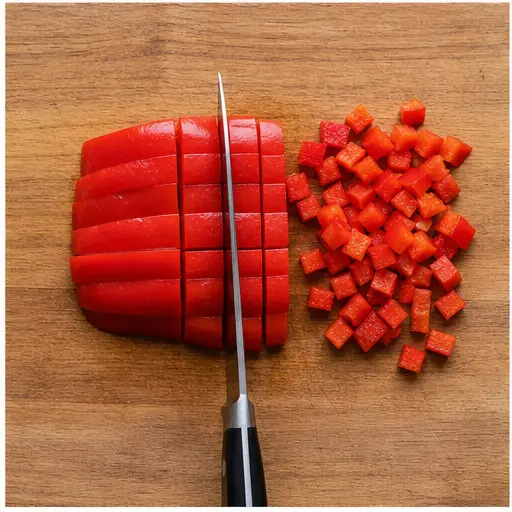
Start by removing the core just like before slice off the top and bottom, cut open one side, and lay the pepper flat on the board. Trim away the white pith. Now, instead of cutting thin strips, slice the pepper into thicker strips, about half an inch wide.
Here’s the key part: gather a few of those strips together in a neat pile. Hold them steady with your claw grip, then cut perpendicularly into even squares. The size is up to you half-inch dice for soups, quarter-inch for salsas. Just make sure they’re uniform so they cook evenly.
A quick hack: If you need really small minced peppers (like for a fine dice), cut your julienne strips even thinner first, then dice from there. It takes a little more time, but the result is worth it for dishes where you want the pepper flavor without big chunks.
How to Cut a Bell Pepper for Stuffing
Stuffed bell peppers are a classic comfort food, and cutting the pepper properly is the difference between a beautiful presentation and a mess. You want the pepper to stay intact so it can hold all that delicious filling.
This method is a little different. Instead of slicing off the top and bottom, only slice off the top (the stem end). Cut about a quarter inch down from the stem. Set that top piece aside you can use it as a little hat if you want.
Now, use a paring knife to run around the inside edges of the pepper. Gently loosen the core and seeds. You can pull them out with your fingers or use a small spoon. The goal is to remove the seeds and membrane while keeping the pepper’s shape intact.
If the bottom is uneven and the pepper wobbles, trim just a tiny slice off the bottom to make it flat. Don’t cut too much, or the filling will leak out. Now you have a perfect hollow vessel ready for stuffing.
My favorite trick: After removing the seeds, give the inside a quick rinse to get any stray seeds. Pat it dry, and you’re ready to fill it with your favorite stuffing rice, ground meat, quinoa, whatever you like.
Storage and Make-Ahead Tips
So you’ve mastered how to cut a bell pepper now what? If you’re like me, you probably prep a bunch at once for the week ahead. Here’s how to keep them fresh.
For cut peppers in the fridge: Place them in an airtight container or a zip-top bag. Here’s the secret line the container with a paper towel. It absorbs excess moisture and keeps the peppers from getting soggy. They’ll stay fresh for about 3 to 4 days.
For freezing: Bell peppers freeze surprisingly well. Spread your cut pieces on a baking sheet in a single layer and pop them in the freezer for an hour. This is called flash freezing, and it prevents them from clumping together. Once frozen, transfer to a freezer-safe bag or container. They’ll keep for up to 6 months.
Pro tip: Don’t thaw frozen peppers before using them in cooked dishes. Just toss them straight into the pan. They’ll release some moisture, but they’ll still taste great. For raw applications like salads, use fresh peppers instead.
And those stems and cores? Don’t throw them away. They’re great for compost, or you can save them to make vegetable broth. Zero waste, maximum flavor.
Recipes with Bell Peppers
Now that you know how to cut a bell pepper in all these different ways, you’re probably wondering what to make. Here are some of my favorite ways to use them.
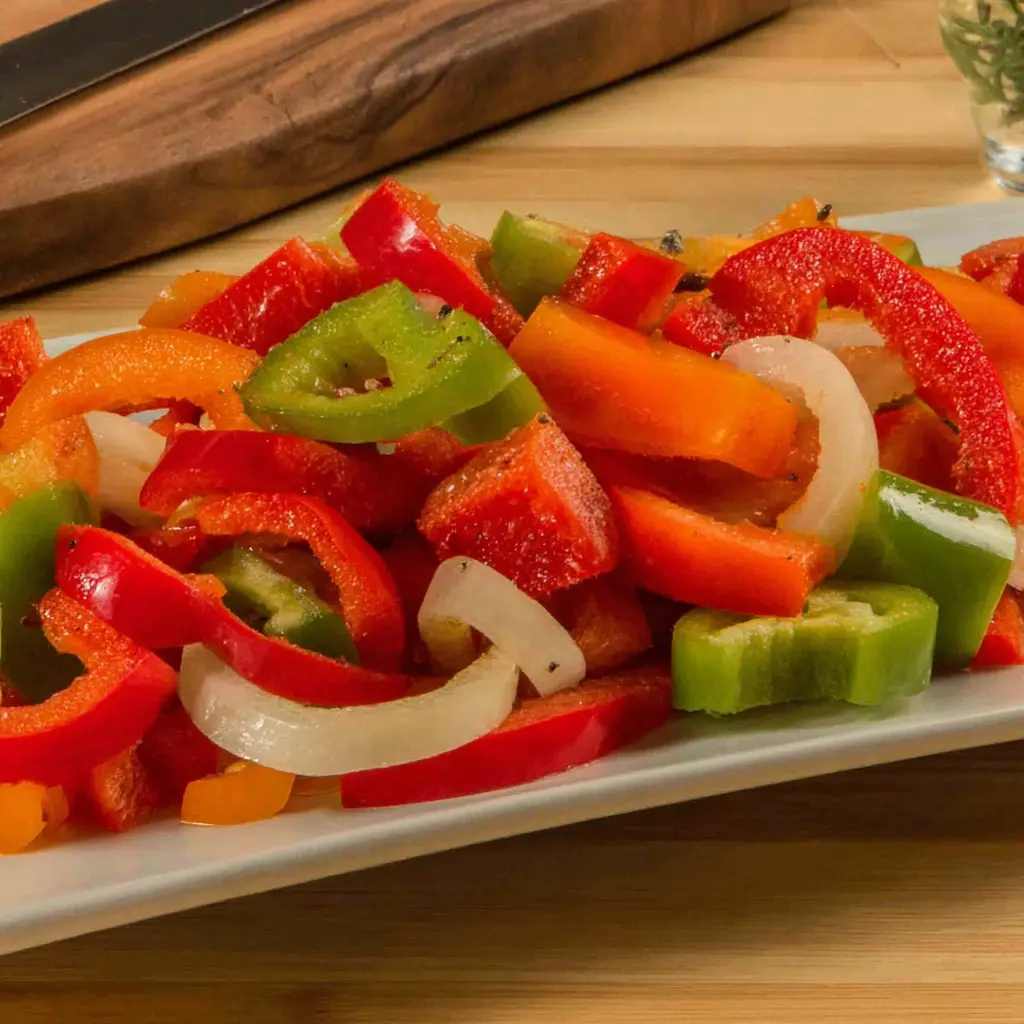
- Fajitas: Use the julienne strips. Toss them with sliced onion and your protein of choice, then serve with warm tortillas and all the fixings. Perfect for Taco Tuesday.
- Stir-fry: Diced or julienne peppers work great. They cook fast and add color and crunch. Throw in some snap peas, carrots, and a simple soy-ginger sauce.
- Grilled peppers: Those rings we talked about? Brush them with olive oil, season with salt and pepper, and grill for 3-4 minutes per side. They’re amazing as a BBQ side or on top of burgers.
- Salads: Thin julienne strips add a fresh crunch to any salad. I love them in a simple cucumber and tomato salad with a lemon vinaigrette.
- Stuffed peppers: Use the hollowed-out method for a hearty dinner. Fill with a mixture of cooked rice, ground beef or turkey, tomato sauce, and cheese, then bake until tender.
- Salsas and dips: Finely diced bell peppers are perfect for fresh salsa, pico de gallo, or even mixed into cream cheese for a quick appetizer spread.
The beauty of knowing multiple cutting techniques is that you can choose the right cut for each recipe. It makes cooking faster, easier, and honestly, more fun.
Frequently Asked Questions
Now you’ve got all the skills you need. Whether you’re prepping for a week of healthy lunches, getting ready for a summer BBQ, or just want to how to cut a bell pepper without the struggle, you’ve got this. Grab a pepper, your sharpest knife, and give it a try. The first one might not be perfect, but by the third or fourth, you’ll be cutting like a pro.
And hey, if you want to save this guide for later, pin it to your favorite recipe board on Pinterest. That way you’ll always have it handy when pepper season hits.
How to Cut a Bell Pepper: 4 Easy Methods for Perfect Results
Ingredients
Method
- Lay the bell pepper on its side on a cutting board. Slice off the top (stem end) and the bottom, discarding any stem that remains. Stand the pepper upright and cut open one side. Slide your knife along the inner walls to release the core, resulting in one long strip of pepper.
- After removing the core, place the pepper strip skin-side down on the board. Carefully trim away any white pith to ensure even thickness. Cut the pepper into thin strips, about 1/8 inch wide and 1.5 to 2 inches long.
- With the core removed, lay the pepper flat on the board and slice it into thick strips, roughly 1/2 inch wide. Gather a few strips together and cut perpendicularly into even squares or chunks.
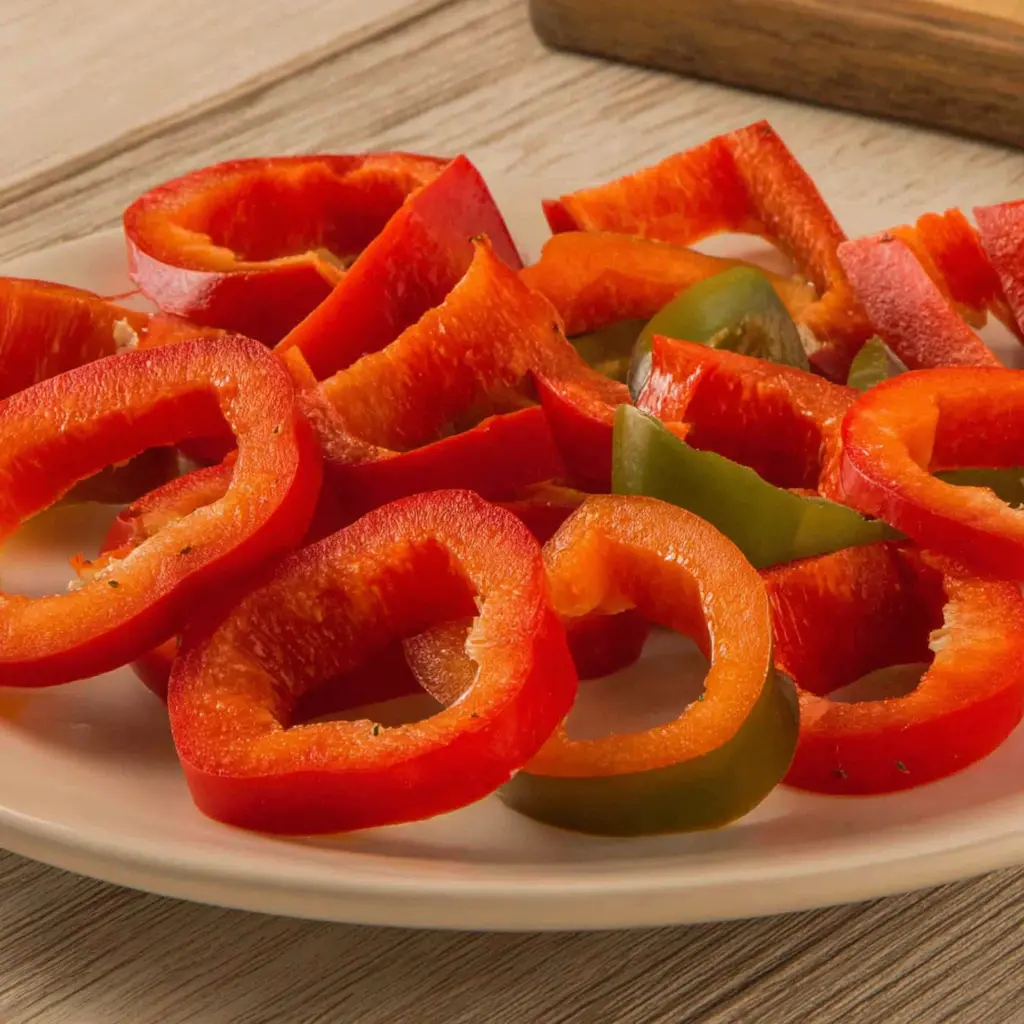
- After removing the core, place the pepper on its side and use a sharp knife to cut thin cross-sections, creating perfect bell pepper rings.
- Slice off only the top (stem end) of the pepper. Run your knife around the inside edges to remove the core while keeping the sides intact. Trim the bottom slightly if needed so it stands upright, then fill the hollowed pepper as desired.
Nutrition
Notes
Tried this recipe?
Let us know how it was!Source: Health & Nutrition Research
Do you have to peel bell peppers?
No, you don’t need to peel bell peppers. The skin is edible and adds texture and nutrients. However, for some recipes like roasted pepper soup or sauces, you might want to char and peel the skin for a smoother texture. For everyday cooking, just wash them and cut away.
Why do you have to remove the seeds from bell peppers?
Bell pepper seeds are edible but have a slightly bitter flavor and a tough texture. Removing them gives you a cleaner taste and better texture in your dishes. Plus, the white membrane around the seeds is also bitter, so trimming it away improves the overall flavor of your meal.
Can I freeze cut peppers and for how long?
Yes, you can freeze cut bell peppers for up to 6 months. For best results, flash freeze them on a baking sheet first, then transfer to an airtight container or freezer bag. They’ll be slightly softer when thawed, so they’re best for cooked dishes rather than raw salads.
How should you store bell peppers?
Whole bell peppers keep for about 2 weeks in the fridge’s crisper drawer. Cut peppers should be stored in an airtight container lined with a paper towel to absorb moisture. They’ll stay fresh for 3 to 4 days. For longer storage, freeze them as described above.
What is the difference between green, yellow, and red bell peppers?
Green bell peppers are unripe and have a more bitter, grassy flavor. Yellow and orange peppers are sweeter and milder. Red peppers are fully ripe and the sweetest of all. Nutritionally, red peppers have the most vitamin C and beta-carotene. All are great for different recipes.
Is it worth paying more for organic bell peppers?
Bell peppers are on the “Dirty Dozen” list for pesticide residue, so organic is a good choice if your budget allows. But conventionally grown peppers are still nutritious and safe. Just wash them thoroughly before cutting. If you’re on a tight budget, prioritize organic for thin-skinned produce.
What is the easiest way to cut a bell pepper for beginners?
The easiest method for beginners is the ring method. Just slice off the top and bottom, then cut cross-sections. It’s simple, doesn’t require precise knife skills, and produces beautiful results. As you get more comfortable, you can try the julienne and dice methods for more versatility.