
Roasted Eggplant Dip
Ingredients
Method
- Preheat your oven to 400°F (200°C).
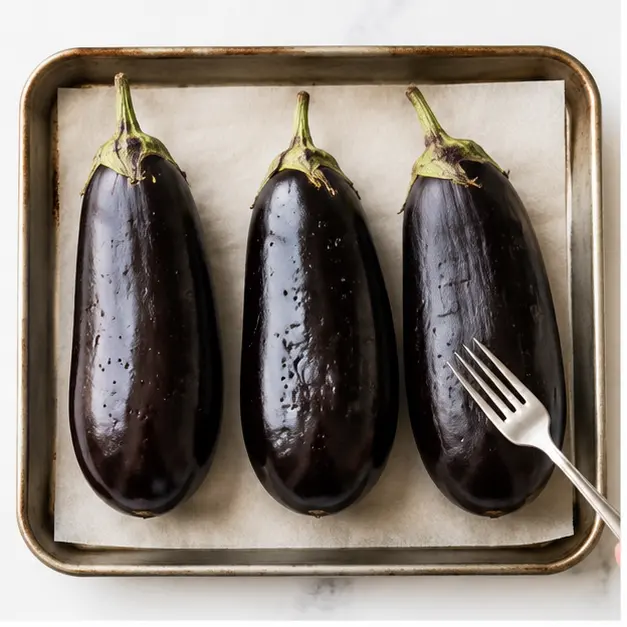
- Pierce the whole eggplants several times with a fork to allow steam to escape. Place them on a baking sheet.
- Slice off the top of the garlic head to expose the cloves, then set it on a small piece of foil. Drizzle the cut surface with 1 tablespoon of olive oil, wrap tightly in foil, and place on the same baking sheet.
- Roast for 50 to 60 minutes, flipping the eggplants halfway through, until the eggplants are very tender and the garlic is soft. Larger eggplants may need a few extra minutes.
- Carefully unwrap the garlic and let it cool slightly. Slice the eggplants in half lengthwise and allow both to cool for at least 10 minutes.
- Scoop the eggplant flesh into a food processor. Squeeze the roasted garlic cloves out of their skins and add them as well.
- Add the Greek yogurt, lemon juice, fresh herbs, sea salt, and black pepper to the food processor. If using tamari or hot sauce, add them now.
- Blend until the mixture is smooth and creamy, scraping down the sides as needed.
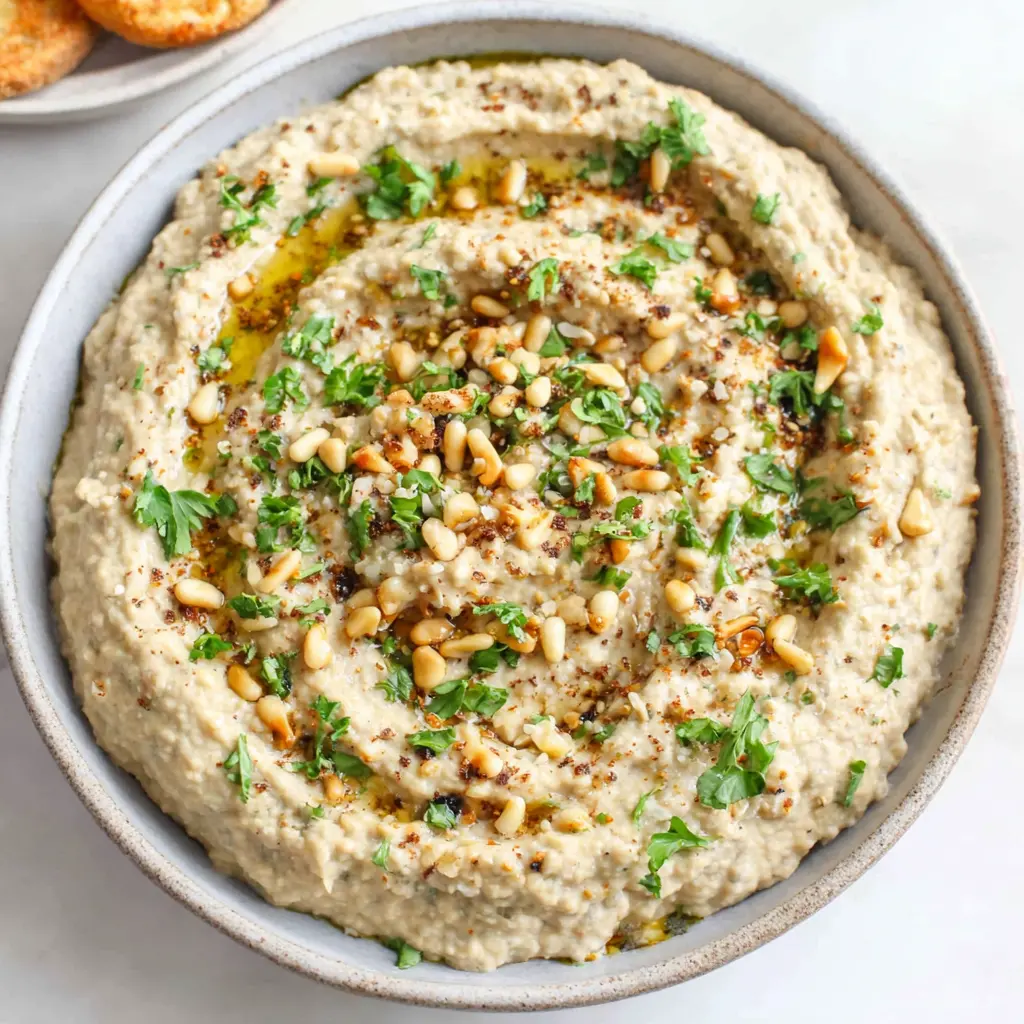
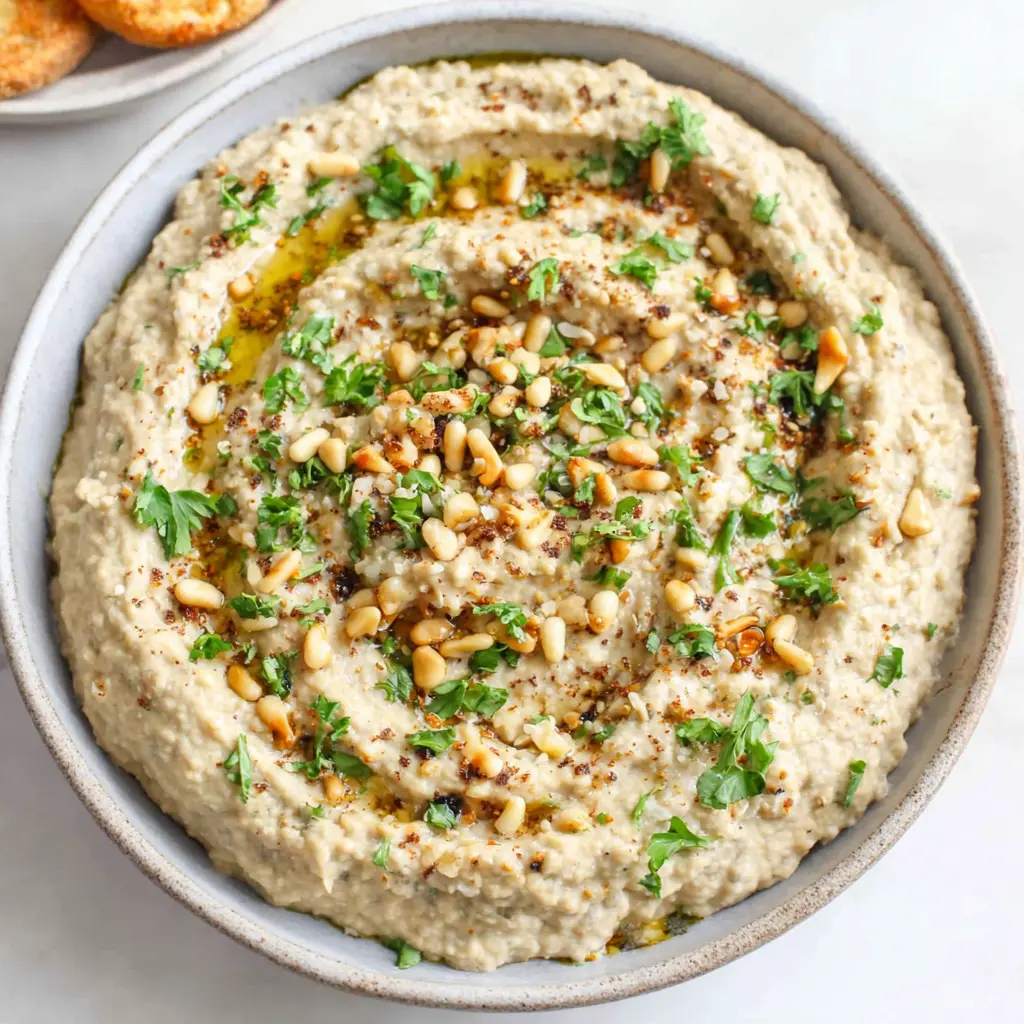
- Transfer the dip to a serving bowl. Garnish with toasted pine nuts, fresh parsley, a sprinkle of sumac, and a touch of lemon zest.
- Serve at room temperature or chilled with crackers, chips, or warm pita bread.
Nutrition
Notes
Tried this recipe?
Let us know how it was!Why You’ll Love This Roasted Eggplant Dip
The first time I made a roasted eggplant dip, I ended up with a sad, watery mess. I had skipped a few steps, rushed the process, and honestly, I was just impatient. The result? A bland, bitter paste that no one wanted to touch. It was a total party fail.
But I learned my lesson. And after a lot of trial and error (and a few more sad dips), I finally cracked the code. This recipe is the result of all that delicious research. It’s creamy, it’s smoky, and it’s packed with flavor from roasted garlic and fresh herbs. It’s the kind of dip that disappears in minutes at a summer barbecue.
So what makes this one different? For starters, we’re roasting the whole eggplant and a whole head of garlic together. This isn’t a quick fix it takes about an hour. But that time is where the magic happens. The eggplant gets impossibly tender, and the garlic turns into sweet, mellow cloves that blend into the dip like a dream. No sharp, raw garlic bite here.
This dip is also incredibly versatile. Serve it with warm pita chips, crunchy veggie sticks, or slather it on a sandwich. It’s a healthy snack, a show-stopping appetizer, and a make-ahead lifesaver all in one. Seriously, you’re going to love it.
Ingredients Needed
Let’s talk about what you’ll need. The beauty of this roasted eggplant dip is that it uses simple, fresh ingredients. You probably have most of them in your kitchen right now.
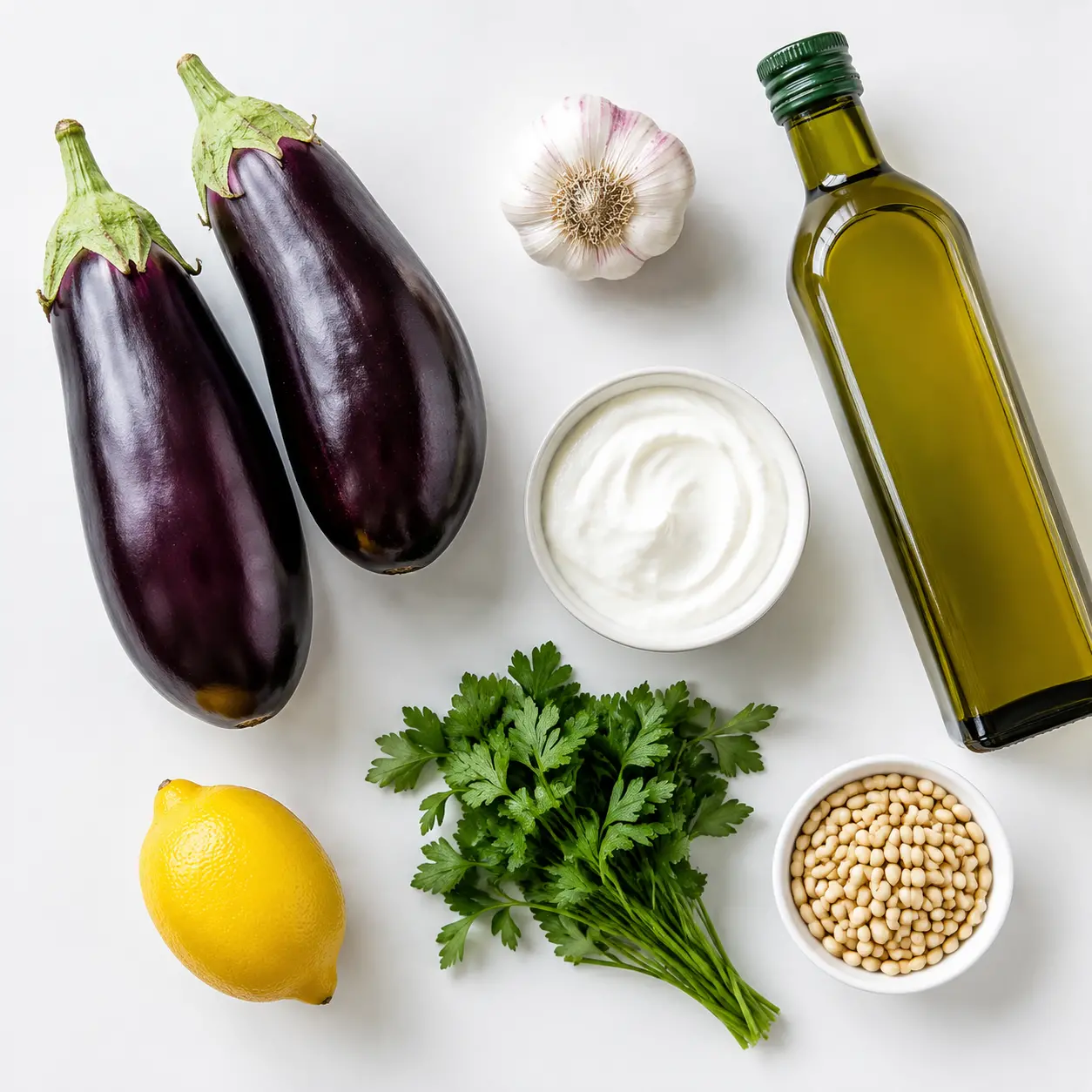
Here’s the lineup for the base of the dip:
- Eggplant: About 1 1/2 to 2 pounds total. Look for firm, glossy eggplants that feel heavy for their size. That’s a sign they’re fresh and not full of seeds.
- Garlic: One whole head. We’re roasting it whole, which transforms it from pungent to sweet and buttery.
- California Olive Oil: You’ll need a good quality one here. We use it to drizzle on the garlic before roasting and it adds a lovely richness to the final dip.
- Full-Fat Greek Yogurt or Crème Fraîche: This is what gives the dip its incredible creamy texture. Full-fat is key here it won’t separate or get watery.
- Meyer Lemon Juice: Freshly squeezed, please. Meyer lemons are a bit sweeter and less acidic, which works perfectly here.
- Mixed Fresh Herbs: A full cup of them! I love using flat-leaf parsley, chives, and dill. Parsley is the workhorse, but the mix adds layers of flavor.
- Sea Salt and Black Pepper: Simple seasonings to bring everything together.
And for the optional add-ins and garnish:
- Tamari or Soy Sauce: Just a teaspoon adds a lovely umami depth.
- Hot Sauce or Chili Flakes: For a little kick if you want it.
- Toasted Pine Nuts, Fresh Parsley, Sumac, and Meyer Lemon Zest: These are for the final garnish. They add texture, color, and a bright, tangy finish.
Kitchen Tools Required
You don’t need a ton of fancy equipment for this one. Here’s what you’ll want to have on hand:
- A baking sheet (rimmed is best, to catch any drips)
- A small piece of aluminum foil (for wrapping the garlic)
- A fork (for piercing the eggplants)
- A food processor (this is the easiest way to get that super smooth, creamy texture)
- A rubber spatula (for scraping down the sides of the food processor)
- A serving bowl
- A small skillet (for toasting the pine nuts, if you’re using them)
That’s it. Simple stuff you probably already own.
How to Make Roasted Eggplant Dip
Alright, let’s get to the fun part. Here’s the breakdown of the process. I’ll walk you through each major stage, explaining the why behind the how.
Stage 1: Roast the Eggplant and Garlic
First things first, preheat your oven to 400°F. While it’s heating up, take your eggplants and pierce them several times with a fork. This is crucial it lets steam escape so they don’t explode in your oven. Trust me, you don’t want to clean that up.
Place the eggplants on your baking sheet. Now, take the head of garlic and slice off the top to expose the cloves. Set it on a piece of foil, drizzle the cut surface with a tablespoon of your California olive oil, and wrap it up tight. Place that on the baking sheet too.
Roast everything for 50 to 60 minutes. Flip the eggplants halfway through. You’ll know they’re done when they look deflated and feel very soft when you poke them. The skin will be wrinkled and slightly charred. The garlic should be soft and golden when you unwrap it.
Stage 2: Cool and Prepare the Flesh
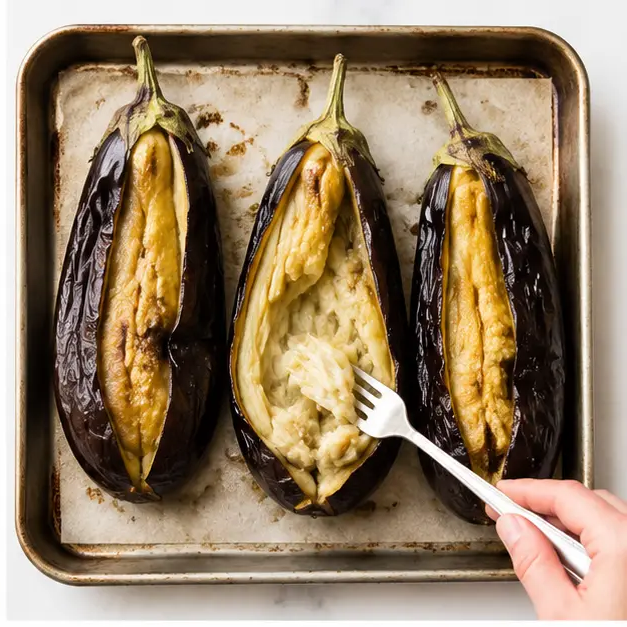
Once everything is out of the oven, carefully unwrap the garlic and let it cool for a bit. Slice the eggplants in half lengthwise. This is where patience pays off. Let them cool for at least 10 minutes. If you try to handle them too soon, you’ll burn your fingers.
Then, the satisfying part. Scoop the tender eggplant flesh out of the skins with a spoon. It should come away easily. Add it to your food processor. Now, squeeze the roasted garlic cloves out of their skins they’ll pop right out and add those too.
Stage 3: Blend the Dip
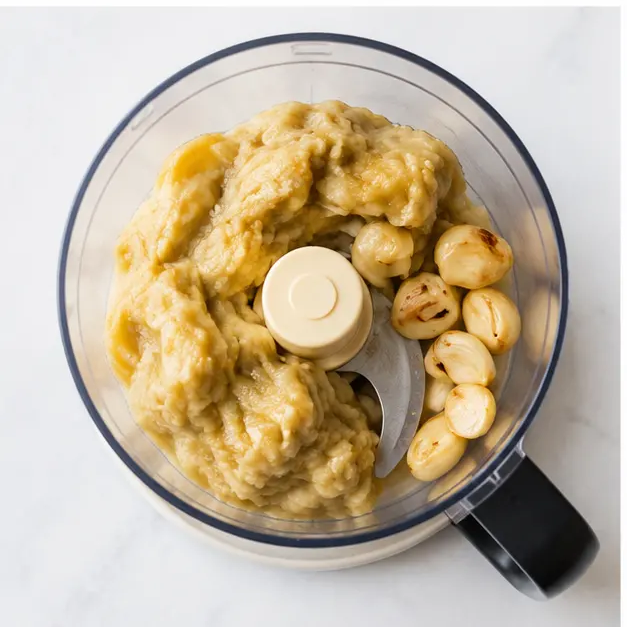
To the food processor, add your Greek yogurt, Meyer lemon juice, the cup of mixed fresh herbs, sea salt, and black pepper. If you’re using the tamari or hot sauce, throw that in now.
Blend until the mixture is super smooth and creamy. You’ll need to stop and scrape down the sides with your spatula a couple of times. That’s normal. This is where it all comes together into that gorgeous, silky dip.
Stage 4: Finish and Serve
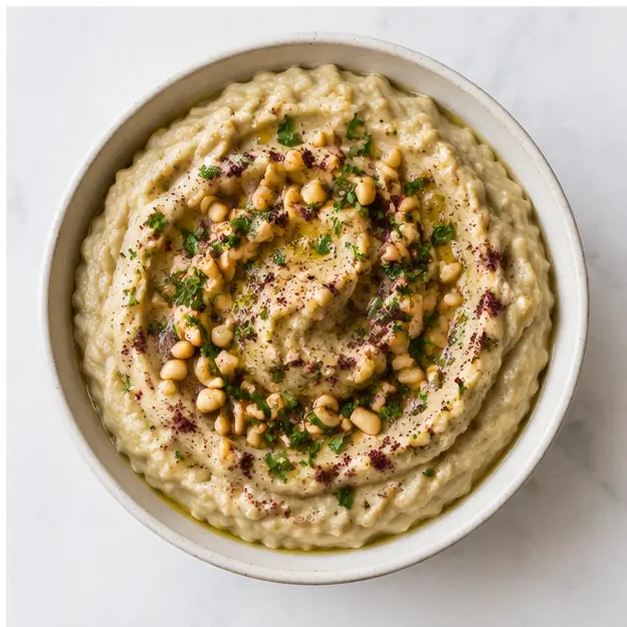
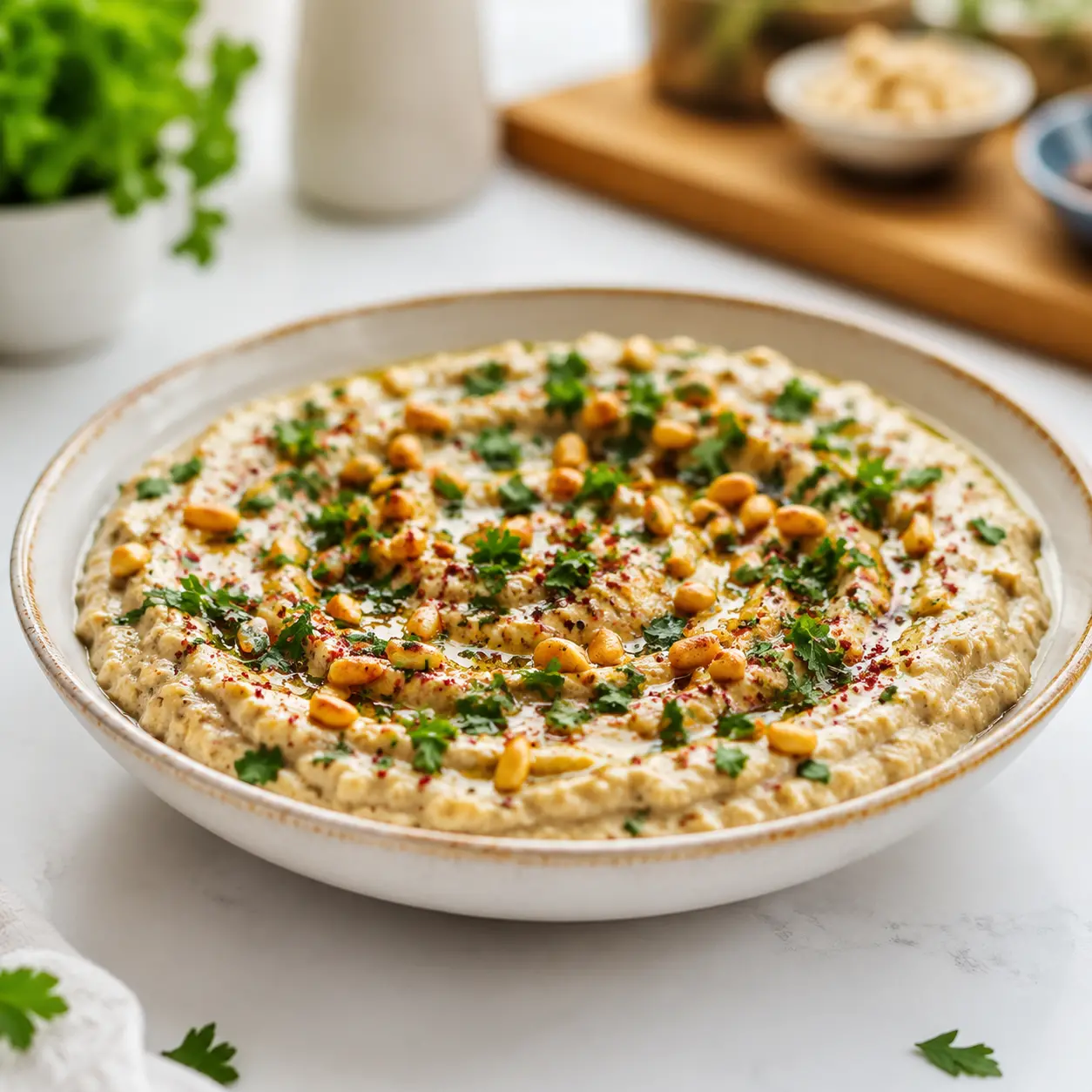
Transfer the dip to your serving bowl. Now for the fun part the garnish. Sprinkle on the toasted pine nuts, some chopped fresh parsley, a good pinch of sumac, and a little freshly grated Meyer lemon zest. It’s beautiful and adds so much flavor and texture.
You can serve this dip at room temperature or chilled. It’s delicious either way. Grab some warm pita bread, pita chips, or a veggie platter, and dig in.
Recipe Tips and Variations
Here are a few things I’ve learned along the way to make sure your dip is perfect every time.
Pro Tips for Success
Don’t skip the cooling step: Letting the eggplant cool makes it much easier to handle and prevents the dip from being watery. The flesh releases some liquid as it sits.
Avoid over-burning the garlic: The garlic should be soft and golden brown, not dark brown or black. Burnt garlic will make your dip bitter.
Adjust the texture: If your dip seems too thick after blending, just stir in a teaspoon of olive oil or a little water to loosen it up.
Variations to Try:
- Vegan Version: Substitute the Greek yogurt with a thick, plain plant-based yogurt or even silken tofu. It works beautifully.
- Spice It Up: Add that optional hot sauce or a pinch of chili flakes for a kick.
- Extra Smoky: For an even deeper smoky flavor, you can char the eggplants directly on a gas grill or over an open flame before roasting them in the oven. Just watch them closely.
How to Store Leftovers
This dip is a great make-ahead option. In fact, the flavors get even better after a day in the fridge.
Store any leftovers in an airtight container in the refrigerator. It will keep well for up to 4 days. To make it ahead, just prepare the dip without the garnish and add the toppings right before you serve it.
Can you freeze it? Yes! This roasted eggplant dip freezes surprisingly well. Store it in a freezer-safe container for up to 2 months. Thaw it overnight in the fridge, give it a good stir, and it’s ready to go. The texture might be slightly different after freezing, but the flavor will still be fantastic.
Frequently Asked Questions
When you make this roasted eggplant dip (and I know you will!), I’d love to see it. Tag me on Pinterest so I can check out that gorgeous dip. Happy cooking!
Follow me on Pinterest for more recipes like this!What is baba ganoush?
Baba ganoush is a classic Levantine dip made from roasted eggplant, tahini (sesame paste), lemon juice, and garlic. Our roasted eggplant dip is similar but uses Greek yogurt for creaminess and a mix of fresh herbs, giving it a brighter, fresher flavor profile.
Do you have to peel eggplant for this dip?
Nope. For this recipe, you roast the eggplant whole with the skin on. The skin helps trap steam and creates that soft, creamy interior. After roasting, you simply scoop out the flesh, leaving the charred skin behind. It’s the easiest way.
What dips can I make with roasted eggplant?
Roasted eggplant is incredibly versatile. Besides this creamy herb dip, you can make baba ganoush, melitzanosalata (a Greek dip with olive oil and vinegar), or a spicy harissa eggplant dip. The possibilities are endless once you master the roasting technique.
Do you soak eggplant before roasting?
Not for this particular recipe. Some methods call for salting and soaking eggplant to draw out bitterness, but with fresh, firm eggplants, it’s usually not necessary. Roasting them whole at a high temperature is enough to create a sweet, creamy result.
What can I use in place of tahini in eggplant dip?
This recipe doesn’t use tahini at all, so you’re in luck! It uses Greek yogurt for creaminess. If you want a nutty flavor similar to tahini, you could try a tablespoon of almond butter or even a spoonful of well-stirred hummus as a substitute.
What’s the difference between eggplant dip and hummus?
The main difference is the base. Hummus is made from chickpeas and tahini, giving it a thick, nutty flavor. Eggplant dip, like this one, is made from roasted eggplant, making it lighter, smoother, and with a distinct smoky flavor from the roasting process.
Can roasted eggplant dip be served cold?
Absolutely. This dip is delicious served at room temperature or chilled. In fact, I often make it a day ahead and serve it straight from the fridge on a hot summer day. Just give it a good stir before serving and add the fresh garnish.
What do I serve with this dip?
The options are endless. Serve it with warm pita bread, pita chips, or crunchy crackers. It’s also fantastic with a veggie platter of carrot sticks, cucumber rounds, and bell pepper slices. You can even use it as a spread on sandwiches or wraps.
Can this recipe be frozen?
Yes, it freezes well. Store the dip in a freezer-safe container for up to 2 months. Thaw it overnight in the refrigerator and give it a good stir before serving. The texture might be slightly softer after freezing, but the flavor will still be wonderful.