
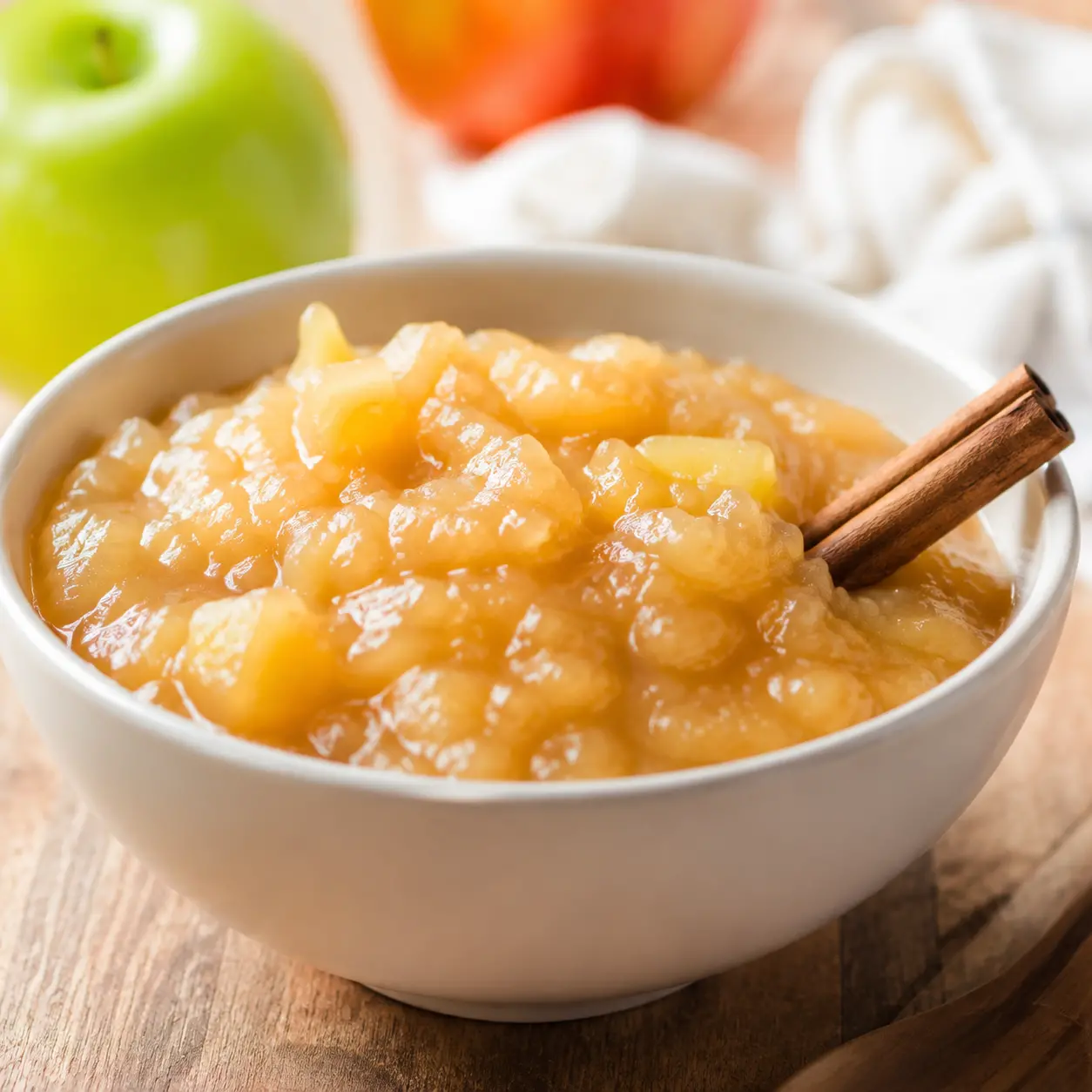
Why You Will Love This Stovetop Applesauce
I have a confession to make. Last week I stood in the grocery aisle staring at a pouch of applesauce and just felt… defeated. The ingredient list was longer than my receipt, there was added sugar I did not sign up for, and the price? Forget it. I put the pouch back, walked to the produce section, and grabbed a bag of mixed apples instead. Best decision I have made all month.
This stovetop applesauce is the recipe I now make on repeat. It takes 30 minutes, uses one pot, and turns fresh apples into something so good you will wonder why you ever bought the stuff in jars. And honestly? It is genuinely hard to mess up. Worst case scenario, it is still delicious.
The first time I made it, my kitchen smelled like a fall candle had exploded, my kids hovered around the stove asking when it would be ready, and when I took that first warm bite straight from the pot, I actually said “whoa” out loud. To no one. In an empty kitchen. That is the power of good homemade applesauce.
Ingredients for Stovetop Applesauce
Here is the beautiful thing about this recipe. You only need a handful of real ingredients, and you probably already have most of them in your kitchen right now.
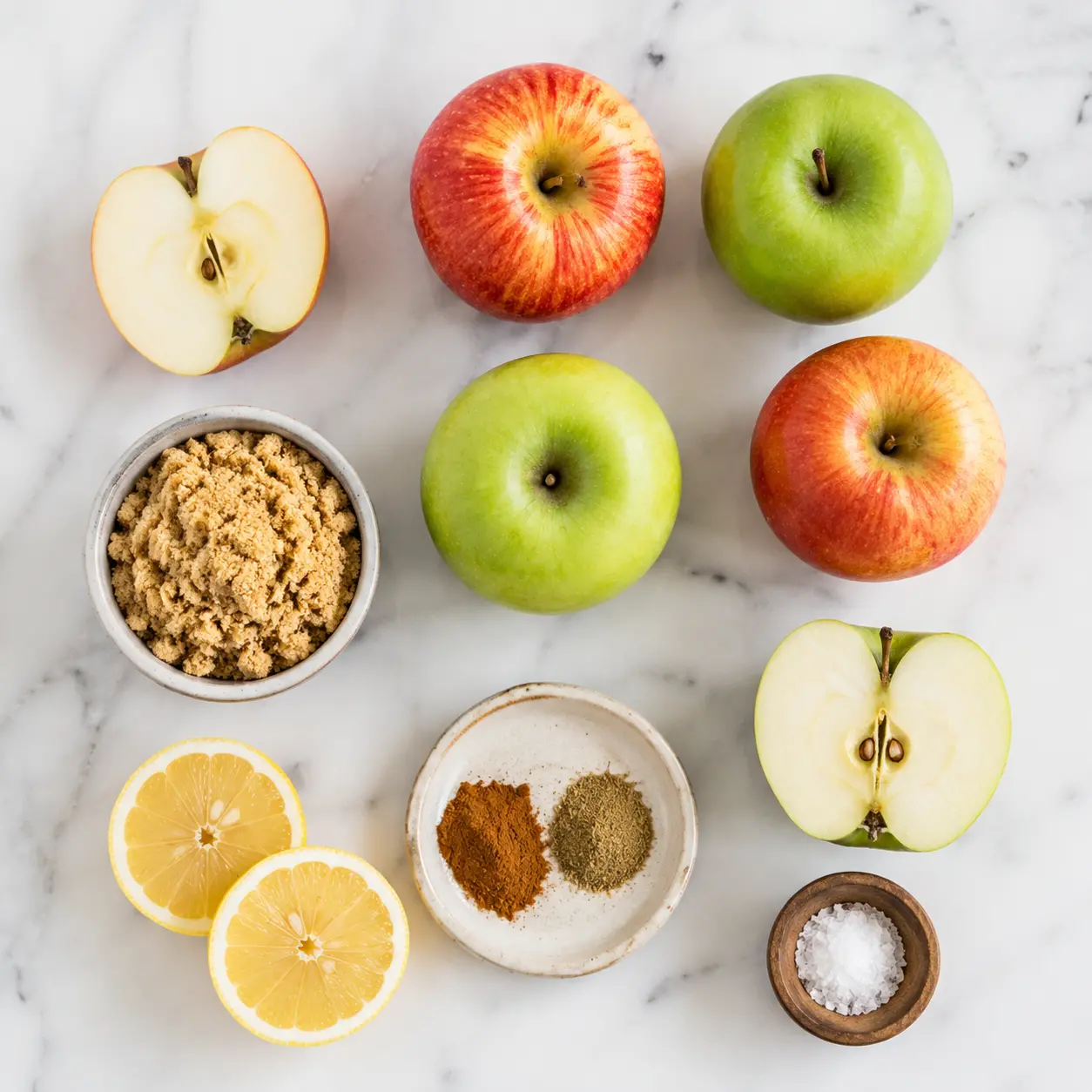
- Mixed apples (1.5 pounds or about 680 g): The star of the show. A mix of sweet and tart gives you the most balanced flavor.
- Filtered water (1/2 cup): Just enough to get the apples simmering without diluting the flavor.
- Packed light brown sugar (2 to 4 tablespoons): Start with less, add more after tasting. Some apples are naturally very sweet.
- Fresh lemon juice (1 to 2 tablespoons): This keeps the apples from turning brown and gives the flavor a little lift. If you have Meyer lemons, even better.
- Ground cinnamon (1/4 teaspoon): The warm, familiar spice that makes the whole house smell amazing.
- Ground cardamom (1/8 teaspoon): Trust me on this one. It is subtle, but it makes the applesauce taste somehow more special. Like the fancy version of something you already love.
- Fine sea salt (1 pinch): Just a pinch. It brightens everything without making it taste salty.
That is it. No weird preservatives, no high-fructose corn syrup, nothing you cannot pronounce. Just fresh apples and a few pantry staples doing their thing.
Best Apples for Stovetop Applesauce
Okay, let us talk apples for a second, because this actually matters. The rule of thumb for apple varieties for applesauce is simple: use what you like to eat. If you would not snack on it raw, do not bother cooking it into sauce.
But here is the pro move. Use a blend of sweet and tart. When you mix varieties, you get a sauce that is not one-note. It has a little brightness, a little depth, a little something going on. My go-to blend right now is Honeycrisp, Gala, and Granny Smith. The Honeycrisp brings sweetness, the Gala brings that classic apple flavor, and the Granny Smith cuts through with tartness.
If you are in California in August, keep an eye out for Gravenstein apples at the farmers market. They are one of the first apples of the season, they are fantastic for sauce, and they have this honeyed tartness that is hard to beat. Grab them while you can, they have a short window.
Apple Cheat Sheet
Sweet and soft: Gala, Fuji, Honeycrisp, Golden Delicious. These cook down quickly and need less sugar.
Tart and crisp: Granny Smith, Gravenstein, Jonathan. These hold their shape a little longer and add tang. They may need a few extra minutes of simmering to soften.
One more thing. If your apples are super ripe and sweet, you can reduce the brown sugar or skip it altogether. This recipe is flexible like that.
How to Make Stovetop Applesauce
Here is where the magic happens. The process breaks down into four simple stages, and the whole thing comes together in about 30 minutes flat. Let me walk you through it, including a few hard-earned lessons from my own kitchen.
Stage 1: Prep Your Apples
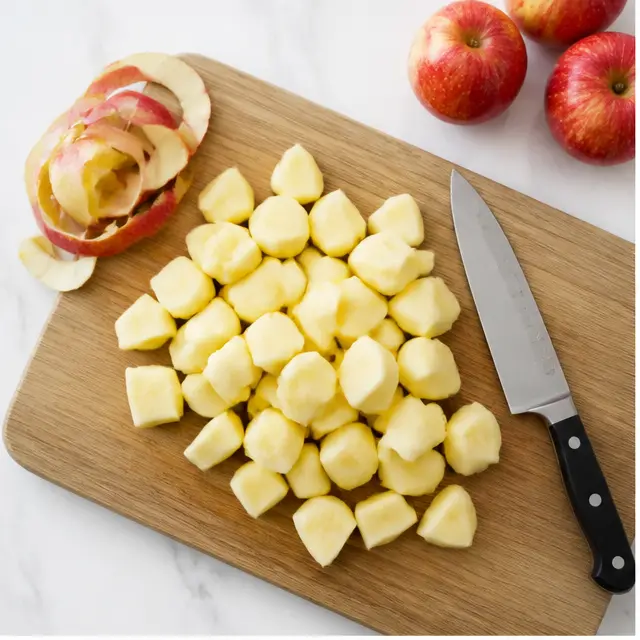
Peel, core, and cut the apples into 1/2-inch chunks. You want them roughly uniform so they cook at the same rate. I know peeling apples feels like a chore, but put on a podcast or just enjoy the rhythm of it. There is something meditative about the thunk of the knife through a crisp apple.
If you hate peeling (I get it), you can leave the skins on and use a food mill at the end. The peels add color and flavor, and the food mill catches them so you still get smooth sauce. But for this recipe, I peel. It is simpler and the texture comes out more consistent.
Stage 2: Simmer the Apples
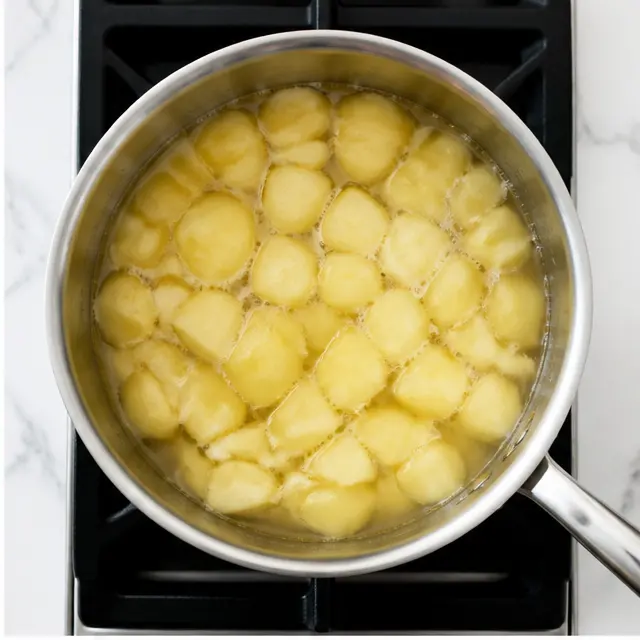
Put the apple chunks in a medium saucepan with the water and lemon juice. Cover the pot, set it over medium heat, and let it simmer for about 10 minutes. Stir from time to time so the bottom does not stick.
You will know it is working when the kitchen starts to smell incredible and the apples go from firm chunks to tender pieces that are starting to fall apart. Firmer varieties like Granny Smith might need a couple extra minutes. That is fine. This is not a race.
Stage 3: Season the Sauce
Once the apples are soft, stir in the brown sugar, cinnamon, cardamom, and salt. Start with the smaller amount of sugar. Taste it, and then decide. Some apple varieties are already so sweet they barely need any help, others are tarter and want a little more.
Here is where I admit my first batch was a total disaster. I dumped in all 4 tablespoons of sugar, and the result was so sweet it basically glowed in the dark. My kids loved it, of course. But I learned my lesson. Always start low and build up.
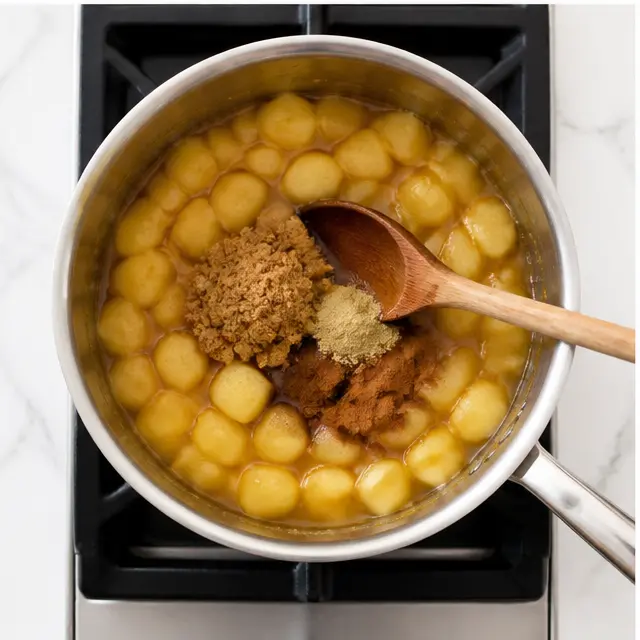
Stage 4: Mash or Blend
This is the texture decision, and there is no wrong answer. For chunky applesauce, leave the apples right in the pan and get in there with a potato masher. Press to your preferred texture, lumpy is fine, actually lumpy is kind of the point.
For smooth applesauce, pass everything through a food mill fitted with a coarse disc. If you do not have a food mill, a food processor works, but pulse it gently. Over-processing turns applesauce into a drinkable puree, and that is not what we are going for.
Return the sauce to the pot and simmer it gently for 3 to 5 minutes, stirring often, until it turns thick and glossy. If it looks watery, keep simmering. It will thicken as it cools, but a few extra minutes of heat helps too.
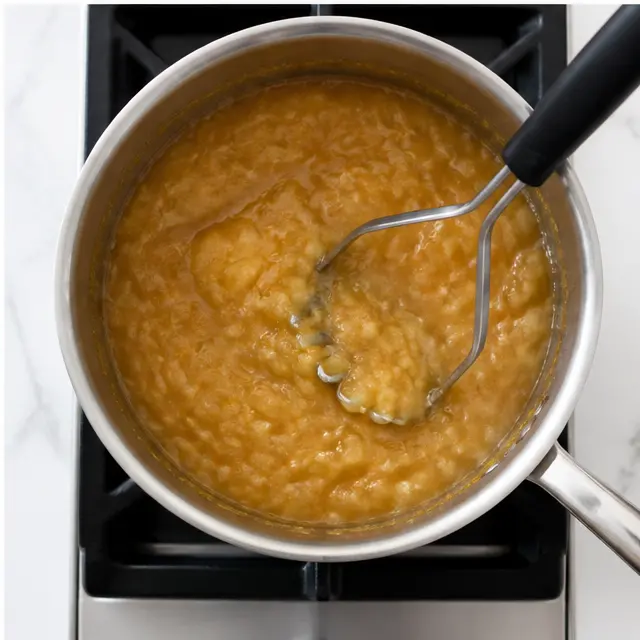
Stovetop Applesauce Tips and Troubleshooting
Let us get real about the problems that can happen, because they absolutely happened to me at some point.
❌ Mistake: Adding too much water, then having to cook it off forever.
✅ Solution: Start with just 1/2 cup. Apples release liquid as they cook, so you do not need much.
❌ Mistake: Burning the applesauce because you walked away to fold laundry.
✅ Solution: Keep the heat at medium or medium-low and stir every few minutes. Set a timer if you need to.
❌ Mistake: Over-processing in the food processor and getting apple smoothie instead.
✅ Solution: Pulse in short bursts. You want it saucy, not drinkable.
❌ Mistake: Judging the texture while it is piping hot.
✅ Solution: Remember that applesauce thickens as it cools. It should look a little looser than your target.
❌ Mistake: Not tasting for sweetness.
✅ Solution: Apples vary wildly in sweetness. Always taste before you declare it done.
❌ Mistake: Going overboard on spice and hiding the apple flavor.
✅ Solution: Start with the small amounts listed. You can always add more, but you cannot take it out.
Stovetop Applesauce Variations
Once you nail the basic recipe, you can play with it. Here are some of my favorite ways to switch things up, depending on the season and my mood.
- Swap the sweetener: Brown sugar is classic, but maple syrup or honey works beautifully. If you use a liquid sweetener, cut the water by about 1 tablespoon so the texture stays thick. Honey does change the flavor profile, so taste as you go.
- Add more spice: Love cinnamon? Crank it up to 3/4 teaspoon and skip the cardamom, or keep both. You can also add a tiny pinch of nutmeg, allspice, cloves, or ginger. Use 1/8 teaspoon or less for these, they are potent.
- Keep it unsweetened: If your apples are naturally sweet, leave out the brown sugar entirely. You get an unsweetened applesauce that is perfect for babies or anyone watching their sugar intake. Omit the spices too for a clean, pure apple flavor.
- Make it in a slow cooker: If you want to keep the kitchen cool or you are already using the oven for something else, cook the apples with all the ingredients on low for about 4 hours. Mash and done.
- Try a different liquid: Replace the water with fresh pressed apple cider for an even more intense apple flavor. Not the vinegar kind, the drink kind.
How to Store and Serve Stovetop Applesauce
This recipe makes a small batch, about enough to fill a couple of mason jars. Which is perfect, because it means you will eat it before it even has a chance to go bad. But if you do have leftovers, here is the full scoop.
Refrigerator: Cool the applesauce to lukewarm, spoon it into jars or airtight containers, and keep it in the fridge for up to 2 weeks. I like to label mine with the date, partly for practicality and partly because it makes me feel very organized.
Freezer: For longer storage, freeze it in small containers for up to 2 months. Thaw it in the refrigerator overnight, or at room temperature for a few hours. Portion it into small jars so you can pull out just what you need.
Water-bath canning: If you want to keep it even longer, water-bath canning is your friend. The acidity from the lemon juice helps make this safe for canning. Process pint jars for 20 minutes in a boiling water bath, and check the pH stays below 4.6. If you are new to canning, read up on current USDA guidelines before you start. It is worth doing right.
Now for the fun part. How to eat this glorious stuff.
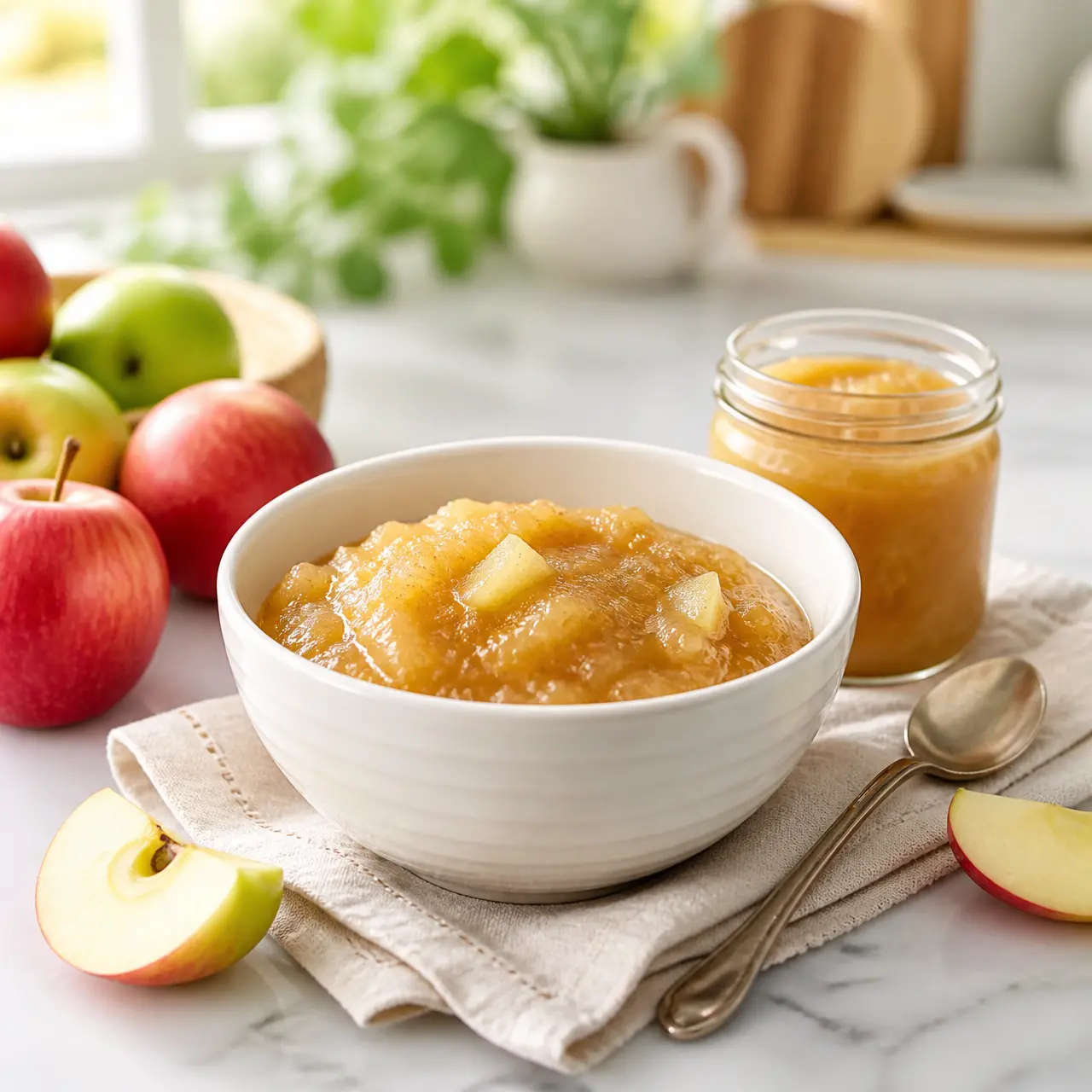
My favorite ways to serve it:
- Warm over oatmeal or pancakes on a slow Saturday morning
- Chilled straight from the fridge as an afternoon snack, it is the ultimate kid-friendly recipe
- Packed in a small jar for lunchbox snacks when school starts
- Spooned into plain yogurt for a quick parfait situation
- Used as a filling for pies, crisps, or crumbles (nobody will know it is homemade)
- Swirled into muffin or quick bread batter for extra moisture
And the timing could not be better. It is late August, which means back-to-school season is here. Make-ahead and meal prep are about to become your survival strategy. Whip up a batch of this on Sunday night, and you will have a whole week of snacks handled.
Plus, it is still Gravenstein apple season in California. These early summer apples are gorgeous right now at places like the Santa Monica Farmers Market, and they make exceptionally flavorful applesauce. Grab a bag while you can.
Stovetop Applesauce FAQ
Make This Your Kitchen Ritual
There is something deeply satisfying about making your own stovetop applesauce. It is not just about the money you save or the ingredients you control, though both of those are excellent reasons. It is about the way the house smells while it bubbles away, the way your kids gather around asking “is it done yet?”, the way you feel when you pop the lid off a jar you filled yourself.
This recipe is forgiving. It is fast. It is made from things you can actually pronounce. And when you pack that first jar in a lunchbox, you will feel like a kitchen hero. Trust me.
If you make this, I would love to hear about it. Tag me or drop a comment, and if you are looking for more inspiration, come say hi on Pinterest, I am always pinning new easy recipes for busy families.
Happy cooking, friends. Go make some applesauce.
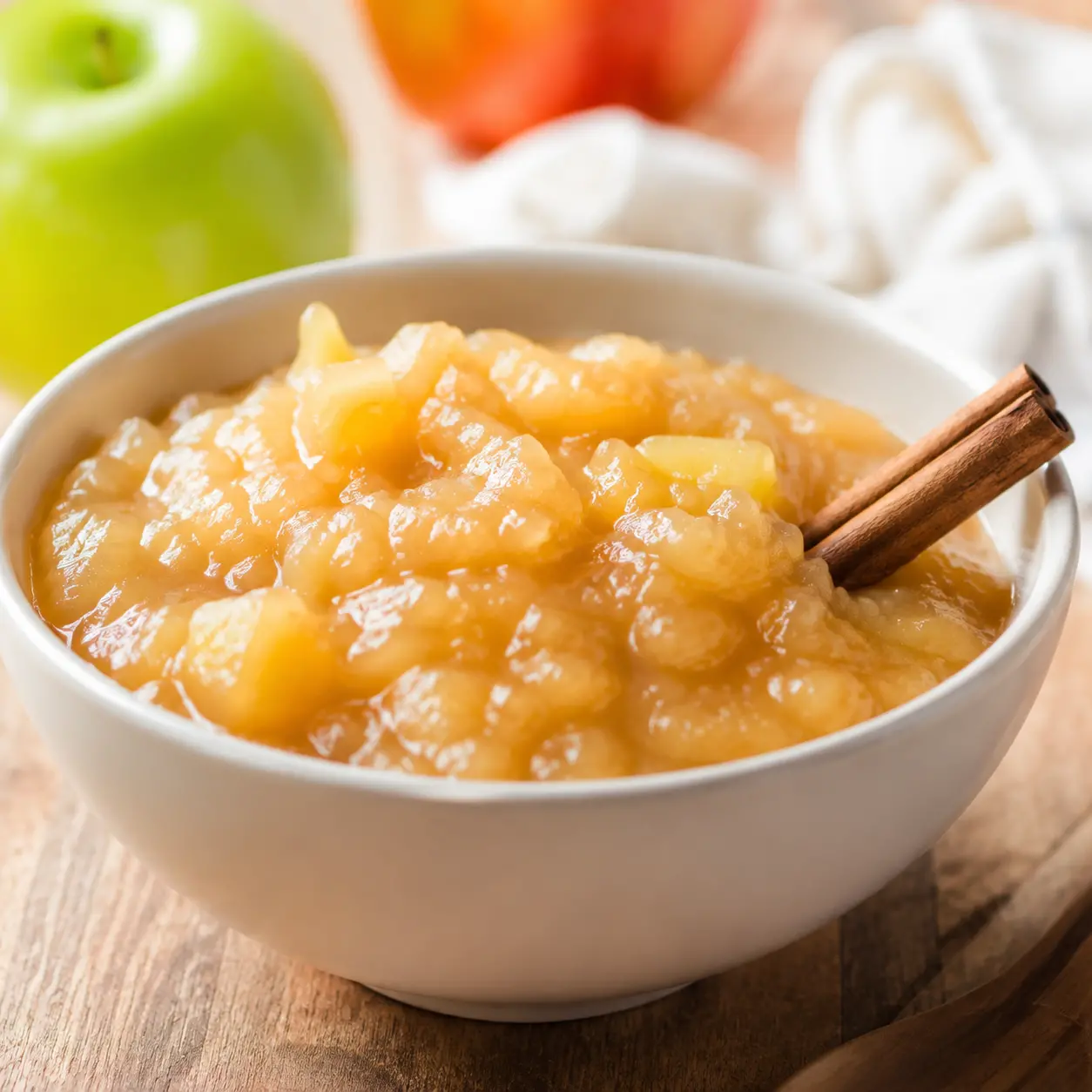
30-Minute Homemade Stovetop Applesauce
Ingredients
Method
- Peel, core, and cut the apples into 1/2-inch chunks. You should end up with about 3 cups of prepared apple.
- Put the apple chunks in a medium saucepan with the water and lemon juice. Cover, set over medium heat, and simmer for 10 minutes, stirring from time to time, until the apples are tender and starting to fall apart. Firmer apple varieties may need a little extra time.
- Stir in the brown sugar, cinnamon, cardamom, and salt, starting with the smaller amount of sugar and adjusting to taste.
- For chunky applesauce, leave the apples in the pan and mash them with a potato masher to your preferred texture.
- For smooth applesauce, pass the apples through a food mill fitted with a coarse disc. If you do not have a food mill, pulse them in a food processor just until saucy, being careful not to turn the sauce into a drinkable puree.
- Return the applesauce to the saucepan over medium-low heat. Simmer gently, stirring often, for 3 to 5 minutes, or until it turns thick and glossy; simmer a little longer if you prefer a dense texture. Taste, then adjust with extra sugar, spices, or lemon juice as needed.
- Cool the applesauce to lukewarm, spoon it into jars or airtight containers, and refrigerate for up to 2 weeks. For longer storage, freeze for up to 2 months.
Nutrition
Notes
Tried this recipe?
Let us know how it was!Source: Learn More About This Dish
What are the best apples to use for stovetop applesauce?
Use a mix of sweet and tart varieties like Honeycrisp, Gala, and Granny Smith for the most balanced flavor. Tart varieties like Granny Smith may need a few extra minutes to soften. If you find Gravenstein apples at a farmers market, grab them, they are fantastic for sauce.
After cooking, should there still be a lot of water in the applesauce?
No. If the sauce looks watery at the end, simmer it uncovered for a few extra minutes to cook off the excess liquid. It will also thicken as it cools, so aim for a texture slightly looser than your final target.
Can I bottle this stovetop applesauce and how long does it last?
Yes, you can water-bath can this applesauce for longer storage. The lemon juice helps keep it acidic enough for safe canning. In the fridge, it keeps for up to 2 weeks in an airtight jar, or freeze it for up to 2 months in small portions.