
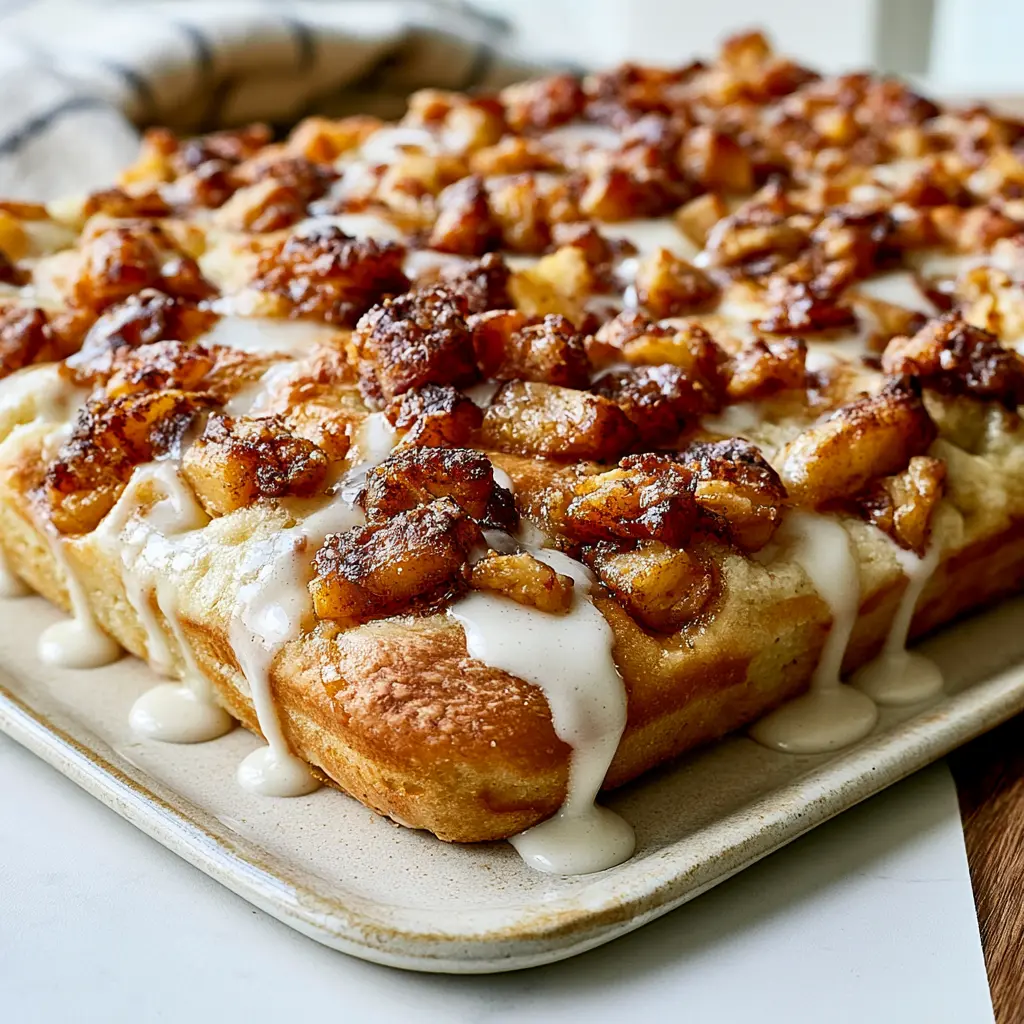
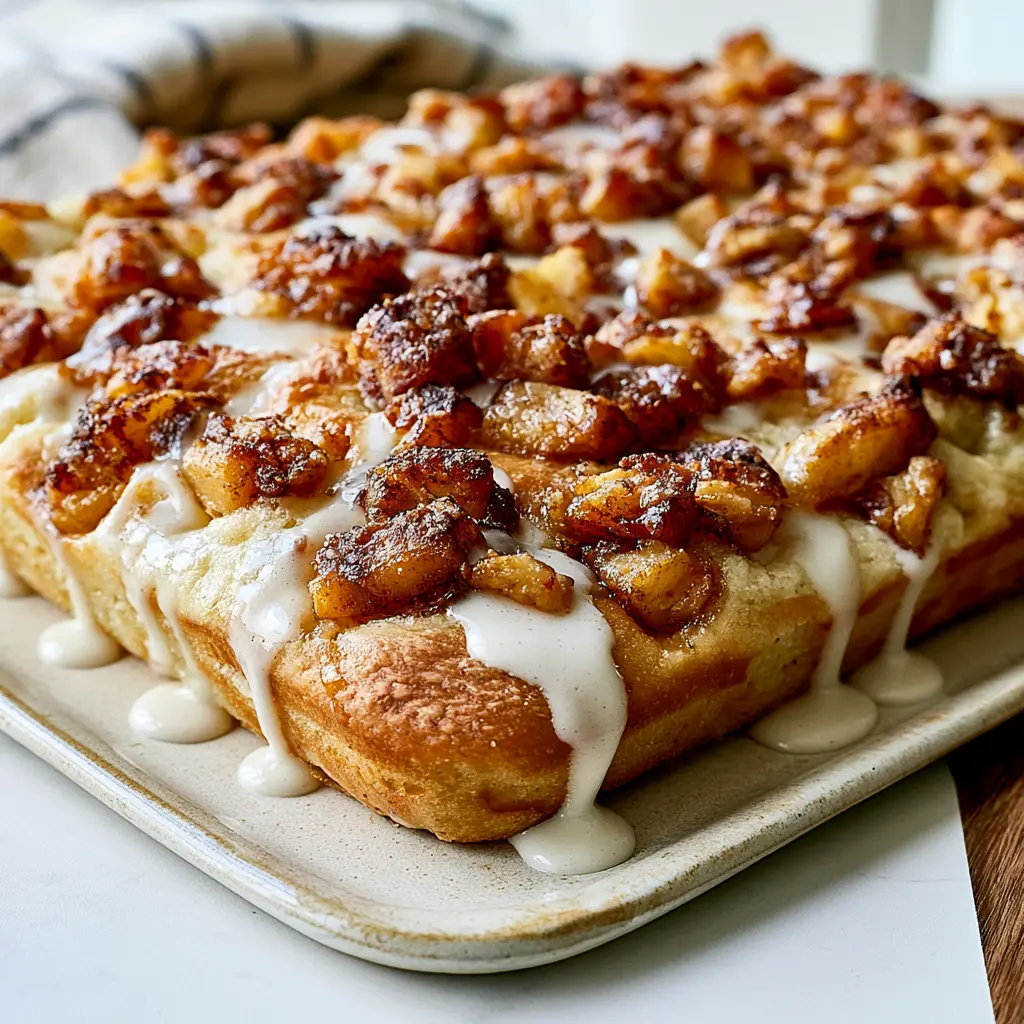
Apple Fritter Focaccia with Brown Sugar Cinnamon Apples
Ingredients
Method
- In the bowl of a stand mixer, combine the water, active sourdough starter, and raw honey. Pulse the mixer a few times just until the starter is dispersed; it does not need to be fully dissolved.
- Add the bread flour and coarse sea salt. Knead on low speed for 5 to 7 minutes. The mixture will be sticky and wet, but it should eventually pull away from the sides of the bowl and cling to the dough hook.
- Cover the mixing bowl and let it rest for 30 minutes.
- Uncover the bowl and do one set of stretch and folds: grab a section of dough, stretch it upward, and fold it over the center. Rotate the bowl 90 degrees and repeat 3 more times. Cover and rest for another 30 minutes.
- Repeat this process until you have completed 3 sets of stretch and folds with a 30 minute rest after each, about 90 minutes total. After the last set, lightly coat a large bowl with butter or oil, place the dough in it, and cover for bulk fermentation.
- Put the dough in a warm spot and let it rise until it has nearly doubled in size, about 3 to 4 hours. While it ferments, prepare the apple fritter filling.
- Melt the butter in a small saucepan over medium-low heat. Whisk in the granulated sugar and bread flour and cook until the mixture thickens slightly.
- Add the diced apple, packed brown sugar, cinnamon, and salt. Continue cooking over medium-low heat until the apples soften and the mixture is thick and glossy. Remove from the heat and cool to room temperature.
- Pour 2 tablespoons of the reserved melted butter into a 9x13-inch baking dish. Scrape the dough into the dish, then drizzle 1 tablespoon of the melted butter over the top.
- Press the dough out into a rough rectangle that covers most of the pan. Spread half the apple filling over the surface. Fold in the two long sides, then the short sides, to form an envelope. Flip the dough seam-side down and spread the remaining filling on top.
- Cover the dish with plastic wrap and let it proof until nearly doubled, about 2 to 3 hours, or refrigerate for up to 2 days before baking.
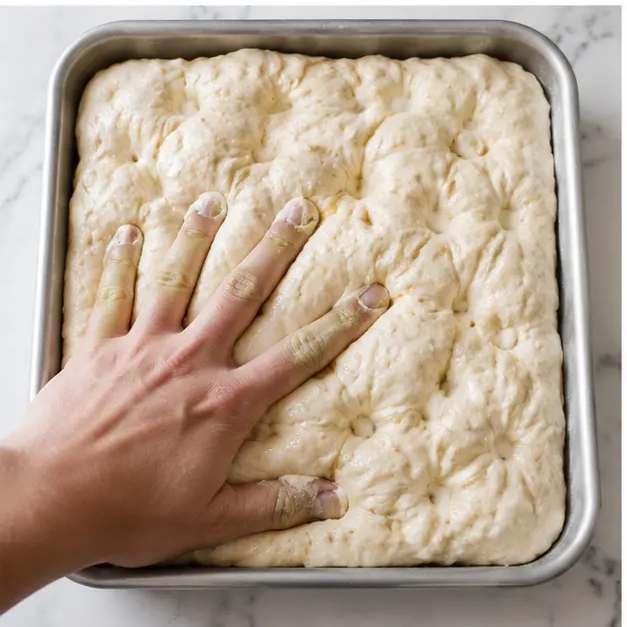
- Use the remaining 1 tablespoon of melted butter to coat your fingers and drizzle any extra over the dough. Press your fingertips firmly into the dough to dimple the entire surface, jiggling slightly as you go. Stretch the dough to fill the pan if needed, then let it rest while the oven preheats to 425°F.
- Bake at 425°F for 25 to 30 minutes, until deep golden brown, or until the internal temperature reaches about 200°F.
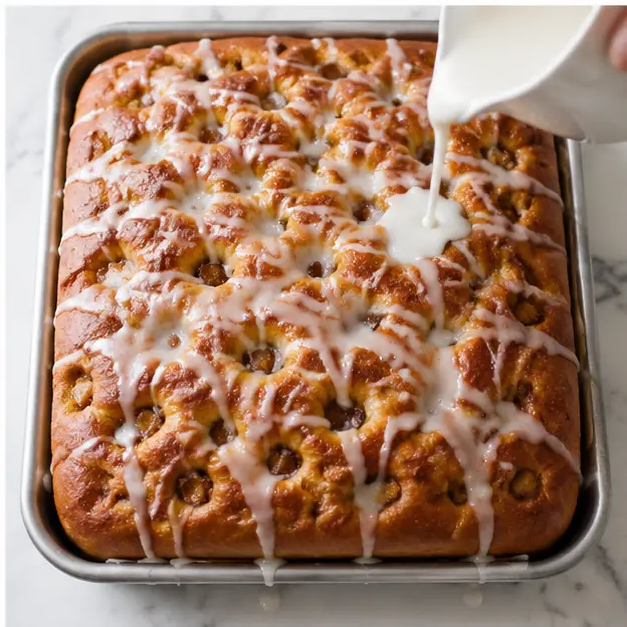
- Cool the focaccia in the pan for at least 10 minutes, then transfer to a wire rack. While it cools, whisk the powdered sugar, milk, vanilla paste, and a pinch of salt into a smooth glaze.
- Drizzle the glaze evenly over the still-warm focaccia and serve.
Nutrition
Notes
Tried this recipe?
Let us know how it was!Why You’ll Love This Apple Fritter Focaccia
I still remember the paper bag. Slightly translucent with grease spots, warm in my hands, promising something dangerous inside. You’d open it and catch a cloud of cinnamon and caramelized sugar, then pull out a fritter the size of your palm, all craggy and golden with jagged edges that caught the glaze just right. That was the apple fritter of my childhood. But here’s my confession. I will never, ever deep-fry at home. The oil, the mess, the smell that lingers for days? No thanks. So when apple fritter focaccia started filling my feed, it felt like a compromise I didn’t know I needed. This apple fritter focaccia is the real thing. A soft, airy sourdough base with a crispy golden crust that crackles when you squeeze it. Brown sugar cinnamon apples that turn jammy and caramelized in the heat. And a vanilla glaze that drips into every single dimple. It tastes exactly like the bakery version, minus the deep fryer. Here’s why you’ll love it:- No frying involved. The oven does all the heavy lifting.
- Mostly hands-off. Long proofing windows mean you can get other things done.
- That nostalgic flavor. Cinnamon, caramelized apples, sweet vanilla glaze. All of it.
- The wow factor. Bring this to brunch and prepare for questions.
Ingredients and Substitutions
This recipe keeps things simple. Bread flour, an active sourdough starter, a little raw honey, butter, one good apple, brown sugar, cinnamon, and a powdered sugar glaze. Every ingredient earns its place in this apple fritter focaccia, so the details matter.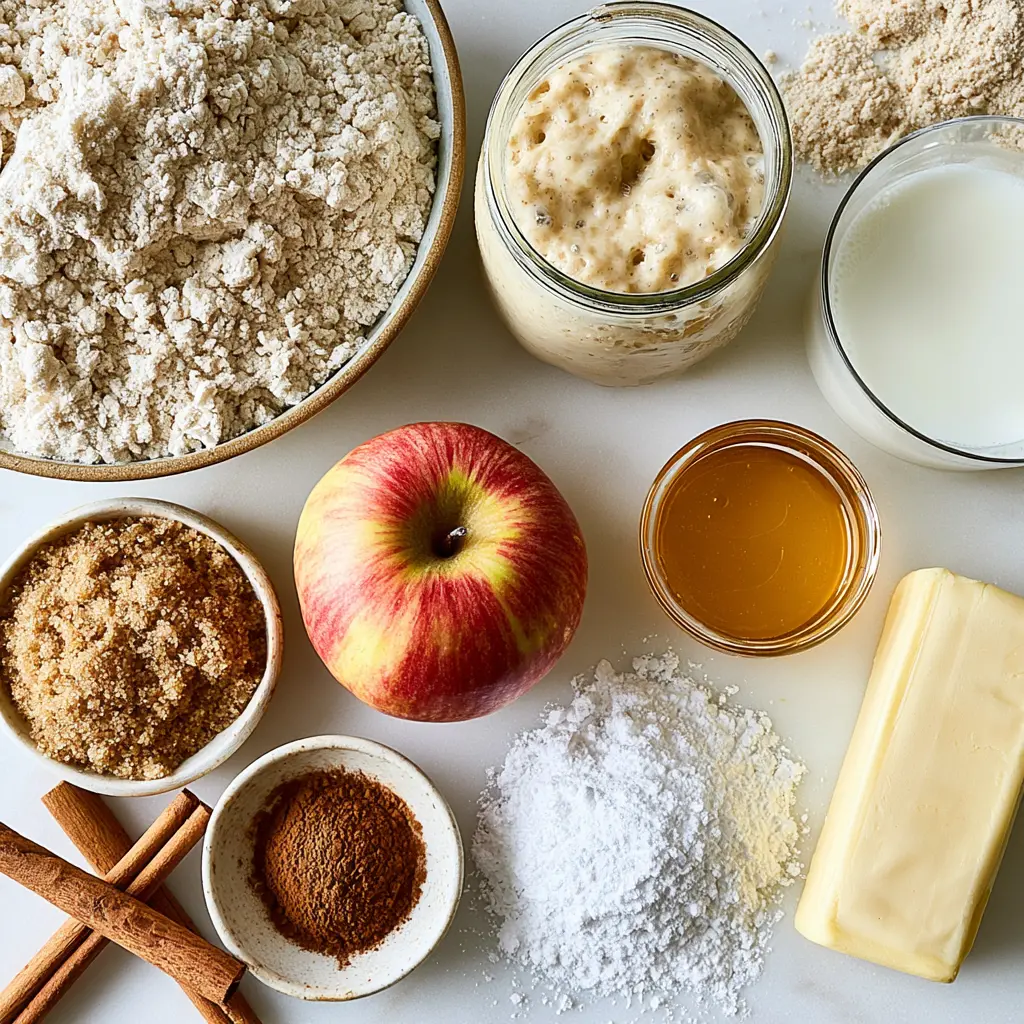 The apple is the star. The recipe calls for a large Fuji or Pink Lady apple. You want something firm and tart-sweet that holds its shape while it cooks. Honeycrisp is a great swap. And if you’re in California in late summer, early-season Gravenstein apples are incredible here. They’re tart, aromatic, and they make this apple fritter focaccia taste like a farmers market trip in bread form. Look for them at your local farmers market or specialty stores like Whole Foods and Trader Joe’s.
Don’t skip the bread flour. This is a high-hydration dough, so it needs that extra protein to build structure. All-purpose flour works in a pinch, but the texture won’t be quite as much like a bakery loaf. Bread flour also shows up in the filling, where that little spoonful thickens the apple juices so they cling to the fruit instead of soaking into the bread.
Active sourdough starter does the heavy lifting. It adds a subtle tang that balances all the sweetness, which is honestly what makes this recipe work. It’s the same logic behind San Francisco-style sourdough, just pointed in a sweeter direction.
A few more swaps you can make:
The apple is the star. The recipe calls for a large Fuji or Pink Lady apple. You want something firm and tart-sweet that holds its shape while it cooks. Honeycrisp is a great swap. And if you’re in California in late summer, early-season Gravenstein apples are incredible here. They’re tart, aromatic, and they make this apple fritter focaccia taste like a farmers market trip in bread form. Look for them at your local farmers market or specialty stores like Whole Foods and Trader Joe’s.
Don’t skip the bread flour. This is a high-hydration dough, so it needs that extra protein to build structure. All-purpose flour works in a pinch, but the texture won’t be quite as much like a bakery loaf. Bread flour also shows up in the filling, where that little spoonful thickens the apple juices so they cling to the fruit instead of soaking into the bread.
Active sourdough starter does the heavy lifting. It adds a subtle tang that balances all the sweetness, which is honestly what makes this recipe work. It’s the same logic behind San Francisco-style sourdough, just pointed in a sweeter direction.
A few more swaps you can make:
- Apples: Fuji, Pink Lady, Honeycrisp, or Gravenstein. Skip soft varieties like McIntosh, which turn to applesauce.
- Honey: Swap in golden syrup or maple syrup if that’s what you have on hand.
- Glaze: Not a glaze person? A dusting of powdered sugar works beautifully too.
- Butter: Salted butter is fine, just dial back the coarse salt in the dough a touch.
How to Make Apple Fritter Focaccia
Making apple fritter focaccia is a lesson in patience, but none of the steps are hard. The hardest part is the waiting, and even that is mostly hands-off. Here’s the rhythm: make the dough, stretch and fold, let it rise, cook the apples, shape, proof, dimple, bake, glaze. Let’s walk through each stage.Make the Sourdough Dough
Start by combining the water, active sourdough starter, and raw honey in the bowl of a stand mixer. Pulse a few times just to disperse the starter, then add the bread flour and coarse sea salt. Knead on low for 5 to 7 minutes. Quick reality check: this dough is wet. Like, really wet. It’s a high-hydration dough, which is exactly what gives focaccia bread that signature open crumb and pillowy interior. It will look shaggy and stick to everything. That’s normal. Trust the process. Cover the bowl and let the dough rest for 30 minutes. Then comes the stretch and folds. Grab a section of dough, stretch it upward, and fold it over the center. Rotate the bowl 90 degrees and repeat three more times. Cover and rest another 30 minutes. Repeat until you’ve completed three sets total, about 90 minutes. This builds gluten without traditional kneading, and it’s the technique that makes this apple fritter focaccia so light and airy.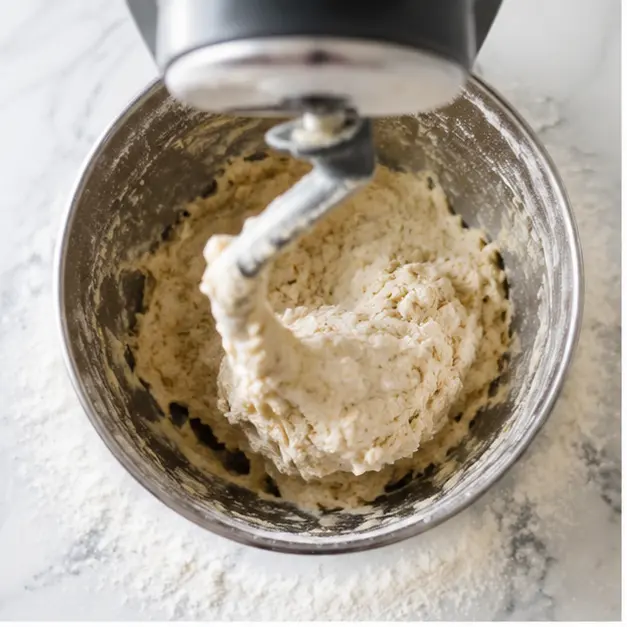
Cook the Apple Filling
The filling is what separates apple fritter focaccia from plain sweet bread, so this step is worth your attention. Melt a tablespoon of butter in a small saucepan over medium-low heat. Whisk in the granulated sugar and a tablespoon of bread flour, and cook until it thickens slightly. That little flour slurry is the secret. It soaks up the apple juice as it cooks, so your focaccia stays light instead of turning into a soggy mess. Add the diced apple, packed brown sugar, cinnamon, and salt. Keep cooking over medium-low until the apples soften and the mixture turns thick and glossy. Your kitchen will smell incredible right about now. Let the filling cool completely to room temperature before you use it. Warm filling next to raw dough is a recipe for a collapsed rise, and nobody wants that.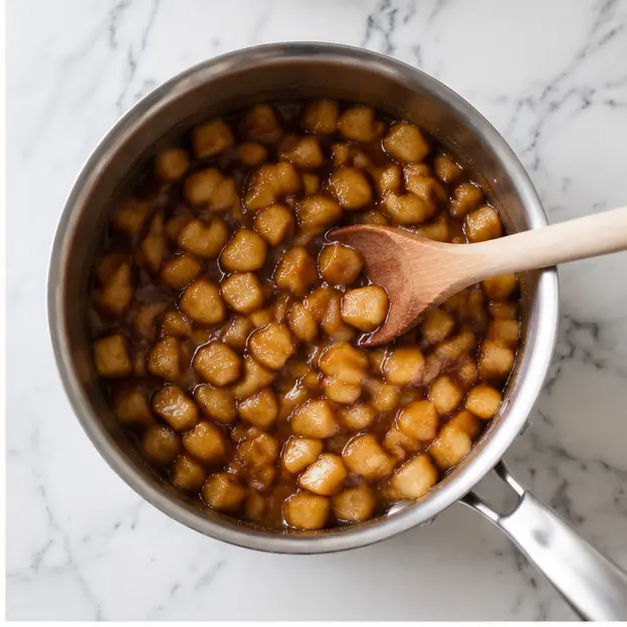
Shape, Proof, and Bake
Pour 2 tablespoons of the reserved melted butter into a 9×13-inch baking dish. Scrape the dough in, then drizzle another tablespoon of butter over the top. Press it out into a rough rectangle that covers most of the pan. Now the envelope fold. Spread half the apple filling over the surface, then fold in the long sides, then the short sides, like you’re wrapping a gift. Flip the dough seam-side down and spread the remaining filling on top. The filling gets sandwiched inside and layered on top, so every bite has some. This envelope fold is the signature move of this apple fritter focaccia, and it’s what creates those gorgeous pockets of fruit. Cover the dish and proof until nearly doubled, about 2 to 3 hours. Or refrigerate for up to 2 days for a slow cold proof. Cold proofing dough does wonders for flavor, so don’t be afraid to use it.Hot Weather Bread Hack
Above 80°F in your kitchen? Warm August kitchens speed up fermentation fast, which is why this apple fritter focaccia works so well in summer. Use cooler water when you mix, cut the first rise to 60 to 75 minutes, or move the dough to the fridge for a slow cold proof. Watch the dough, not the clock.
Pro Tips for Apple Fritter Focaccia
A few things I learned the hard way so you don’t have to:- Keep your hands buttered, not floured. For this sticky, high-hydration dough, lightly buttered hands and a bench scraper make shaping far less stressful. Flour just creates dry pockets.
- Use firm apples. Crisp apples hold their shape through the bake. Soft apples turn to mush and make the crumb soggy.
- Check the internal temperature. 200°F means it’s done. Don’t rely on color alone, especially if your oven runs hot or cool.
- Glaze while barely warm. If the focaccia is cold, the glaze just sits on top. Warm, it seeps into every dimple and tastes like it belongs there.
- Cool the filling completely. Hot filling will kill the dough’s structure and ruin your rise. Patience pays off here.
What the Test Kitchen Says
I tested this apple fritter focaccia more times than I care to admit. Here’s what I know for sure: the flour in the apple filling is non-negotiable. I skipped it once thinking nobody would notice, and the bottom of the bread turned into a sad, soggy mess. Lesson learned. The glaze matters more than you’d think. The first time I tested this recipe, I skipped the glaze because I was impatient and wanted to dig in immediately. It was still gone in 20 minutes. But the glazed version is the one people text me about. Don’t skip the glaze. Also, don’t shortchange the bulk fermentation. The dough needs those 3 to 4 hours to develop flavor. It’s not just about rising. It’s about building that slightly tangy sourdough character that plays so beautifully against the brown sugar cinnamon apples. Worth noting: each serving comes in around 426 calories. This is a treat bread, not an everyday toast. But for something this satisfying, it’s absolutely worth it.Apple Fritter Focaccia Variations
Once you’ve mastered apple fritter focaccia, the possibilities are genuinely fun to play with:- Other fruits: Pears, peaches, or berries all work in this base. Adjust the sugar down slightly for sweeter fruit, and cook firmer fruits a bit longer so they soften before baking.
- Add-ins: Fold chopped pecans or walnuts into the cooled filling for crunch, or scatter raisins over the top before baking. These are optional additions, but they’re excellent ones.
- Glaze variations: Swap the vanilla for a teaspoon of Earl Grey or a pinch of Chinese five spice to change the whole vibe. Or go full dessert with a cream cheese glaze or caramel drizzle.
- Skip the starter: No sourdough on hand? Instant yeast works with a shorter rise time. The flavor won’t be as complex, but it’ll still be delicious.
- Leave it whole: You don’t have to cut this into neat pieces. Serve it as one big pull-apart bread and let everyone tear off their share. Way more fun anyway.
Apple Fritter Focaccia Storage and Make-Ahead
This apple fritter focaccia is best on day one, when the crust is crackly and the glaze is glossy. But let’s be real, leftovers are still pretty amazing. I’ve been known to eat a cold slice straight from the container at 9 a.m. and feel zero shame. Keep it in an airtight container at room temperature for up to 2 days. Please don’t refrigerate it. The fridge dries out the crumb and makes the apples taste flat and sad. Because of the fruit topping, this apple focaccia really is best fresh, so plan to enjoy it quickly. Need it to last longer? You can freeze apple fritter focaccia for up to 3 months. Wrap the cooled loaf tightly in plastic wrap and foil, or stash it in a freezer-safe bag. Thaw at room temperature, then reheat in a 325°F oven for 5 to 7 minutes to bring back that crispy golden crust. You can also toast individual slices in a toaster oven for a quick grab-and-go breakfast. For make-ahead mornings, the cold proof is your best friend. After shaping the dough in the pan, cover it and refrigerate for up to 2 days. When you’re ready to bake, pull it out, let it come to room temperature, dimple it, and pop it in the oven. Fresh apple fritter focaccia on a busy school morning, without the early start.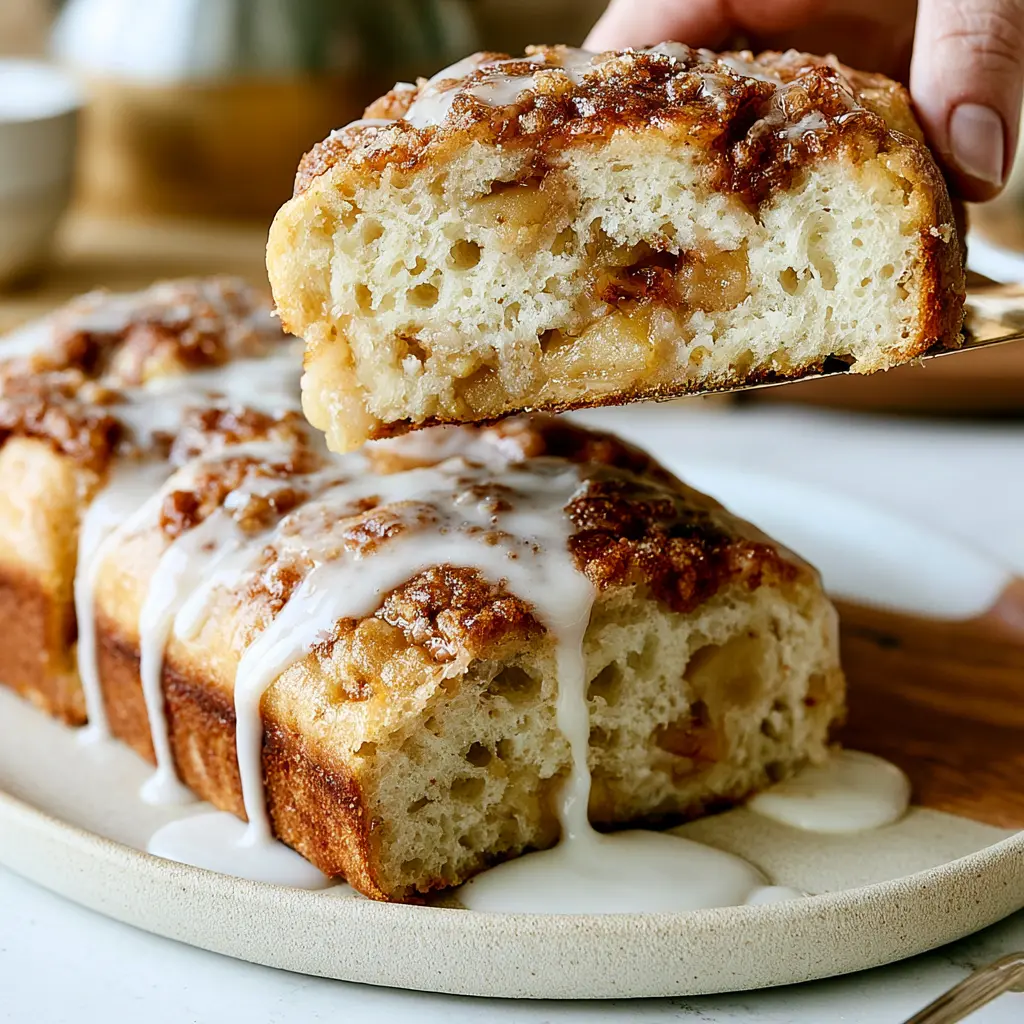
Frequently Asked Questions
Expert Notes & Data Insights
There’s a quiet kind of satisfaction in understanding why a recipe works, not just knowing that it does. After testing this apple fritter focaccia more times than I care to count, I’ve gathered a few insights that go beyond the recipe card.
The Baking Science Behind the Crumb
This dough is high-hydration, which is exactly why the interior bakes up so pillowy. In a wetter dough, the gluten strands have more room to develop, creating that open, airy crumb you see in bakery focaccia. But dough this wet won’t survive traditional kneading. That’s where stretch-and-fold comes in. Each fold aligns the gluten proteins into a stronger network without knocking out the carbon dioxide the sourdough starter produces. Three sets, thirty minutes apart, and you’ve built the same structure that hours of kneading would create. With a fraction of the effort.
Bread flour is doing serious work here too. At 12 to 13 percent protein, it gives the dough enough strength to carry the weight of the apples, the brown sugar, and the glaze without collapsing. All-purpose flour, at 9 to 11 percent protein, doesn’t have the same structural backbone. It’ll work in a pinch, but you’ll notice the difference in the crumb.
And that tablespoon of flour in the apple filling? That’s starch gelatinization in action. As the apples heat up, the flour absorbs their released juices and thickens them into a glossy syrup that clings to the fruit. Skip it, and those juices soak into the dough, leaving a wet, dense bottom. I learned that one the hard way so you don’t have to.
Why the Glaze Must Go On Warm
Glazing warm focaccia isn’t just a habit, it’s the difference between a glaze that soaks in and a glaze that sits on top. Warm bread keeps the glaze thin and fluid, so it flows down into every dimple and settles into the crumb. As the loaf cools, the glaze sets into that glossy, crackly sheen you want. Cold bread makes it pool and puddle on the surface. If you want real fritter energy, glaze while the bread is still barely warm.
Apple Variety Reference
Not all apples behave the same in the oven. Here’s how the best options break down:
| Apple | Flavor | Texture When Baked | Best For |
|---|---|---|---|
| Fuji | Sweet, mildly tart | Very firm, holds shape | All-around reliable |
| Pink Lady | Tart-sweet, complex | Crisp, holds shape | The top pick for this recipe |
| Honeycrisp | Sweet, bright | Very crisp, juicy | When you want extra texture |
| Gravenstein | Tart, aromatic | Softens but keeps character | Early-season farmers market find |
| Granny Smith | Very tart | Firm, holds shape | If you like extra tang |
| Braeburn | Tart-sweet, spicy | Firm, holds shape | Great fall alternative |
Firm, tart-sweet apples are the reliable choice. The ones to avoid are the soft varieties like McIntosh and Gala, which break down into mush before the bread even finishes baking.
Baking Data at a Glance
Here are the numbers I keep in my back pocket every time I make this apple fritter focaccia:
- Bulk ferment: 3 to 4 hours at 74–78°F
- Cold proof after shaping: up to 48 hours
- Bake temperature: 425°F
- Internal temperature when done: 200°F
- Yield: one 9×13-inch pan, about 12 servings
- Calories per serving: approximately 426
Equipment matters more than you’d expect. A metal 9×13-inch pan is ideal. Glass holds heat differently and can stretch the bake time. And a bench scraper is worth its weight in gold with dough this wet. Between buttered hands and a bench scraper, the envelope fold actually becomes enjoyable.
The Final Word
That greasy paper bag from my childhood still means something to me. It was warm, it smelled like cinnamon, and it promised a few minutes of uncomplicated happiness. This apple fritter focaccia is that same feeling, minus the deep fryer and the lingering kitchen oil.
Make it for a slow weekend morning. Make it for a fall brunch with people you love. Make it on a busy August weekday just because you deserve something that tastes like a celebration. And when you pull that golden pan out of the oven, I hope it becomes a memory for you too.
Can I use other fruits?
Yes. Pears, peaches, and berries all work beautifully in this apple fritter focaccia. Adjust the sugar down slightly for sweeter fruit, and cook firmer fruits longer so they soften before baking. Keep the flour in the filling to absorb extra moisture.
Do I have to cut the dough?
Nope, leave it whole. The envelope fold in the recipe is what traps the apple filling inside, so keep that step. But once it’s baked, you can serve it as one big pull-apart bread and let everyone tear off their own piece. More fun anyway.
What kind of apples work best for Apple Fritter Focaccia?
Firm, tart-sweet apples like Fuji, Pink Lady, or Honeycrisp are ideal. They hold their shape during cooking and balance the brown sugar and cinnamon. Avoid soft varieties like McIntosh that break down into applesauce and make the bread soggy.
Can I make this Apple Focaccia ahead of time?
Absolutely. After shaping the dough in the pan, cover it and refrigerate for up to 2 days. Let it come to room temperature, dimple it, and bake when ready. You can also bake this apple fritter focaccia fully and reheat slices in a 325°F oven for 5 to 7 minutes.
Can I add nuts or raisins to the filling?
Yes, and they’re fantastic. Fold chopped pecans or walnuts into the cooled apple filling for crunch, or scatter raisins over the top before baking. These are optional additions, so keep the base recipe the same and just layer in what you love.
Do I need to peel the apples?
Yes, peel them. The peels don’t soften enough during the bake and can create chewy bits in an otherwise pillowy bread. Dice them small, about a quarter inch, so they cook evenly and meld into the cinnamon sugar filling.