Ingredients
Method
Make The Dough
- In the bowl of a stand mixer, combine the water, active sourdough starter, and raw honey. Pulse the mixer a few times just until the starter is dispersed; it does not need to be fully dissolved.
- Add the bread flour and coarse sea salt. Knead on low speed for 5 to 7 minutes. The mixture will be sticky and wet, but it should eventually pull away from the sides of the bowl and cling to the dough hook.
- Cover the mixing bowl and let it rest for 30 minutes.
Stretch and Fold
- Uncover the bowl and do one set of stretch and folds: grab a section of dough, stretch it upward, and fold it over the center. Rotate the bowl 90 degrees and repeat 3 more times. Cover and rest for another 30 minutes.
- Repeat this process until you have completed 3 sets of stretch and folds with a 30 minute rest after each, about 90 minutes total. After the last set, lightly coat a large bowl with butter or oil, place the dough in it, and cover for bulk fermentation.
Bulk Ferment
- Put the dough in a warm spot and let it rise until it has nearly doubled in size, about 3 to 4 hours. While it ferments, prepare the apple fritter filling.
Make The Fritter Filling
- Melt the butter in a small saucepan over medium-low heat. Whisk in the granulated sugar and bread flour and cook until the mixture thickens slightly.
- Add the diced apple, packed brown sugar, cinnamon, and salt. Continue cooking over medium-low heat until the apples soften and the mixture is thick and glossy. Remove from the heat and cool to room temperature.
Shape and Proof
- Pour 2 tablespoons of the reserved melted butter into a 9x13-inch baking dish. Scrape the dough into the dish, then drizzle 1 tablespoon of the melted butter over the top.
- Press the dough out into a rough rectangle that covers most of the pan. Spread half the apple filling over the surface. Fold in the two long sides, then the short sides, to form an envelope. Flip the dough seam-side down and spread the remaining filling on top.
- Cover the dish with plastic wrap and let it proof until nearly doubled, about 2 to 3 hours, or refrigerate for up to 2 days before baking.
Bake
- Use the remaining 1 tablespoon of melted butter to coat your fingers and drizzle any extra over the dough. Press your fingertips firmly into the dough to dimple the entire surface, jiggling slightly as you go. Stretch the dough to fill the pan if needed, then let it rest while the oven preheats to 425°F.
- Bake at 425°F for 25 to 30 minutes, until deep golden brown, or until the internal temperature reaches about 200°F.
- Cool the focaccia in the pan for at least 10 minutes, then transfer to a wire rack. While it cools, whisk the powdered sugar, milk, vanilla paste, and a pinch of salt into a smooth glaze.
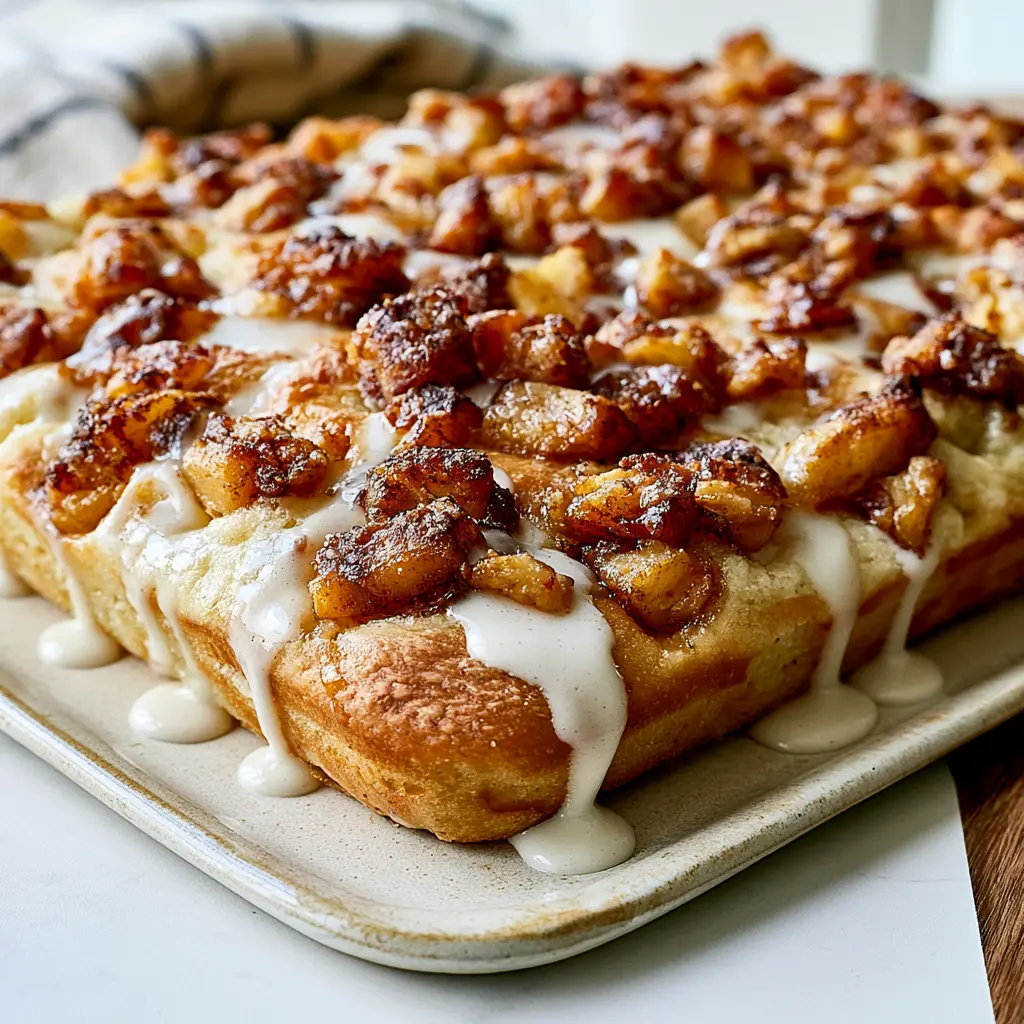
- Drizzle the glaze evenly over the still-warm focaccia and serve.
Nutrition
Notes
If your kitchen is cooler than 77 to 80°F, expect longer bulk fermentation and proof times; go by the look and feel of the dough, not the clock.
The long prep time includes the bulk rise and final proof; hands-on work is about 1 hour.
For a softer crumb, use a ripe, sweet-tart apple such as Fuji, Pink Lady, or Honeycrisp.
Store leftovers in an airtight container at room temperature for up to 2 days; because of the fruit topping, it is best fresh.
To freeze, wrap the cooled loaf tightly in plastic wrap and foil for up to 3 months; thaw at room temperature before serving.
If you prefer a less sweet finish, reduce the glaze or skip it and dust with powdered sugar instead.
The dough is high hydration and very sticky; oil your hands and use a bench scraper to make shaping easier.