
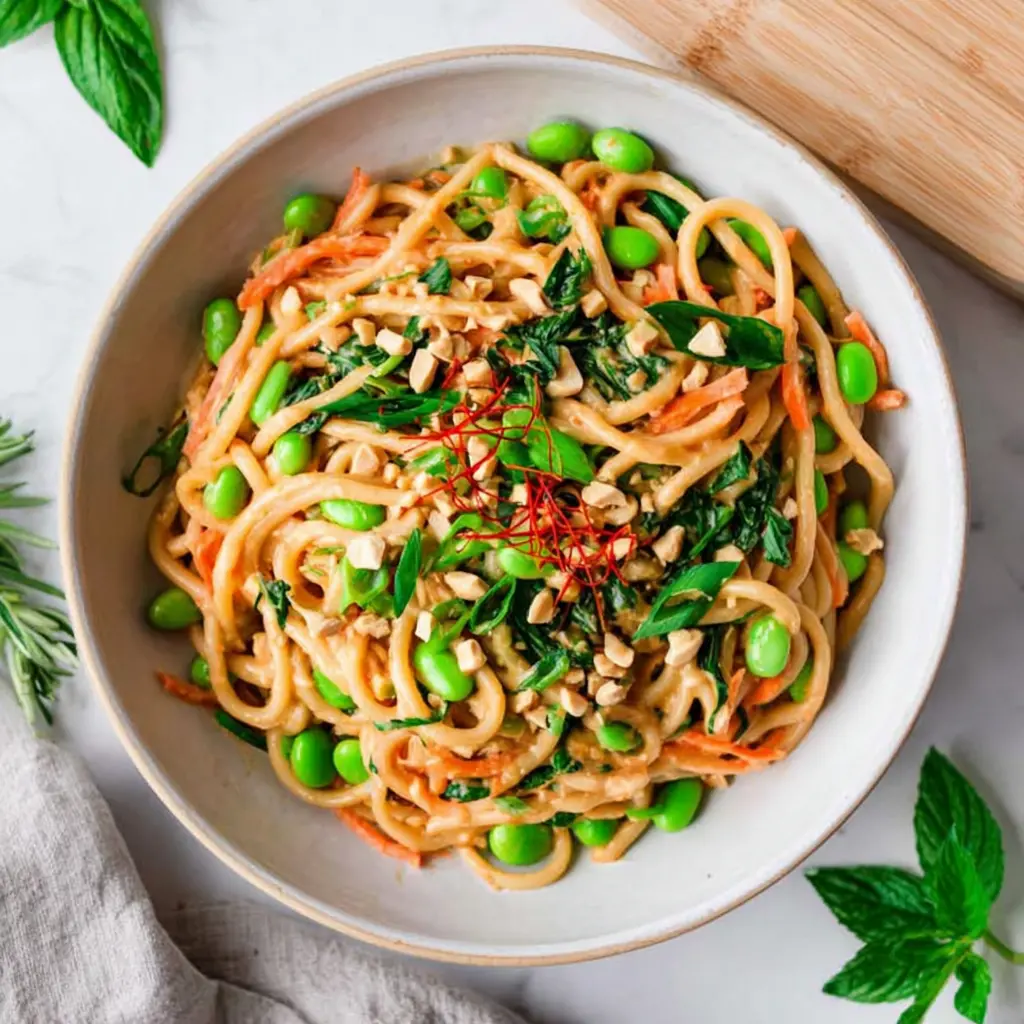
Why This Recipe Works
When it’s 100°F outside and the AC is struggling to keep up, the last thing I want is a hot, heavy pasta dish. I want something cold, creamy, and refreshing that doesn’t make me sweat more. That’s exactly where these cold sesame noodles with peanut sauce come in. They’re like a cool breeze in noodle form.
Here’s the thing: this isn’t just a salad pretending to be dinner. It’s a legit, satisfying meal with chewy udon noodles, a rich and tangy peanut sauce, and plenty of crunch from fresh veggies and peanuts. And it comes together in under 25 minutes. No oven required. No stovetop heat beyond boiling water for a few minutes. I promise it’s easy enough for a busy weeknight and impressive enough for company.
I’ve been making some version of cold peanut sesame noodles for years. My first attempt was… let’s just say the sauce was a little thin and the noodles were a clumpy mess. But I learned a few tricks along the way, and now this is my go-to summer meal. It tastes even better the next day, so I always make extra for lunch.
Ingredients
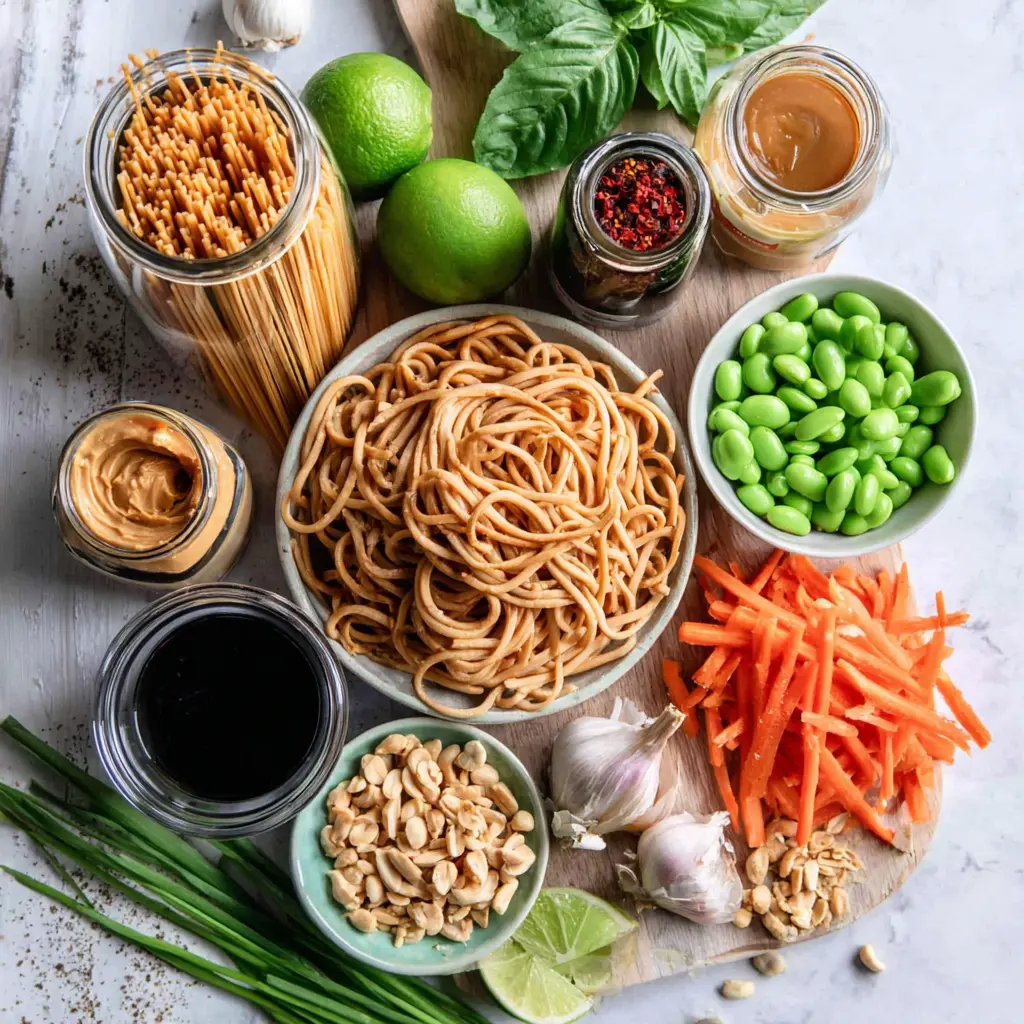
Before we get into the details, let’s talk about what you need. The ingredients are simple, but each one plays a role in that perfect balance of savory, nutty, tangy, and just a little sweet.
Peanut Sauce Ingredients
The heart of this dish is the sauce. It’s creamy, salty, a little tangy, and has that unmistakable sesame warmth. Here’s what goes in:
- Creamy peanut butter – the base. Natural or regular both work, but I’ll explain the difference below.
- Reduced sodium soy sauce – for saltiness without overwhelming.
- Rice wine vinegar – that bright acidity that cuts through the richness.
- Fresh lime juice – adds a fresh citrus note.
- Honey or agave nectar – just a touch of sweetness to round things out.
- Toasted sesame oil – that nutty, aromatic flavor you can’t skip.
- Water or vegetable broth – to thin the sauce to a pourable consistency.
See? Nothing weird. You probably have most of these in your pantry already.
Noodles and Vegetables
The other half of the equation: the noodles and the crunch.
- Dry udon noodles – thick, chewy, and perfect for soaking up sauce.
- Frozen shelled edamame – protein-packed pops of green.
- Matchstick carrots – for color and crunch.
- Unsalted roasted peanuts – roughly chopped, for extra texture.
- Shallot – thinly sliced, adds a mild onion bite.
- Green onions – sliced, both white and green parts.
- Thai basil – or regular basil if you can’t find it. It adds a subtle anise-like freshness.
- Spicy chili crisp – optional but highly recommended for heat and crunch.
Now, before you ask: yes, you can totally swap things around. Let’s talk options.
Noodle Options and Substitutions
One of the best things about this dish is how forgiving it is. If you don’t have udon, no problem. Here are some swaps that work great:
- Rice noodles – make it gluten-free and still delicious.
- Soba noodles – they have a slightly nutty flavor that pairs nicely.
- Spaghetti or other pasta – honestly, I’ve used angel hair pasta in a pinch, and it was still really good. Just cook al dente.
- Lo mein noodles – if you have them, go for it.
If you need this to be gluten-free, use tamari instead of soy sauce and rice noodles. For nut-free, swap peanut butter with sunbutter or tahini (tahini makes a creamier, slightly different sauce but still yummy).
Step-by-Step Instructions
Okay, let’s make these cold sesame noodles with peanut sauce. I’ll break it into four stages so you can see the flow. No stress, just tasty noodles.
Stage 1: Cook the Noodles
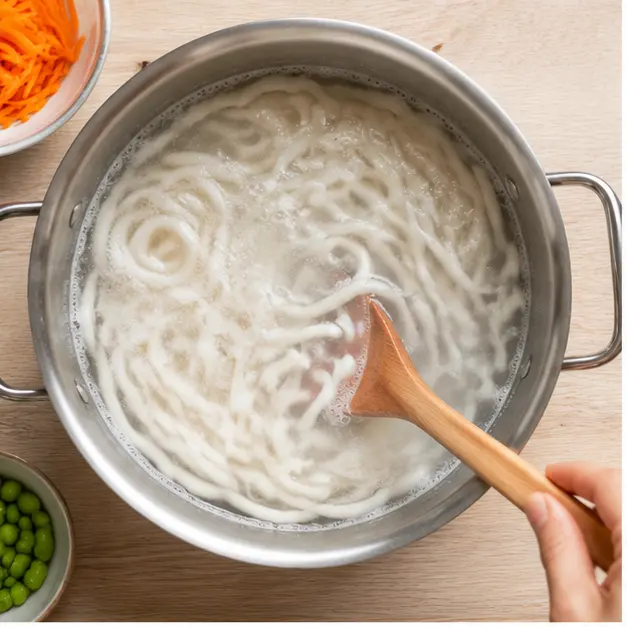
Bring a large pot of salted water to a boil. Drop in your udon noodles and cook according to package directions – usually 8-10 minutes for dry udon. While they cook, fill a large bowl with ice water (or just cold tap water). Once the noodles are tender but still chewy, drain them and immediately rinse under cold running water. You can even dunk them in that ice water bath for 30 seconds – but don’t leave them in too long or they’ll get waterlogged. Shake off the excess water and set aside.
Stage 2: Make the Peanut Sauce
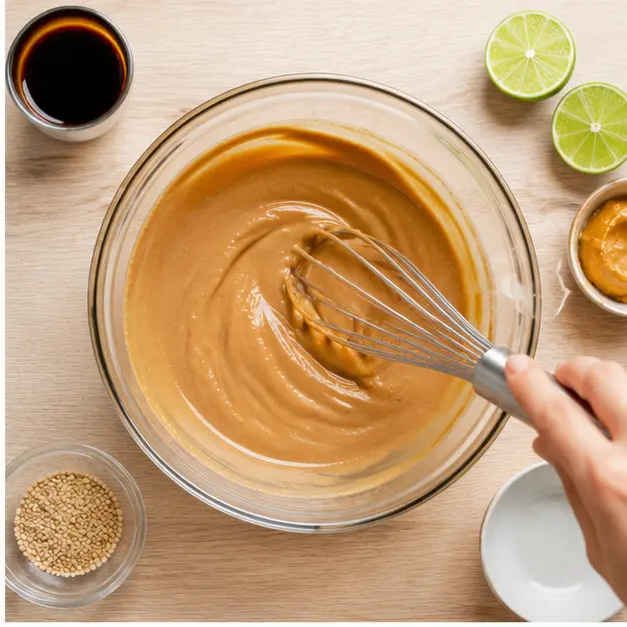
While the noodles cook, whisk together the sauce ingredients in a medium bowl. Start with the peanut butter, soy sauce, rice vinegar, lime juice, honey, and sesame oil. Whisk until smooth. It might look a bit thick at first, but keep going. Add water or vegetable broth a tablespoon at a time until it reaches a pourable, creamy consistency. Taste it. If it’s too salty, add a little more lime juice or honey. If it’s not salty enough, a dash more soy. No need to be exact – trust your taste buds.
Why this works: The acidity from the vinegar and lime cuts the richness of the peanut butter, while the sesame oil adds depth. It’s all about balance.
Stage 3: Assemble the Salad
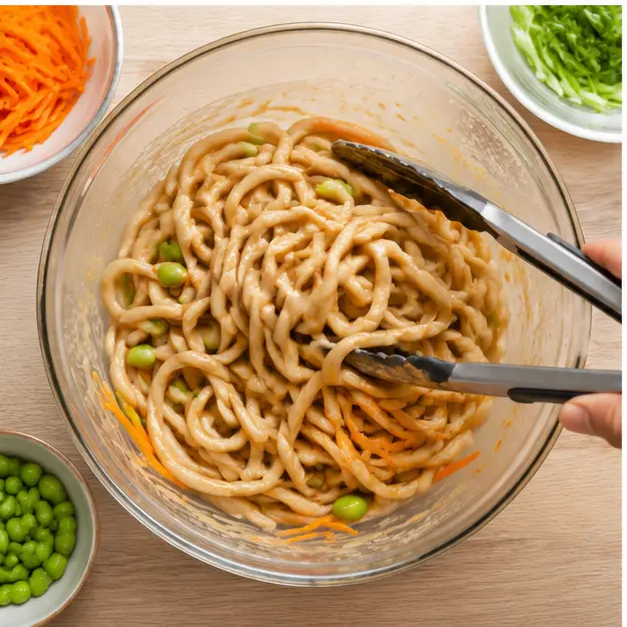
In a large mixing bowl, combine the chilled noodles with the peanut sauce. Use a rubber spatula or salad tongs to toss until every strand is coated – this is where the magic happens. Then add the thawed edamame, matchstick carrots, chopped peanuts, sliced shallot, green onions, and Thai basil. Toss again gently so everything is distributed.
Stage 4: Serve and Garnish
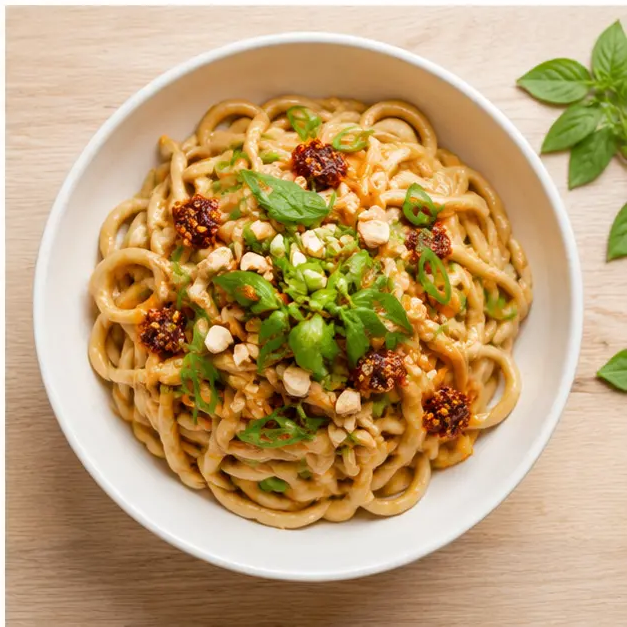
Give it a final taste. Adjust with a squeeze of lime or a pinch of salt if needed. Serve immediately topped with dollops of spicy chili crisp for heat and crunch. You can also add extra green onions and a sprinkle of sesame seeds if you have them.
Tips for the Best Cold Sesame Noodles
Over the years I’ve picked up a few tricks that make a big difference. Here are my top tips:
- Don’t overcook the noodles. Udon should be tender but still have a slight bite. Mushy noodles in a cold dish? Not great.
- Rinse thoroughly. That cold water wash stops the cooking and removes excess starch, so the noodles don’t clump together. If you want extra insurance, toss them with a teaspoon of sesame oil before refrigerating.
- Sauce consistency is key. If your peanut butter is very thick (especially natural kinds), add extra water gradually. You want a sauce that coats the noodles easily, not a paste.
- Cool the noodles completely. Warm noodles will make the sauce thin out. I like to cook them ahead and pop them in the fridge for 30 minutes if I have time.
- Taste as you go. This is the most forgiving recipe. Too thick? Add water. Too thin? Add more peanut butter. Not enough flavor? More soy or lime.
- Make it ahead. This salad actually tastes better after an hour or two in the fridge, as the flavors meld. It’s perfect for meal prep.
Variations and Add-Ins
This dish is a blank canvas. Here are some ways to change it up:
- Add protein: Toss in cooked shredded chicken, cubed tofu, or even a fried egg on top. I’ve done all three, and they’re all great.
- Extra veggies: Thinly sliced cucumber, bell pepper strips, snap peas, or even spiralized zucchini add more crunch and color.
- Make it spicy: Already have chili crisp in the recipe, but you can also add sriracha or red pepper flakes to the sauce.
- Make it less spicy: Simply skip the chili crisp or use a mild chili sauce.
- Switch the nut butter: Cashew butter or almond butter work beautifully. For a nut-free version, use sunflower seed butter (sunbutter) – it changes the flavor slightly but still tastes great.
- Use different noodles: As mentioned, spaghetti, linguine, or even coleslaw mix (really!) can work if you’re in a pinch.
How to Store and Reheat
This cold sesame noodles with peanut sauce handle leftovers like a champ. Store the salad in an airtight container in the fridge. It stays good for 3-4 days. The sauce might thicken a little overnight, and the noodles will absorb some of it – that’s fine. Just give it a good toss before serving and add a splash of water or lime juice if it seems dry.
If you want to eat it warm (yes, you can!), simply skip the rinsing step when cooking the noodles and gently reheat everything in a skillet over medium heat, stirring frequently. But honestly, I love it cold straight from the fridge – it’s like a noodle salad that keeps giving.
Can you freeze it? I wouldn’t recommend freezing the assembled salad. The texture of the noodles and veggies will suffer. But you can freeze the peanut sauce separately for up to 2 months. Just thaw and whisk before using.
Frequently Asked Questions
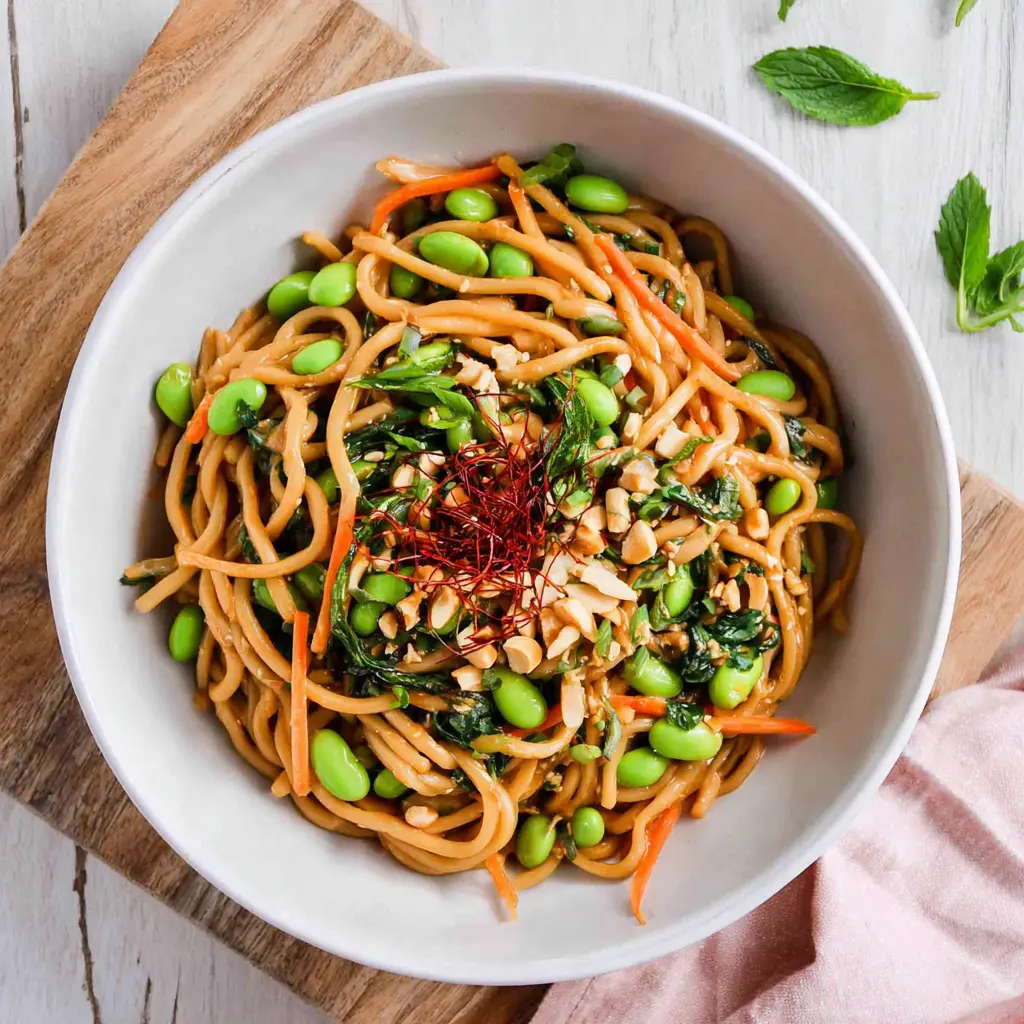
I hope you love these cold sesame noodles with peanut sauce as much as I do. They’re the ultimate summer comfort food – cool, creamy, crunchy, and so satisfying. Go make these – you’ll thank me later.
If you make this recipe, I’d love to see it! Share it on Pinterest and follow me at Sofia Rodriguez for more easy, delicious recipes.
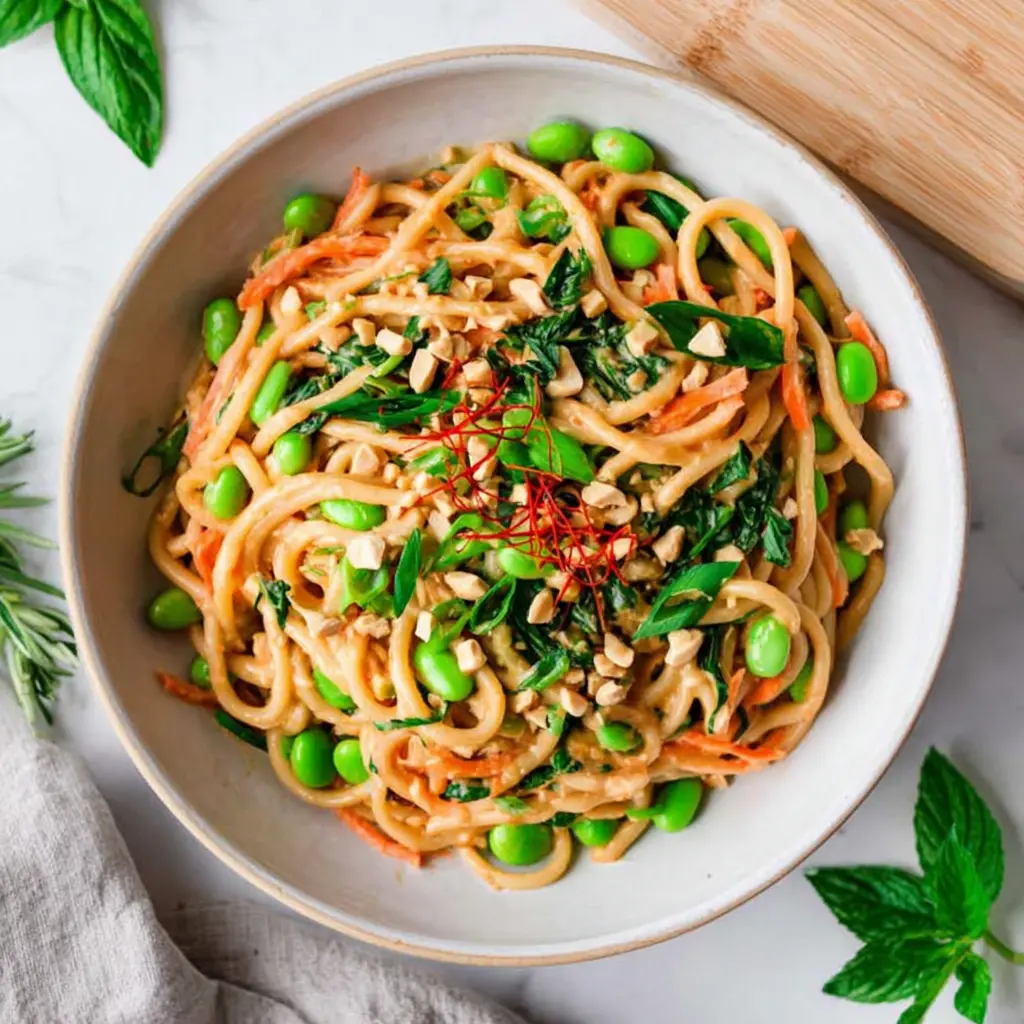
Cold Sesame Noodles with Peanut Sauce and Edamame
Ingredients
Method
- Bring a large pot of salted water to a boil. Cook the udon noodles according to package directions, typically 3-5 minutes for fresh or 8-10 minutes for dry. Drain in a colander and rinse under cold running water until the noodles are completely cool. Shake off excess water and set aside.
- While the noodles cook, prepare the sauce. In a medium bowl, whisk together the creamy peanut butter, soy sauce, rice wine vinegar, lime juice, honey, and toasted sesame oil until smooth and well combined. The mixture should be pourable like a dressing. If it is too thick, add water or vegetable broth 1 tablespoon at a time, whisking until you reach the desired consistency.
- In a large mixing bowl, combine the chilled noodles with the peanut sauce. Use a rubber spatula or salad tongs to toss until every strand is evenly coated.
- Add the thawed edamame, matchstick carrots, chopped peanuts, sliced shallot, green onions, and Thai basil. Toss everything together until well distributed.
- Taste and adjust seasoning if needed. Serve immediately, topped with dollops of spicy chili crisp for heat and crunch if desired.
Nutrition
Notes
Tried this recipe?
Let us know how it was!Source: Learn More About This Dish
Can I use another nut butter in cold sesame noodles with peanut sauce?
Absolutely. Cashew butter or almond butter make great substitutes. For a nut-free option, use sunflower seed butter (sunbutter). The flavor will shift a bit, but the creamy texture and overall deliciousness remain. Just adjust the sweetener and salt to taste.
Can this be eaten warm?
Yes! If you prefer a warm dish, skip the rinsing step after cooking the noodles. Then gently reheat everything in a skillet over medium heat, stirring frequently until just warmed through. The peanut sauce will coat the noodles beautifully either way.
What kind of peanut butter do I use?
Both regular and natural creamy peanut butter work. Regular peanut butter has a bit of sugar and stabilizers, so the sauce will be slightly sweeter and thicker. Natural peanut butter can be more liquidy and may need extra sweetener or a little more peanut butter to reach the right consistency. Just taste and adjust.
How do I make this less spicy?
The heat comes from the optional spicy chili crisp garnish. Simply leave it out or use a mild chili sauce. You can also reduce the amount of chili crisp to just a tiny drizzle for a hint of warmth without the burn. The peanut sauce itself is not spicy.
What if I don’t have a blender?
You don’t need one! This peanut sauce is whisked by hand in a bowl. Just make sure your peanut butter is at room temperature so it mixes easily. A whisk or even a fork works fine. If you have a food processor, you can use that for an even smoother sauce, but it’s totally optional.
Can I use another type of pasta shape?
Definitely. Spaghetti, linguine, fettuccine, and even angel hair pasta work great. Cook them al dente and rinse under cold water. Rice noodles and soba noodles are also excellent choices. Just adjust cooking times according to the package.
How long can this stay out of the fridge?
This cold sesame noodle salad can sit at room temperature for about 6-8 hours, making it perfect for picnics, potlucks, or outdoor gatherings. If you’re serving it at a party, keep it in a cool spot and give it a stir occasionally. After that, refrigerate any leftovers.